
З життя
You can stretch your legs, but if you want real responsibility, you’d better give up the baby.

June 11, 2026
Today was a day I shall not soon forget, and I feel compelled to set it down while the images are still vivid. My wife, Eleanor, had been expecting our first child for nine long months. From the moment the pregnancy was confirmed she was under my watchful eye, shuttling me to lectures and keeping my schedule straight. I even forbade her from venturing out on icy mornings, lest the slick streets of Manchester catch her unawares.
Just as the due date loomed, I was summoned on urgent business to Birmingham. I tried to decline, but the call was firm; I was to leave the day before the birth. I had already decided to quit my post as soon as the baby arrived, because Eleanor would be alone at home with the newborn, and I could not be both a guard on the night shift and a husband.
The labour began the moment I stepped onto the train. Eleanors screams echoed through the corridor, and there was no man at her side to hold her hand. It was not the kind of firstbirth story one imagines no gentle whispers, no tender embraces.
When the infant finally emerged, healthy and wailing, Eleanor seemed reluctant to tell her husband about the miracle. Let him hear it from strangers, she muttered, as if the news might somehow be softened.
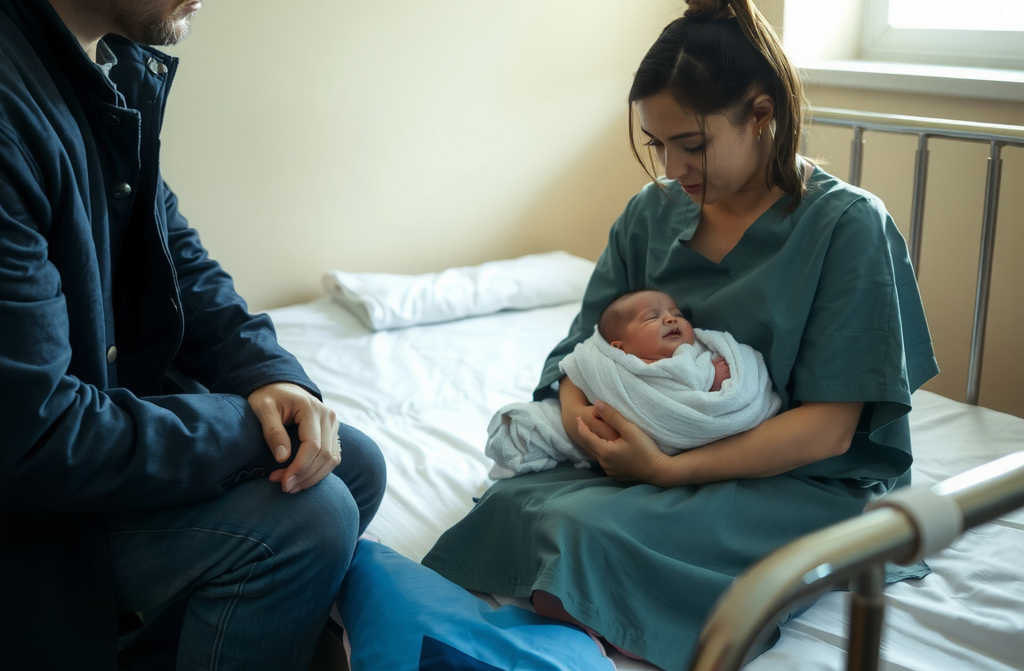
I entered the ward and took in the scene. Across from us lay a woman in her forties, her face etched with fatigue. Beside her, a young lady, perhaps twentytwo, chatted eagerly on her mobile. Near the door a third woman hunched over a wall, sobbing silently.
After the exhausting delivery, Eleanor collapsed onto a blue cushion stamped with a triangular motif and drifted into a deep sleep, as if the world around her had ceased to exist.
Will we be feeding the baby? a voice called through the haze. Eleanor turned, a smile breaking across her face.
A nurse stood beside the weeping woman, who had turned her back to the room.
Why are you silent? the nurse urged. Take the child in your arms. Look at the little miracle you hold. The woman froze, refusing to meet anyones gaze.
Spread your legs if you must, but if you cannot shoulder the responsibility, it is better to renounce the child, the nurse added, before stepping back into the bustling ward.
At last the woman in her forties, Natalie, let loose her pentup emotions.
Do you think I wanted this baby? she spat. Im fortythree, my son is married, Ill have a grandchild soon enough. And now this What am I to do? The child is innocent. If I hadnt wanted it, I wouldnt have kept it. What now? Should she wander the orphanages? Who will think of her when she is betrayed the moment she takes her first breath?
Anna, the younger mother, burst into tears, her sobs filling the room.
Why are you crying? It wont help you, Natalie snapped. Take the child, feed her, and stop being foolish.
Perhaps she was assaulted? suggested Alisha, finally putting her phone down. Or maybe the father is not the man we think he is?
I listened to Annas story and felt a pang of guilt, as though some unseen hand had placed this sorrow upon us. Here was a woman whose husband held her hand, whose parents adored her, yet she still found a reason to be miserable.
And here was another soul, a newborn, unwanted and unblemished, already cast aside. A girl who might grow up bitter, her parents drinking away their woes, her fatheronce a promisemakerhaving fled at the very mention of a child.
No balloons would be tied to her crib, no flowers for her mother. Both mother and child would be left to wander alone.
Shame settled over me, and I could not help but ask, If there is a place for her, will you take her in?
Anna stared at me as though I were mad.
Of course not, she replied, turning back to the wall, her voice a thin echo.
A few hours later, the matron announced, You and the child will reside in the university dormitory. My mother is the warden there. Youll be cleaning the floors; theyll allocate you a room.
I have a fresh discharge form, Alisha snapped, snapping her phone back to life. Ill call my husband now. We have two of us, why do we need more?
Ill bring some things, Natasha chimed in. From my own daughters handme-downs. They arent new, but theyre sturdy. Ive washed and ironed them. I dont need them; my son has his own. Grandchildren will get brandnew stuff anyway. Theyll never need these.
The following day, women from other bays began to approach, offering prams, bassinets, blankets. One young mother from the next ward sighed, I have nothing. May I buy a formula mix? What if the milk runs out?
Annas voice broke into sobs again, this time not from despair but from an unexpected surge of joy.
Ill give it away, she muttered, Ill earn enough to pay it back. The older ladies patted her shoulder and said, Give it to those who truly need it.
Late that night, as I lay down to sleep, I thought about how everything seemed to have fallen into place. Anna would find a decent man someday, and her daughter would be safe. Eleanor would stay with me, and we would raise our child together. The world, despite its harshness, could still be kind.
And so I close this entry with a lesson Ive learned: compassion, however small, can turn a bleak hallway into a beacon of hope. It is our duty, not just to the child, but to each other, to reach out before the darkness settles.



Puchýř pod malíčkem Boženy Kovářové
Tmavá, vlhká noc koncem srpna. Božena Kovářová se probudila ve dvacet minut po jedné, protože ji na pravém chodidle tak...


Жената от третия етаж на улица „Пирин“
Казвам се Весела и от три години работя като нощна портиерка в блок на улица „Пирин“ в Пловдив — стар...


Il frigorifero di mio cognato e i cinquemila euro che non torneranno
Mi chiamo Dario Ferraris, ho quarantatré anni, faccio l'elettricista a Bergamo da quando ne avevo diciannove. Questa storia la devo...


Dvi šunų lizdai Nr. 9 ir nuotrauka, kuri sustabdė furgoną
Mano vardas Audrius Vaitkus, man šešiasdešimt treji, ir jau vienuolika metų savanoriauju Kauno rajono gyvūnų prieglaudoje, netoli Garliavos. Mačiau visko....


A jászberényi diófa, amelyik hatszázezer forintot ért meg egy családnak
A jászberényi diófa, amelyik örökre megmentett egy udvart Negyedik éve dolgozom a jászberényi piacon zöldséges standnál, pont szemben azzal a...


Žentas, kuris liko: Birutės akys devynerius metus
Mane vadina nedėkingu žentu. Taip sako uošvienės draugės prie bažnyčios Pasvalyje, kai aš parvežu ją iš poliklinikos ir padedu išlipti...


האלמנה מרחוב הדקלים
היה סוף אוקטובר, בבאר שבע עוד נשבה החמסין המאוחר שחודר דרך כל בד, לא משנה מה לובשים מתחתיו. אני לבשתי...


Свекървата ми изхвърли дрехите, а мъжът ми мълчеше
Стоях във всекидневната с разкъсан найлонов плик до краката и гледах празния рафт в гардероба. — Къде е ризата ми...