
З життя
A penniless bloke rescues a drowning girlHe held her close as they swam to shore, where the sunrise painted their newfound bond in golden light.

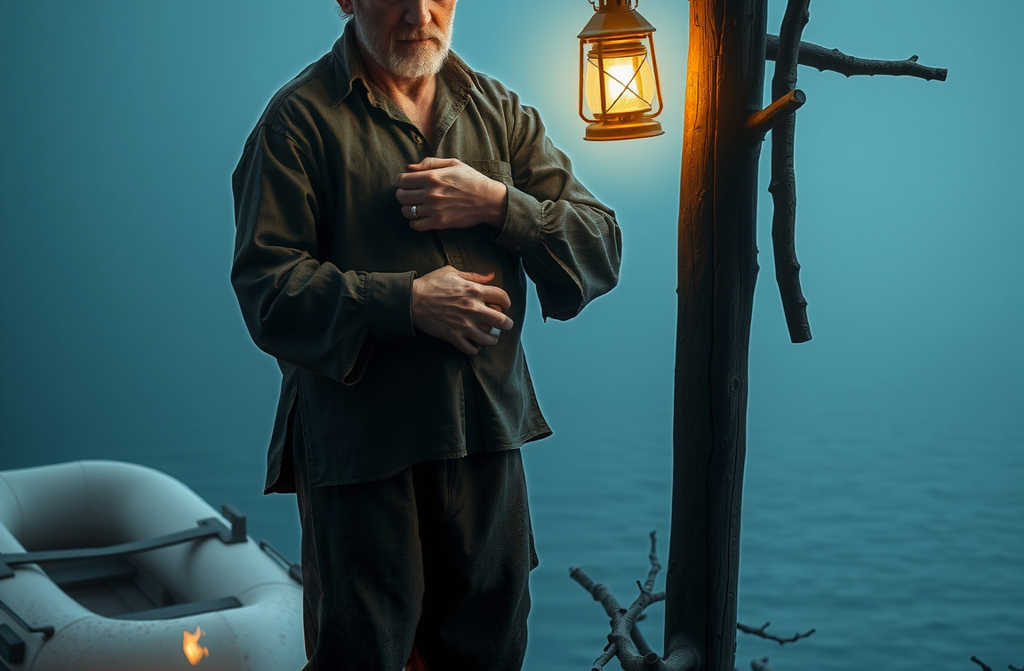
**Diary 12April**
I had just slipped my meagre evening catch into a wicker basket and was making my way down the narrow track toward the ramshackle cart I keep by the river when I froze, as if a bolt from the sky had struck me. The rivers heavy, impenetrable mist seemed to swallow sound, yet a desperate wail rose from the gloommore a dying moan than a shout, a animallike terror that sent a shiver racing up my spine. A womans cry cut through the howl of wind in the ancient pine crowns, the gust tearing at her voice, but I could still make out the words. She wasnt merely calling for help; she was begging, pouring the last strength of her soul into that scream. Beside her, another presence broke the surface, its frantic splashes echoing to the bank.
Without a second thought I hurled the basket; a handful of silverglinting minnows spilled onto the damp sand. Stripping my heavy, patched coat and the workworn trousers, I was left in a threadbare shirt and lunged into the black, chilling water. The wind, like a rabid beast, whipped the waves, slapping foam and spray across my face.
The swim was unbearable. The current, usually a lazy companion, was treacherous today, clawing at my legs with cold, watery hands. Near the rivers main channel, where the water grew especially dark and deep, a girl was fighting for her life. Her dark hair floated like seaweed, sometimes rising to the crest of a wave, sometimes sinking helplessly into the black abyss that threatened to swallow her whole. The young man she had been pleading with seemed already on the opposite bank. He did not look back; his movements were sharp, frightened. Grabbing a small inflatable boat, he turned his back on the forests edge, eager to disappear into its sheltering thicket.
The girls cries faded. She no longer broke the surface. When I, Victor Iles, exhausted my last strength and reached the fatal spot, the water spread only slow, ominous circles. My heart sank to my heels. I gulped a lungful of air, then plunged into the icy gloom. My hands felt the slick fabric of my coat; I seized the limp body from behind, using my other hand like an oar while my legs kicked desperately, driving me back toward shore. Each stroke burned my muscles, each breath was a groan, but I kept moving, clinging to life and to the life in my arms.
When I hauled the girlEmilyonto the bank, fatigue left me numb, yet I set to work. My calloused hands, accustomed to hard labour, acted swiftlyturns, presses, artificial respiration. Cloudy river water burst from her lungs and a hoarse, broken cough followed. Her breathing, weak but steady, returned. I needed to warm her. I gathered the dying embers from an old campfire, built a quick platform of flat river stones, and covered it with a thick layer of pine needles. I laid Emily gently on this makeshift bed, tucked her in with my only jacketworn, smelling of smoke and sweat. I collected the scattered belongings, wrestled damp clothing onto her stiffening form, and settled by a newly kindled fire, extending my trembling, frostwhite hands toward its heat.
The warmth crept in slowly, as if reluctant to penetrate frozen flesh. Emily lay motionless; only the faint vapor rising from her breath testified to life. The cold water and the shock had done their work, but I knewjust as the rivers bends had always taught methat time would bring her back to consciousness. I lifted my gaze to the sky, thick with low, heavy clouds. Not even the moon could pierce that leaden veil. The world felt empty and bleak.
I stared at the dancing flames, and they dragged me back to a night just as mercilessly grey, a night that had taken everything from me.
It had been that very evening when Lottie, our little Tommy, and I set out for a fishing trip, as we did almost every summer. Leaving my wife to tend to the tent with our son, I pushed off from the bank in our old but reliable boat.
Warm yourselves with a cuppa, Ill be back with a good haul and well have the finest fish stew in the world! I called cheerfully to Lottie, my smile wide and carefree.
Just be careful, Victor, the weathers turning, my wife warned, eyes fixed on the gathering clouds.
I know every stone out here! Dont worry! I shouted back, the oars slicing the mirrorsmooth water.
I dropped my lines into my favourite spot and settled into the familiar ritual of waiting. Suddenly the sky blackened as if night had fallen early. A gusty wind bent the trees to the ground, and a wall of water crashed from the sky. The boat was tossed, carried sideways, and a deafening, dry snap echoedmy hull had caught on a hidden snag, a twisted branch jutting up like a dagger. Air hissed out with a sour whine, and within moments the boat shredded into a shapeless piece of rubberised canvas.
I tried to swim, but a sharp, burning cramp seized my leg in the frigid water. The raging elements overwhelmed me; the current slammed me into something hard, and darkness swallowed my senses. I awoke three days later on a hard wooden pallet in a strange cottage that reeked of smoke and herbs. Standing to rise sent a wave of dizziness and nausea through me. At the doorway shuffled an ancient man, his face a map of deep wrinkles.
Got your senses back, he muttered, setting a steaming bowl of broth on a low stool. Drink this herb tea; itll staunch the bleeding. Have some porridge, or youll waste away.
Where am I? I croaked, the name of a faroff county ringing in my ears, and horror settled in as I realised Id been carried dozens, perhaps hundreds, of miles from home.
The forest took you, lad, the old man said after a pause. Hunters dragged me you barely alive. Thought youd not make it.
I tried again to sit up, but the man waved a withered finger at me.
Stay down, dont act the hero. Youve lost bloodno point in moving. Rest, recover.
What about my family? My wife, my son they think Im dead! Desperation cracked my voice. I imagined Lotties anguish, my heart clenching tight.
No postoffice here, just woods, wolves howling, bears growling. A whole wild. He sighed, We live on herbs, mushrooms, nuts, berries. In winter we store what we can. Hunters drop by now and then with a few provisions. Thats my life, twenty years now.
He collapsed onto his pallet, and soon the room fell silent, the dim light of a single oil lamp flickering against the walls. Shadows danced, forming fleeting silhouettes of Lottie and Tommy. A cold ache settled in my chest, the wind outside howling like a lost soul.
Days merged, each movementturning my head, sitting up, lifting a spoonfelt like a small triumph, a sliver of joy. At the hermits urging I began to help: shovelling snow from the doorway, fetching firewood, stoking the stove. The simple peaandroot stew he boiled from wild roots no longer disgusted me; hunger and survival outweighed revulsion. The tea he brewed from summergathered herbs reminded me of Lotties habit of adding mint and thyme to her own brewsweet and bitter at once, like a lingering wound.
Winter dragged on, seemingly frozen in place. When spring finally crept in, the snow reluctantly melted, exposing the earth inch by inch. Two more months of a tugofwar between frost and thaw passed before I felt the strength return to my legs. The old man, now frail, whispered, I cant guide you out as promised. Im down for good. You must go on your own.
You cant stay alone! Let me take you to the town, the doctors
Doctors? None of your city surgeons could fix what weve both endured. Weve kept each other alive with poultices and prayer. Go, lad. Ill mend myself in time.
He pointed me toward the road, and I set off, grateful for his aid. The path that had seemed straightforward turned into a labyrinth of hedgerows. I walked until night fell, with no sign of a trail. I spent the night beneath a stand of firs. At dawn, a soft rustle behind me made me turngreen glints flickered in the gloom: wolves. I scrambled up the nearest oak, clutching the bark until sunrise, nails digging into the rough wood. The pack, after a moment of sniffing the air, retreated into the shadows. Descending felt like courting death.
The following days blurred. I met a boarlike boar, a lynx perched on a branch, and endured sleepless nights in trees. I survived on wild berries, roots, and clear water from forest streams, always alert to any sound. Yet surrender never entered my mind; I had to reach home, alive.
Two weeks later, a dark rectangle emerged among the treesa derelict cottage. I crawled to it, almost fainting from exhaustion. Inside lay dust, dry pine needles, and a thin straw mattress. A single window let in a shaft of light, illuminating a rusted tin kettle, a halffilled bag of oats, and a metal mug.
Outside I gathered branches, found a small clearing, and built a fire. I boiled water from the stream in a tin, steeped dried currant leaves and mint Id salvaged from the cottage. The first sip of the hot, fragrant drink brought a fleeting sense of comfort. I bolted the door with a sturdy branch and curled into the dry straw bedding, finally sleeping like a dead man.
A bears roar woke me the next morning, close enough that my heart hammered. The sturdy timber walls gave me a thin shield of safety. I knew I could not wander further; the forest was a death sentence. I decided to stay, to wait out the winter, hoping one day I might return home.
With few matches left, I learned to strike fire with flint, dried mushrooms and berries over the stove, and collected medicinal herbs, recalling the old mans teachings. Weeks turned into months. One dawn, distant gunshots and barking dogs pierced the silence. I bolted from the cottage in my threadbare shirt, shouting, stumbling over roots.
Voices answered. After what felt like an eternity, four hunters emerged from the trees, having been drawn to the area by the sounds. They led me back to civilization. I rode in a lorry for more than a day, barely sleeping, clutching my fists in nervous anticipation. When I finally stood before the familiar door of the flat I once shared, my heart thudded like a drum. I knocked. A man in a stretchedout tshirt opened, eyes narrowing.
He told me the previous tenants had moved out after the husband drowned. The word drowned struck me like a verdict, a heavy iron hammer to the mind. So Lottie thinks Im dead, I thought.
Lost, I wandered aimlessly until I found myself at the local police station. Stammering, I explained my plight. The officer took my details, promised to search for my family. Well find them, he said, though his eyes hinted at the usual bureaucratic delay.
Returning to the warehouse where Id worked before the accident, the doors were boarded, a foreign sign plastered over the old one. A caretaker shrugged, They moved to a new address. I dont know where.
The city I returned to felt alien, strangers everywhere. My last hope was an old schoolmate, Stephen. His former wife, Naomi, opened the door, her face hard. Were divorced. He moved away with his new family. I know nothing about Lottie. No other friends remained. Lottie had been a solitary woman, a skilled knitter of beautiful sweaters and hats, but I never knew her clients.
The police kept dragging their feet; each visit yielded the same line: Search ongoing, no results yet. I obtained a temporary ID after a month and began hunting for work. Men in overalls gathered by the old bridge, waiting for a truck. I slipped in, waiting.
Soon a battered lorry pulled up. A man in a flat cap shouted, Builders needed? Three of you? A few men leapt into the vehicle, and it roared away.
Another driver offered a job with accommodation. I accepted, joining another weatherworn man on a convoy to a derelict industrial site. The place was a massive, halfcollapsed warehouse, reeking of chemicals, cheap spirits, and mould. Work was simple but vile: pumping a foul, oily liquid from drums into bottles, capping them, affixing fake labels, and stacking crates. We slept on those crates. Food came once a weekbread, pasta, tinned stew. Occasionally fresh barrels arrived, and the finished product was carted off.
A month passed. Pay was a whispered promise; questions were met with brusque, You work for food and shelter first, then well talk. My passport was taken for registration and never returned. When I tried to leave one night, two burly guards stopped me, explaining that walking out without papers would be a very bad idea.
Time stretched. One and a half years under that oppressive roof eroded everything but one spark: the urge to be free. I escaped with a few hundred pounds earned from unloading stew, no documents, heart pounding.
Back at the police, I filed a complaint about unlawful detention and extortion. It took half a year before a new passport was finally issued. The officer who handed it to me said dryly, Next time, think carefully about the statements you make. Your story is complicated. You could face charges for false reporting.
I went to old acquaintances, asking for a wash, a spare coatevery door shut. Despair settled in like a constant companion. I drifted to a cottage village, offering any manual labourdigging, fixing fences, chopping woodin exchange for a meal, a bath, a pair of trousers. Most slammed doors in my face. A kind pensioner fed me soup, let me bathe in her sauna, and gave me sturdy trousers and a warm jacket. Another farmer, impressed by my diligence, paid me a few pounds. Bit by bit I gathered a few sets of clothing and a modest sum. I placed an advertisement on the local radio, pleading for any news of my family, but only static replied.
With all municipal hope worn thin, I made a decision. I returned to the forest, to the very bank where the tragedy had begun. I found an old, rusted railway carriage abandoned by former geologists. I repaired it, sealed the gaps, and cobbled together a makeshift stove. Thus began my solitary, selfsufficient life, one I eventually grew to accept.
Months later, a familiar cry echoed across the water. I lunged to the girls side, helped her back to consciousness, and watched as the opposite bank lit up with flickering lanterns and voices.
It must be for you, I told her, voice trembling with sudden excitement. Help me gather brush for a signal fire.
We piled dry kindling near the rivers edge, lit it, and the flames rose high, illuminating the surface. Soon a rubber inflatable boat glided toward us, bearing rescuersand the very young man who had fled that night.
Artem! the girl called weakly, her eyes widening at the sight of his hand. The name struck a chord deep within me.
The boy, embarrassed and guiltridden, approached, extending his hand.
Thank you. Thank you so much. I I dont know what would have happened if you hadnt
A beam from the rescuers lantern fell on his hand; a simple silver ring glinted on his little finger. It was plain, masculine, with a distinct geometric patternexactly the one Lottie had once had made for our fifth anniversary, a design shed commissioned herself. No one else owned such a ring.
Artem I whispered, tears mingling with river water, Where did you get that ring?
Its it belonged to my father, he replied, bewildered by my stare. He vanished years ago when I was a child. This is all I have left of him.
My hand trembled. I stared into his eyes, searching for familiar traitsLotties cuteye shape, the line of my own brow.
Artem My voice was barely a rustle, like leaves, yet it held a weight that made the boy freeze. I I am your father.
I collapsed into his arms, unable to hold backIn that trembling hug, I finally realised that love, once lost, could still bind us across the cruelest of rivers.



A jászberényi diófa, amelyik hatszázezer forintot ért meg egy családnak
A jászberényi diófa, amelyik örökre megmentett egy udvart Negyedik éve dolgozom a jászberényi piacon zöldséges standnál, pont szemben azzal a...


Žentas, kuris liko: Birutės akys devynerius metus
Mane vadina nedėkingu žentu. Taip sako uošvienės draugės prie bažnyčios Pasvalyje, kai aš parvežu ją iš poliklinikos ir padedu išlipti...


האלמנה מרחוב הדקלים
היה סוף אוקטובר, בבאר שבע עוד נשבה החמסין המאוחר שחודר דרך כל בד, לא משנה מה לובשים מתחתיו. אני לבשתי...


Свекървата ми изхвърли дрехите, а мъжът ми мълчеше
Стоях във всекидневната с разкъсан найлонов плик до краката и гледах празния рафт в гардероба. — Къде е ризата ми...


Dvě stě padesát hodin, matko
Tereza seděla v kuchyni na sídlišti Lesná v Brně, byla půl čtvrté ráno, a za oknem svítila jediná rozsvícená lampa...


Konvice, co nikdy nevystydla
Jmenuji se Radka Bartošová, bydlím na sídlišti v Pardubicích, ve stejném paneláku už osmadvacet let, a naproti přes chodbu, ve...


מאה חמישים מטר על מגרש הכדורגל של בית הספר בעפולה
אני עובדת בבית הספר התיכון כבר שתים עשרה שנה, מזכירה במשרד המנהלת, ורואה הרבה דברים שהורים לא רואים. אבל את...


Il quaderno di ricette di mia suocera
Mi chiamo Massimo, ho quarantatré anni e faccio il ragioniere a Bergamo. Per dodici anni ho vissuto nella stessa palazzina...