
EN
The actress never glanced at the little girl.

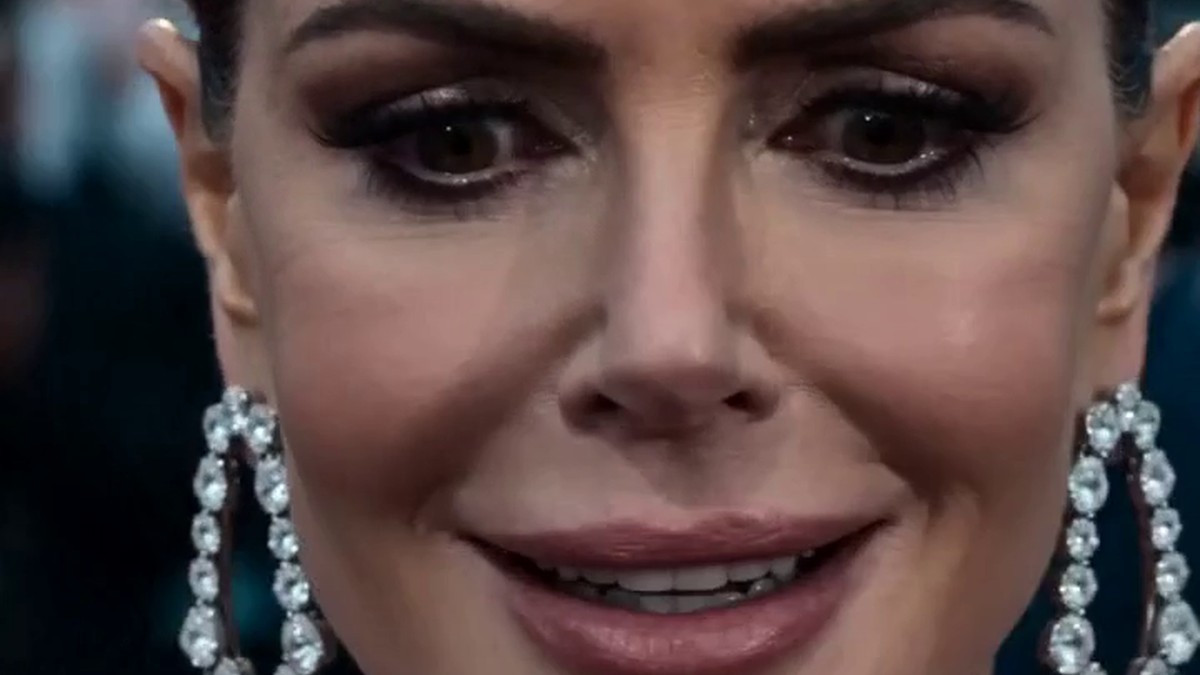
She just touched the diamond at her earlobe — a reflex — and kept her smile aimed at the cameras like a weapon.
"Keep her away from me."
The red carpet rolled on. Flashbulbs detonated in white bursts. Interviewers traded rehearsed laughter. Security moved in — smooth, practiced, automatic.
Because to everyone watching, she was just another kid who'd slipped the barricade.
Small. Hair a mess. Hoodie two sizes too big. Sneakers that had seen better days.
Nobody stopped to notice she wasn't reaching for an autograph.
The girl held her ground.
Looked up.
And said — quietly, like it cost her something —
"You really don't remember me?"
The actress went still.
Not visibly. Not enough for the cameras. Just one beat — one skipped pulse — before the smile snapped back into place.
Flawless. Professional. Impenetrable.
Security reached for the child's shoulder.
That's when the girl raised her wrist.
A pale pink ribbon. Fraying at the edges. Tied around something old — a hospital bracelet, the plastic yellowed and soft with age.
The actress's gaze snagged on it.
And her lungs forgot what they were for.
The cameras kept firing. The crowd kept breathing. No one understood what they were watching.
But her face — her carefully constructed, industry-approved face — cracked. Just slightly. Just enough.
She took one step forward.
Then another.
Her eyes locked onto the bracelet like it was the only thing in the world. Close enough now to read what was written there.
Not printed.
Not typed.
*Written.* In pen. In her handwriting.
Three words.
"…no," she whispered.
Someone nearby laughed — a short, nervous sound that died fast.
The girl closed her fingers around the bracelet and held on.
"You wrote this."
The actress stared.
Because she *remembered.*
The hospital room. Rain streaking the glass. The sound of machines. A newborn so small she'd been afraid to breathe near her. A promise made in the dark, when there was no one left to witness it.
Words written by her own hand on a strip of plastic.
Her knees threatened to go.
The reporter let the microphone drop an inch. The crowd sealed itself in silence.
The girl looked at her — eyes unsteady, voice barely held together —
and asked the question that unmade everything.
"Then why did they tell me —"
She swallowed hard.
"— that you never wanted me?"
Nobody moved a camera. Nobody spoke a word.
The actress pressed her hand over her mouth.
Because something she had buried — layered over with years and work and careful forgetting — broke the surface all at once.
The papers. The contract. The room where a man in a gray suit slid documents across a table. The line she signed without reading because she'd already been told there was nothing left to grieve.
For the first time in her entire career, she forgot the cameras existed.
She stepped toward the girl. Both hands trembling now.
"Who brought you here?" she whispered.
The girl pointed.
Not toward the crowd. Not toward security.
*Behind* the cameras — where an older woman stood perfectly still. Perfectly calm. A brown envelope held flat against her coat.
The actress looked at her.
And the color left her face all at once.
Because she knew her. Immediately. Completely.
The woman who had looked her in the eye — in that rain-gray hospital room — and told her the baby hadn't made it.
The older woman didn't flinch.
Didn't smile. Didn't flee. Just stood there with the envelope pressed against her coat like a shield she'd carried a long time and was finally ready to put down.
The crowd had gone the kind of quiet that doesn't happen on red carpets. The kind that costs something.
A cameraman kept rolling. Old reflex. But his hands had stopped being steady.
—
The actress's publicist appeared at her elbow — materialized, the way they do — and leaned close.
"We need to get you inside. Right now. Whatever this is—"
"Don't."
One word. Flat as a door closing.
The publicist stepped back.
The actress moved through the frozen crowd like a woman walking the bottom of a lake. Past the stanchions. Past the lights that had been designed to make her immortal. Toward the woman behind the cameras who had once looked her in the eye and spoken words that rearranged the architecture of her entire life.
She stopped three feet away.
"Miriam."
The older woman exhaled. Like she'd been holding that breath for years.
"Celeste."
Behind her, the girl — *her daughter*, a word the actress hadn't let herself think in so long it detonated quietly now in her chest — hadn't moved. Still holding the bracelet. Still watching with those eyes that looked exactly like hers did in old photographs she no longer kept.
"You told me she died." The actress's voice was low and clinical, the way people go clinical when they cannot afford to fall apart in public. "You showed me paperwork. You told me there were complications. You said—"
"I know what I said."
"You *lied* to me."
Miriam pressed her lips together. Nodded once.
"Who paid you?"
The silence stretched. Miriam's fingers tightened on the envelope.
"Who *paid* you?"
"Your mother."
The word landed like a dropped glass — that specific sound, the one that happens before you've processed the breaking.
The actress didn't move. Behind her, someone in the crowd made a small, involuntary sound.
"My mother was not involved in—"
"She was the one who made the call." Miriam's voice didn't waver, but something in her face did. Something old and corroded with guilt. "You were nineteen. You had nothing. She had everything — the contracts, the agency deal, the name she'd been building for you since you were eight years old." She paused. "She decided a baby would end it. She decided you wouldn't fight hard enough if you knew the truth."
The actress heard a sound she didn't recognize for a moment.
Then realized it was coming from her own throat.
"She decided," she repeated. The words tasted like copper.
"I was her personal assistant for eleven years." Miriam looked down. "She didn't ask me. She told me. And I was—" Her jaw tightened. "I was afraid of her. I'm not proud of that."
"So what changed?"
Miriam looked past her. At the girl.
"She found me. Six months ago. She's been looking for you for two years." A beat. "She's seventeen, Celeste. She found her adoption records and she went backward through everything. She's been trying to get to you for—" Miriam's voice finally fractured, just slightly. "She's relentless. She gets that from someone."
—
The actress turned.
Slowly.
The girl was still standing where she'd left her, arms at her sides, chin lifted a half-inch more than it had been before — braced for something. Expecting, maybe, to be turned away again. Familiar with it.
The cameras were still rolling. The actress didn't care.
She walked back.
Stopped in front of her daughter.
Up close, she could see the things she hadn't let herself see before. The shape of her eyes. The specific way she stood with her weight on her back foot. The small scar above her left eyebrow — raised, silvery, old.
She wanted to ask about the scar. She wanted to ask about a thousand things. Every year. Every missing birthday. Every room the girl had slept in that wasn't hers.
She wanted to say: *I didn't know.*
She wanted to say: *I would have come.*
She wanted to say: *I wrote your name on that bracelet because I was terrified of forgetting the only real thing I'd ever done.*
Instead, what came out was:
"What do they call you?"
The girl's throat moved.
"Nora."
The actress — Celeste — pressed her hand to her sternum like she was trying to hold something in.
"Nora." She said it like she was learning a word in a language she'd always almost known. "That's—"
"My middle name's Eleanor." Nora's voice was careful. Controlled. Seventeen years of bracing. "The family who adopted me. They said the hospital bracelet had a name on it. They kept it. When I was old enough, they showed it." A pause. "They told me whoever wrote it loved me. They made sure I believed it."
Celeste's eyes burned.
"They were right."
Nora looked at her. Really looked — steady and a little raw and trying hard not to need this too much, which is exactly how you look when you need something very much and have been disappointed before.
"I just want to know you," she said. "That's all. I'm not trying to—" She stopped. Started again. "I don't want anything from you. I have a family. I have a life. I just wanted to know if the story was true. If it was real."
"It was real."
"Okay." Nora exhaled. "Okay."
—
Miriam stepped forward and held out the envelope.
Celeste took it without looking at it.
Inside, she knew, were the originals. The documents. The proof of what had been done and who had done it and the seventeen years that had been built on a lie designed to protect an investment in a girl who had never asked to be one.
She'd deal with that. There would be calls. There would be a conversation with her mother — or rather, the end of one that had been decades in the making. There would be lawyers and statements and a story that would unspool publicly whether she shaped it or not.
But that was later.
Right now there was Nora.
Who was trying very hard to look like she didn't need anything, and who looked, more than anything in the world, like the only real thing Celeste had ever made.
She reached out — slowly, giving her time to step back if she needed to — and touched the fraying edge of the pink ribbon.
"I tied this," she said. "You were three hours old. You were—" Her voice broke at last. Let it. "You were so small. I was so scared. I didn't know how to hold you right. The nurse had to show me." A breath. "I didn't want to put you down. I couldn't stop looking at you."
Nora's composure slipped. Just at the edges.
"And then they told you I died."
"And then they told me you died."
"And you believed them."
"I had no reason not to." She paused. "I should have needed a reason not to. I should have fought harder. I know that. I've known it for a long time, without knowing why."
Nora was quiet for a moment.
"My mom," she said finally — and the word landed clearly, no apology in it, the family she'd had and meant to keep — "she used to say that sometimes people fail us and they're still worth forgiving. That the failure doesn't have to be the whole story."
Celeste absorbed that.
"She sounds like someone worth knowing."
"She is." Nora looked at her. "So might you be. I don't know yet."
Which was honest. Which was exactly right.
Celeste almost smiled. Almost — because it came from somewhere unexpected, somewhere she'd forgotten was still there.
"Fair enough," she said.
—
Later, the photos would be everywhere.
The actress on the red carpet, the cameras catching everything, a girl in an oversized hoodie and worn-out sneakers standing close but not yet close enough to touch.
But the one that would matter — the one that would get sent around in silence, that people would look at longer than they meant to — was a different frame. Caught by accident. By the cameraman whose hands had stopped being steady.
Two people standing still inside an ocean of noise.
The space between them.
And both of them, for once, not running from what was on the other side of it.



Nebylainis mokesčių skolininkas: ką Gabija man pasakė apie savo mamą ir pinigus
Mano uošvė sulaužė dantį pirmadienį, o ketvirtadienį jau nebeturėjau pinigų, kuriuos devynis metus siunčiau be klausimų. Taip tiksliai pasakyčiau, iš...


Dílna po Vladimírovi a mlčení, které Petr neslyšel
Ivana měla čtyřicet sedm let a dvacet tři z nich vedla účetnictví v autoservisu na Dobrovského ulici v Olomouci. Dílnu...


Il bagno delle nove e un quarto a Sabaudia
Faccio il bagnino allo stabilimento da sei stagioni, e di solito alle nove e un quarto del mattino la spiaggia...


Kréta a kapualjban
Pontosan két hete történt, szerda reggel, amikor hazaértem a műszakból, és ott álltam a lépcsőház előtt, mint egy idióta, mert...


Котката на Марин Петков
Тя драска, значи го мрази — така си мислех първите седмици. Казвам се Марин Петков, на четиридесет и три съм,...


Il campionato che mio padre voleva lasciare
Mi chiamo Sergio, ho 46 anni e abito a Torino, due isolati dallo stadio. Mio padre si chiama Manuel, ha...


Доверителният фонд на Боряна Велева
Дървото на живота Шест месеца преди развода ми, в сряда следобед, аз седях в чакалнята на Алианц Банк на булевард...


Тайната зад банята на улица „Пирин“
Тайната зад банята на улица „Пирин" Казвам се Красимир. От осем месеца живея с чувството, че съм обвиняем в собствения...