
EN
Grandpa’s Funeral Was at Noon on Tuesday

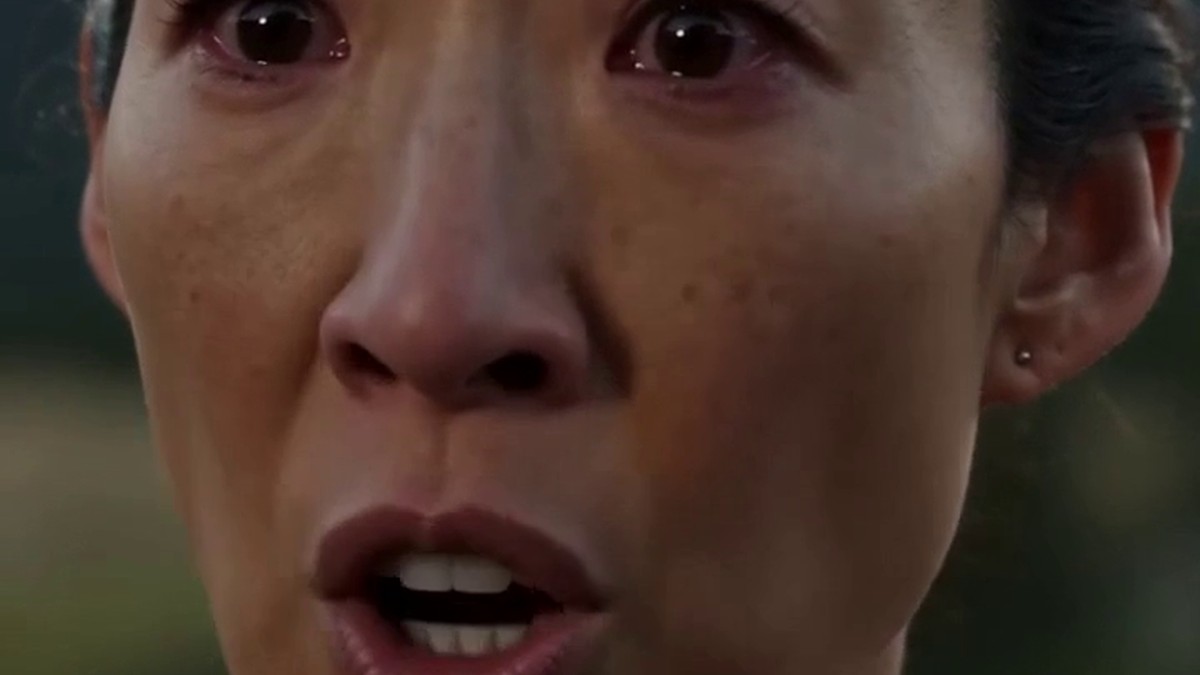
Maya’s phone buzzed at 6:47 p.m. on a Thursday, right as she was locking her office door. A Denver area code, but not one she recognized. She almost let it go to voicemail—her shoulders were screaming after ten hours hunched over a drafting table, and all she wanted was a hot shower and the leftover Thai food in her fridge.
She answered anyway.
“Is this Maya Kowalski?” A woman’s voice. Older. Tight.
“Speaking.”
“This is Diane Harper. I live next door to your grandfather. In Libby.”
Maya’s hand tightened on the phone. Libby, Montana. A town of maybe three thousand people tucked into the Kootenai Valley, surrounded by the Cabinet Mountains. She hadn’t been back in six years.
“Your grandfather passed,” Diane said. “Last night. It was his heart. The coroner said it was fast. He didn’t suffer.”
Maya stood in the empty hallway of the architecture firm, her key card still dangling from her other hand. The fluorescent lights hummed overhead. A cleaner’s cart rattled somewhere down the corridor.
“When’s the funeral?” she heard herself ask.
“Tuesday. Noon. At the little cemetery on Flower Creek Road. He had a plot already. Planned everything years ago.”
“I’ll be there.”
She hung up and walked to her Subaru in the parking garage. She did not cry. Not then. She drove home, packed a black dress and a pair of heels she’d never worn, booked a flight to Kalispell and a rental car for the two-hour drive north, and sat on her bed staring at the wall until 3 a.m.
Her grandfather. Ben Kowalski. Her *dziadziu*.
She was nine when her mother—Ben’s only daughter—OD’d in a motel bathroom outside Butte. Maya’s father had never been in the picture. So Ben drove down from Libby in his rusted-out ’84 Ford pickup, showed up at the foster home where they’d placed her, and said eight words to the social worker: “She’s my blood. She’s coming with me.”
He was sixty-one then. A retired logger with a bad knee and a cabin on ten acres of pine and cedar. He taught her to split firewood, to gut a trout, to drive a stick shift on the old logging roads. Every morning he made her oatmeal with brown sugar, even when money was so tight he skipped dinner himself. Every night he sat on the edge of her bed and told her stories—about the time he saw a grizzly on Bear Creek, about the winter of ’78 when the snow was so deep he had to climb out the second-story window, about her mother as a little girl with skinned knees and a gap-toothed grin.
Maya got a scholarship to CU Boulder. Then an internship in Denver. Then a junior architect position that turned into a senior one. Apartment in LoDo. Yoga on Sundays. A boyfriend for two years, then another for eight months. The cabin in Libby got smaller and smaller in the rearview mirror, a place she told herself she’d visit next summer, then next Christmas, then maybe in the spring.
She called. Once a month, maybe. Then once every few months. Then just birthdays and Christmas.
Ben never complained. Not once.
But two years ago, during a five-minute call on his eighty-first birthday, he said something that didn’t land until much later.
“You know, Maybug, I put a new roof on the place last fall. Did it myself. Your old room still looks the same.”
“That’s great, Dziadziu.”
A pause. Then: “I guess it’ll be here when you’re ready.”
“Ready for what?”
“To come see it.”
She’d had a client meeting in ten minutes. She said she had to go. He said he loved her. She said it back, already reaching for her blazer.
He never asked again.
The flight to Kalispell took two hours. The drive to Libby took another two, winding through the Kootenai National Forest. It was late October. The larches had turned gold, and the mountains were already dusted with snow. Maya drove with both hands on the wheel, her black dress folded in the suitcase on the passenger seat.
She didn’t stop for coffee. She didn’t turn on the radio. She just drove, her jaw clenched so hard her teeth ached.
Six years. She hadn’t seen him in six years.
She turned off Highway 2 onto the dirt road that led to his property. The potholes were the same. The leaning mailbox was the same. The big Ponderosa pine with the lightning scar—still standing.
And then the cabin came into view.
Smoke curled from the chimney. The porch light was on.
A man was sitting on the front steps.
He wore a red-and-black checkered wool jacket and oil-stained Carhartts. His boots were unlaced. He had a carving knife in one hand and a half-finished wooden duck in the other. Wood shavings littered the ground around his feet.
He looked up when her car crunched to a stop.
It was Ben.
Alive.
Maya didn’t move. Her hands were frozen on the steering wheel, the engine still running. She stared at him through the windshield, and he stared back, squinting a little, and then he raised one hand in a small, almost sheepish wave.
She killed the engine and stepped out. Her legs felt like someone else’s. The air smelled like pine smoke and cold earth and the river somewhere behind the cabin.
“Hey there, Maybug,” Ben said. His voice was the same. Gravelly. Warm. “Long drive.”
“You’re dead,” she said.
“Well, now.” He set the knife and the carving down on the step and stood up slowly, one hand braced on the railing. His knee. Still bad. “That’s a hell of a greeting.”
“Diane Harper called me. She said you had a heart attack. She said the funeral is Tuesday.”
“Ah.” He nodded. “I asked her to.”
Maya felt the words hit her chest like a physical blow. “You *what*?”
“Asked her to call. Told her what to say. She didn’t want to, but I talked her into it. Took some doing, honestly. Diane’s a pretty straight arrow.”
“You… you faked your *death*?”
Ben tucked his hands into his jacket pockets and looked at her. His face was more lined than she remembered. The skin around his eyes had gone papery. His hair, once salt-and-pepper, was now completely white, thin enough to show his scalp. But his eyes were the same—pale blue, clear, sharp as ever.
“Six years, Maya,” he said. “Six years you haven’t set foot on this property. I called. You were busy. I wrote letters. You sent a gift card for Christmas. A *gift card*. To your grandfather.”
“I’ve been working—”
“I know you’ve been working. I’m proud of you for working. You think I didn’t tell every person in this town about my granddaughter the architect in Denver? Bill at the hardware store is probably sick of hearing about you.” He paused. “But I got tired of bragging to Bill. I wanted to brag to *you*. And you weren’t here.”
She opened her mouth. Closed it. The wind picked up, rattling the dry leaves of the cottonwood by the fence.
Ben took a step toward her. “So I got to thinking,” he said. “If I actually died—if the call was real—would she come? She’d have to, right? For the funeral. She’d get on a plane. She’d drive up here. She’d stand at my grave.” He stopped a few feet away from her. Close enough that she could see the wood dust on his collar. “And I thought: why am I waiting until I’m in the ground to get that? Why can’t I get that now, while I can still see her face?”
Maya’s hands were shaking. She pressed them against her thighs. “Do you have any idea what you put me through? I spent the last three days thinking you were *gone*. I packed a dress to bury you in. I was planning your *eulogy* on the plane.”
“What were you gonna say?”
“What?”
“In the eulogy. What were you gonna say?”
She stared at him.
“Were you gonna say you wished you’d visited more?” He tilted his head. “Were you gonna say you loved me, and you were sorry, and you should’ve come when I asked? Because I’ve heard a lot of eulogies in my life, Maybug, and that’s usually what people say. A lot of ‘I should have.’ A lot of ‘if only.’” He let out a breath. “I didn’t want to be an ‘if only.’ I wanted to be a ‘right now.’”
She was crying. She hadn’t realized when it started, but her face was wet, and her nose was running, and she was making those ugly, ragged sounds that she hadn’t made since she was a kid with a scraped knee and her dziadziu carrying her up the porch steps.
“I hate you,” she whispered.
“No, you don’t.”
“This is insane. This is manipulative and insane.”
“Probably,” he agreed. “But you’re here.”
She wiped her face with her sleeve. It didn’t help. The tears kept coming. “You could have just *asked*. You could have said, ‘Maya, I’m old, please come.’”
“Would you have?”
She tried to say yes. The word wouldn’t come.
“Yeah,” Ben said quietly. “That’s what I figured.”
He walked toward her, his limp more pronounced than she remembered, and stopped right in front of her. He smelled like woodsmoke and coffee and the same drugstore aftershave he’d worn her whole life.
“I’m not mad at you,” he said. “You hear me? There’s not a single mad bone in my body. You went out in the world and you built something. That’s what I raised you to do. I’m proud. I’ll always be proud.”
“Then why—”
“Because pride isn’t the same as seeing you. It’s not the same as sitting on this porch with you and watching the light change on the mountains. I’m eighty-three years old, Maybug. My heart *will* give out one of these days, and I wanted to see you one more time before it does. Not in a casket. Like this.” He touched his chest. “Breathing. Talking. Real.”
She looked at him—really looked. At the tremor in his hands that hadn’t been there six years ago. At the way his shoulders curved inward, his frame smaller than she remembered. At the deep lines carved into his face like riverbeds.
He was going to die. Maybe not this year. Maybe not next. But soon. Soon, he would be gone, and all she would have left was a gift card she never should have sent.
She stepped forward and wrapped her arms around him. He felt frail under the thick jacket, his bones closer to the surface than they used to be. But his arms came around her the same way they always had—firm, solid, certain.
“I’m sorry,” she said into his shoulder. “I’m so sorry, Dziadziu.”
“Ah, hush.” His voice was muffled against her hair. “You’re here now. That’s all that counts.”
They stayed like that for a long moment. The cottonwood rustled. A raven called from somewhere up the ridge. The cabin’s chimney sent a ribbon of smoke into the pale gray sky.
Ben pulled back first. He kept his hands on her shoulders and studied her face, and then a slow grin spread across his.
“So,” he said. “You hungry? I caught some cutthroat this morning. Got a stew going on the stove.”
Maya let out a wet, hiccuping laugh. “You’re really just going to pretend you didn’t fake your own death?”
“I’m not pretending anything. I’m prioritizing.” He turned and started back toward the cabin, limping up the steps. “Death faking can wait. Stew cannot. You want bread with it? I baked a loaf this morning. Sourdough. Took me three tries to get the starter right.”
She followed him inside.
The cabin hadn’t changed. Same rough-hewn beams across the ceiling. Same cast-iron stove in the corner. Same braided rag rug on the floor, the one her great-grandmother had made before Maya was born. Her old room was visible through a half-open door—the quilt still on the bed, the macramé owl she’d made at summer camp still hanging on the wall.
The stew smelled like garlic and thyme and fresh trout. Ben ladled it into two chipped ceramic bowls while Maya sat at the kitchen table, her black funeral dress still folded in the car outside.
They ate. He told her about the new family of foxes that had denned up near the creek, about the storm last winter that took down the old spruce by the shed, about the ongoing war between him and a particularly stubborn raccoon that kept getting into his trash. She told him about the firm, the projects, the boyfriend who hadn’t worked out.
“What was wrong with that one?” Ben asked, tearing off a piece of bread.
“He didn’t like the mountains.”
“Well, there you go. Dealbreaker right there.”
After dinner, they sat on the porch in the old Adirondack chairs, wrapped in wool blankets, watching the alpenglow turn the Cabinet Mountains pink and then purple and then dark. The stars came out, brighter than Maya had seen them in years. No light pollution out here. No city glow.
“I’m staying,” she said.
Ben looked over at her. “How long?”
“I don’t know. A couple weeks, at least. I’ve got vacation time banked. And I can work remote if I need to.”
He was quiet for a moment. Then he said, “That’d be nice.”
She heard the crack in his voice. She didn’t look at him. She just reached over and took his hand—knobby knuckles, papery skin, still warm—and held it.
The next morning, she woke up to the smell of oatmeal with brown sugar. Ben was at the stove, humming something off-key. An old Polish folk song, maybe. One she remembered from childhood.
“Morning, Maybug,” he said without turning around. “Eggs?”
“Yeah. Scrambled.”
“You got it.”
She sat at the table, in the same chair she’d sat in as a kid with her feet dangling off the floor, and watched her grandfather crack eggs into a cast-iron pan. The sun was just coming up over the ridge, spilling gold through the kitchen window. The coffee was hot. The cabin was warm. Her dziadziu was alive, and so was she, and that was more than enough.
Tuesday came and went. There was no funeral. Instead, Maya drove into town and told Diane Harper, in person, that she wasn’t angry—that she understood, even if it was a hell of a thing to do. Diane cried a little and made her take a Tupperware of lasagna back to the cabin.
Maya stayed two weeks. Then three. Then she called her boss in Denver and negotiated a permanent remote arrangement. She’d fly back once a month for in-person meetings. The rest of the time, she’d work from the cabin, where the internet was spotty but the view from her makeshift desk—the old oak table by the window—was all pine and mountain and sky.
Ben objected for approximately thirty seconds.
“You don’t have to do this,” he said. “I didn’t pull that stunt to trap you here.”
“You’re not trapping me.” She was already hauling her suitcase into her old room. “I want to be here.”
He stood in the doorway, watching her unpack. After a long moment, he said, “You mean that?”
“I mean it.”
He nodded. He turned away. But before he did, she saw his chin tremble, just a little. And then he walked to the kitchen and started peeling potatoes for lunch, and by the time she came out of the room, he was humming again.



Майстерня на Гончарній
Мене звати Роман Ткачук, мені сорок два, і я зять. Це слово в нашій родині звучить майже як вирок —...


Kein Streit am Sonntagstisch in Bad Homburg
Ich arbeite seit vierzehn Jahren als Kellnerin im "Kurhaus am Taunus", einem Restaurant mit Blick auf den Kurpark, wo die...


Der Werkstattschlüssel, den Bernd nie zurückgab
Renate Kessler hatte die Nummer ihres Sohnes seit Jahren nicht mehr wählen müssen — sie stand ganz oben in ihren...


Der Umschlag mit dreitausendachthundert Euro
– Wo ist mein blaues Kleid? – fragte ich und blieb im Flur stehen, den Müllsack noch in der Hand....


Ein Zufallsfund am Trödel im Spreewald
Frau Brenner drängte schon seit Wochen: „Komm mit, Marlene, du hockst hier nur rum seit der Scheidung." Marlene hatte eigentlich...


# Der Tag, an dem Josie ungefragt in unser Bett kletterte
Mein Mann Matthias und ich haben sechs Jahre versucht, ein Kind zu bekommen, bevor wir es ganz aufgaben. Es war...


Der Weinkeller in der Lindenstraße
Als Rosalinde Kaspers vor elf Jahren die kleine Weinhandlung von ihrem Onkel übernahm, saß im Hinterzimmer noch die alte Kaffeekanne...


Wachstuben-Weg 4, Vorpommern
Acht Töchter hatte Bernhard Lehnert, und keinen einzigen Sohn — die Nachbarn im Dorf hatten Jahre gebraucht, um damit aufzuhören,...