
EN
The Listing on Shelby Avenue

The zipper caught at the small of her back. Nora Walsh twisted an arm behind her, fishing for the tab — deep emerald silk, cut on the bias, a dress she’d bought three weeks ago at a boutique on Twelfth Avenue South where the saleswoman kept saying "statuesque" instead of "plus-size." Nora had tipped her forty dollars.
She got the zipper up and looked at herself in the full-length mirror. Thirty-six years old. Size fourteen. Curves like a country road. She owned a branding agency downtown, thirty-one employees, and the house she was standing in — this 1925 Craftsman on Shelby Avenue with the wide front porch and the original oak floors — she’d bought with her own money eighteen months before she even met Marcus.
She turned sideways, smoothing a hand over the silk. The dress had cost four hundred eighty dollars. She’d earned it.
The bedroom door swung open. No knock. That was the first thing Nora noticed — there was never a knock.
"Nora, honey. I just had to come see you before the guests arrived." Diane Walsh stood in the doorway, a coral caftan draped over her thin frame, hair done in tight silver curls. She was sixty-seven. She’d been Marcus’s mother for her whole life, and Nora’s problem for exactly eleven years. "Turn around. Let me look at you."
Nora turned.
Diane pressed two fingers to her sternum. "Oh. Oh, my. Now that is a choice." She let her eyes travel from Nora’s collarbone to the hem of the dress. "Most women your size spend their lives hiding in black. You go the other direction. Bright green. Like you want everyone to look." She laughed — a little trill, almost musical. "I’m not sure I’d have the nerve. But that’s you, isn’t it? Always charging ahead."
Behind Diane, on the king bed, Marcus was scrolling through his phone. A Tennessee Titans game had ended an hour ago; he’d moved on to Instagram. He didn’t look up.
"Diane, I haven’t finished getting ready," Nora said.
"Of course, of course. I’ll go check on the cheese board." Diane floated out, trailing the scent of White Diamonds and old resentment.
Nora met Marcus’s eyes in the mirror. "Eleven years, Marcus. Eleven years she’s talked to me like that."
He shrugged without lifting his head. "She called you brave, babe. That’s a compliment."
"Brave to be fat in a fitted dress. That’s not a compliment."
"You always do this." Marcus sighed and set the phone face-down on the duvet. "You hear what you want to hear. She’s elderly —"
"Sixty-seven."
"Whatever. She’s old. You’re the successful one, the smart one. Why do you let her get under your skin?"
Nora eased the zipper down two inches and reached behind her to adjust the strap. "Why does she get to say it in my house?"
Marcus had no answer. He picked up the phone again.
—
Two months earlier, the day the kitchen renovation wrapped, Diane had come by unannounced. She’d run a hand over the new quartz island, traced the brass fixtures, and said, "Three hundred forty thousand dollars. For a kitchen. You know what I could do with three hundred forty thousand dollars, Nora? I’d put it toward a retirement. I’d help my son. But no — you spend it on a stove that looks like a spaceship and you’re never home to use it." Then she’d turned to Marcus with a look that didn’t reach her eyes and added, "But I forget. You’re the one who works from home. You’ll get to enjoy it while your wife pays for it."
Marcus had laughed. "Mom’s just being practical, babe. You know how she is."
Nora had stood there, a dish towel in her hand, and said nothing.
That was the moment she’d called the attorney.
—
The doorbell rang at seven. Nora was in the kitchen, arranging bourbon pecan pie on a serving plate, when she heard Marcus opening the front door and turning on the host voice — the one he only used for an audience.
Friends arrived in a rush of noise: Alan Chen and his wife Priya — Alan ran a pediatric dental practice off West End; Priya was a civil engineer. Sarah Novak, who produced records for half the indie bands in Nashville, came with her husband David. All of them had heard about the renovation. All of them wanted the tour.
Nora gave it. She showed them the coffered ceiling in the living room, the original pocket doors that had taken a restoration specialist six weeks to salvage, the closet she’d turned into a home office with a window seat overlooking the backyard. She told them about the powder room tile from a local ceramist in Wedgewood-Houston, the hand-blown glass pendant lights above the island. She did not mention how much any of it cost. She could feel Diane on the edge of the tour, waiting for an opening.
The opening came at the dinner table.
They’d finished the salad course. Nora had just refilled Priya’s wine glass when Diane set down her fork with a little clink and folded her hands in front of her.
"You know what I admire most about Nora?" she said to the table, her voice carrying like a dinner bell. "She’s built this whole career, this whole house, and she’s never once let herself get distracted by… well, by looking after herself. I mean, look at her. She’s not a small woman. But that doesn’t stop her. She’ll throw on a dress that fits like a second skin and walk into a room full of people. That takes real nerve."
The table went still. Alan Chen’s fork stopped halfway to his mouth. Priya looked at her napkin.
Marcus let out a thin laugh. "Ah, Mom. You know she’s busy. The gym’s not everybody’s priority."
He said it like he was defending Nora. He wasn’t. He was handing Diane a ladder and holding it steady.
Nora felt something turn over inside her — a gear that had been rusted and stuck for years now catching. She was in the kitchen a moment later, sliding the pecan pie onto the counter, when Aunt Rita came through the swinging door balancing an empty salad bowl.
Rita was Diane’s older sister by four years. She’d taught eighth-grade science for thirty-one years and retired with no patience left for her sister’s nonsense.
"You okay?" Rita asked.
Nora reached for a pie server. "She just told the whole table I’m too fat to care."
Rita set the bowl down and looked at the kitchen door as if Diane might be listening on the other side. "You know why she does it, don’t you?"
"I know she’s never liked me."
"That’s part of it." Rita lowered her voice to a near-hush. "But not the whole story. Forty-two years ago, when she first married Marcus’s father, his mother Clara used to do the same thing to her. At every family dinner. Clara would take one look at Diane — twenty-one years old, bones like a bird, no curves to speak of, all elbows and collarbone — and she’d say, 'Diane, honey, I just love that you wear sleeveless blouses. Your arms are so thin. Like a child’s. So brave of you, not hiding them.'" Rita shook her head. "And Marcus’s father — god rest him — he’d sit there chewing his pork chop."
Nora didn’t ask if he ever defended her. She knew the answer.
"Clara did it for years," Rita went on. "Diane would cry in the car on the way home. She’d write letters to her sister — to me — about the look on Clara’s face when she said those things. That tone. Like she was being kind." Rita stacked two plates. "And then one day, Clara died. And Diane became the mother-in-law."
Nora set down the pie server. "She turned into the thing she hated."
"She trained for it her whole life." Rita picked up the salad bowl and paused at the door. "You’re not imagining it, Nora. And you don’t have to eat it the way she did."
The kitchen door swung shut behind her. From the dining room, Nora could hear Diane saying something else — the same trilling laugh, the same audience.
Nora picked up the pecan pie and walked back out.
—
"A toast," Nora said.
She was standing at the head of the table, her wine glass raised. The room had been chattering; now it fell silent. Marcus looked up from his plate, fork suspended. Diane tilted her head like a bird that had spotted something shiny.
"To Diane," Nora said.
A few guests raised their glasses automatically.
"Most women at sixty-seven would have learned to ease up on the lipstick," Nora went on, her voice smooth as bourbon. "But not you. You walk around with that fuchsia mouth like you’re still twenty-five. Even with the deep lines around your lips. I have to say, I admire the commitment."
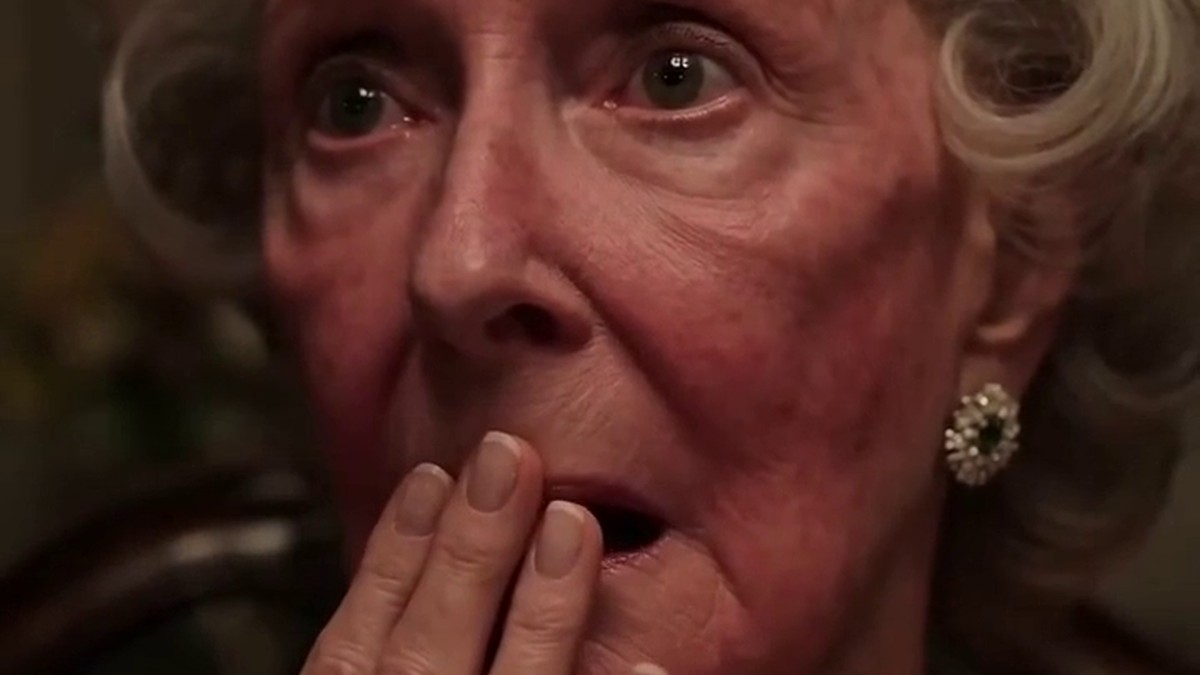
Diane’s hand drifted to her mouth. Her face went blotchy — patches of pink rising from her neck to her hairline.
"And to Marcus." Nora turned to him. "Eleven years. Eleven years you’ve sat at the head of this table and let her say whatever she wanted to me. You’ve never once said, 'Mom, that’s enough.' Not once." She paused. "But here’s what’s interesting — Aunt Rita just told me a story in the kitchen. About your grandmother. Clara. And how she used to body-shame your mother at every family dinner. How she’d tell Diane she was 'so skinny it was like looking at a child.' And your father — god rest him — just kept eating his pork chop."
Diane’s mouth opened. No sound came out.
"So this whole thing," Nora said, "this little system where Diane gets to insult me and you get to eat your dinner — it’s not new. It’s a tradition. Passed down. Grandmother to mother. Mother to…" She gestured at herself with the wine glass. "Well. To me."
She took a sip of wine. It was a nice red — a Pinot Noir from Oregon that had cost ninety dollars. She’d bought it for this party. She’d bought it for the toast she didn’t know she’d be giving until an hour ago.
"Alan, Priya, Sarah, David — I’m sorry you had to sit through this. Dessert’s in the kitchen. Bourbon pecan pie. I made it this morning before anyone got here."
She set down the glass, picked up her napkin, and picked a crumb off the table. "So. Who’s ready for pie?"
—
No one was ready for pie. Not after that.
The Chens made the first excuse — Priya had an early site visit, Alan had a patient. Sarah and David followed close behind, Sarah muttering something about a session at the studio that started at nine. Nora walked them all to the door. She hugged them. She told them it was okay. She said good night.
Then she went upstairs to the master bedroom and locked the door.
Marcus pounded on it around midnight. "Nora, open the door. We need to talk about what you did."
She didn’t open the door. She sat at the small desk by the window and opened her laptop. The screen glowed pale blue across her face.
She didn’t cry. She didn’t write a long message about her feelings. She logged into her bank account, pulled up the transfer page, and moved seventy-five thousand dollars from the joint savings into a new account with only her name on it. Then she opened a folder she kept in the top drawer of the desk — a burgundy leather folio with a gold clasp — and took out a stack of papers.
She signed three places on the separation agreement. She initialed the listing agreement for the house at one million two hundred fifty thousand dollars. She slid both into the folio, along with a receipt from a locksmith scheduled for noon the next day.
Then she closed the laptop and went to bed.
—
At seven the next morning, she carried the folio downstairs.
Marcus was at the kitchen island, a mug of coffee in front of him, one hand wrapped around his phone. Diane sat at the table in a yellow bathrobe, her face pale, no lipstick.
Nora walked to the island and set the folio between them. She unzipped it and took out the papers.
"The house goes on the market Monday," she said. "I’ve already signed the listing agreement with a realtor from Parks. One million two hundred fifty. Before the open house, the locksmith is coming at noon to change the locks. If you have anything in the house you want, you need to pack it by then."
Marcus set his phone down. His hand was shaking.
"What are you talking about? Nora, what is this?"
"It’s a separation agreement. And a listing agreement. And a receipt." She tapped the receipt. "Twelve o’clock. Change the locks. I’ll have a moving company come by tomorrow for anything that doesn’t fit in your car."
Diane pushed her chair back. The sound scraped against the oak floor. "You can’t just — this is my son’s home —"
"This is my home, Diane." Nora didn’t raise her voice. She didn’t need to. "I bought it for eight hundred ninety thousand dollars. I paid for a three hundred forty thousand dollar renovation. My name is on the deed. You’ve never paid a bill here in your life."
She opened the folio again and slid out a cashier’s check. She set it next to the papers.
"Seventy-five thousand dollars. That’s half the joint savings. It’s more than enough for first and last month’s rent anywhere in Nashville. Take it. Find a place. I don’t need to know where."
Marcus looked at the check. He looked at the papers. He looked at Nora.
"You’re serious."
"I’ve never been more serious."
Diane made a sound — a small, strangled noise like a tea kettle that couldn’t quite whistle. "After everything we’ve — I’ve never — I raised my son to —"
Nora turned to face her. "You raised him to sit and eat while you picked at his wife. That’s what you raised him to do." She paused. "And I’m done being the person you pick at."
She zipped the folio, tucked it under her arm, and picked up her car keys from the hook by the door. Her black Volvo — she’d leased it two years ago, a reward for landing the hotel chain contract — was parked in the driveway next to Marcus’s ten-year-old Ford.
She walked out the front door, down the porch steps, across the lawn where the neighbor’s golden retriever, Biscuit, was lying in a patch of morning sun. Biscuit lifted his head, thumped his tail twice, and settled back down.
Nora got in the car, started the engine, and backed out of the driveway. At the stop sign on Shelby Avenue, she tapped out a text to the realtor: "We’re on for Monday."
Then she turned left and drove toward downtown, where her office was waiting, where thirty-one people worked for her, where the coffee machine made a sound like a small train, and where nobody had ever once told her she was brave for wearing a dress.



Ocho millones en la pantalla
El salón del Hotel Ébano olía a champaña caliente y a perfume importado. Me quité los tacones detrás del telón,...


The Listing on Shelby Avenue
The zipper caught at the small of her back. Nora Walsh twisted an arm behind her, fishing for the tab...


Seventeen Minutes
The call came on a Wednesday morning. The county shelter north of Columbus, off Route 19, had Sophie's jacket—the one...


The Guarantor
The air in Las Vegas in late October has a way of making everything feel temporary. The convention center smelled...


La Llave Sobre la Mesa
Nunca pensé que un billete de avión de 213 dólares pudiera dividir mi vida en dos. Lo compré un martes...


Une leçon à la table du dimanche
Camille Rouzet avait soixante-huit ans et une main qui ne tremblait jamais, même pour verser le café bouillant sans regarder...


The Other Retirement
The first time Dan said he wanted to live for himself, I was wiping crumbs off the kitchen table with...


Piszę tę historię jako świadek — postronna osoba, sąsiadka lub znajoma — w języku polskim, z polskimi realiami, nowymi imionami i innym miastem, zgodnie z wytycznymi.
Koperta z Gdyni, która zmieniła adres notarialny Nazywam się Bożena i od siedemnastu lat prowadzę mały sklep spożywczy na rogu...