
EN
The Night My Mother Tapped Morse Code Through a Garden Wall

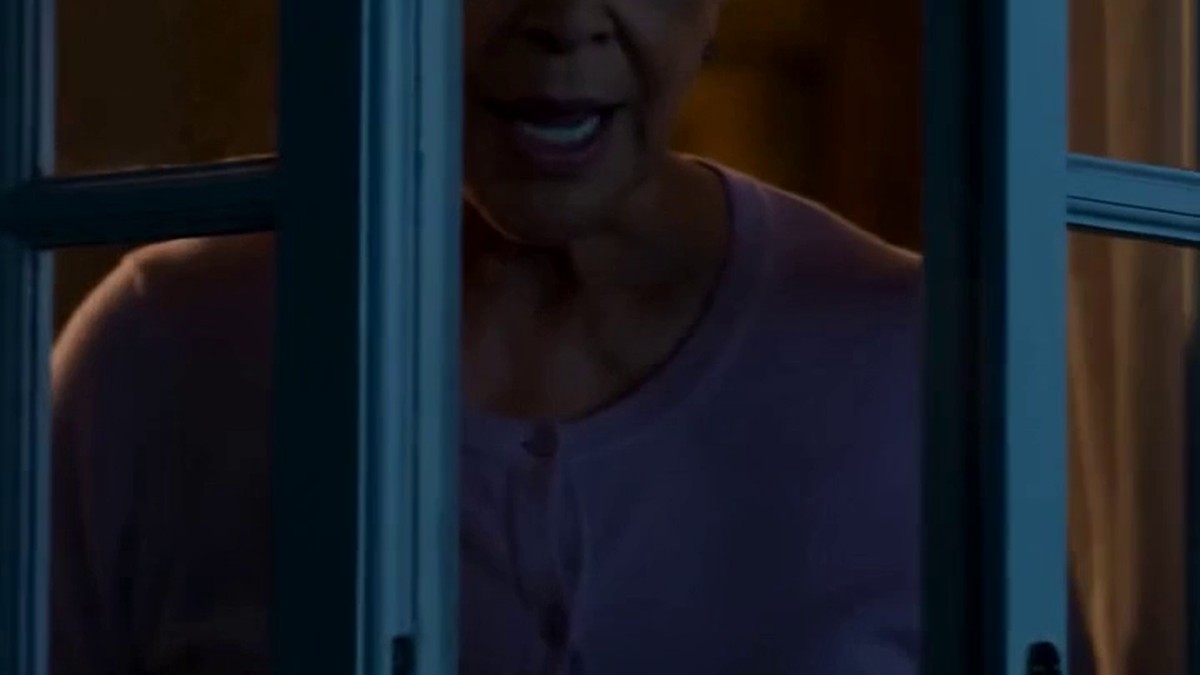
# The Night My Mother Tapped Morse Code Through a Garden Wall
The taxi dropped me at the main gate of the Miranda estate just after eight, and I stood there a full minute with my duffel bag on the gravel, staring up at the stone columns like they belonged to somebody else's life. My shirt was wrinkled from the flight into Austin, my bank account had eleven hundred dollars in it, and the last fourteen years of my name meant less than the dust on my shoes.
A new groundskeeper opened the gate without asking who I was. That told me everything before I'd stepped one foot inside.
They had me wait in the front parlor. I remember the ice in the crystal glasses, untouched, and the way the ceiling fan turned through the heat with a sound like a slow heartbeat. This house had been built by my grandfather in 1948, limestone and cypress, and I'd grown up under these beams thinking they would always hold.
Beatriz Delacroix sat on the velvet settee with a posture that could cut glass. My son, Riley, stood by the fireplace, fiddling with a cufflink, looking everywhere except at me.
"Dad," he said, and the word came out with a hush around it, like he was already at my funeral. "Good to see you."
He hugged me the way you hug a man you're about to rob.
Beatriz didn't stand. She motioned to the chair across from her, and I sat because my knees were tired and my life was in a bag by the door.
"Marcus," she said. Just my name, flat as a legal filing.
"Beatriz."
"I'll be direct." She reached behind her and produced a manila folder, the tab marked with a small yellow sticker, fresh. "Your mother, Dolores Miranda, has been diagnosed with advanced cognitive decline. Dementia. The medical board has confirmed it, and I've initiated proceedings for legal conservatorship — of her person and of her shares in Miranda Consulting."
The ceiling fan clicked. Somewhere in the kitchen, a door closed.
"The paperwork is all there," she went on, tapping the folder with one manicured nail. "Dr. Whitfield's assessment. The evaluation by two independent physicians. And here" — she slid out a separate document, notched in the corner with a red seal — "the petition for appointment of a guardian, witnessed and signed by Judge Calloway's clerk two weeks ago."
I looked at the paper. I didn't recognize the signature. I recognized the letterhead.
"You've been busy, Beatriz."
"Someone had to be." She settled back into the sofa the way a cat settles onto a windowsill in the sun. "Riley and I have managed the firm through your… difficulties. We've kept your mother comfortable. But her condition has become unmanageable. It's for her own protection."
My son shifted his weight. "Dad, I know this is hard to hear. But Mom and I have been handling it for months. You weren't here."
"You weren't welcome here," Beatriz corrected, softly, without looking at him. She meant me.
The heat pressed against the windows. My shirt stuck to the small of my back. I'd spent eleven months untangling the wreckage of my divorce, liquidating a construction business that had drowned in debt after a partner emptied the accounts. The money — all of it, four hundred and twenty thousand dollars exactly — had been moved out of the company in June. I only learned the number later, from the bank records.
But that evening in the parlor I didn't know about the transfer. I just knew there was a lie in the room, and it was wearing my son's last name.
"The guest room's ready for you," Beatriz said. "The small one at the end of the hall. Light's good in the morning."
The small one. My father's old study, before they gutted it.
Riley walked me to the staircase. The house was dark, all the hallway sconces dimmed to a flicker. On the landing he stopped and rubbed the back of his neck.
"Grandma's in the carriage house," he said, voice low. "Out past the rose garden. It's nicer for her there. Quiet."
I didn't answer. My mother had planted those roses with her own hands in 1986. I'd watched her do it from this very hallway, six years old, barefoot on the marble. She'd handed me a trowel and told me a woman's garden is the one place nobody can take from her.
The carriage house sat a hundred and twenty yards from the main building. A separate structure with a tin roof and one lit window.
I went to my room, which had been stripped of everything that belonged to me. New sheets, new rug, new absence where the bookshelf used to be. I lay on the bed in my clothes and listened to the house settle.
Somewhere after midnight, I heard it.
A rhythm. Very faint, carried through the open window with the damp of the hill country. Irregular at first, then settling into a pattern: two taps, a pause, four taps, a longer pause, two taps again.
I sat up.
Two. Four. Two. Metal on metal — a spoon against pipe work, maybe. Not the wind, because the wind doesn't pause between phrases like a woman choosing her words.
It was coming from the carriage house.
I pulled on a pair of sneakers and moved down the back staircase, the worn treads cool underfoot. The kitchen was empty, the stove clock glowing 12:47 in green. I slid open the patio door and stepped into the dark.
The rose garden was overgrown along the path — Beatriz's gardeners had stopped coming this far. Thorny stems scraped my sleeves. Eighty feet from the carriage house, I stopped and listened.
I'd learned Morse in the Coast Guard, thirty years ago, and it came back to me the way an old phone number does, unbidden. Two dots: I. Four dots: H. Two dots: I.
I-H-I. Nothing. I ran it backward. I tried grouping it differently — maybe it wasn't letters at all, maybe it was numbers, maybe it was nothing but an old woman testing a pipe to see if anyone was listening on the other end.
The pattern ran on a loop, every minute or so, patient as a metronome. I gave up trying to translate it and just listened to the rhythm itself — steady, unhurried, deliberate. Whoever was making that sound had strong hands and no fear of the dark. I thought of my mother negotiating a twelve-million-dollar contract without lifting her voice, and I understood that the code didn't need to spell a word. It only needed to tell me one thing: *I'm still here, and I'm still myself.*
I didn't knock on the carriage house door. I wouldn't be the one to give Beatriz her excuse. I walked back through the garden, over the same damp stones, into the kitchen where a fly buzzed in lazy circles under the range hood.
By morning, I'd made a plan. I would go in the daylight, as her son, and ask her myself what she wanted me to hear.
Three days passed. Beatriz kept her routines — 7 a.m. calls to a case manager, folders that arrived and left the house by courier, a locksmith who spent an afternoon on the carriage house door "for Dolores's safety." I played the returned bankrupt, the broken man. At breakfast I let my fork rattle against my plate. I read Beatriz's report with a face of dull surrender, the numbers — four hundred twenty thousand, transferred to an account in Hamilton, Nevada — settling into my chest like a stone.
On the third afternoon, while Beatriz was at the county office filing an emergency motion to move the hearing up, I walked out to the carriage house and knocked.
My mother opened the door herself. She was thinner than I remembered, her hair pulled back tight, but her eyes found mine and held them with total clarity.
"Marcus." She said my name like she was setting down something heavy. "Took you long enough."
"I heard the tapping."
"I know you did. I saw you standing in the roses like a burglar." She stepped back to let me in. The carriage house smelled like her — lavender water and old paper. "I wasn't sending you a code, Marcus. I was making noise so you'd come find me instead of waiting to be told what to think."
"I thought it meant something. A box. A number."
"It meant I was awake at midnight with a spoon and a pipe and nobody to talk to." She sat down slowly in a wingback chair by the window. "Beatriz has been telling Judge Calloway I forget my own name. Ask me anything."
I asked her the date, her granddaughter's birthday, the name of the bank where she kept our grandfather's old documents. She answered every one without hesitating, then reached into a drawer in the side table and handed me a small brass key.
"First Meridian, downtown. Box five. There's a codicil in there your grandfather had drawn up years before he died, changing how the trust passes if I'm ever ruled incompetent. I've kept it quiet because once Beatriz knew it existed, she'd have found a way to make it disappear before I could use it."
"Why didn't you go get it yourself?"
"Because for three weeks I haven't been allowed off this property without a chaperone from Whitfield's office." Her mouth tightened. "This is not memory loss, Marcus. This is a woman who wants my shares and my grandson's inheritance, and she has a doctor on retainer to write whatever the checks require."
That afternoon I went to the bank. Beatriz had frozen the estate accounts under the pending conservatorship, but the safety deposit box wasn't tied to the company. It was personal, and the key opened it without a question asked.
Inside Box 5 I found what my mother had promised.
A codicil to my grandfather's will, drawn up in 2003 and witnessed by two names I didn't recognize, notarized at a storefront office on East 6th that Beatriz had never bothered to check. It named an independent trustee — not the court-appointed conservator — to hold voting control of the family trust in the event my mother was ever found incapacitated, "pending review by a physician of the family's choosing, not the estate's." There was also a short letter in my mother's handwriting, dated the week the "diagnosis" came through:
*Marcus — if you're reading this, she moved faster than I hoped. Get Sandra Bell. Don't wait on the court date. — Mom*
That afternoon I called Sandra Bell, a lawyer who'd beaten a major insurer in a guardianship fraud case two years back and had a Sunday-night radio show out of Austin. I told her the facts in eleven minutes. She told me to meet her at the county clerk's office in the morning, with the codicil and my mother's letter in hand.
"This isn't going to be quick," she warned me. "Beatriz has two medical evaluations and a judge who already signed off once. We're not walking in and winning on a piece of paper from 2003. We're walking in to force a new evaluation, on the record, with a neutral doctor. That's the fight."
The hearing was moved up to Monday, at Sandra's request, on grounds of "urgent risk to the ward's assets."
Beatriz did not fold quietly.
She arrived with her own attorney, a sharp, unhurried man named Corbin, and a third medical opinion she'd apparently rushed through over the weekend — a specialist flown in from Houston who'd examined my mother for eleven minutes on Sunday morning and found "clinically significant impairment consistent with early-stage dementia." Corbin argued that the 2003 codicil was stale, superseded by a 2019 trust amendment Beatriz produced on the spot, one my mother had signed during a period Corbin characterized as "the documented onset of cognitive decline."
For a moment, watching Judge Calloway frown down at two competing stacks of paper, I thought we would lose.
Sandra didn't blink. She asked for a court-ordered evaluation that afternoon, conducted by a specialist chosen by the court itself, not by either family. Calloway granted it — reluctantly, and only after Sandra pointed out that a woman's liberty shouldn't be decided by whichever side could produce the more expensive letterhead.
The specialist arrived within the hour: a woman in her fifties with white sneakers and a kind, unhurried face. She asked my mother to count backward from one hundred, name three objects, repeat a phrase, sign her name three times at three-minute intervals. My mother did all of it without a single error, in the same flat, patient voice she'd used to teach Sunday school for twenty years.
Corbin objected to the sequence of the questions. Beatriz sat with her hands folded so tightly the knuckles went pale, watching a plan come apart under a stranger's clipboard.
The specialist's written finding took four sentences. The last one read: *Patient demonstrates full cognitive capacity with no clinical evidence supporting conservatorship.*
Judge Calloway dismissed the petition from the bench.
Riley hadn't said a word through any of it. He found me afterward in the courthouse hallway, his tie loose, his jacket over one arm.
"Dad. I need to tell you something, and I need you to let me finish before you say anything."
I nodded.
"I moved the four hundred twenty thousand out of the company account in June," he said. "I set up the Henderson account myself. I knew Beatriz was going to push the conservatorship through and sell the firm to a private equity group before you could get back on your feet. I thought if the cash wasn't sitting there, she couldn't close the deal. I didn't loop you in because I didn't know if you were coming back, and I didn't know if I could trust you not to tell her before I'd finished moving it."
"You let me sit in that parlor thinking I'd lost everything."
"I let you sit in that parlor because I was scared of what happens to people who get in Beatriz's way." His voice cracked on it. "I should have called you the day it happened. I know that."
"Where's the money now?"
"Still in Henderson. I didn't touch it once the hearing got scheduled — I didn't want it to look like I was covering tracks." He handed me a folded bank statement. "It's not back in the firm's account yet. I wanted you to decide that, not me. I've already told Sandra everything. She said I should expect the firm's board to ask questions, and I'm ready to answer them."
I looked at my son for a long moment — his mother's coloring, my father's hands — and I didn't tell him it was fine. It wasn't, entirely. But he'd told me the truth before I'd had to drag it out of him, and in this family that counted for something.
"We'll deal with the board together," I said. "And you're going to explain it to your grandmother yourself. Not me."
He nodded, and for the first time since I'd landed in Austin, he looked like he could breathe.
Beatriz was gone by the following Friday. Riley told her she needed to be out of the main house by the end of the month; she was gone in six days, in a black Escalade loaded with garment bags, with Corbin's number still saved in her phone and a motion for reconsideration she never filed. I didn't watch her go. I was in the kitchen with my mother, walking her through the paperwork for Riley's new position as CFO — a title the board approved only after two long meetings, a forensic accountant's review of the Henderson transfer, and my mother's own insistence that her grandson be held to the same standard as anyone else who'd moved company money without authorization.
The check I wrote Beatriz came two weeks later. Seventeen thousand dollars — her share of the proceeds from the sale of the townhouse on Barton Springs Road, the one she and Riley had bought together three years into their marriage and that Riley had since bought her out of as part of the separation agreement. It was her exact portion, calculated to the dollar by an accountant neither of us had chosen. No more, no less. I mailed it certified. The receipt is still in my desk drawer.
We kept the carriage house. My mother reads there most afternoons, door open to the roses, and some evenings, when the light goes long and gold over the hill country, I hear the tapping start again against the copper pipe outside the kitchen door.
I don't try to translate it anymore.
I just walk outside, sit down on the cool stone step, and listen until she's done.



Zaproszenie dla mojej siostry
Siostra posadziła mnie za filarem na własnym weselu, a potem zamarła, kiedy mój wynajęty partner usiadł obok i powiedział: „Nigdy...


Nikt nie wie, co będzie dalej. Rozdział o kluczach do warsztatu na Wilczej
Pierwsza rzecz, którą Wiktoria zobaczyła, wchodząc do kuchni, to była teczka z dokumentami leżąca na obrusie obok cukiernicy — jasnoniebieska,...


Nikt nie wie, co będzie dalej. Rozdział o kluczach do warsztatu na Wilczej
Pierwsza rzecz, którą Wiktoria zobaczyła, wchodząc do kuchni, to była teczka z dokumentami leżąca na obrusie obok cukiernicy — jasnoniebieska,...


Дідусева шафа з горіха
Оксана Верещак років зо два тому почала називати посилки свекрухи «мотлохом» і була переконана, що та просто економить на них...


Дідусева шафа з горіха
Оксана Верещак років зо два тому почала називати посилки свекрухи «мотлохом» і була переконана, що та просто економить на них...


Le silence après le portail vert
Je m'appelle Bastien Ferrand, j'ai quarante-six ans, et pendant onze ans j'ai porté l'uniforme de la gendarmerie à Vézenne, un...


**Gdynia, lotnisko Chopina w Warszawie, wtorkowa noc przed Wszystkimi Świętymi**
**Warszawa, lotnisko Chopina, wtorkowa noc przed Wszystkimi Świętymi** Myślałam, że mój mąż ratuje ludziom życie na sali operacyjnej. Zamiast tego...


**Gdynia, lotnisko Chopina w Warszawie, wtorkowa noc przed Wszystkimi Świętymi**
**Warszawa, lotnisko Chopina, wtorkowa noc przed Wszystkimi Świętymi** Myślałam, że mój mąż ratuje ludziom życie na sali operacyjnej. Zamiast tego...