
EN
My Two Moms, My Three Daughters, and a Dog Named Rocket

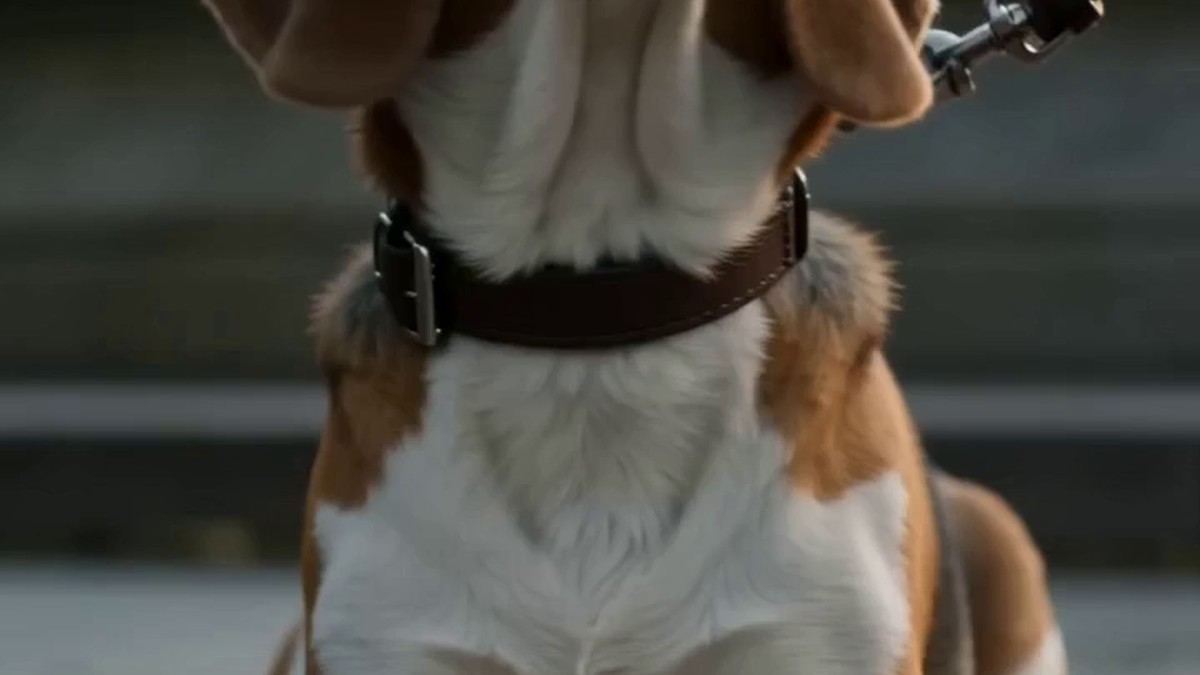
The first time I saw her, she was sixty years old and arguing with me over a beagle puppy in the middle of Palmer Square. Her name was Diane. My name is Frank. The dog, apparently, had two names and two broken hearts attached to him.
Chicago, late October. Wind coming off the lake like God left the freezer open. I'd spent six days walking every block from Logan Square down to Pilsen, checking shelters, posting on every lost-dog Facebook group in Cook County. Seven months I'd had that dog. Rescued him from a drainage ditch off I-55 during that bad March flood. Bottle-fed him, medicated him, taught him to sleep on the foot of my bed. Then some idiot kid lit a firecracker at Millennium Park and Rocket bolted into the crowd. His collar snapped clean off. Just the tag left in my palm.
So when I saw that little brown-and-white fool sniffing a hot dog wrapper near the fountain, I didn't think. I ran.
"Sir! Excuse me! What do you think you're doing?"
She had a grip like a retired gym teacher and a voice that could stop traffic on North Ave. Sixty, maybe, silver hair pulled back in one of those clips, sensible shoes, that particular Chicago look of a woman who's been through forty winters and isn't scared of anything anymore.
"That's my dog," I said, trying not to shout.
"Like hell it is. That's my Rocket."
"His name is Rocket? No. His name is Gizmo. And he's mine."
The dog sat between us, tail beating the pavement, looking back and forth like he was watching a tennis match he'd bet money on.
—
Here's what you need to know about Diane. She was thirty when she became a mother. Wanted it sooner, but the men she met—let's just say the South Side had a shortage of Prince Charmings. She waited. And waited. One year, two, three. At twenty-nine her friends from the old neighborhood started calling her "the last single woman in Cook County." She didn't care. Better alone than shackled to some guy who treats the couch like a second job.
Then she met a truck driver named Marcus. Big guy, warm laugh, drove a semi for a logistics company out of Joliet. He looked at round-faced Diane Marcella like she was the only woman in the room. Took her out to the stock car races in Grundy County, bought her cotton candy, kissed her in the parking lot of a Culver's. Made promises. Big ones.
She got pregnant. He said, "After the baby comes, we'll do it right. Big wedding, white dress, the whole thing."
She went into labor at Rush University Medical Center on a Tuesday night. Gave birth to not one, not two, but three girls. Hannah, Erica, and Jill. All healthy, all screaming.
Marcus showed up once, looked at the three bassinets, and went pale. He'd wanted a son. One son. Not three daughters and certainly not three daughters all at once. He mumbled something about needing air. Diane never saw him again.
Her friends laughed. "Your prince ran off, honey," they said. "Traded his white horse for a Greyhound ticket."
She cried into the same pillow for two weeks, then she got up. Because diapers don't change themselves, and because she had three princesses who needed a queen.
She sold her mother's old two-flat in Bridgeport, moved to a small condo in Evanston, and did what half a million single mothers do in this country—she worked. Two jobs for a while. Then night school. Then a better job as a medical billing specialist at a clinic on Howard Street. She raised those girls alone. Paid for three college tuitions. Cried at three weddings.
At the last one, Hannah's, she stood in the corner of the banquet room with a glass of cheap champagne and watched her baby girl dance with a man named Paul. Someone took a picture of Diane at that moment. She looked like a woman saying goodbye to something she never got to hold.
The girls worried about her. Set her up on dating apps. Sent her on a singles cruise that she left after two days because "everyone over sixty either talks about their prostate or their stocks." They tried everything.
"Mom," Erica said one afternoon, stirring sugar into her coffee at the kitchen table, "maybe you should get a dog."
Diane laughed. A real laugh, not the polite one. "A dog? Sweetheart, I can barely keep a cactus alive."
"No, really. It'd be good for you. Daily walks. Company. Someone to talk to besides the ladies at the nail salon."
"I said no, honey. Thank you, but no."
A week later, Erica used her key to pop in unannounced and found a beagle puppy tearing through the living room, dragging one of Diane's slippers. The dog skidded on the hardwood, crashed into a lamp, and looked up at her with that beagle grin that says, "I regret nothing."
"Mom?! You said you didn't want a dog!"
"Erica, sometimes," Diane said, not looking up from her tea, "the dog finds you."
—
That was the dog. My dog. Sitting in Palmer Square between the only two people in the world who'd ever loved him.
"He ran off at Millennium Park," I said, quieter now. "The Fourth of July fireworks. Some kid with a firecracker. He's scared of loud noises—has been since I pulled him out of that ditch."
Diane looked at Rocket. Then at me. "When did you lose him?"
"Nine days ago."
She went still. "I found him eight days ago. Outside my building. Crying by the dumpster. It was forty degrees. He was shaking so hard his tags rattled."
"That's him," I said. "That's my… that's Gizmo."
"I call him Rocket. Because when I let him off the leash at the dog park, he takes off like something launched him."
We sat on a bench near the fountain. Rocket hopped up between us, lay his head on my knee and his butt pressed against Diane's thigh. We sat like that for a while, not talking. Just two strangers and a dog who didn't see any reason why we both couldn't stay.
"I live alone," I said finally. "My wife, Carol, passed four years ago. Breast cancer. A year after I retired from the pipe fitters' union. We never had kids. It's just me in that apartment on the sixth floor, and for the last seven months, it's been me and him."
Diane didn't say anything for a long moment. Then: "I have three daughters. Three grandkids—well, one on the way. But they're all so busy. The mortgage, the jobs, the school plays. I see them on Sundays. Maybe. The rest of the week, it's… you know. It's quiet."
"Yeah," I said. "I know."
She looked at me, and I swear, under the streetlights, with the wind doing its thing, she didn't look sixty. She looked like a girl about to say something brave.
"So what do we do about this little guy?" she asked.
And I heard myself say the dumbest, bravest thing of my life: "Maybe he doesn't have to choose."
—
We started walking together. Every morning, six-thirty, by the fountain. Rocket between us, tail going like a helicopter rotor. Then it turned into coffee at the little diner on California. Then lunch. Then—and this is the part my doctor told me to be careful about, on account of my blood pressure—then she invited me over for a lasagna dinner she'd made too much of.
She told me about the girls. All three of them, in excruciating detail. Their favorite cereals as kids, their boyfriends in high school, the time Jill broke her arm falling off a trampoline at a block party in 2004. I ate three helpings and listened to every word.
"I was married thirty-one years," I told her. "Carol was my high school sweetheart. We grew up three blocks from each other in Bridgeport. She died holding my hand in a hospital room that smelled like bleach."
Diane reached across the table and put her hand over mine. "I never got that," she said, almost whispering. "A long marriage. Someone who stays."
And just like that, on a random Thursday with lasagna on the table and Rocket snoring under it, I knew.
A month later, I showed up at her door in my one good suit—the gray one I wore to Carol's funeral, which I thought I'd never wear again—holding a bouquet of daisies, a box of Frango mints from Macy's, and a bag of the premium dog food Rocket liked.
"I'm not getting on one knee," I said. "The sciatica won't allow it."
Diane laughed so hard she had to lean on the doorjamb.
"But I'm asking," I said, "if you'll marry me. Spend whatever's left of this wild ride with an old pipe fitter and his beagle. I can't promise you white dresses and honeymoons. But I can promise you this: I will never, ever leave."
She didn't say yes. She said, "You big fool, get inside before the neighbors see me crying."
Rocket barked. Then peed on the welcome mat.
We both looked at the puddle. Then at each other.
"I'll get the paper towels," I said.
"I'll get the mop," she said.
And just like that, we were engaged.
—
The girls found out on a Sunday. They'd all shown up unannounced—some "mother checks on you" thing they did twice a month. I was in the kitchen, slicing bread, when the front door opened and three women walked in, all talking at once.
"Mom, you won't believe what happened at the—"
They stopped. Three pairs of eyes, all identical to Diane's, fixed on me.
I raised a hand. "Hello, ladies. I'm Frank."
Nobody moved, except Rocket, who started running victory laps around the coffee table.
"Girls," Diane said, coming in from the balcony with a pitcher of lemonade, "this is my fiancé."
Erica, the oldest, set down a bag of the custard-filled pastries they'd brought from Tag's Bakery on Central Street. "Your what now?"
"Fiancé," Diane repeated. "We're getting married in April. Small ceremony at the courthouse. Rocket will be the ring bearer, assuming we can keep him from eating the rings."
Hannah's eyes went wide. "Mom, that's in three months!"
"I'm sixty-one years old, sweetheart. If there's one thing I've learned, it's that life doesn't wait for you to feel ready."
Jill, the youngest, crossed her arms. "How do we know he's not just after the condo? There are guys out there who target single women, Mom. We've talked about this."
I set the bread knife down. "Fair question," I said. "I'll show you my bank statements. My pension. My 401(k). I own my apartment outright, twenty minutes away. I don't need your mother's money. I need your mother."
The room went quiet. Rocket stopped running, sat down next to Diane, and looked up at the girls with that beagle face that says, "Go ahead. Try to argue with that."
It was Erica who broke. She'd been watching me since she walked in, reading me the way her mother did. After a long, uncomfortable silence, she said, "He's got honest eyes."
"He's got a beagle," Hannah added. "That's basically a character reference."
Jill exhaled, long and slow. "Okay, fine. But we're running a background check."
"Already printed it out," I said. "It's in the kitchen drawer, under the takeout menus."
And that, I think, is when they decided I was okay.
—
The wedding was on a Saturday in April. Clear skies, sixty-eight degrees, cherry blossoms out in the plaza behind the Evanston Civic Center. We did it at the courthouse, like we said. Erica and her husband came. Hannah brought her kids—two boys, five and seven, who spent the entire ceremony trying to get Rocket to sit still. Jill, nine months pregnant, stood as witness with one hand on her belly and the other holding a tissue she never used.
There were no white horses. No ballroom. No hundred-guest reception.
Just me, in a suit that fit better this time because I'd had it altered, and Diane, in a simple ivory dress she'd bought off the rack at Nordstrom Rack for ninety dollars.
She kept staring at her hands during the ceremony, like she expected them to disappear. When the judge asked if she took me as her lawfully wedded husband, she looked up, and her eyes were wet.
"I've been waiting my whole life for somebody to ask me that," she said.
The boys giggled. Rocket barked. Jill swore under her breath, then laughed.
When we walked out into the daylight, married, there was a man outside the building selling flowers from a bright yellow bucket. I bought the last bunch of tulips. Seven dollars.
I handed them to my wife.
Diane looked at the tulips, then at me, then at the beagle pulling on his leash toward a squirrel. She was sixty-one years old. She'd raised three daughters alone, worked two jobs, cried at three weddings, and once told me she'd given up on ever being the one in the white dress.
She lifted the tulips to her face, inhaled, and said, "Frank, do you think that hot dog cart is still open on Orrington? I'm starving."
We ate lunch on a park bench—two hot dogs with everything, a bag of chips split in half, and a bottle of lemonade we passed back and forth. Rocket sat at our feet, waiting for someone to drop a piece of bun.
That night, for the first time in forty years, Diane fell asleep next to someone who hadn't left.
And I lay there in the dark, listening to her breathe, listening to Rocket snore from his bed in the corner, and I thought about that drainage ditch off I-55, and the kid with the firecracker, and the million tiny accidents that had to line up exactly right for a lost beagle to find himself a family.
Sometimes, you don't find what you're looking for. It finds you. Usually when you're not ready, usually when you've stopped hoping, and usually with muddy paws and no collar on.
The next morning, I made coffee and watched my wife—my wife—pour two mugs half-full of milk, just the way she likes it. She caught me staring and raised an eyebrow.
"What?" she said.
"Nothing," I said. "Just… nothing."
She brought me my mug, kissed the top of my head, and went to let Rocket out for his morning inspection of the front stoop.
I sat there at the kitchen table, holding my coffee, listening to the sound of her talking to the dog through the screen door, and I let myself have exactly one more minute of this. This simple, ordinary, staggering thing.
Then I got up and joined them.



Der Tag, an dem Malte vor der Tür stand und wusste: die Werkstatt gehört ihm nicht mehr
Sechsunddreißig Wochen schwanger saß Nora Brenneke im Wartezimmer der Praxisklinik in Münster, eine Hand auf den Bauch gepresst, während warme...


Le Testament de Céleste
La sage-femme m'a proposé un fauteuil roulant à onze heures moins vingt, un mardi de novembre. J'ai regardé mon téléphone...


Nie oddam za darmo jedenastu lat
Sylwia weszła do mieszkania chwilę po dziewiętnastej. Miała za sobą jedenaście godzin pracy i najdłuższy dzień od trzech miesięcy. Dwa...


My Two Moms, My Three Daughters, and a Dog Named Rocket
The first time I saw her, she was sixty years old and arguing with me over a beagle puppy in...


Tomas Müller stand seit siebenundzwanzig Jahren hinter der Fleischtheke in der alten Markthalle von Bielefeld. Er kannte jede Art von Kunden. Die, die am Monatsende mit gesenktem Kopf kamen und nur nach Hackfleisch fragten. Die, die für den Sonntagsbraten die teuren Stücke wollten und dabei auf die Uhr schauten, als könnte das Fleisch schneller reifen, wenn man es nur ungeduldig genug anstarrt. Und er kannte die, die Angst hatten. Angst erkennt man an den Händen. Nicht an den Augen. Die Hände einer verängstigten Person tun Dinge, die der Kopf nicht kontrolliert: sie zählen Münzen zweimal, sie halten den Einkaufskorb, als wäre darin etwas, das jeden Moment weglaufen könnte, sie berühren immer wieder denselben Punkt am eigenen Mantel.
An einem Dienstagmorgen im November war diese Frau zum ersten Mal da. Siebenundsiebzig Jahre alt, schmale Schultern, ein dunkelgrüner Wollmantel,...


Ключі від «Таврії», яку мама боялася навіть завести
Мамі шістдесят три. У жовтні вона вперше сяде за кермо сама — без нас на пасажирському сидінні, без нашого «не...


Комод для Світлани Вікторівни
– Після розлучення мама переїде сюди, – сказав Тарас, не відриваючи очей від телефону. – Твою кімнату звільниш повністю. Меблі,...


Naprawiłam furtkę, zanim sąsiad zdążył zapytać, czemu Ares szczekał jak oszalały
Zawsze uważałam, że najgorsze, co może spotkać matkę, to usłyszeć płacz dziecka w nocy. Mylisz się. Najgorsze jest zobaczyć, jak...