
З життя
A Stray Cat Sneaks Into the Hospital Room of a Billionaire in a Coma—What Happened Next Was a Miracle That Even the Doctors Couldn’t Explain…

12th April
It amazes me how a wandering cat, slipping into a place where he shouldnt have been, utterly changed the story of our family. I still can scarcely believe it, even as I put pen to paper. Thinking back to those bleak months at St. Bartholomews Hospital in London makes my heart race and ache all over again. My father, Richard Harris, had been trapped in a coma for three long months after suffering a terrible stroke. The doctors said there was almost no hope he would ever wake upa vegetative state, they called it, as if he had vanished but left his body behind.
Behind closed doors, wethe familyhad started those unavoidable, awkward discussions: the ageing family business, the money, the estate in Surrey. Fifty years of my fathers life, built brick by brick, now hanging in the balance, while he drifted behind closed eyelids. And then, late one dusky evening, something extraordinary happened.
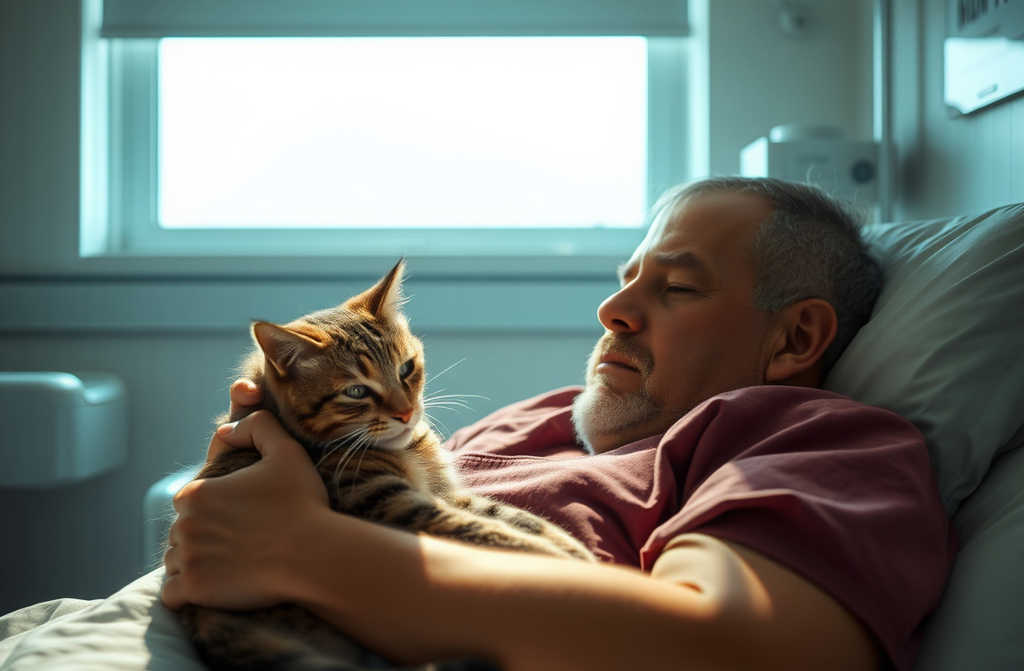
No one saw him enter. A skinny old tabby, with brown and white markings and one ear torn, must have slipped through the half-open sash window of Dads hospital room312without a soul noticing. I wonder how long hed been there. It was only when the night nurse, this gentle-eyed woman called Mrs. Simpson, returned with the medicine, that she found the animal sprawled on Dads coverlet, a small paw reaching out and touching his cheek, as if the two were old friends.
She shrieked loud enough to wake the deadI can still picture the tray crashing to the floor with a metallic clatter. But the cat, unbothered, stared up at Dad, emitting a low, almost conversational purr. As Mrs. Simpson scrambled to move him, he gripped the blanket with iron claws. She pleaded, Come on, out you go! all while the situation threatened to tip from farce to disaster.
Thats when Dr. Edward Foster appeared, drawn by the commotion. Young but brilliant, with a reputation for innovation (and some say, unorthodox compassion), he halted Mrs. Simpson with an upraised hand. Wait, he murmured, studying Dads ashen face intently. Look at his cheek.
A single tearimpossible, the doctor whisperedwas trickling down Dads right cheek. People in deep vegetative states dont shed emotional tears. The doctor quickly checked Dads pupils; no response. Yet the wet line glistened on the pillow, as undeniable as a miracle.
I have to call the family, the nurse announced in a daze, already dialling. All through this, the tabby had started meowing, faint but insistent, as if calling someone home.
I was the one who answered the call, though it took all my will to do so. I considered ignoring itavoiding another sleepless night filled with regretbut a tug in my chest made me pick up. Miss Charlotte Harris, please come immediatelysomethings happened to your father, Mrs. Simpson said, urgency in her voice. Even after all my anger and old wounds, I felt as if Id been punched. Is he gone? I croaked. No. But its urgent. Please come.
I drove through the silent city, red lights stretching endlessly, memories swirling. Had it been three weeks since Id last visited Dad? Four? I hardly knew any more. When I burst into his room, breathless, I froze at the sight: a battered tabby nestled at my fathers side, purring as if it was on a mission. AndimpossiblyDads face was turned towards the cat.
Whats going on? I demanded. Dr. Foster explained, Charlotte, I know this sounds bizarre, but your father reacted to this cats arrival. He cried. And lookhis heads turned towards it. Just this morning, it wasnt. Dazed, I looked at the tabby, who held my gaze with remarkable green eyes. Recognition flickered in my mind. I know that cat, I whispered. The doctor caught the edge in my voice. You recognise him? I nodded, piecing the memory together. Years ago, my father had taken to feeding a stray cat outside the companys loading bay. Id thought it just a small act of charity, but now…
The doctor nodded thoughtfully. A deep emotional link, perhapssomething powerful enough to break through. I slumped down by the bed, watching in disbelief as the cat continued purring, filling the sterile space with unlikely comfort. How long has he been like this? I asked. About two hours, the nurse replied, since we found him. He wont leave. Weve tried. He just clings on.
Strangely, I felt a sort of peace settle over Dads face, one I hadnt seen in years. Let him stay, I said, shocking myself. If this is helping, let him remain.
The following days became quietly surreal. The hospital staff, once resigned and businesslike, began leaving out bowls of food and water in the corner for Mr. Whiskersthe nickname caught on fast. Every morning, through the same window, hed leap onto Dads bed and settle by his side, purring away. I found myself staying longer and longer, watching the impossible scene with a kind of awe.
Eventually, curiosity nudged me to ring Mrs. Margaret Dawson, Dads loyal secretary. If anyone would know about this cat, itd be her. We met in a café near the hospital. She arrived on time, her grey hair neatly knotted, spectacles glinting. When I shared news of the cats return, her face shifted from shock to nostalgia. A battered old tabby with a torn ear, you say? Your father was devoted to him, she confided. Every day, before starting work, hed nip outside, a bag of biscuits in hand, and sit chatting to that cat for twenty minutesoffloading worries, regrets. That animal was as much a confidante as any friend.
Suddenly, all those years of distance between me and Dad felt heavier. Hed revealed himself to a stray but rarely to me. Why do you think he could talk to the cat, but not us? I asked quietly. Mrs. Dawson took off her glasses, polishing them with deliberate care. He was a complicated man, Charlotte. The business, the fortuneit came at a cost. He lost touch with what mattered and was too proud to admit it. With an animal, theres no judgment. Just peace.
That evening, I found my uncleJohn Harrisarguing with Dr. Foster. This is a joke! A stray in a critical care ward is a health hazard, he bellowed. Sir, Mr. Harriss condition improved after the cat began visiting, Dr. Foster argued. Weve observed subtle but consistent changes. Im in charge of the family business now and I insist its removed! John thundered. I shut the door behind me. Youre not in charge, Uncle. Im his daughter and I say the cat stays. His face burned red with fury. Now you show upbarely a visitor for weeks, but for a cat, suddenly the model daughter. That stung, but I held my ground. He stays.
John turned on his heel, muttering threats about the company. What was driving him, beyond concern for Dad? I wondered, alarmed.
The next days, I dug deeper into Dads life. I met old employeeslike Mr. Samuel, the janitor who spoke of Dad secretly funding his sons college fees, and Mrs. Clark in accounts, who told me Dad had a special fund for staff in trouble. There was so much more to Dad than the tough, silent figure Id resented. Still, hed kept it hidden, terrified of seeming vulnerable.
Then disaster struck. A thunderstorm rolled over London, winds rattling the hospital windows. The cat became restless, yowling at the sky. Before anyone could stop him, he leapt out the window and vanished into the raging rain. We searched the next dayno sign. Soon, Dad deteriorated, his vital signs slipping. Its as though hes given up, Dr. Foster confided.
The next morning, I refused to sit idle. I scoured every street, calling, searchingsometimes in posh areas, sometimes down forgotten alleys. People stared at mewell-dressed and desperate for a straybut I didnt care. Finally, in a drizzly lane, I heard a faint mewl. There, half-sheltered beneath some bins, was the poor creature, wounded and shivering beside an elderly woman.
Please help, she called, I found him yesterday, looks to have been clipped by a car. As I knelt to gather the cat, recognition struckher lined face, her soft accent. Im AliceAlice Thompson. Used to work for your family years ago. Memories flooded back. Shed cared for me as a child and vanished abruptly at fifteen. Mum had always been tight-lipped about her dismissal.
I bundled Mr. Whiskers in my coat and rushed him to the nearest veta kindly chap named Dr. Elliot. Broken leg, malnutrition; hell need surgery, several days inwill cost about three thousand pounds altogether. I didnt flinch; how could I, after all this? Do everything you can, please.
As we waited, Alice finally told me the truth. Shed discovered my mother and Uncle John plotting to siphon off company funds behind Dads back. Shed told him and was quietly forced outblackmailed and given hush money, but devastated all the same. He tried to apologise. Wrote letters, called. But I was too hurt to answer. The hospital, the storm, the strayso many threads, now tangled in a new tapestry.
Once the cat was mended and released, I smuggled him back into Dads hospital room. As soon as he flopped onto the bed and began to purr, Dads fingers twitched. I sobbed with relief as Dr. Foster checked his statsshowing faint but definite signs of improvement, moving his head, fluttering his eyelids.
In those stretching days, I uncovered old documents Dad had left with his solicitorMr. Duncan, an upright, silver-haired man whod known Dad before anyone else. Your father asked me to hold these in trust. He wanted to donate half his fortunemillions, Charlotteto charity: schools, hospitals, community centres. But he never told your uncle or mother, convinced theyd fight him. When Uncle John learned of my new-found authority, he tried to have Dad declared mentally incapable to gain control of the companies. I refused. As the truth about his embezzlement started to surface, John grew desperate. When confronted, he confessedbitter, envious, aching to escape Dads shadow. Dad simply whispered, I forgive you, but the money goes back, and you need to leave.
With Dad slowly regaining movement, we set a new course. He declared his intention to proceed with the charitable trust, and I, now trustee of the family companies, worked to turn the business into something more humanewell-being programmes, an open-door policy, community outreach.
We converted part of St. Bartholomews into a therapy unit for animal-assisted recovery. Mr. Whiskers, now universally beloved, led the way, curling up beside children suffering through treatment, lonely elderly patients, even stressed staff. The effect was remarkablepeople smiled, families reconnected, hearts mended.
My father transformed, too. He let Alice back into his life, not as a servant but a friend, and reached out to estranged staff and family alike. John returned every stolen penny and moved away to rebuild his life in Devon, sending peaceful, grateful letters.
When Dad finally hosted a celebration to launch the new animal therapy centre, he held Mr. Whiskers on his lap. This little cat taught me more about humanity than all my years in business, he told the gathered crowd. He reminded me that presence, love, and forgiveness matter more than wealth or pride. He hugged me, and I knew this time he truly meant it.
After many happy years, Mr. Whiskers passed quietly, curled in Dads lap as ever. We mourned him with a simple grave beneath a cherry tree, inscribed: Mr. Whiskers, who taught us love. His legacy lingered. The therapy centre thrived, new initiatives blossomed. As for me, I found not just my father but myself anew.
Sometimes, I think about the unlikely sequence of small miraclesa tear, a purr, a stubborn animals devotionwhich changed us all. Dad once told me, in a quiet moment, It wasnt a miracle from on high. It was a simple, stubborn connection, the sort that makes us human. And I believe him.
The world remembers Richard Harris now not for the empire he built or the pounds he made, but for the lives he changedthe children he helped, the bridges he rebuilt, the love he dared to give and receive, all because a scruffy tabby slipped unnoticed into a room and reminded us what really matters.

Our Neighbor Loved Blasting Rock Music at 2 AM, So I Bought My Son a Violin and We Started Practicing Scales Right at 8 in the Morning, Just as the Neighbor Was Finally Getting to Sleep
Every night at half past two, the ceiling above my bedroom would come alive with a suspicious amount of activity....


My Father Abandoned Us, Leaving My Mum Buried in Debt—Since Then, I Lost My Right to a Happy Childhood
When I was ten years old and my younger brother was just three, our dad walked out on us. Hed...


My brother and his family wanted to settle in London at my expense, but I made sure they understood from the start that this wasn’t going to happen!
My brother and I have an age gap of six years, with him being the elder. Three years ago, he...
A Coworker Tried to Dump Her Reports on Me, So I Forwarded Her Request to the Manager: “Please Help Mary, She’s Struggling”
Today was another one of those days when my patience in the office was really put to the test, and...


No One Will Ever Forget My Son’s Wedding: Two Shocking Secrets Revealed
My son has just recently gotten married. Of course, before that, he brought his girlfriend over several times so that...


Jack discovered that his colleague’s wife was pregnant, and instantly felt uneasy—after all, he had a good reason for feeling uncomfortable.
When Jack arrived at work, he was taken aback. The staff were having a celebration. Is there a special occasion...


“Wouldn’t You Like to Have a Daughter? I Could Be Your Daughter, If You’d Like.” The Girl Joined Our Family On Her Own
This story takes place 15 years ago. A girl at the orphanage looked up at me with her bright green...


A Friend of Mine Is 35 and Has Never Worked—Now He’s Running for a Top Management Position with a High Salary
Theres this woman I went to school withlets call her Charlotte. Charlotte was, in a word, the star of our...