
З життя
And Barnaby sat by the gate, waiting. Day after day. A week went by… The first snow fell — and still he sat. His paws grew cold, his belly rumbled from hunger, but he kept waiting.

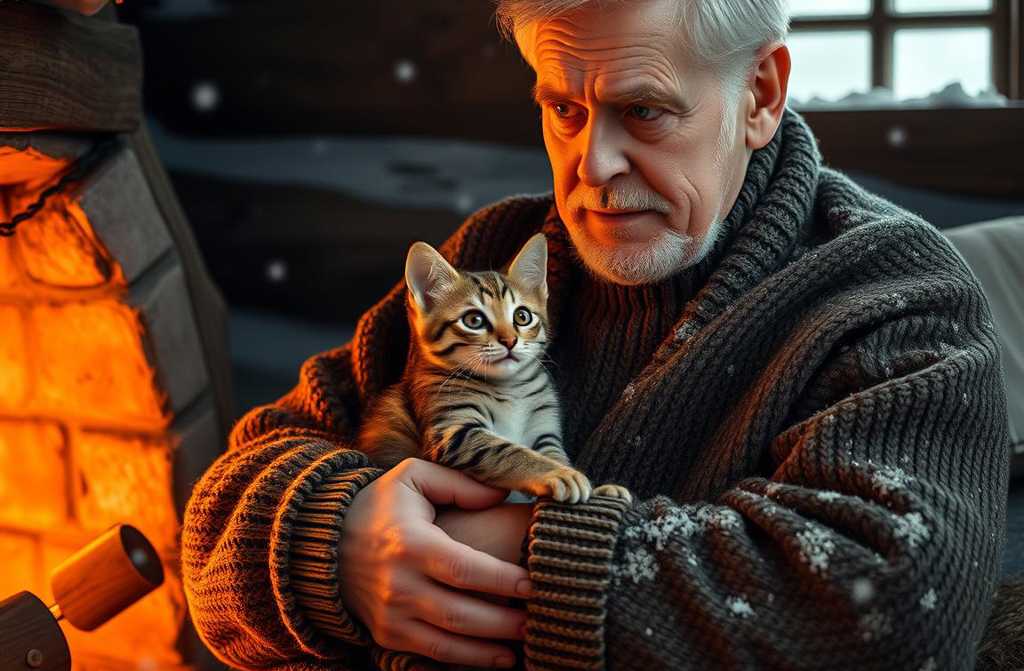
Stripes sits at the gate and waits. One day. Two. A week The first snow falls he still sits. His paws are freezing, his stomach rumbles with hunger, but he keeps waiting.
People find him early in spring, in April. The snow still clings to the shady corners, but sunny patches already show tender shoots of green. A tiny greywhite kitten curls up against a warm pipe behind the corner shop, trying to heat itself.
Mum, look! a sevenyearold girl named Rosie shouts, eyes bright. A kitten!
Her mother, Margaret, twists her face and presses her lips together. Lets keep going, Rosie. Hes probably dirty and full of fleas.
But Rosie already crouches down and holds out her hand. The kitten doesnt bolt, it only lets out a plaintive squeak.
Please, Mum! Lets take him home! she pleads.
No, and no again! We rent a flat and pets arent allowed! Margaret says firmly.
Susan, walking by, stops when she hears the argument. She looks at the little creature cute, trusting, and Rosie is already in tears.
Where were you going to take him? Susan asks.
Home Rosie sniffles. But Mum wont let us.
Susan thinks for a moment. Her countryside cottage has a mouse problem. A tiny cat could grow into a fine hunter.
You know what, she says gently to Rosie, I have a cottage, big with a garden. The kitten would be happy there.
Rosies face lights up.
Really? What will you call him?
Stripes, Susan decides quickly. Hes a striped one.
So the kitten comes to their home. Greywhite, amber eyes, astonishingly trusting. The moment anyone pets him, he starts to purr and presses his little nose against the hand.
He turns out to be an agile mouser! Within a week he clears the garden of every rodent. The owners are delighted its both useful and pleasant.
Stripes gives his all. Every Saturday he meets them at the gate, sleeps at their feet as if he knows this is his family, his life.
It feels like this will last forever.
But autumn changes everything. In November Susan and her husband Mark come to the cottage for the last time to shut it down for winter.
What will we do with Stripes? Susan asks, packing cans into a bag.
Nothing, Mark waves off. Hell manage. Cats belong outside, they survive the winter on their own.
And they leave.
Stripes stays at the gate, waiting. One day. Another. A week.
The first snow falls again. His paws are icy, hunger twists his belly, yet he still sits. They promised to return. They will, he believes.
But his strength dwindles, and with it his hope.
A hoarse voice calls out one afternoon. Hey, little fellow, you frozen through?
Standing above him is Arthur Bennett, a neighbour from the next plot. A retired man who lives alone on his cottage for the winter. His hands are warm, and the scent that comes from him is not cold or fear but something solid and homelike.
Come inside with me, the old man says softly. Youll warm up.
Stripes follows. In that instant he understands a simple truth: not everyone is the same.
Arthur lives at an unhurried pace. At sixtyplus he no longer rushes anywhere. His children have grown and moved away, his wife died three years ago. He remains alone with his cottage and memories.
Wintering here feels right: the city is cramped, neighbours are strangers, but here there is silence, snow outside the window, and the comforting crackle of the fireplace.
Arthur wraps Stripes in an old sweater and brings him indoors.
Well then, mate, he mutters, setting a pot of milk on the stove, tell me how you ended up out there in the cold?
The cat stays silent, his huge amber eyes full of sorrow that tightens Arthurs heart.
Got it, Arthur nods. You were abandoned. People God, forgive them.
In the first days Stripes hides, tucking himself behind the stove, eating only when Arthur isnt looking, as if waiting for a trick.
Arthur doesnt hurry him. He simply leaves a bowl of food down and talks in a low voice:
Heres some porridge. Not a feast, but itll keep you alive. No need to be shy.
Or:
The snows deep good thing were indoors, isnt it?
After a week the cat grows bolder. He starts eating right by Arthur, then comes closer, and a few days later he hops onto his lap.
Look at that, Arthur laughs. You finally decided! Lets get to know each other proper.
He scratches Stripes behind the neck, and the cat purrs, first timidly, then louder, more confident.
Thats the spirit, Arthur says. Now everything will be fine.
Life settles into a new rhythm. Each morning Arthur wakes to find Stripes waiting by the bed. They share breakfast. By day Arthur reads the newspaper while the cat perches on the windowsill.
Sometimes they step out into the garden together: shovelling snow, clearing paths. Stripes darts after Arthur, splashing through drifts, playing with the flakes.
Youve forgotten how to play, Arthur chuckles, Dont worry, youll pick it up again.
Evenings are full of talk about life, his grownup children, and a cat named Murzik who died a year ago.
Murzik was a good cat. Loyal. Fifteen years with me. When he left, I thought Id never have another. It hurt too much.
Stripes listens, purring as if he understands every word.
By New Years, he is fully settled. He sleeps at Arthurs feet, greets him at the door when he returns, even catches a mouse once and proudly brings it to his owner.
A proper hunter! Arthur exclaims. But no need for more weve got enough food.
Winter rushes by. February turns to March.
One crisp morning a car engine rattles outside the gate.
Stripes stiffens and darts to the window. Arthur peers out, eyebrows knitting.
Theyve arrived, he says lowly. Your former owners.
From the vehicle step Susan and Mark, looking relieved and chatty as they survey the garden.
Wheres our Stripes? Susan calls loudly. Come here, you little mouser!
The cat shivers, pressed flat against the glass.
Dont you want to go with them? Arthur asks quietly.
Stripes looks at Arthur, and in the old mans yellow eyes the answer is clear. He knows without words.
Alright, Arthur says, its obvious. Theyll take you back, but they think you still belong to them.
A halfhour later the door rattles with loud knocks.
Arthur Bennett! Susans voice shrieks. We know the cat is with you! Get him out this instant!
Arthur rises slowly from his chair. Stripes bolts under the bed, curling into the far corner.
Stay quiet, the old man whispers. Dont show yourself.
The door swings open. Susan stands firm, Mark trailing, looking embarrassed.
Good day, Arthur replies dryly.
Wheres our cat? Susan demands. The neighbours said youre keeping him!
What cat? Arthur asks calmly.
Dont play games! Greywhite, Stripes. We left him in autumn, thought hed manage, and now hes with you.
You left him? Arthurs eyes harden. In November? In the frost? Out on the street?
Mark stammers, Well a cat should survive, right?
Survive? Arthur steps forward. A house cat out in winter? Do you realise what youre saying?
Enough preaching! Susan snaps. Were here for the cat. We need him; the mouse problem is back. Return him.
No, Arthur answers shortly.
What does no mean? Susan huffs. Hes ours!
Yours? Arthur croaks a laugh. Where were you when he was trembling at the gate, starving? Where were you when I dragged his halfdead body inside?
Mark murmurs, We didnt know
Didnt know or didnt want to know? Arthurs voice rises. You pampered him in summer, then tossed him out in winter like old junk!
Who are you to lecture us? Susan snaps. The cat is ours, and if you dont give him back
What then? Take us to court for an animal you abandoned to die? Arthur retorts.
At that moment a familiar face appears at the foot of the gate. Its Martha Jones, the nextdoor neighbour.
Oh, youve finally returned? she says, squinting. And you want the cat back?
Of course! Its our cat! Susan insists.
Yours? Martha smirks. And who fed him all winter? Who tended to him when he fell ill?
Mark fidgets, We didnt ask
Exactly, Martha cuts in. You didnt ask because you didnt care! Summer toy, autumn trash!
Other neighbours gather, forming a small crowd. Most side with Arthur.
Your conscience is gone, Mrs. Peters declares. Abandoning a creature in the cold!
Enough arguing, Mr. Clarke waves his hand. Stripes belongs to Arthur now. Fair enough.
What if they try to force us? Martha asks nervously.
Let them try, Arthur replies flatly.
Susan glowers at everyone, This isnt over! She storms back to the car. Mark follows, head down.
No one sees them again. Whether by guilt or by the sheer futility of the fight, the neighbours stand firm, and Stripes has clearly shown where his true home lies.
By summer, Susan and Marks garden is overrun with mice.
Just as we thought, Mr. Clarke mutters, passing by, they wanted a working cat and got a mouse kingdom instead.
Arthurs life brightens. He greets each morning with a cheerful Good morning, Stripes, boils porridge, buys fresh milk.
Stripes thrives: his coat shines, his eyes sparkle. He feels like the ruler of his little domain.
In July his grandchildren visit. They marvel at the cat, quickly becoming attached. The youngest, Lily, says as she leaves, Im glad you took him in, Dad. You both look happy.
Yes, Arthur smiles, watching Stripes wave a paw at the departing guests, very happy.
When winter returns and the first snow falls the same snow that once almost ended him he darts out into the garden, chasing flakes, no longer fearing the cold.
Thats how it should be, Arthur says, smiling at the window, everythings right now.
In spring, when the last drifts melt, a For Sale sign appears on Susan and Marks property. Stripes walks past, indifferent. He has more important things to do like waiting for Arthur to return from his earlymorning fishing trip.

Our Neighbor Loved Blasting Rock Music at 2 AM, So I Bought My Son a Violin and We Started Practicing Scales Right at 8 in the Morning, Just as the Neighbor Was Finally Getting to Sleep
Every night at half past two, the ceiling above my bedroom would come alive with a suspicious amount of activity....


My Father Abandoned Us, Leaving My Mum Buried in Debt—Since Then, I Lost My Right to a Happy Childhood
When I was ten years old and my younger brother was just three, our dad walked out on us. Hed...


My brother and his family wanted to settle in London at my expense, but I made sure they understood from the start that this wasn’t going to happen!
My brother and I have an age gap of six years, with him being the elder. Three years ago, he...
A Coworker Tried to Dump Her Reports on Me, So I Forwarded Her Request to the Manager: “Please Help Mary, She’s Struggling”
Today was another one of those days when my patience in the office was really put to the test, and...


No One Will Ever Forget My Son’s Wedding: Two Shocking Secrets Revealed
My son has just recently gotten married. Of course, before that, he brought his girlfriend over several times so that...


Jack discovered that his colleague’s wife was pregnant, and instantly felt uneasy—after all, he had a good reason for feeling uncomfortable.
When Jack arrived at work, he was taken aback. The staff were having a celebration. Is there a special occasion...


“Wouldn’t You Like to Have a Daughter? I Could Be Your Daughter, If You’d Like.” The Girl Joined Our Family On Her Own
This story takes place 15 years ago. A girl at the orphanage looked up at me with her bright green...


A Friend of Mine Is 35 and Has Never Worked—Now He’s Running for a Top Management Position with a High Salary
Theres this woman I went to school withlets call her Charlotte. Charlotte was, in a word, the star of our...