
З життя
And They Say He Brings Joy to the People

Emily was driving home from her country cottage late in the evening. She had set off for the road just as dusk fell, letting the car crawl along the longest, outer ring road instead of the usual shortcut. If she didnt have to work the next day, she would have stayed overnight at the cottage.
Why was she in no hurry? Because she didnt want to go back inside at all she didnt want to see her husband.
A quiet voice inside her had long warned Emily that the roof under which she and James lived wouldnt shelter them much longer. Their relationship had grown cold and tense, often exploding into arguments.
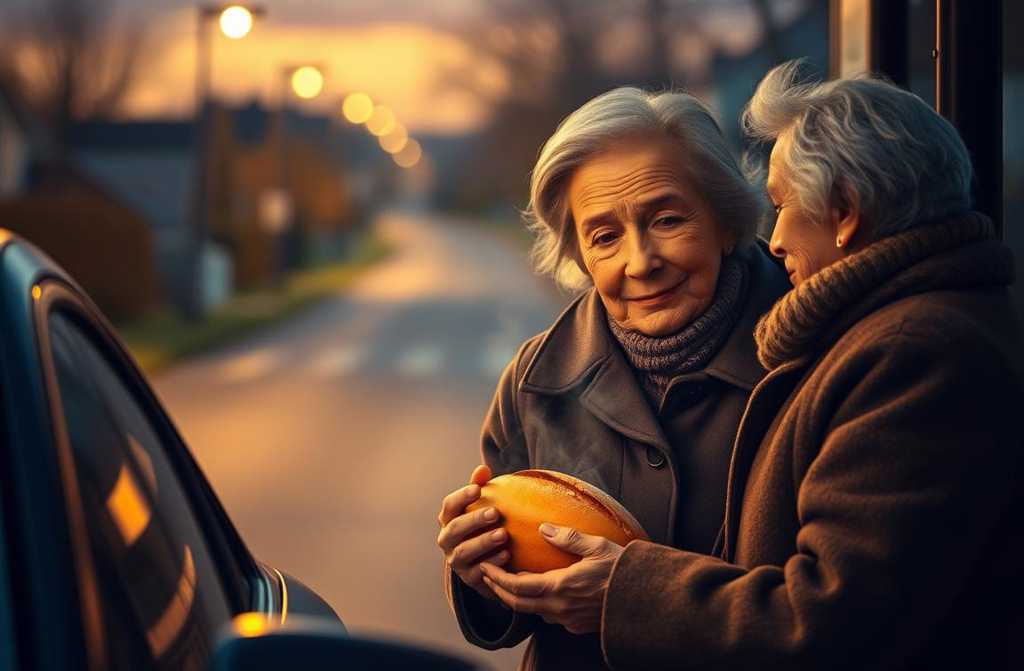
She kept her eyes on the road, thinking about their strange, unhealthy marriage. The ring road wound through a tiny village called Littlebrook. As she slowed for the villages bus stop, the headlights caught a frail elderly woman clutching something wrapped in a cloth, pressing it close to her chest as if it were a newborn. The woman stared at the approaching cars with hopeful eyes, and Emily instinctively slammed on the brakes.
She parked, jumped out and hurried to the woman. Near the old ladys feet lay a wheeled basket.
Why are you standing here? Emily asked, concerned. Do you need help? Whats that youre holding a baby?
A baby? the woman blinked, embarrassed, then forced a smile. No, its not a baby its a loaf of bread.
A loaf? Emilys eyebrows shot up. What sort of loaf?
Homemade fresh from the oven I sell it.
How do you sell it? Where do you get it?
I bake it myself. My pension is tiny, so I supplement my income when money runs out. Some people buy it; they say it tastes wonderful. They even say it brings a bit of happiness.
Happiness, you say?
Im not sure why. One gentleman keeps buying it and insists it makes people happy. Maybe today itll work for you too. Would you like a fresh piece? Its still warm.
Emily realised the woman probably needed money badly, so she nodded. Yes, Id love a loaf. How much?
£5 for a whole loaf, the old lady said cautiously, watching Emilys reaction. Is that alright?
How many loaves do you have?
Ten. No ones bought any yet; I just arrived. How many do you want?
Ill take them all, Emily declared, turning for her car to fetch the cash.
No! I cant give them all away! the woman cried, frightened.
Why not? Emily asked, puzzled.
Because I think youre buying them not because you need bread, but to help me, the old lady whispered. What if someone else needs it? What if that gentleman returns and Im left with nothing?
Emily was taken aback by the simple honesty.
Alright then, how many can you sell?
Five Im not confident, the woman replied.
Maybe a few more?
No I cant youre buying out of pity. This bread is for eating, not charity, she said, shaking her head.
Emily smiled, fetched the money and a bag, placed five stillwarm loaves inside, and walked back to her car.
A minute later she set off again. The scent of fresh bread filled the cabin, overwhelming her. She tore off a generous slice, popped it into her mouth, and felt she had never tasted anything better.
Her phone buzzed. Seeing the callers name, she frowned and answered.
Emily, Jamess voice sounded irritable, stop by a shop and bring some bread home.
What? Emily glanced at the stillwarm loaves on the passenger seat. Why are you thinking of bread now?
Because weve got none! Not a crumb! And, as luck would have it, your friends are at the house!
Friends? What friends? Its almost night.
Ask them yourself. Your three university mates have plonked themselves in our kitchen, drinking tea and waiting for you.
Good grief Emily throttled the accelerator.
She pulled into the driveway about half an hour later, carrying the intoxicating aroma into the house.
Emily, you smell amazing! her friends shrieked, hugging her as they had done back at university.
James, catching the incredible scent, lunged for the bag, broke off almost half a loaf, brought it to his nose and stared at Emily in disbelief.
Where did you get such brilliant bread?
Where I got it, its gone now, she shrugged.
He retreated to the bedroom with his piece, while Emily stayed in the kitchen with the others. They spent the evening drinking wine, nibbling the unbelievably tasty bread, and venting about their husbands, each confessing that the men theyd married werent the ones theyd once dreamed of. A few tears were shed.
When it was time to leave, Emily handed each friend a fresh slice of the grandmothers loaf.
After the friends went out, Emily closed the door, slipped past the bedroom where James was already asleep, and tucked herself onto the sofa in the lounge to sleep.
The next morning something odd happened. As she was waking, James settled beside her on the sofa and, with a dry, ironic tone, announced,
Emily, I think I overindulged in your bread yesterday and had an epiphany. Were both fools.
You what? she whispered, halfasleep.
Were fools, love. We need to change. Im inviting you out tonight the restaurant where I first proposed.
Why?
Because I want to put things right. I think our love can still be saved. Ill be at work until six, then Ill wait for you there.
James left, and Emily felt the morning was strangely bright, as if spring had already arrived. She began to look forward to the evening date.
A call rang shortly after. One of her friends, breathless with excitement, said, Emily, can you believe it? My husband and I made up last night! We were about to divorce, but we ate your bread until threea.m., and it mended everything. Thank you!
What do I have to do with that? Emily was bewildered.
Later, the other two friends called, each telling how their marriages had unexpectedly turned around. The foolish words theyd spat out seemed suddenly harmless.
Emily went to the bread box, pulled out the remaining halfloaf, inhaled its fragrant scent once more, took a small bite, and felt a subtle taste of love a love that seemed to extend to everyone.
She realised that a simple loaf, given with a genuine heart, could soften hardened edges and bring people together. In the end, she understood that the smallest gestures often hold the greatest power to heal.



When the Key Turned in the Lock, His Heart Nearly Leapt from His Chest and His Soul Raced to Meet He…
When the key turned in the lock, my heart nearly leapt out of my chest, and it felt as if...


I Knew My Husband Was Having an Affair—So I Hired His Mistress at My Company and Everyone Called Me …
I knew my husband had a mistress. Instead of confronting him, I hired herI was called mad. When I stumbled...
Well, he was ugly and unwanted. So I threw him out. A mother’s heart nearly stopped. The father went outside to search for the child.
Once upon a time, there was an old woman named Edith who decided she wanted to do a good deed....
When I Was Visiting My Friend Alice, My Husband Suddenly Called Her. I Answered and Heard Something Astonishing. Here Is the Story of Our Relationship, Alice’s Recent Struggles, and an Unexpected Turn of Events
Six months ago, my friend Emily was left by her husband, and I did my best to be by her...


I Thought My Husband Was Supporting His Three Daughters From His First Marriage—But That Wasn’t the …
I used to believe that my husband supported his three daughters from his first marriage, that he fulfilled his duty...


Bride for Hire: The Wedding’s Off! At a Family Dinner, Polly Stuns Her Parents by Announcing She’s C…
A BRIDE FOR HIRE The weddings off! Emily announced over dinner, stunning her parents into silence. Her mum almost choked...


I Grew Up Trying Not to Disappoint My Mum – And Without Realising, I Started Losing My Marriage
I grow up always trying not to disappoint my mum and somewhere along the way, I start losing my marriage....


You Stay Home with the Little One—I’m Going Alone to My Brother’s Wedding Yesterday, my husband cam…
Stay with the little one. Ill go to my brothers wedding on my own. So, my husband came home from...