
З життя
At Just Three Years Old, Little Vitaly Was Left Without His Mother

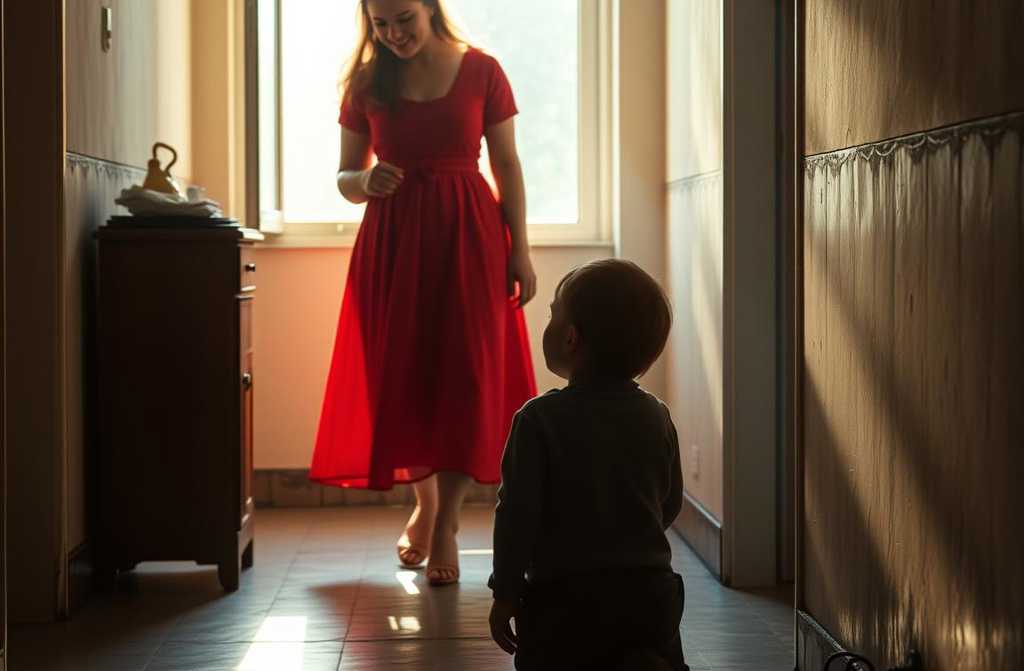
Victor is only three when his mother dies in his arms. She is thrown from a roaring motorbike that hurtles toward them, her red dress flaring like flame before darkness swallows the scene.
Doctors fight to save him; after weeks of uncertainty he finally opens his eyes. Everyone fears the moment he will ask for his mother, but Victor keeps silent. He stays mute for six months until, one night, he wakes with a desperate scream: Mum!
The memory returns in his dream, the red fire reigniting his eyes. By then Victor lives in a childrens home in a quiet Yorkshire village, unable to understand why he was placed there. He develops a habit of standing at the large window that looks out onto the main road and the high street, staring intently into the distance.
Why do you stand there all the time? grumbles the elderly housekeeper, Martha, sweeping the hallway with practiced ease.
Im waiting for Mum. Shell come for me, he replies.
Martha sighs, Oh, love, youre wasting your time. Come, lets have a cuppa. Victor agrees, but soon returns to the window, flinching whenever someone approaches the home.
Days turn into weeks, weeks into months, and Victor never abandons his post, hoping that one grey, joyless day a woman in a red dress will appear, stretch out her hands and say, At last Ive found you, my boy!
Martha watches the child with more pity than she feels for any other resident, but she can do nothing to ease his longing. Doctors, psychologists and volunteers all tell Victor he shouldnt wait so long, that he should stop staring out that window and engage in games and friendships.
Victor nods politely at the adults, agrees, but as soon as they leave he walks back to the sill. Martha has lost count of how many times she has seen his silhouette through the glass, how many times she waves goodbye as she leaves for work.
One evening, Martha finishes her shift, walks home across the railway bridge that arches over the tracksa place most people avoid. A young woman stands there, looking down, then makes a quick, almost invisible motion. Martha knows exactly what she intends.
Honestly, youre daft, the woman says, stepping closer.
What? the stranger asks, her eyes dull with habit.
Daft! What are you thinking, you reckless thing? Dont you know its a grave sin to deny yourself life? It isnt yours to decide whether it ends, the woman snaps.
If I cant go on any longer? the stranger shouts, desperation in her voice. If I have no strength left? I see no point in anything!
Then come with me. I live just beyond the footbridge. We can talk there. Theres no point standing here. Martha slips away quietly, breath held, hearing the womans footsteps fade behind her, relieved that she escaped in time.
Whats your name, you fool? the woman asks.
Poppy, she answers.
Poppy my daughter was called that. She died five years ago, burned away after a long illness, leaving me an orphan. I have no grandchildren, no children, no husband. Im called Martha. Come in, my flat isnt a palace but its mine. Ill change, set a table, well have dinner and tea, and everything will settle. Poppy smiles gratefully at the elderly lady.
Thank you, Aunt Martha, she says.
Dont mention it Oh, dear, lifes always hard on a woman. So many tears, so much suffering. But throwing yourself into extremes isnt the answer.
Dont get me wrong, Poppy says, warming her hands on a steaming mug of Earl Grey, Im strong. It just feels like Ive gone mad.
Poppy grew up in a nearby village and knew no hardship until she was seven. Her parents loved her dearly, being an only child, but everything collapses when her father abandons them, revealing a second family with other children. Her mother, unable to bear the blow, turns to heavy drinking and vents her anger on Poppy.
In revenge on the husband she never formally divorced, her mother starts bringing strange men home, neglects the house, and leaves all responsibilities to the young daughter. Soon the mothers drinking companions strip away whatever remained of her husbands support.
Poppy takes odd jobs for neighboursraking gardens, running errandsand is paid in food. She feeds her wayward mother without receiving any gratitude. She no longer expects kindness, knowing a stable family with her mother will never materialise.
Her father never calls; rumours suggest he moved abroad, and Poppy accepts she will never see him again.
Poppy endures countless humiliations. Poverty prevents her from having friends, and local lads avoid the daughter of the village drunk, leaving her in profound loneliness. Her village is relatively affluent; families like hers are rare, making her an outcast from a young age.
One night, a drunken friend of her mother bursts into Poppys small bedroom. She barely manages to push him out the window, escaping a terrible fate.
She spends the night in a dilapidated shed, and at first light, when silence returns, she slips back inside, gathers her documents, pulls a hidden stash of cash, packs a few belongings, and flees without looking back, vowing never to return.
That evening her father, Ian, arrives to meet his daughter. Horror grips him at what he sees; he searches the village, questioning neighbours, but no one knows anything. Finally, Ian learns how hard his daughters life has been. He weeps in his expensive car, cursing himself for returning so late.
Ian had been a longhaul truck driver. On a route he meets a wealthy unmarried woman, Gillian, who repeatedly hires his transport firm, always asking for Ian personally. She likes his demeanor and eventually convinces him to stay. Over several years they have two sons, and then Gillian declares she will leave the country.
Do you want to live with us? Come with me. If not, go back to your wife. I love you, Ian, and Ill struggle without you, but I wont force you. Choose, she says.
Ian chooses her. He feels guilty leaving his daughter, but he no longer wants to juggle two families. Poppys mothers endless complaints and jealousy exhaust him, as does her reliance on booze.
One day, while Poppy is at school, Ian comes home to find his wife with another man. This is the final straw. When Poppy returns, she finds only her drunken mother, who tells her that Ian has abandoned them forever. Poppy refuses to go back home.
She moves to the city, seeking work. Luck brings her a room from a kind, solitary old lady named Zinnia. Poppy pays three months rent upfront. When the term ends, Zinnia offers Poppy a place to stay in exchange for caring for her. For five years Poppy looks after Zinnia, who becomes bedridden in her last two years. When Zinnia dies, Poppy, tearful, discovers she has inherited the modest flat on the towns outskirts.
Later, Poppy meets a young banker named Luke. She believes fate finally smiles on her. Two happy years pass until Poppy catches Luke with another woman. He refuses to apologise, evicts his lover, then violently assaults Poppy, sending her to the hospital.
Poppy never gets to tell Luke shes pregnant. She loses the baby; doctors say shes unlikely to conceive again. She now has no family, no husband, no home. Luke sells the flat she inherited and buys a flashy car. Poppy, though heartbroken, accepts it because she still loves him.
Leaving the hospital, Poppy wanders aimlessly until she reaches a railway bridge. Martha, who has been listening patiently to Poppys story, finally speaks.
Well, thats something, she says. But you still have to live, you know? Youre young, you have your whole life aheadlove, happiness. Stay with me for a while; I work all day and only get home at dusk.
Poppy stays with Martha for two weeks. A new police constable, Greg, arrives to meet residents of the neighbourhood. Martha isnt home, so Greg talks to Poppy, promising to return when the housekeeper is back. He does, several times, and soon becomes a trusted friend.
One day Greg calls Poppy.
Do you know Ivan Savelyev? he asks.
Yes, thats my father, she replies.
Hes been looking for you for years.
Greg tells her that her father has finally found her. He buys her a decent flat, opens a solid bank account, helps her secure a respectable job, and promises to visit more often.
Poppy decides to bring gifts to Martha. She arrives to find the old woman ill, feverish and weak.
Somethings taken a turn for me, dear! Martha croaks. Im scared I wont pull through.
Dont, Aunt Martha. Ive called an ambulance; theyll be here soon. You trust me, dont you?
I do. Listen, I work at the childrens home. Theres a boy there, Victor. He just turned five. I want to leave my flat to him, write it into my will, let it pass to you.
What boy? How will I recognise him?
Youll know. Hes the one whos been standing by the secondfloor window for two years, waiting for his mother in a red dress
The ambulance rushes Martha to the hospital, then later to a care home. Poppy pays for everythingtreatment, a holiday, everything. When Martha returns to work, the window is empty; Victor has been adopted.
Stories swirl that his mother finally appears. One bright morning, as Victor keeps his vigil, a woman in a red dress steps onto the road. He clutches his heart, screams, Mum!
She looks straight at him, waves, and rushes toward him.
Mumaa! Victor cries, running forward, fearing she might leave him behind. She opens her arms, meeting him.
Poppy weeps, hugging the thin little body, determined to shield the child from any more sorrow. Time passes. Poppy and Greg live in a spacious house, raising Victor, who is now preparing for school and eagerly awaiting a younger brother. Martha, grateful beyond words, stays with them, and the quiet happiness of their family rests on the love they share each day.



I’ll get married one day, but definitely not to this handsome guy. Yes, he’s wonderful in every way—…
I suppose Ill get married one day, but never to that handsome fellow. Yes, hes quite the charming bloke in...


VIC, PLEASE DON’T TAKE IT PERSONALLY, BUT I WANT MY DAD TO WALK ME DOWN THE AISLE — HE’S MY REAL FAT…
JAMES, PLEASE DONT TAKE THIS THE WRONG WAY. BUT I REALLY WANT MY DAD TO WALK ME DOWN THE AISLE....


A Parent’s Love: Elly’s Heart-Stopping Taxi Mix-Up, Grandparent Hugs, Christmas Comforts, and the Fi…
Parental Love Ellie breathed out, tired but content, as she settled her children into a taxi. Millie was four, and...


The Day I Went to Get Divorced Dressed as a Bride
The day I went to get divorced, dressed as a bride. When my husband told me he wanted a divorce,...


I Discovered My Son Had Abandoned a Pregnant Woman—So I Paid for Her Lawyer Myself When I Learned W…
I found out my son had abandoned a pregnant woman. I paid her solicitors fees myself. When I learned what...


I Miss Him. I’ve Never Missed Anyone Like This—Even Though I Wasn’t Truly Happy With Him and There W…
I miss him. Ive never missed someone like this before. And I dont even know whyespecially when I never truly...


My Aunt Arrived for a Visit with Her Daughter and Son-in-Law, Bringing Expensive Wine and Meat—But M…
My mothers side of the family is quite large. She used to have six siblings, though only three are left...


My Mother-in-Law Called My Children Ill-Mannered, So I Banned Her from Ever Entering Our Home Again
Elbows! Who puts their elbows on the table like that? In polite company, youd have been booted out ages ago,...