
З життя
Aunt Rita: The Story of a 47-Year-Old Londoner, a Self-Confessed Cynic, Who Finds Unexpected Purpose and Family in Helping a Struggling Young Mother and Her Children in a Tower Block, Transforming Both Their Lives and Her Own

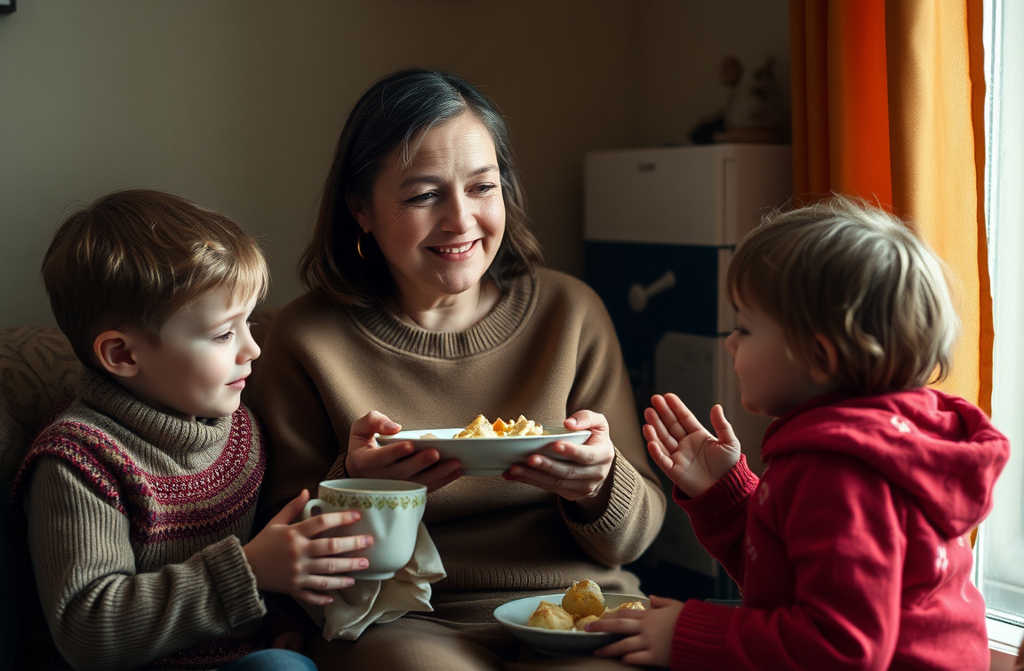
Aunt Rita
I am forty-seven years old. Just an ordinary womanone might say a bit of a plain Jane. Not particularly attractive, my figure nothing to write home about. Alone. Never married, nor do I desire to be. In my mind, men are much the same: creatures content to fill their bellies and sprawl on the sofa. Not that anyones ever offeredno proposals, no courtships, nothing. My parents, elderly now, live up in Newcastle.
Im an only child. No sisters, no brothers. There are some cousins, but I dont bother with them. Dont want to, really. For fifteen years, Ive lived and worked in London. Each day its the same routine: office, then home. I live in a typical block of flats, somewhere in a quiet suburb.
Im icy, bitter, and cynical; I don’t care for anyone, least of all children. Over New Year, I made my annual pilgrimage north to see the parents. This year, the same as alwaysthere and back, just the once. Returning home, I decided to clean out the fridge. Time to rid myself of ancient bags of frozen stuff: fish fingers, pies, what have you. Bought them once, didnt like them, and into the freezer they disappeared. I gathered everything into a box and set off to the bins. Called the lift, and there was a little boy inside, couldnt have been more than seven. Id noticed him before with his mother, sometimes carrying a baby. I remember thinking, What a messshes really landed herself in it! He stared at my box, eyes big as saucers. We stepped out; I headed to the big green bin, and he trailed behind. A timid voice: Can I have it? Its old, I replied. But then I thought, well, if he wants it, its not rotten at least. As I started to leave the bins, for some reason I turned back. He was carefully packing up the little food parcels, cradling them to his chest as if they were treasures. Wheres your mum? I asked. He told me she was ill, so was his sister. They couldnt even get up. I turned on my heel and went home.
Back in my flat, I put a lonely dinner on the hob. I sat and stared into space. I couldnt shake the image of that boy. I had never been one for pity or for helping others. But something compelled mequick as a flash, I gathered up whatever food I could find: some ham, cheese, a bottle of milk, biscuits, potatoes, onions, even cut a chunk of meat from the freezer. Out I went. By the lift, it struck meI had no idea which floor they lived on. Only that it was above mine. So I started at the top and worked my way down. Second try, the boy opened the door. At first, he looked puzzled, then, silently, stepped aside to let me in. The flat was incredibly sparse, but spotlessly clean.
His mother was curled up on the bed, baby beside her. On the table, a bowl of water with some old flannels. Clearly trying to bring down a fever. The little girl slept fitfully, her chest rattling. Medicine? I asked the boy. He showed me a battered tin of stale tablets, all out of date. I touched the womans headburning hot. Her eyes flickered open, blank. Suddenly she startled upright: Wheres Toby? I explained that I was a neighbour. I asked what was wrong with her and the baby, and then rang for an ambulance straightaway. While we waited, I gave her tea and ham. She ate greedily, not a word of protestshe must have been starving. How she managed to breastfeed was a mystery.
The medics arrived and examined them, scribbled out prescriptions aplenty for the little girljabs and all. I hurried to the chemist, bought everything on the list. Then a stop at the supermarketmilk, baby food, the works. On impulse, I picked up a ridiculous, lemon-yellow monkey toy. Id never bought a present for a child before.
Her name was Annie, twenty-six. Shed grown up in Readingwell, the edges really. Her mother and grandmother were both from London, but her mum married a man from Reading. Off they went. She worked in a small factory, he was a technician. When Annie was born, her father was killed in an accident at work, electrocuted. Her mum, left broke with a baby, lost her job. They started getting visitors, friends, and neighbours. Her mother spiraled into drinkingthree years and she was gone. The neighbours managed to track down Granny back in London, who took Annie in. At fifteen, when Annie was old enough, Granny told her everything. Mum dead from tuberculosis. Granny smoked like a chimney, spoke little, was stingy with affection.
At sixteen, Annie got a job at the local shopstocking shelves at first, cashier later on. A year later, Granny passed, and Annie was alone. When she was eighteen, she met a boy. He promised to marry her but bolted after she got pregnant. She worked up until she could no longer hide the bump, saving every penny she could, knowing there was no help from anyone. The baby came, and within a month, she was leaving him alone in the flat while she mopped stairwells for a bit of cash. Her daughter arrived in a terrible way. The shop owner, after Annie returned to work when her son got older, once raped her in the dark behind the shelvesand after that, again and again, threatening to sack her, saying shed never find another job. When he found out about the baby, he shoved £100 in her hand, told her not to come back.
Thats how it was. She told me all this on that very night. She thanked me, insisted shed repay me with cleaning or cooking. I waved it away and left. I didnt sleep at all. I lay there, turning things over in my mind. What was the point of lifemine especially? Why was I like this? I didnt visit my parents, rarely called them. Loved nobody. Felt pity for no one. Id squirreled away a tidy sum of money, yet there was no one to spend it on. And here, in the same building, lives torn up, children hungry, no money for medicine.
Next morning, little Toby turned up on my doorstep with a plate of piping hot crumpets and dashed off. I stood there, warmth seeping into my fingers, and felt as if something inside had begun to thaw. I suddenly wanted to cry, laugh, and eat, all at once.
Not far from the block is a little shopping precinct. The owner of the toy shop, after failing to muddle through my panicked requests for childrens clothes, agreed to walk home with me! I couldnt tell if she saw a chance for good sales or was moved by my sudden concern. Within an hour, we had four big bags crammed with clothes for both children. I threw in a duvet, pillows, sheets. I bought enough food to feed a small army. I even bought vitamins. I wanted to buy everything, anything. For once, I felt needed.
Its been ten days now. They call me Auntie Rita. Annie is handy with her handsthe flat now feels warm and homely. Ive started calling my parents. I text donations for sick children. I cant imagine living as I did before. Every day, after work, I dash home. I know someone is waiting for me. And this spring, were going up to Newcastleall of us, together. The train tickets are already booked.

Our Neighbor Loved Blasting Rock Music at 2 AM, So I Bought My Son a Violin and We Started Practicing Scales Right at 8 in the Morning, Just as the Neighbor Was Finally Getting to Sleep
Every night at half past two, the ceiling above my bedroom would come alive with a suspicious amount of activity....


My Father Abandoned Us, Leaving My Mum Buried in Debt—Since Then, I Lost My Right to a Happy Childhood
When I was ten years old and my younger brother was just three, our dad walked out on us. Hed...


My brother and his family wanted to settle in London at my expense, but I made sure they understood from the start that this wasn’t going to happen!
My brother and I have an age gap of six years, with him being the elder. Three years ago, he...
A Coworker Tried to Dump Her Reports on Me, So I Forwarded Her Request to the Manager: “Please Help Mary, She’s Struggling”
Today was another one of those days when my patience in the office was really put to the test, and...


No One Will Ever Forget My Son’s Wedding: Two Shocking Secrets Revealed
My son has just recently gotten married. Of course, before that, he brought his girlfriend over several times so that...


Jack discovered that his colleague’s wife was pregnant, and instantly felt uneasy—after all, he had a good reason for feeling uncomfortable.
When Jack arrived at work, he was taken aback. The staff were having a celebration. Is there a special occasion...


“Wouldn’t You Like to Have a Daughter? I Could Be Your Daughter, If You’d Like.” The Girl Joined Our Family On Her Own
This story takes place 15 years ago. A girl at the orphanage looked up at me with her bright green...


A Friend of Mine Is 35 and Has Never Worked—Now He’s Running for a Top Management Position with a High Salary
Theres this woman I went to school withlets call her Charlotte. Charlotte was, in a word, the star of our...