
Connect with us

З життя

“But I Told You Not to Bring Your Kids to the Wedding!” The doors to the reception hall slowly swung open, filling the foyer with a warm golden glow. There I stood in my wedding dress, clutching the hem ever so slightly as I tried to hide the trembling in my hands. Gentle jazz played in the background, guests smiled, and waiters set out glasses of bubbly—everything just as Arty and I had dreamt it would be. Almost. Just as I tried to steady my breath before stepping into the hall, tyres screeched outside. Through the glass doors, I watched as an old silver minivan came to a stop at the foot of the steps. The doors burst open, and out poured a noisy troupe: Auntie Gail, her daughter with her husband… and five children already tearing around the car. My heart sank. “Oh, please no…” I whispered. Arty moved closer. “They actually came?” he murmured, eyes locked on the spectacle. “Yes. And… with the kids.” We stood frozen in the doorway, meant to sweep elegantly into the room but instead stuck like two actors suddenly, hopelessly lost for lines on opening night. And in that moment, I knew: if I didn’t hold it together—well, the entire day would spiral. To understand how things got so absurd, we have to rewind a few weeks. From the moment Arty and I planned this day, we were certain about one thing: a quiet, intimate, cosy wedding. Just forty guests, live jazz, warm lighting, relaxed vibes. And—most importantly—absolutely no children. Not because we’re anti-kids. We simply dreamt of an evening without racing about, shrieks, juice spills, and awkward yet well-meaning parenting interventions. Our friends? No problem. My parents? Absolutely fine. Arty’s parents were a little surprised, but quickly accepted it. But then—extended family. Auntie Gail was the first one to call—a woman whose voice is set at maximum volume by nature. “Ina!” she snapped, skipping any pleasantries. “What’s this nonsense about no kids allowed at the wedding? Are you serious?” “Yes, Gail,” I replied calmly. “We want a peaceful evening so the adults can really enjoy themselves.” “Enjoy themselves without their own children?!” she practically shrieked, as if I’d declared children illegal across the land. “You do know what family means, don’t you?! We do things together!” “It’s our day. No one has to come, but that’s the rule.” Long, stony pause. “Well, fine, then. We just won’t come,” she huffed—and hung up. I sat holding the phone, feeling as though I’d just triggered a family disaster on the scale of a nuclear missile launch. Three days later, Arty arrived home wearing a thundercloud expression. “Ina… can we talk?” He peeled off his jacket. “What is it?” “Katya’s in tears. Says it’s a family outrage. Her three aren’t some wild monsters, apparently; ‘they’re people too’. And if the kids can’t go, neither will she, nor her husband, nor his parents.” “So… five less?” “Eight,” he corrected, slumping down next to me. “Apparently we’ve ‘broken with tradition’.” I just laughed—hysterical, brittle, ugly laughter. “Tradition?! The great family tradition of children tripping up the waiters at weddings?” Arty managed a weary smile. “Don’t say that to them. They’re on the warpath already.” But the pressure didn’t stop there. A week on, we were at his parents’ place for a family dinner—ready for a surprise. His grandma—sweet, soft-spoken, usually praying never to get drawn into family squabbles—suddenly piped up. “Children are a blessing,” she scolded. “Without their laughter, a wedding is empty.” I opened my mouth but Arty’s mum stepped in first. “Mum, enough!” she sighed. “Children at weddings equals chaos. You’ve always complained about the noise… how often did we have to fish them out from under the tables?” “But family celebrates together!” “Family respects the wishes of the bride and groom,” his mum said, steady as stone. If I could’ve applauded, I would have. But Mrs. Antonina just shook her head. “I still say it’s wrong.” That’s when I realised: the drama had reached nearly Game of Thrones level. And we, the bride and groom, were the royal couple everyone wanted to topple. The knockout came a few days later. Ring-ring. Uncle Michael—Arty’s most laidback, “not-my-business” relative—on the screen. “Ina, love,” he began in his gentlest tone. “Just a little thing… Olly and I wondered… why no children? They’re a part of us. We’ve always brought them along.” “Michael,” I sighed, “it’s just a quiet evening we want. No one’s being forced to come…” “Yes, I understand… but Olya says: no kids, then she’s not coming. And neither will I.” Eyes closed. Two more down. By this point, our guest list was basically on a crash celebrity diet—minus fifteen bodies and counting. Arty sat beside me, arm round my shoulders. “We’re doing the right thing,” he murmured. “Otherwise, it’s not our wedding.” But still, the drama churned on. One minute, his grandma would drop a guilt trip about “no children’s laughter—so bleak!” The next, Katya would post a tragic message in the family chat: “Sad that some people don’t want to see children at their own celebration…” And so—the wedding day. The minivan rolled up to the steps. The children spilled out, pounding the pavement in military-style formation. Auntie Gail clambered out after, fixing her hair. “I’m going to lose my mind…” I whispered. Arty squeezed my hand. “Don’t worry. We’ll sort it out.” We walked to meet them. Gail had already reached the top step. “Hello, my dears!” she sang, arms wide. “Forgive the late arrival. But, well, we just had to come. We’re family! Honestly, there was no one to mind the kids. But they’ll be ever so good. We won’t stay long.” “Good?” Arty muttered, watching the children already trying to peek under the wedding arch. I took a deep breath. “Gail… we had an agreement,” I said clearly, voice even. “No children. You knew about this far in advance.” “But a wedding is…” she began to protest. Then Grandma Antonina cut in. “We’ve come to wish you well,” she said evenly. “But children are part of family. It’s not right to leave them out.” “Mrs. Antonina,” I replied softly, “we’re grateful you’re here. Truly. But this is our choice. And if it’s not respected, I’m afraid we’ll have to…” I didn’t finish. “Mum!” Arty’s mum snapped, striding from the hall. “You’re ruining their day. Adults celebrate—children stay home. End of story. Let’s go.” Grandma was stunned. Auntie Gail froze. Suddenly, even the children went quiet—sensing the shift. Gail sniffed. “Fine. We didn’t mean to cause trouble. We just thought…” “You don’t need to leave,” I said. “But the children must go home.” Katya rolled her eyes. Her husband sighed. Two minutes of silence later—and they quietly shepherded the children back to the minivan. Katya’s husband got in, drove off, and the adults stayed. For the first time—by choice. Inside, soft candlelight, jazz, and gentle laughter set the mood. Friends raised their glasses. Gentlemen opened a path. A waiter handed us champagne. In that moment I knew: we’d done the right thing. Arty leaned over. “Well, my wife… I think we’ve won.” “I think so too,” I smiled. It was a perfect evening. We danced the first dance with no children swirling underfoot. No shrieks, no sticky cupcakes dropped, no Peppa Pig blaring from iPhones. Grown-ups chatted, laughed, and enjoyed the music. Much later, Grandma Antonina shuffled over to us. “Ina, Arty…” she said quietly. “I was wrong. Tonight was… lovely. Peaceful.” I smiled. “Thank you, Mrs. Antonina.” She sighed. “Old people cling to habits. But I see—you knew what you wanted.” Her words meant more than all the toasts that night. Near the end, Auntie Gail joined me, clinging to her glass like it was a shield. “Ina…” she whispered. “I overreacted. Sorry. We’ve just always done it this way. But today… it was beautiful. Calm. Grown-up.” “Thank you for being here,” I replied. “We rarely get time without the kids. Tonight… I actually felt like myself,” she admitted. “Makes me wish we’d thought of it sooner.” We hugged, finally free of the tension that had been brewing for weeks. When the night ended, Arty and I wandered outside under the soft glow of the lamps. He draped his jacket over my shoulders. “So, darling—how was our wedding?” “It was perfect,” I said. “Because it was ours.” “And because we stood our ground.” I nodded. That was everything. Family matters. Traditions too. But so does holding your own boundaries. If a bride and groom say “no kids,” it’s not a whim—it’s their right. And, it turns out, even the most stubborn family gears can shift—if you show you mean it. This wedding taught us all—and especially us newlyweds—an essential truth: sometimes, to truly save your celebration, you have to say “no”. And that “no” is what makes happiness possible.

Published

on

I distinctly said, dont bring your children to the wedding!

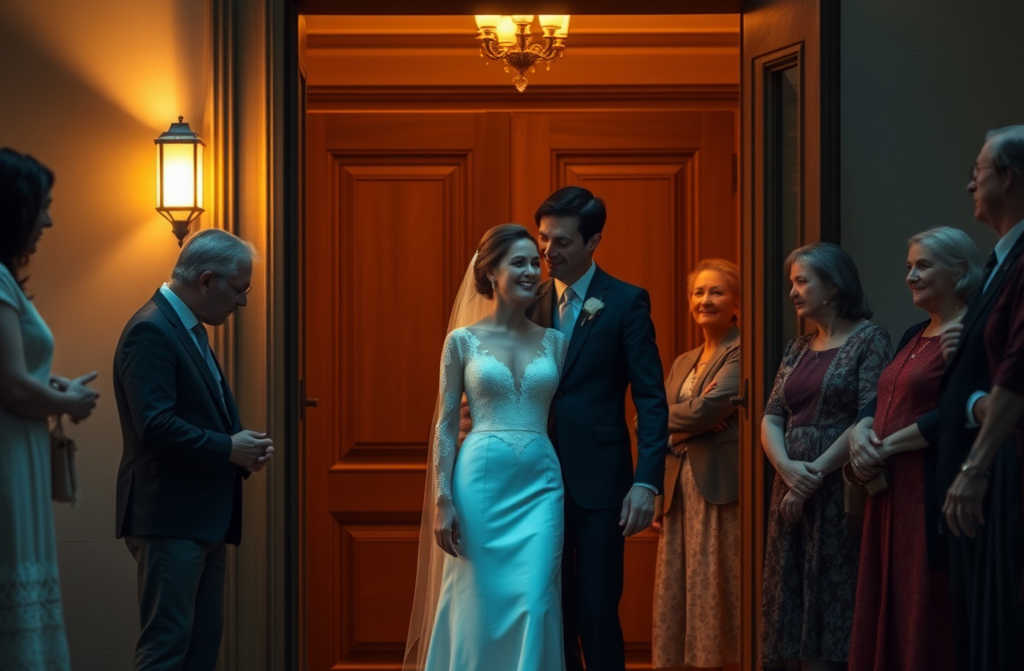
The doors of the reception hall creaked open, spilling warm honeyed light into the corridor as though the sunshine had been bottled. I stood there in a bridal gown, clutching at the soft folds, my fingers shivering ever so slightly. A dreamy melody drifted from somewhere distant. Guests beamed from candlelit tables. Waiters floated by with trays of fizzing champagne flutes. Everything felt exactly as James and I had dreamed.

Almost.

I sucked in a breath before our grand entrance, but a harsh squeal of brakes split the gentle hush outside. Through the frosted doors I saw it: A battered old blue Ford MPV chugging right up to the steps. The door flew open, disgorging a boisterous lotAunt Susan, her daughter and son-in-law, and five wild children tumbling onto the drive, already darting round the car like sprites set free.

My heart turned to sleet.

Not this, I whispered, desperation catching in my throat.

James sidled closer. They still came? he said, eyes on the chaos.

They did. And with the whole lot.

So we hovered in the threshold, posed frozen as two actors mid-play whod forgotten their lines at the big moment.

In the feverish haze of a dream, clarity suddenly struck: If I broke now, the day would splinter into anarchy.

To understand how we drifted into this surreal mess, youve got to float backwards, weeks before.

James and I were set on something understated and intimate. Just forty friends, gentle jazz, low golden lamps, an atmosphere as soft as velvetand absolutely no children.

It wasnt that we stamped our feet about children. Wed just longed for a night without dashes beneath tables, shrieking, aerial orange squash, and the embarrassment of managing other peoples rules.

Our mates were fine with it. My parents too. Jamess folks blinked, frowned, then conceded.

But the far reaches of the family tree

Aunt Susan rang first, her voice genetically set to public announcement.

Emily! she barked, forgoing any greeting, What nonsense is this about no children? Are you quite serious?

Yes, Sue, I said quietly. We just want a calm evening, for grown-ups.

A rest from children?! She reacted as if Id announced a ban on childhood itself. Family sticks together, you know! We do everything as one!

Its our day. No ones forced. Thats just the way it is.

A pause iron-heavy.

Well, then. We shant come, she snapped, and the line went dead.

I stared at my phone, the electricity in the room crackling, as if Id pressed the red button to launch a small apocalypse.

Three days later, James trudged in, gloom stitched right into his face.

Emgot a minute? he said, dropping his coat.

Whats up?

Its Charlotte. Shes in bits. Says its disgraceful, the whole family shunned. She swears her three arent monsters, theyre proper children. If the kids cant go, neither can she or William, or his parents.

So thats five less?

He winced. Eight, actually. Says weve broken sacred tradition.

A wild, choked laugh broke from mehalf sob, half giggle.

Whats the blessed tradition? Bringing children to weddings so they can upend all the canapés?

James managed a wan smile. Dont try that line with the family. Theyre touchy.

But the siege continued.

At Sunday roast with his parents, the real drama began.

Grandma Dorothysilent, church-mouse Dorothy who prayed no one remembered her name at gatheringslifted her head to speak.

Children are a blessing, she chastised, A wedding without them ischill and empty.

I opened my mouth, but Jamess mum swooped in.

Thats enough, Mum, she sighed, sinking into her chair. Weddings with children are chaos. You always said so. How many times did we rescue some little scamp under the table?

But families are meant to be together!

Families ought to honour the wishes of the bride and groom, she replied coolly.

I nearly clapped. But Grandma just shook her head.

I do think youre wrong. A frown congealed on her brow.

This was no longer just a squabble; it was turning into some great dynastic sagaJames and I the embattled sovereigns on the brink of overthrow.

The knockout blow landed just days later.

The phone buzzedJamess uncle, Simon. Mild, unflappable, strictly not my problem Simon.

Emily, hello, he cooed, voice soothing. Just a quick wordWhy no children, dear? Theyre part of us, arent they? Weve always come as one.

Simon, I sighed into the receiver, we only want peace for the night. No one need come if the rules a bother

Yes, yes. But listen, Olivia saysif the children arent invited, she wont come. Nor will I.

Slowly, inexorably, the guest list slimming like it had donned slimming pants and shed stones in a matter of hours.

James draped his arm round my shoulders.

Were right to stand firm, he said quietly. Otherwise, it isnt our wedding.

But the whispering never ceased.

Grandma would gently mention how without childish laughter, its all dreadfully dull. Charlotte penned a flouncy note in the family groupSad how unwelcome children are at some eventscasting a pall.

Thenwedding morning.

The Ford screeched to a halt by the steps. The children shot forwards, marching across the paving as if rehearsing a military display. Aunt Susan heaved herself out, hair escaping its badge-of-honour bun.

Ill lose my mind, I hissed.

James gripped my hand, sharing my nerves. Well manage, whatever happens.

Out we stepped.

Aunt Susan strutted onto the top step, flourished her arms like a stage heroine. Well! Hello, you two! Sorry were late. We had to come, thats what family means! Couldnt leave the children, of course. But theyll be absolute angels, dont you fret. Were only dropping in.

Angels? James muttered, eyeing the children already unpicking the ribbons on the wedding arch.

I breathed deep.

Susanwe all agreed. Children werent coming. You knew from the start, I said, as primly as a headmistress.

But a wedding is she began.

Grandma suddenly interjected.

“We came to celebrate with you. Still, children are family. It’s wrong to part them.

Dorothy, we appreciate your presence, I said carefully, truly we do. But we must insist. If our wishes are ignored, well have to

I got no further.

Mum! Jamess mother cut in sharply, appearing behind us. Thats enough. Let the young ones have their day. Adults celebratechildren go home. Now come on.

For a beat, everyone froze. Aunt Susan blinked. The children, too, were still, absorbing the new quiet in the air.

Susan dabbed her nose.

Wellright, then. We never meant to upset anyone. We simply thoughtWell, never mind.

You dont have to leave, I told her, honestly. Just the children need to go home.

Charlotte threw up her eyes in exasperation. Her husband exhaled. After an awkward pause, they shepherded the children back to the minivan. Charlottes husband took them off, and the adults at last returned alone.

For the first timeof their own free will.

Inside, the magic hovered, the room aglow, tranquil. Guests raised glasses as we entered, gentlemen stepped aside, a waiter glided up with champagne.

That was when I sensed: we were right.

James leaned in.

Well, wifelooks like we made it.

We did, I smiled.

The evening sparkled. Our first dance, unimpeded by scurrying feet. No one wailed, dropped cakes, or piped cartoons onto a phone. Laughter and music ebbed and flowed around us.

Hours later, Grandma approached, quieter.

Emily, James, she said gently, I was quite wrong. Its lovely, you know. Peaceful. Really very nice.

I smiled, warmly.

Thank you, Dorothy.

She sighedWe old folk cling to habit, dont we? But its clearyou knew best.

Her words meant more than all the toasts in the world.

Just before midnight, Aunt Susan appeared, glass in hand, a fragile shield.

Em she whispered, I got too heated. Forgive me. Weve just always done it our way. But tonightbeautiful. Grown-up. So calm.

Im glad you stayed, I told her truthfully.

We never rest when the children are about. TonightI felt human again. She gave a wistful smile. Bit sad I never saw it before.

We embraced, and suddenly, all those weeks of tension just melted away.

When the night finally faded, James and I slipped out beneath the lamplight. He wrapped his blazer round my shoulders.

So, he asked, how was our wedding?

It was perfect, I said. Because it was ours.

And because we stood our ground.

I nodded. Yes, that was everything.

Family matters. So do traditions. But holding your boundaries matters, too. And when a bride and groom say no children, its not fussiness. Its their right.

Even the stiffest family traditions can shiftif only you make it clear you mean what you say.

This wedding taught everyone somethingespecially us:
Sometimes, to save your own celebration, you must know how to say no.

And that no can turn out to be the key to real happiness.

Click to comment

Leave a Reply

Ваша e-mail адреса не оприлюднюватиметься. Обов’язкові поля позначені *

чотирнадцять + 10 =

Також цікаво:

З життя6 секунд ago

“I Never Invited You! – The Daughter-in-Law’s Voice Broke as She Faced Uninvited In-laws on Her Birthday”

I never invited you! The daughter-in-law’s voice finally trembled. I didnt ask you to come! Matthew stood in the kitchen,...

З життя2 хвилини ago

The Recipe for Happiness… Everyone in the block watched as new residents moved into the second-floor flat—a family led by the supervisor of a key factory in a small provincial English town. “Why would they choose an old building to live in?” pensioner Mrs. Nina Anderson asked her friends. “With their connections, they surely could’ve snatched up a new-build somewhere fancy.” “Don’t judge by yourself, Mum,” replied her unmarried thirty-year-old daughter Anna, her make-up bright. “This is a proper period flat—high ceilings, big separate rooms, a spacious hallway, and the balcony’s almost a full room on its own! Besides, they had a phone line put in right away—not many of us do; just three phones among nine flats…” “You just want to chat on the phone all the time,” her mother chided. “The neighbours are sick of it. Don’t you dare bother these serious people—they lead busy lives…” “They aren’t so serious, Mum—they’re young. Their daughter Natasha is only nine. They’re my age, maybe five years older,” Anna insisted. The new neighbours turned out to be polite and friendly. Lydia worked as a school librarian, while Ivan already had a decade of factory experience. Anna relayed all this to the women on the communal bench where her mother and the other ladies chatted each night. “And how do you already know all this?” they teased her. “You’re like a regular detective!” “I pop in to use their phone—they let me, unlike some people,” Anna hinted, recalling neighbours who pretended not to be home to avoid her hour-long gossip sessions. So, Anna got to know the newcomers and grew increasingly fond of dropping by to chat to her friends or colleagues—sometimes in her smart new outfits, sometimes in cosy house clothes—always on the lookout for friendship. One day she noticed Ivan firmly shutting the sitting room door when she arrived to make a call. It happened more than once. Anna would smile at Lydia in the kitchen and thank her after her calls, but Lydia only nodded and asked her to pull the door shut as she left. “Can’t close behind me, hands are covered in flour,” Lydia would say. “The lock clicks itself—French, you see.” “Ooh, baking again? More pies? You always have something in the oven… I never learned how,” Anna admitted. “Yes, I’m prepping cheese danishes for breakfast. No time in the mornings, so I do it now,” Lydia smiled, turning back to her dough. Anna would leave, sulking at their lack of warmth. “Lydia, you find it hard to tell her no, but our phone’s always busy thanks to her—my mates can’t get hold of me,” Ivan once remarked. “I did notice she’s making herself far too comfortable, treating our home like a drop-in centre,” agreed Lydia. That evening, Anna, dressed up and with bright lipstick, was again perched on the hallway stool gossiping into the receiver. “Anna, are you nearly done? We’re expecting a call,” said Lydia after ten minutes. Anna nodded and hung up, but then produced a bar of chocolate. “I’ve brought a treat for tea—let’s celebrate getting to know each other!” She headed for the kitchen, placing the chocolate on the table. “Please, take it away,” Lydia said. “If Natasha sees, she’ll be tempted, but she’s allergic—no sweets allowed. No tea for us, sorry; chocolate’s taboo here.” “What? Taboo? Well, suit yourself. I meant well,” said a flustered Anna. “No need for gifts. And use the phone only if it’s for something important—a doctor, an emergency. That’s different, even in the middle of the night—we understand. But otherwise, please, not so often,” Lydia said as kindly as she could. Anna took back her chocolate and left without a word, confused by their coldness and blaming Lydia’s jealousy. “She can see I’m younger and prettier, Mum—that’s why. I only wanted some friendly company over tea,” Anna lamented. “You’re stubborn and foolish,” sighed Mrs. Anderson. “Stop pushing into other people’s homes. Make friends on your own terms—get your own phone, invite neighbours to yours if you must!” Anna’s last attempt at befriending Lydia came when she arrived with a notepad, asking for the danish recipe. “You’d best ask your mother—she knows all the recipes,” Lydia replied, surprised. “I don’t use exact amounts, I do it by eye. My hands just remember,” she smiled, hurrying out. Anna blushed and went home. Of course, her mum had an old recipe notebook stuffed in a kitchen cupboard with scribbled-down instructions for everything—salads, pies, even festive fish terrine. Anna didn’t want to bake herself, but with her own mother’s baking days long past, she finally gave it a go. She found the recipe, to her mother’s amazement. “Are you really going to bake something?” Mrs. Anderson exclaimed. “Why is that so surprising?” Anna asked. “Perhaps things with Slav are getting serious…” her mum guessed. “What if they are?” Anna retorted. “So be it—you’re long overdue! Want advice with the recipe?” “No need. Just preparing myself,” came the reply. But when her mother returned from her walk a few days later, the warm scent of fresh pastries filled the flat. “Goodness‒pies!” Mrs. Anderson exclaimed. “You must be in love; nothing else explains it!” “Shh, not so loud,” Anna smiled. “Taste for yourself—these are cheese danishes, just like the old days.” The teacups were out, and a plate piled with golden sunburst treats awaited. “You haven’t lost your touch,” her mother praised. “It’s like old times.” “Don’t just say so—do they taste right?” Anna asked. “Try for yourself! There’s nothing wrong with them—your father used to say ‘that’s edible’ and it was the highest praise!” Anna pondered. “Maybe I’ll invite Slav for tea soon—what do you think?” “Oh, he’ll love them, I’m sure. I won your father over with danishes too—couldn’t get enough of them or me!” Mrs. Anderson chuckled. “You keep baking, and I’ll go watch a film with the neighbour. Time you settled down—curls and dresses alone won’t catch a man!” Soon, Anna’s boyfriend Slav started coming round. There were fewer arguments, and her mother grew used to the couple’s laughter and busy kitchen. When Anna announced they’d put in for the register office, her mother even shed a tear of joy. Anna had slimmed for the wedding, and Slav joked: “Have you stopped baking danishes for good? Will we have pies at the wedding feast?” Wedding preparations were a family affair, with Anna, her mother, and aunt cooking for two days, though just twenty close relatives were invited. The newlyweds had the largest room in the shared flat. Within a year, the whole building was equipped with telephones. Anna called everyone at first—but kept her chats brief. “Sorry, Rita, have to dash—the dough is ready and Slav will be home soon!” Now, with a baby on the way, Anna kept baking—her husband’s favourite cheese danishes, always fresh and homemade. And he adored her, for her warmth, her treats, and their happy home.

The Recipe for Happiness Everyone in the block was watching as the new family moved into the second-floor flat. It...

З життя54 хвилини ago

“But I Told You Not to Bring Your Kids to the Wedding!” The doors to the reception hall slowly swung open, filling the foyer with a warm golden glow. There I stood in my wedding dress, clutching the hem ever so slightly as I tried to hide the trembling in my hands. Gentle jazz played in the background, guests smiled, and waiters set out glasses of bubbly—everything just as Arty and I had dreamt it would be. Almost. Just as I tried to steady my breath before stepping into the hall, tyres screeched outside. Through the glass doors, I watched as an old silver minivan came to a stop at the foot of the steps. The doors burst open, and out poured a noisy troupe: Auntie Gail, her daughter with her husband… and five children already tearing around the car. My heart sank. “Oh, please no…” I whispered. Arty moved closer. “They actually came?” he murmured, eyes locked on the spectacle. “Yes. And… with the kids.” We stood frozen in the doorway, meant to sweep elegantly into the room but instead stuck like two actors suddenly, hopelessly lost for lines on opening night. And in that moment, I knew: if I didn’t hold it together—well, the entire day would spiral. To understand how things got so absurd, we have to rewind a few weeks. From the moment Arty and I planned this day, we were certain about one thing: a quiet, intimate, cosy wedding. Just forty guests, live jazz, warm lighting, relaxed vibes. And—most importantly—absolutely no children. Not because we’re anti-kids. We simply dreamt of an evening without racing about, shrieks, juice spills, and awkward yet well-meaning parenting interventions. Our friends? No problem. My parents? Absolutely fine. Arty’s parents were a little surprised, but quickly accepted it. But then—extended family. Auntie Gail was the first one to call—a woman whose voice is set at maximum volume by nature. “Ina!” she snapped, skipping any pleasantries. “What’s this nonsense about no kids allowed at the wedding? Are you serious?” “Yes, Gail,” I replied calmly. “We want a peaceful evening so the adults can really enjoy themselves.” “Enjoy themselves without their own children?!” she practically shrieked, as if I’d declared children illegal across the land. “You do know what family means, don’t you?! We do things together!” “It’s our day. No one has to come, but that’s the rule.” Long, stony pause. “Well, fine, then. We just won’t come,” she huffed—and hung up. I sat holding the phone, feeling as though I’d just triggered a family disaster on the scale of a nuclear missile launch. Three days later, Arty arrived home wearing a thundercloud expression. “Ina… can we talk?” He peeled off his jacket. “What is it?” “Katya’s in tears. Says it’s a family outrage. Her three aren’t some wild monsters, apparently; ‘they’re people too’. And if the kids can’t go, neither will she, nor her husband, nor his parents.” “So… five less?” “Eight,” he corrected, slumping down next to me. “Apparently we’ve ‘broken with tradition’.” I just laughed—hysterical, brittle, ugly laughter. “Tradition?! The great family tradition of children tripping up the waiters at weddings?” Arty managed a weary smile. “Don’t say that to them. They’re on the warpath already.” But the pressure didn’t stop there. A week on, we were at his parents’ place for a family dinner—ready for a surprise. His grandma—sweet, soft-spoken, usually praying never to get drawn into family squabbles—suddenly piped up. “Children are a blessing,” she scolded. “Without their laughter, a wedding is empty.” I opened my mouth but Arty’s mum stepped in first. “Mum, enough!” she sighed. “Children at weddings equals chaos. You’ve always complained about the noise… how often did we have to fish them out from under the tables?” “But family celebrates together!” “Family respects the wishes of the bride and groom,” his mum said, steady as stone. If I could’ve applauded, I would have. But Mrs. Antonina just shook her head. “I still say it’s wrong.” That’s when I realised: the drama had reached nearly Game of Thrones level. And we, the bride and groom, were the royal couple everyone wanted to topple. The knockout came a few days later. Ring-ring. Uncle Michael—Arty’s most laidback, “not-my-business” relative—on the screen. “Ina, love,” he began in his gentlest tone. “Just a little thing… Olly and I wondered… why no children? They’re a part of us. We’ve always brought them along.” “Michael,” I sighed, “it’s just a quiet evening we want. No one’s being forced to come…” “Yes, I understand… but Olya says: no kids, then she’s not coming. And neither will I.” Eyes closed. Two more down. By this point, our guest list was basically on a crash celebrity diet—minus fifteen bodies and counting. Arty sat beside me, arm round my shoulders. “We’re doing the right thing,” he murmured. “Otherwise, it’s not our wedding.” But still, the drama churned on. One minute, his grandma would drop a guilt trip about “no children’s laughter—so bleak!” The next, Katya would post a tragic message in the family chat: “Sad that some people don’t want to see children at their own celebration…” And so—the wedding day. The minivan rolled up to the steps. The children spilled out, pounding the pavement in military-style formation. Auntie Gail clambered out after, fixing her hair. “I’m going to lose my mind…” I whispered. Arty squeezed my hand. “Don’t worry. We’ll sort it out.” We walked to meet them. Gail had already reached the top step. “Hello, my dears!” she sang, arms wide. “Forgive the late arrival. But, well, we just had to come. We’re family! Honestly, there was no one to mind the kids. But they’ll be ever so good. We won’t stay long.” “Good?” Arty muttered, watching the children already trying to peek under the wedding arch. I took a deep breath. “Gail… we had an agreement,” I said clearly, voice even. “No children. You knew about this far in advance.” “But a wedding is…” she began to protest. Then Grandma Antonina cut in. “We’ve come to wish you well,” she said evenly. “But children are part of family. It’s not right to leave them out.” “Mrs. Antonina,” I replied softly, “we’re grateful you’re here. Truly. But this is our choice. And if it’s not respected, I’m afraid we’ll have to…” I didn’t finish. “Mum!” Arty’s mum snapped, striding from the hall. “You’re ruining their day. Adults celebrate—children stay home. End of story. Let’s go.” Grandma was stunned. Auntie Gail froze. Suddenly, even the children went quiet—sensing the shift. Gail sniffed. “Fine. We didn’t mean to cause trouble. We just thought…” “You don’t need to leave,” I said. “But the children must go home.” Katya rolled her eyes. Her husband sighed. Two minutes of silence later—and they quietly shepherded the children back to the minivan. Katya’s husband got in, drove off, and the adults stayed. For the first time—by choice. Inside, soft candlelight, jazz, and gentle laughter set the mood. Friends raised their glasses. Gentlemen opened a path. A waiter handed us champagne. In that moment I knew: we’d done the right thing. Arty leaned over. “Well, my wife… I think we’ve won.” “I think so too,” I smiled. It was a perfect evening. We danced the first dance with no children swirling underfoot. No shrieks, no sticky cupcakes dropped, no Peppa Pig blaring from iPhones. Grown-ups chatted, laughed, and enjoyed the music. Much later, Grandma Antonina shuffled over to us. “Ina, Arty…” she said quietly. “I was wrong. Tonight was… lovely. Peaceful.” I smiled. “Thank you, Mrs. Antonina.” She sighed. “Old people cling to habits. But I see—you knew what you wanted.” Her words meant more than all the toasts that night. Near the end, Auntie Gail joined me, clinging to her glass like it was a shield. “Ina…” she whispered. “I overreacted. Sorry. We’ve just always done it this way. But today… it was beautiful. Calm. Grown-up.” “Thank you for being here,” I replied. “We rarely get time without the kids. Tonight… I actually felt like myself,” she admitted. “Makes me wish we’d thought of it sooner.” We hugged, finally free of the tension that had been brewing for weeks. When the night ended, Arty and I wandered outside under the soft glow of the lamps. He draped his jacket over my shoulders. “So, darling—how was our wedding?” “It was perfect,” I said. “Because it was ours.” “And because we stood our ground.” I nodded. That was everything. Family matters. Traditions too. But so does holding your own boundaries. If a bride and groom say “no kids,” it’s not a whim—it’s their right. And, it turns out, even the most stubborn family gears can shift—if you show you mean it. This wedding taught us all—and especially us newlyweds—an essential truth: sometimes, to truly save your celebration, you have to say “no”. And that “no” is what makes happiness possible.

I distinctly said, dont bring your children to the wedding! The doors of the reception hall creaked open, spilling warm...

З життя1 годину ago

I Pushed My Son to Divorce His Wife—And Now I Regret It…

Managed to make my son get a divorce and Ive regretted it ever since… Yesterday, my neighbour Margaret caught me...

З життя2 години ago

“What Do You Mean You Won’t Take Care of My Son’s Child?”—The Mother-in-Law Couldn’t Hold Back “Firstly, I’m not turning my nose up at little Billy. I’d like to remind you that in this household, it’s me—after work, as a proper wife and mother—who does the second shift of cooking, laundry, and cleaning. I’m happy to help out and offer advice, but I have no intention of taking on full parental duties.” “So what do you mean, you’re not going to help? Is this the real you—a hypocrite?” “Oh come off it, Rita. Who wants work if it doesn’t pay?” As expected, at the school reunion, Becky couldn’t help but gossip and pass judgement, just like always. But those days when Rita didn’t know how to answer were long gone. Now she always had a quick comeback, and she wasn’t about to let Becky get away with her sharp tongue this time. “If you’re worried about finding money, that doesn’t mean everyone else has the same problem,” Rita shrugged nonchalantly. “I inherited two flats in London from my dad. One was his, which we lived in until my parents divorced, and the other came from my grandparents, first to him, then to me. And rental prices there, as you know, aren’t exactly local rates—I have enough to live on and to enjoy a few treats, so I don’t have to scramble for any old job just because it pays. Isn’t that why you left medicine to work in retail?” That was supposed to be a secret. Rita had promised not to tell anyone. But if Becky really wanted to keep it under wraps, she should have watched her words—especially not calling Rita an ‘idiot’ in public. What, did she seriously think she’d get away with that? If anyone’s being an idiot, it’s hardly Rita. “You’re working in retail? Seriously?” “You promised you wouldn’t tell!” Becky squeaked, wounded, and grabbing her bag, rushed out of the restaurant, clearly fighting back tears. “Serves her right,” Andrew commented after a moment’s silence. “Honestly, I’ve had enough of her. Who even invited her?” Tanya chimed in. “I had to invite everyone,” said Anna, the former head girl and now chief organiser, apologetically. “I remember Becky was never exactly pleasant in school, but I thought people could change—well, some do. Some.” “But not always,” Rita shrugged. They all burst out laughing, and after that, people actually started asking Rita about her job—this time genuinely curious, with none of the snide remarks about her choices or intelligence. Hardly anyone comes across this line of work (nor would you wish it on your worst enemy), so there are a lot of myths and misunderstandings. Rita spent some time dispelling them for her old friends. “Why even bother treating these kids if there’s no point?” someone asked. “Who says there’s no point? Look, I’ve got a lad, five years old. Birth went a bit sideways, he had a lack of oxygen, so now he’s got some developmental delays. The outlook is actually really positive for cases like his—he just started talking a bit later, at three, and now his parents are taking him to speech therapists and neurologists. There’s every chance he’ll start school in a mainstream class, not special ed, and have a regular life. But if no one worked with him, things would look very different.” “I see. So you didn’t need to chase pennies, and chose a socially meaningful career instead,” Val summed up. Soon enough, the chat moved on to the rest of the classmates and their families. Suddenly, Rita felt like someone was watching her. At first, she brushed it off, but it came again—a prickling sense of being observed. She casually glanced around: no, no one was staring, no one there who’d pay her any mind. So she relaxed, carried on chatting, and soon forgot the odd feeling altogether. A week after the reunion, early morning, Rita was about to leave for work, only to find her car blocked in. She rang the number left on the other car and was greeted by profuse apologies and a promise to run down and move it at once. “Sorry for the hassle!” said a cheerful young man as he rushed over. “Had to pop by on an errand, but parking’s impossible round here. I’m Max, by the way.” “I’m Rita,” she introduced herself. There was something about Max—his way, his clothes, his aftershave—that got under her skin in a good way. She agreed to go out with him, then on another date. Three months in, she couldn’t imagine life without him. Even better, Max’s mum and his young son from a previous marriage took to Rita instantly. The boy had additional needs, but thanks to Rita’s profession, she quickly found common ground. She even offered Max some fresh ideas to help with his son’s social skills. By their first year together, Rita moved in with Max and his son, renting out her own place through the same agency that managed her London flats. All seemed well, but then came the warning signs. Little things at first—“help Billy get ready” or “can you watch him for half an hour while I dash out?”—which Rita didn’t mind, especially since she and Billy got along, and she had the time. But the requests piled up, became heavier. Rita had an honest chat with Max. She was happy to help, but Billy was still his responsibility first, especially since her whole professional life was already dedicated to children with extra needs. Max seemed to understand—until, right before the wedding, he and his mum discussed Billy’s rehabilitation plan, clearly expecting Rita to take over in all her free time. “Whoa, hang on,” Rita interrupted. “Max, we agreed—your son, your responsibility. I don’t ask you to go help with my mum’s house, sort out her repairs, or handle her problems, do I? I manage all that myself.” “That’s different,” his mother snorted. “Your mum’s a grown woman, lives on her own. Billy’s a child.” “So are you saying, after the wedding, I’m supposed to put up with all of this and you’ll just expect it to be normal?” “Look, I’m not turning my nose up at Billy. But after work I already do the cooking, cleaning, laundry. Add all of Billy’s extra care to that? That’s for his dad to manage. I’ll help and advise, but I won’t be the full-time parent.” “And you call yourself a decent person?” Max’s mum snapped. “Happy to brag about your job to your mates, but can’t be bothered to actually care for a child?” “What are you on about?” Rita was baffled. Then it clicked: Max’s mum worked at the same restaurant as a dishwasher—they must have overheard everything at the reunion. “So this was all a set-up, just to dump your child on me?” “You really think I’d be with you if it wasn’t for Billy and your job?” Max couldn’t hold back. “If not for those things, I wouldn’t have looked twice at you…” “Oh, really? Well then, don’t!” Rita slipped off her engagement ring and threw it at her ex-fiancé. “You’ll regret this,” Max and his mother threatened. “No real man wants a mouse like you, dead-end job, no money.” “I’ve got two flats in London, so I’m sorted,” Rita shot back, savouring the way their faces changed, then went off to pack. Of course, the next moment came the desperate apologies and promises—he’d care for his son himself, he’d never talk like that again, he was just tired and overworked. But Rita wasn’t buying it. She even visited her old classmates and had a laugh about the whole thing. And she’s still hoping to meet someone who’ll love her for who she is, not her bank balance or job skills. For now, her work and her friends are enough. And maybe she’ll finally get that cat—at least you can train one of those, which is more than can be said for some men.

How can you say you wont take care of my sons child? my future mother-in-law snapped, unable to hide her...

З життя2 години ago

Are You Out of Your Mind? That’s Our Son, Not a Stranger! How Can You Throw Him Out of His Own Home?! – Shouted Mother-in-Law Mrs. Johnson, Clenching Her Fists in Fury…

Have you lost your marbles? Thats our own son, not some stranger off the street! How can you kick him...

З життя3 години ago

Unexpected Guests in Our Home: Returning from Holiday to Find Strangers, Family Drama, and Our Cat Missing

Emma is the first to unlock the door, and she freezes in the entrance. The sound of the television drifts...

З життя3 години ago

Get Out of My Flat! — Mum Said Calmly “Out,” her mother said with perfect calm. Arina smirked and leaned back in her chair — certain her mum was talking to her friend. “Out of my flat!” Natasha turned to her daughter. “Len, did you see the post?” her friend Lena burst into the kitchen, still in her coat. “Arisha’s had a baby! Seven pounds, twenty and a half inches.” Spitting image of his dad, that same button nose. I’ve already run round all the shops buying baby clothes. Why so glum? “Congratulations, Nat. I’m happy for you,” Lena stood to pour her friend some tea. “Sit down, at least take your coat off.” “Oh, I can’t stay long,” Natasha perched on the edge of the chair. “So much to do, just so much. Arinka’s a marvel, does everything herself, works her fingers to the bone.” Her husband is a real gem, they’ve even managed to get a mortgage on a flat and are finishing the renovations. So proud of my girl! I must have brought her up right! Lena silently put a cup in front of her friend. Right… If only Natasha knew… *** Exactly two years ago, Natasha’s daughter Arina had turned up at Lena’s door without calling—face puffy from crying and hands shaking. “Auntie Len, please, don’t tell my mum. I’m begging you! If she finds out, it’ll break her heart,” Arina sobbed, twisting a damp tissue in her hands. “Arina, calm down. Tell me properly—what’s happened?” Lena was seriously frightened. “I… at work…” Arina hiccupped. “A colleague’s money disappeared from her bag. Fifty thousand.” And CCTV caught me going in when no one else was there. I didn’t take it, Aunt Len! I swear! But they said: either I give them fifty grand by tomorrow lunchtime, or they go to the police. One of them claims they saw me hiding a wallet. It’s a set-up, Aunt Len! But who’ll believe me? “Fifty thousand?” Lena frowned. “Why didn’t you go to your dad?” “I did!” Arina dissolved into fresh sobs. “He said it’s my own fault, that he wouldn’t give me a penny since I’m so hopeless. He said: ‘Go to the police, let them teach you a lesson.’ He wouldn’t even let me in, just shouted at me through the door. I’ve got no one else, Aunt Len. I’ve saved up twenty thousand but I’m thirty short.” “And Natasha? Why not tell your mum? She is your mum.” “No! Mum would eat me alive. She always says I embarrass her — and now, this, a theft… She works at a school, everyone knows her. Please, lend me the thirty thousand, yeah? I swear, I’ll pay you back two or three grand a week. I’ve already found a new job! Please, Aunt Len!” Lena’s heart ached for the poor girl. Just twenty, whole life ahead, and already a stain like this. Her father had refused to help, her mother would—and truly could—bite her head off… “Who doesn’t make mistakes in life?” Lena thought. Arina kept weeping. “Alright,” she said. “I have the money. I was saving it for my teeth, but my teeth can wait.” Just promise this is the last time. And I won’t tell your mum if you’re that scared. “Thank you! Thank you, Aunt Len! You saved my life!” Arina threw her arms round Lena’s neck. That first week, Arina really did bring her two thousand. Bubbly, she said it was all sorted, the police wouldn’t be involved, her new job was going well. But then… she just stopped replying to messages. A month, two, three. Lena would see her at Natasha’s parties, but Arina acted like they barely knew each other — a cold “hello” and that was it. Lena didn’t push it. She thought: “Youth, she must be embarrassed, that’s why she’s avoiding me.” She decided thirty thousand wasn’t worth wrecking years of friendship with Natasha. She wrote off the debt and forgot it. *** “Are you even listening to me?” Natasha waved her hand in front of Lena’s face. “What are you thinking about?” “Oh, just… my own stuff,” Lena shook her head clear. “Listen,” Natasha lowered her voice. “I ran into Ksenia—you remember, our old neighbour? She came up to me at the shop yesterday. Seemed odd. Started asking about Arisha, how she’s doing, if she’s paid any debts off. Didn’t quite understand what she meant. I told her my Arinka is independent, earns her own way. Ksenia just smirked and left. You don’t know, did Arisha maybe ever borrow something from her?” Lena felt herself tense inside. “No idea, Nat. Maybe just small change.” “Well, I best be off. Need to stop by the chemist,” Natasha stood, kissed Lena on the cheek, and fluttered away. That evening, Lena couldn’t take it any longer. She found Ksenia’s number and called. “Ksyusha, hi. It’s Lena. Did you see Natasha today? What debts were you talking about?” A heavy sigh. “Oh, Lenka… I thought you’d know. You and Natasha—so close. Two years ago Arinka came running to me. In tears, red-eyed. Said she was accused of stealing at work. Either she paid thirty grand or it was off to jail. Begged me not to tell her mum, sobbed the whole time. Silly me, I gave her the money. She promised to pay me back in a month. Then disappeared… Lena clutched her phone. “Thirty thousand?” she repeated. “Exactly thirty?” “Yeah. She said that’s exactly what she needed. In the end, she paid back five hundred after six months and vanished. Then Vera from the next block told me Arina came to her with the same story. Vera gave her forty thousand. And Galina Petrovna, their old teacher, she also ‘rescued’ Arisha from prison. She gave her fifty. “Hold on…” Lena sat heavily on her sofa. “So she asked all of you for the same sum? Same story?” “Looks like it,” Ksenia’s voice was cold now. “She just squeezed ‘protection money’ from all of Natasha’s friends. Thirty, forty grand out of each. Story all made up, tugged on our heartstrings. We all love Natasha—so we kept our mouths shut, didn’t want to upset her. Meanwhile, Arinka must have splurged it. A month after all this, there she was on Instagram — holidaying in Turkey. “I gave her thirty, too,” Lena said quietly. “There it is,” sighed Ksenia. “That makes five or six of us. That’s not a ‘youthful mistake,’ Lena. That’s proper fraud. And Natasha’s none the wiser, so proud of her daughter. And her daughter’s a thief!” Lena put the phone down. Her ears rang. She wasn’t upset about the money — she’d already let it go. She was sickened by how cold and calculated the twenty-year-old had been, manipulating grown women’s trust so casually. *** Next day Lena went to Natasha’s. She wasn’t planning to cause a scene. She just wanted to look Arina in the eyes. Arina had just come back from the hospital, and was staying with her mum while her mortgage flat was being renovated. “Oh, Auntie Lena!” Arina’s smile was tight as she greeted her mum’s friend at the door. “Come on in. Tea?” Natasha fussed at the stove. “Hey, Lenny, grab a seat. Why didn’t you phone?” Lena sat down directly across from Arina. “Arina,” she began calmly. “I met Ksenia. And Vera. And Miss Petrova. Last night we had a long chat. We’ve formed, shall we say, a ‘victims’ club’.” Arina stilled, went pale, and darted a glance at her mum’s back. “What are you on about, Len?” Natasha turned. “Oh, Arina knows,” Lena kept her eyes on the young woman. “Remember that nasty little story two years ago? When you borrowed thirty from me? Thirty from Ksenia. Forty from Vera. Fifty from Miss Petrova. We all ‘rescued’ you from jail. Each of us thinking we were the only ones who knew your big secret.” Natasha’s hand quivered, spilling boiling water across the hob. “What fifty thousand?” Natasha slowly set down the kettle. “Arina? What’s she talking about? Did you borrow money from my friends? Even from Miss Petrova?!” “Mum… it’s not what you think…” Arina stammered. “I… I paid most of it back…” “You paid back nothing,” Lena said flatly. “You dropped off two grand for show, then disappeared. You conned over two hundred grand out of us using a made-up story. We all stayed quiet out of pity for your mum. Last night I realised, we should have pitied ourselves. “Arina, look at me right now. You scammed money from my friends?! You lied about a theft to rob people who visit this house?” “Mum, I needed the money for a deposit!” Arina shouted. “You never gave me a thing! Dad wouldn’t give me a penny. I had to start my life somehow! So what? It’s not like it was their last bit of money, I didn’t rob them blind!” Lena felt revolted. So that was it… “That’s enough. Natasha, I’m sorry to dump all this on you now, but I can’t keep your daughter’s secret anymore. I don’t want to encourage her behaviour. She’s been treating us all like idiots!” Natasha leaned on the table, her shoulders shaking. “Out,” she said, with perfect calm. Arina smirked and leaned back — certain her mum meant Lena. “Out of my flat!” Natasha turned to her daughter. “Pack up your things and go to your husband. I don’t want to see you here again!” Arina went white: “Mum, I’ve got a baby! I can’t take stress!” “Mother? You haven’t got one anymore. Mother belonged to the girl I thought was honest. But you? You’re a thief. Miss Petrova… She rings me every day, asking how things are, never said a word… How am I supposed to face her now? How?!” Arina grabbed her bag, threw a towel on the floor. “Choke on your bloody money!” she yelled. “You old witches! Go to hell, both of you!” She rushed to the next room, snatched up her baby’s basket, and stormed out. Natasha slumped in a chair and buried her face in her hands. Lena felt ashamed. “Sorry, Nat…” “No, Lenka… You don’t need to be sorry. I’m sorry I raised such a… thief. I honestly believed she’d made it on her own — and all this time… What a disgrace…” Lena squeezed her friend’s shoulder as Natasha broke down into sobs. *** Within a week, Arina’s husband — pale and drawn — visited all the “lenders”, apologised without meeting their eyes, and promised to repay everyone. And he did start making repayments — fifty thousand for Miss Petrova, paid by Natasha herself. Lena doesn’t blame herself for how it all turned out. Surely a trickster deserves to be found out — right?

Out of my flat! Mum said. Out, Mum said with absolute calm. Clara smirked and leaned back on her chair...