
З життя
Culinary Classes: Mastering the Art of Cooking in Your Kitchen

28October2025
Dear Diary,
The call from Mum came just after breakfast. She sounded worried and asked me to pop over to Grans in the suburbs. Shes mixing up her meds again. Could you swing by? she said. My mind immediately ran through the endless list of work items: the quarterly report, the looming deadline, the client call scheduled for Thursday. I opened my mouth to say I was swamped, but Mum cut me short. Just go, love. Its important.
I drove out on Sunday, the car humming through the outskirts of Milton Keynes. The lift in the block of flats smelled of cheap cleaning fluid and someone elses perfume. In the hallway, as always, there was the neighbours pram and a cardboard box of shoes. Grans door didnt open straight away; the old brass chain rattled, then she eased it ajar.
Whos there?
Its me, Katie, I called.
Gran pushed the chain aside. Seeing me, she straightened her shoulders as if theyd remembered how to hold themselves a bit taller.
Oh, come in then. Ive just put the kettle on, she said, smiling despite the tiredness in her voice.
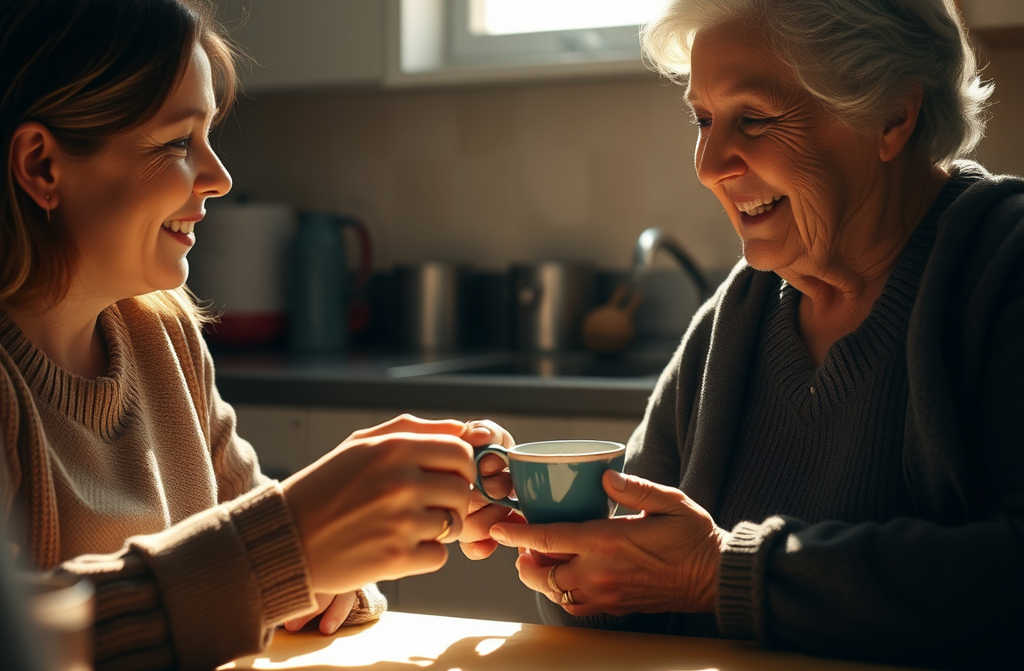
Her kitchen was tiny and oddly familiar: a table covered in a lemonpatterned vinyl, two stools, the ancient fridge with magnets from places Gran had never visitedgifts from the grandchildren. The soup simmered quietly in a battered enamel pot, and beside it sat a small white mug with a blue rim, the same one Id seen as a child, then again now, no longer huge but just right.
Whats taken you so long? Gran asked, pouring tea leaves into the kettle. I thought youd disappeared into Londons hustle.
Im still in London, Gran, I replied, halflaughing. Just on the other side of the city.
Right, right, she waved a hand dismissively. Im here, youre there.
She set the mug in front of me and poured herself a glass of water from a glass tumbler. I tried to bring up the medication issue gently.
Mum says youre mixing up your tablets, I began.
Your mum notices everything, Gran muttered. One time I took one wrong pill and the whole family panicked. Im not mixing them up, Im thinking.
Thinking about what?
About what I need and what I dont.
Her words made my irritation rise. Id come with a clear mission: check the blister packs, confirm the dosing schedule, maybe ring the GP. Instead she said, Im thinking.
The doctor set it up, I reminded her.
Yes, the doctor set it up. But the doctor doesnt live inside me, Gran said calmly. He sees me for ten minutes, but Ive got seventyeight years of me.
A familiar flash of frustration hit meolder people often seem to make everything more complicated than it needs to be.
But you know you cant stop the tablets I pressed.
I know, she interrupted, Sit down. Ill ladle you some borscht.
I sighed, took a seat, and watched as she lifted the pots lid. Steam hit my face, the scent of beetroot and bay leaf whisked me back to schooldays when Id run home for a bowl after lessons.
Do you think Im losing my mind? Gran asked, placing a plate before me. Or maybe Im just not sharp enough anymore?
Of course not, I replied automatically, then caught myself thinking I might have meant it.
Gran nodded, her eyes bright. Heres what Ive learned at my age: happiness is still choosing, even if its only about little things. I can decide whether to have this tablet or not. I can decide whether I want borscht or porridge.
Youre stubborn, I said. If you dont take them, youll feel worse.
It will feel worse, but that will be my choice, not anyones.
I ate in silence. The borscht was as comforting as ever, and I thought about how my days had become a relentless parade of meetings, emails, and deadlinesa life Id once thought was the definition of success. Grans words about choosing for yourself stuck.
Do you think happiness is just the freedom to choose? I asked.
What else? Gran asked back, taking a sip. Do you decide when to rest, who to see?
I chuckled. Not really. Projects dictate everything.
She shrugged. I have no projects. I just wake up, look out the window, and if my legs dont ache, thats a win. If I can walk to the shop, thats another win. If I can cook a meal myself without waiting for someone else, thats a third. It adds up.
She spoke plainly, as if listing groceries.
Back to the tablets, I said stubbornly.
Theyre not about happiness, she replied. Theyre about time. I could stretch my days, but I dont want to live longer just waiting for someone to pull my blanket. Sorry for the bluntness.
I grimaced, yet nodded. I want to live long enough to pour tea into this mug myself, she said, tapping the bluerimmed mug. Thats my secret.
I reached for the handle, feeling the warm porcelain. It struck me that for Gran this mug symbolised her independence.
Lets organise the tablets by day, I suggested softly. Youll decide whether to take them, but lets keep them in order. Deal?
Gran studied me, her eyes softening as if she were seeing a grown adult for the first time.
Alright, she said. Lets.
Together we opened the blister pack, I reading the instructions, sorting the pills into the little compartments. Gran asked occasional questions, and our conversation drifted to the neighbour in flat four, the rising price of bread, a new TV series on the telly.
When we finished, I placed the box on the shelf. Morning here, evening there. You still decide.
Selfreliant, Gran repeated, then gave my hand an unexpected squeeze. And you, Katie, make sure you have something thats yours, not just your reports.
On the tube ride home, I opened my phone to check email, but paused. Instead I opened my notes and wrote: No laptop in bed after 10pm. One evening a week no work. It felt childish at first, then oddly liberating.
I remembered Grans steady voice, her hand on the mug, and realised my own tiny secret to happiness might begin with a small, deliberate choicelike not answering emails after ten.
—
Later that week I found myself in the bustling waiting room of the local NHS clinic. The smell of antiseptic and disinfectant filled the air. I was perched on a hard plastic chair, scrolling through the news feed on my phoneheadlines about mortgages, the latest smartphone, and a celebrity breakup.
Beside me settled an elderly lady in a beige coat and a knitted hat. She lowered herself onto a walking stick, took a breath, and asked, Whats your number?
Twentythird, I replied.
Im twentysecond, so Im ahead of you, she said with a grin, as if wed formed an instant alliance. Mind if I join you?
I nodded, returning to my phone.
Seeing a GP? she inquired.
Yes, I answered.
She chuckled, Youre still young, already at the doctor. Men here tend to wait until they cant stand any longer.
I sighed. My back had been nagging for months, and finally Id booked an appointment. At work, the lads would joke about back pain at 32 and shrug it off, but I couldnt keep slumping over a keyboard for twelve hours a day.
What about you? Which doctor are you seeing? I asked politely.
A cardiologist, she said. Im practically a regular.
She introduced herself as Tamira Clarke. I replied with my own name, Sam.
She asked what I did. I work in an officeanalytics, numbers, I said.
She sighed, Numbers, eh? My late husband was a numbers man tooan accountant. He counted everything: money, calories, steps.
A brief pause followed. Happiness, you know, he never counted, she said softly.
I looked up, surprised that her words struck a chord.
How do you count happiness? I asked.
She spoke simply, He always said, When I retire, well live the good life. When the mortgage is paid, well go on holiday. All postponed. Then one dayboomheart attack.
She apologized, then continued, I used to sit at home, stare at his ledgers. On the kitchen shelf sat a small enamel pothis favourite for porridge. He called it his personal pot.
The door to the consultation room opened, a nurse called the next name, and the queue shifted.
You waiting for something? Tamira asked unexpectedly.
I shrugged, Just waiting for a raise, for the mortgage to be cleared, for a bit more free time.
She shook her head. I decided I wont postpone any longer. My pension isnt large, but every Saturday I go to the park, buy a cabbage pasty, and sit on a bench. People laugh, What a celebrationjust a pasty. I think, Thats my today.
She painted a picture of an ordinary joy that felt foreign to my world of overseas trips, new cars, and bonuses. Yet she reminded me that before any of those, I needed to be alive long enough to enjoy them.
Dont you fear running out of money? I asked.
Of course, she admitted. But Im more scared of living my whole life waiting for a big moment that never comes. Id rather have a pasty today than a promise for tomorrow.
She spoke of her husbands meticulous ledger, how after he passed she talked to his photograph, asking what to do next. One morning she made herself a simple bowl of porridge, realizing she could feed herself. Later she bought herself a lovely scarf for no reason other than that she liked it. Little acts, she said, are what keep us going.
When the nurse called my name, I left the waiting room with a lingering thought: perhaps I could set aside an evening each week for nothing but a film, a walk, or a quiet cup of teano spreadsheets.
I called a friend, Fancy a cinema night this Friday? Ill ditch the report until tomorrow. My voice sounded foreign to my own ears, but the relief that followed was immediate. I booked a ticket, feeling as though Id taken a small step away from the perpetual later.
—
A few weeks later I spent a Saturday at my grandmothers cottage in the Cotswolds. The garden was hot, flies lazily droned around the open window, and fresh cucumbers lay on the windowsill. Inside, the kitchen clock ticked steadily.
Dont let it burn, said Gran Gwendolyn, who was peeling potatoes at the stove.
I wont, I replied, stirring the strawberry jam Id been making.
Id arrived for a weeks break after a painful divorce. Mum had insisted a change of scenery would help. At first Id resisted, but Gwendolyns voice nudged me.
Keep stirring, dont get distracted. Lifes like jamif you look away it runs off, she said.
I muttered, My lifes already run off, and she asked what I meant.
We split up, I said, the words feeling raw.
She paused, her hands still on the potatoes. Youre saying youve given up?
Just it didnt work out, I shrugged.
She shook her head. People used to endure, because there were no choices. Now there are.
She told me shed once left her own husband for a week after he started drinking heavily. Shed taken my mothers hand and fled to a sisters house in a nearby village. When the husband begged her to return, she said, Ill come back only if you stop drinking. He promised and, though he never quit completely, he drank less, and they lived together for forty years. She never regretted that week of courage.
Your happiness isnt about tolerating everything or running away at the first sign of trouble, she said. Its about knowing your limitswhat youll accept and what you wont.
I asked why shed told me all this. She smiled, Because I want you to understand that happiness isnt a grand romance or endless endurance. Its the simple peace of being able to make a cup of soup for yourself without fearing a shout.
She returned to peeling potatoes. Why did you leave? she asked.
We fought all the time. He wanted children; I wasnt sure. Work was stressful, money tight. He kept saying everything would sort itself out, I confessed.
Did you love him? she asked gently.
I think I did, once, I admitted.
She nodded. I left when I still loved him, because I needed to protect myself. I came back when he showed he could change. If theres no love, why stay?
The conversation softened my throat. Everyone says I left too soon, that I should have tried harder, I said.
Dont listen to them, Gwendolyn advised. My secret is simple: happiness is being able to sit at night with a bowl of soup and not fear someone storming in and yelling. Everything else will fall into place.
The jam began to bubble, and I turned down the heat just in time. If you stare too long, it overflows. Same with life, she said. You need to know when to step back.
Later, we walked through the garden, she pointing out which beds needed watering, where the tomatoes were, where the dill grew. I thought perhaps my own life could be tended like these plantssome seeds sown, some weeds pulled, some left to rest.
That evening, I opened a chat with my exhusband. His last message read, If you ever change your mind, let me know. I stared at it, then blocked the conversation. It wasnt hatred; it was a clear boundary: my chapter there was closed.
Teas getting cold! Gwendolyn called from the kitchen.
Im coming, I answered, feeling a lightness I hadnt expectedmore calm than joy, but a quiet certainty that Id made the right choice for myself.
—
The final episode of the week found me back in my flat in Camden, looking out at the street where children chased a ball and someone walked a Labrador. The kitchen cupboard door slammed shut behind me.
I still dont see why we should celebrate this, I muttered, not turning.
My dear, youre turning seventy now, isnt it? Zoya Patel, my neighbour from the landing, replied. Its a milestone, love.
Does it matter? I grumbled. A round number, a square numberwhats the difference?
Id just retired from a thirtyyear career in finance. The office had given me a farewell tea set and a card that read Enjoy your wellearned rest. I felt displaced, as if Id been ejected from the game.
Zoya, eightytwo but spry, had a shock of white hair neatly tied back. Shed knocked on my door earlier, announcing shed brought a cake and candlesthough she admitted she couldnt find seventy candles, so wed make do.
You didnt have to, I said, finally turning. I dont like all this fuss.
You dont like it because you cant accept receiving, she said softly. You spent your life givingat work, at home. Now you think you owe someone everything. You owe nobody.
She set the kettle on, laid the cake on the table.
I have no mood, I admitted. I feel superfluous.
Its because you think your worth only existed in your job, she said, cutting the cake. Now the jobs gone, you feel invisible.
I shivered at her honesty. Isnt that true? I spent forty years there. Who am I without it?
Zoya looked thoughtful. I was once Mrs. Colonel Patel, the wife of a highranking officer. After he passed, I was just Zoya Patel. I didnt know who I was for a while.
She placed a slice of cake before me. At first I talked to his photograph, asking what to do next. Then one morning I boiled a pot of porridge for myself and thought, I can make my own breakfast. That was a small triumph.
She continued, Then I bought myself a beautiful scarf for no reason other than I liked it. I stopped worrying about what others would think. Little things became my happiness.
I asked, Did that make things easier?
It didnt happen overnight, she admitted. But I realised my joy now lies in tiny acts I do for myselfmaking tea, listening to music, reading a book. I dont have to be the grand lady or the heroic wife any more. I can just be me.
She offered me a bite of cake. You think youre useless now, she said, but ask yourself, are you useful to yourself? Not as an employee, not as a manager, but as a person who can brew aI resolved to cherish the small choices each day, knowing that true contentment comes from deciding for myself rather than waiting for anyone elses approval.



The Right to Choose: Empowering Your Decisions
Natalie’s alarm hadn’t even started to buzz when she woke up, a minute before the actual clock. The room was...


Culinary Classes: Mastering the Art of Cooking in Your Kitchen
28October2025 Dear Diary, The call from Mum came just after breakfast. She sounded worried and asked me to pop over...


My Sister-in-Law Borrowed My New Dress Without Asking, and I Caused a Massive Row!
Annas sisterinlaw grabs my brandnew dress without asking, and I throw a massive fit. Emily, look how it sits! She...


My Mother-in-Law Wanted to Take Over My Flat
28October2025 Today I found myself scribbling in this notebook more out of habit than necessity, but the events of the...


My Mother Told Me to Get Rid of the Baby, and Now I’ll Never Have Children Again
When I was sixteen, I found myself pregnant by Tom Gray, the boy I adored. Tom and I had been...


Lola: A World Within.
15March2024 I was born into a modest, warmhearted family that seemed to move at a slower rhythm than the world...


I’m at a Loss: My Son Always Takes His Wife’s Side, Even When She’s in the Wrong
I cannot think what to do any longer. My son always sides with his wife even when she is plainly...


He Didn’t Write It
Yesterday morning Poppy cranked her phone up to full tilt, just in case. Deep down she knew he wouldnt text....