
З життя
Діти далеко: поруч лише на святах

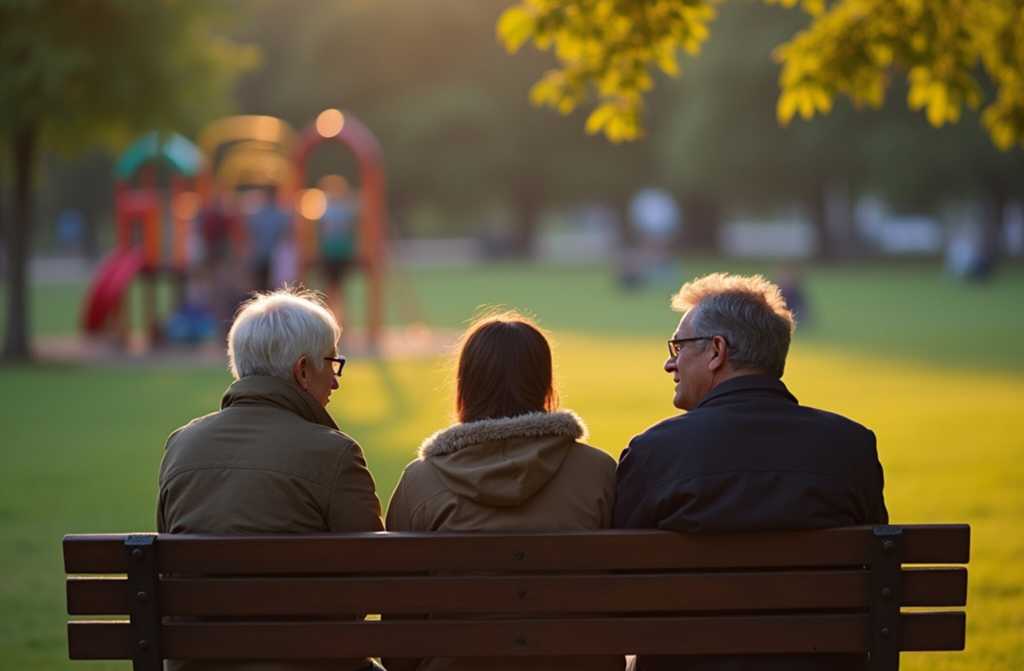
В горлі клубок: наші діти за кордоном, бачимося лише на свята
Як же мені їх не вистачає!
Люди навколо часто кажуть мені: «Ти маєш радіти! Син влаштував своє життя в Канаді, у нього родина, стабільність. Хіба це не щастя?»
Так, я радий. Звісно, я радий. Як інакше? Адже що ще може хотіти батько для своєї дитини, окрім як бачити її щасливою?
Але чому тоді ночі без сну? Чому щовечора дивлюсь у вікно, сподіваючись, що дивом почую знайомі кроки біля дверей? Чому серце стискається від болю, коли бачу сусідських внуків, що граються у дворі, а мій – десь там, за океаном?
Я не бачив, як мій онук зробив перший крок. Я не чув його перші слова. Монітори й екрани не дозволяють обійняти його, не можу взяти за руку й піти на прогулянку осіннім парком, не можу вчити його кататися на велосипеді. Все, що у мене є – це кілька пікселів на екрані і голос, що з кожним тижнем здається все більш далеким, чужим.
«Усі ми в одному човні»
Нещодавно вийшов до парку, сів на стару дерев’яну лавку, де вже зібралася компанія таких же, як я. Літні люди, які пройшли через багато чого, але так і не звикли до найстрашнішого – самотності.
Розговорилися. Кожному було що сказати, адже в усіх однакова історія.
— У мене дві доньки, — розпочала суха жінка з сивим волоссям. — Старша вже п’ятнадцять років живе у Швеції, молодша сім років тому поїхала в Іспанію. Раніше хоч приїжджали, а тепер… Усе справи, турботи. Обіцяють влітку приїхати, але щоразу щось заважає.
Інша, повніша жінка з добрим обличчям, усміхаючись, розповідала:
— Моя онучка вже в першому класі, німецьку знає краще за українську. Син із дружиною будинок у Берліні купили, там у них все чудово. Цього року вже десять років, як вони переїхали до Німеччини. А я їжджу до них узимку, а влітку вони до мене… Ну як до мене? На пару днів у село заїдуть — і назад.
Слухаю, мовчу, лише ковтаю клубок у горлі.
Третя жінка зітхнула, дивлячись кудись вдалечінь:
— А я вже три роки не бачила своїх онуків. У Канаді вони. Все рідше і рідше приїжджають. Кажуть, дорого, далеко… Я вже й літати не можу, ноги не тримають. В’яжу їм светри, шкарпетки, шарфи – знаю, що там холодно. А вони усміхаються через екран: «Дякую, бабусю, ти у нас золота». Тільки от мої речі так і лежать у мене в шафі – ніхто їх не носить, не гріють вони нікого.
Життя на відстані
Хтось отримує від дітей дорогі ліки, хтось — сто євро на місяць на допомогу. У когось сину не дають відпустку на свята, і він не зможе приїхати на Різдво, а хтось з тугою в очах чекає, коли невістка привезе онуків хоч на кілька тижнів.
— А я ось заздрю вам, — несподівано сказала худенька жінка років шістдесяти. — У вас хоч діти влаштувалися. А мій син — без роботи, невістка копійки отримує. Вони нікуди не виїхали, але живуть так, що краще б поїхали… Уся їхня надія — на мої консервації, за літо накручую по триста банок компотів, огірків, варення. А що робити? Без цього не протягнуть.
І ось я сиджу, слухаю і відчуваю, як всередині все стискається. Чому так? Чому доля наших дітей — це життя далеко від нас?
Ми радіємо їхнім успіхам, пишаємося ними, але не можемо обійняти їх, коли важко. Ми не можемо дати їм батьківську пораду за чашкою чаю на кухні, не можемо просто посидіти поруч, мовчки, але так, щоб відчути один одного.
А що далі?
Ми старіємо. Наші діти стають чужими, їхні світи для нас невідомі. Вони не знають, як ми живемо. А ми не знаємо, якими вони стали.
І ось настане день, коли вже не буде дзвінків по скайпу, не буде тих рідкісних зустрічей на свята. Пройде трохи часу – і вони прилетять, але вже не до мене, а на моє прощання.
А так хочеться ще хоч раз міцно обійняти сина, заглянути в очі онукові і сказати: «Запам’ятай, дід тебе любить».
Але час минає. І хто знає, чи встигнемо ми…



You’re Just Jealous – Mum, are you serious right now? The Savoy? That’s at least a hundred quid a head! Igor tossed his keys onto the shelf so hard they rattled off the wall. Olga glanced away from her sauce on the stove and immediately noticed her husband’s white-knuckled grip on his phone. He listened to his mother for several more minutes, then muttered a curse and hung up abruptly. – What happened? Instead of answering, Igor slumped down at the kitchen table and glared at his plateful of potatoes. Olga switched off the hob, dried her hands on a tea towel, and sat across from him. – Igor… – Mum’s lost the plot. Completely gone round the bend at her age. – He looked up, and Olga saw so much anger and helplessness in his eyes that it made her heart ache. – Remember I told you about… this Val? From the dance class? Olga nodded. Her mother-in-law had mentioned the new acquaintance about a month ago – flustered, fiddling with the edge of the tablecloth. Back then, it had seemed sweet: a fifty-eight-year-old widow, alone for five years, and now – a dance club at the community centre, a gallant gentleman who knew his way around a waltz. – Anyway. – Igor pushed his plate aside. – She took him to the Savoy. Three times in two weeks! Bought him a suit for eight hundred quid. Last weekend, they went to Bath – guess who paid for the hotel and tours? – Nina. – Bingo. – He buried his face in his hands. – She scrimped and saved for years. For home renovations, the rainy day fund. And now she’s blowing it all on a bloke she’s known six weeks. It’s mental… Olga hesitated, searching for the right words. She knew her mother-in-law well – romantic, open-hearted, naive in her trust. The kind of woman who believes in true love, even after fifty years. – Igor, listen… – She reached across the table for his hand. – Nina’s an adult. It’s her money, her choices. Don’t interfere, she won’t hear you right now anyway. – Ol, she’s just making mistake after mistake! – Yes, and that’s her right. Besides, I think you’re winding yourself up. Igor jerked his shoulder but didn’t pull away. – I just can’t watch her… – I know, love. But you can’t live her life for her. – Olga stroked his wrist. – She has to be responsible for herself, even if we don’t like it. She’s more than capable. Igor grunted his agreement. …Two months passed swiftly. Conversation about Val dried up – his mother called less, her tone more evasive, as if hiding something. Olga assumed the romance had fizzled and stopped worrying. That’s why, when there was a knock on the door one Sunday night and Nina appeared on their doorstep, Olga didn’t immediately piece it together. – Darlings! My dears! – Nina burst into their flat trailed by a cloud of sweet perfume. – He proposed! Look! Just look! A ring glimmered on her finger. Cheap, but Nina gazed at it as if it were the Koh-i-Noor. – We’re getting married! Next month! He’s so, so… – She cupped her cheeks and laughed, girlishly. – I never thought, at my age… I’d ever feel this way again… Igor hugged his mum and Olga saw his shoulders finally relax. Maybe things weren’t so bad. Maybe this Val really did love his mother-in-law and they’d all been overreacting. – Congratulations, Mum. – Igor stepped back, smiling. – You deserve happiness. – And I’ve already put the flat in his name! Now we’re a real family! – Nina declared, and time seemed to stand still. Olga stopped breathing. Igor flinched, as if he’d walked into a glass wall. – What… what did you say? – The flat. – Nina waved it off, oblivious to their faces. – So he knows I trust him. It’s love, that’s what love is! Love means trust. The silence was thick enough to hear the living room clock ticking. – Nina… – Olga spoke first, very slowly. – You signed your flat over to a man you’ve known for three months? Before the wedding? – So what? – Nina drew herself up. – I trust him, he’s decent. You’ve all got the wrong idea about him. – We’re not thinking anything. – Olga took a step forward. – Still, you could have waited until after you’d registered… Why hurry? – You lot don’t understand. This… It’s proof of my love. – Nina folded her arms. – What do you know about real feelings? About trust? Igor finally unclenched his jaw: – Mum… – No! – She stamped her foot and Olga suddenly saw not a mature woman but a stubborn teenage girl. – I don’t want to hear it! You’re just jealous of my happiness! You want to ruin everything! She stormed out, bumping the doorframe with her shoulder, and the front door slammed, rattling the glasses in the display cabinet. …The wedding was a small affair – registry office, a second-hand dress, a bouquet of three roses. But Nina shone as if she were marrying in Westminster Abbey. Val – a hefty man with a receding hairline and a greasy smile – behaved faultlessly. He kissed the bride’s hand, pulled out her chair, poured champagne. The perfect groom. Olga watched him over her glass, uneasy. Something was off. The eyes. When Val looked at Nina, his pupils stayed cold and calculating. Professional tenderness. Practised care. She held her tongue. What was the point, when no one would listen? …For the first few months, Nina called every week, breathless, reeling off restaurants and theatres her wonderful husband treated her to. – He’s so attentive! Yesterday, he brought me roses – just like that, for no reason! Igor listened, nodded, then hung up and sat in silence, staring into the void. Olga said nothing, just waited. The year slipped past. Then – a knock at the door… Olga opened it to find a woman she barely recognised. Her mother-in-law had aged a decade overnight: deeper wrinkles, sunken eyes, hunched shoulders. In her hand – a battered suitcase, the same one she’d once taken to Bath. – He threw me out. – Nina sobbed. – Filed for divorce and chucked me out. The flat… it’s his now. All legal. Olga stood aside for her to come in. The kettle boiled quickly. Nina sat clutching her mug, crying – quietly, hopelessly. – I loved him so much. I did everything for him. And he… he just… Olga didn’t interrupt. She just gently rubbed her back and waited for the tears to dry. Igor came home an hour later. He stopped at the door, saw his mother – and his face hardened. – Son. – Nina stood, reached for him. – Son, I’ve nowhere to live… You can’t leave your mother, please. I’ll just need a room. Children should look after their parents, it’s only… – Stop. – Igor raised his hand. – Stop, Mum. – I have no money left. Spent everything on him, every penny. My state pension’s tiny, you know that… – I warned you. – What? – I warned you. – Igor sat on the sofa heavily, as if a sack of bricks had been dumped on his shoulders. – I said: slow down. I said: get to know him. I said: don’t sign over the flat. Do you remember what you told me? Nina hung her head. – That we didn’t understand real love. That we were just jealous of your happiness. I remember perfectly, Mum! – Igor… – Olga tried to intervene, but her husband shook his head. – No. Let her hear it. – He turned to his mother. – You’re a grown woman. You made your choices. You ignored everyone who tried to stop you. And now you want us to clean up your mess? – But I’m your mum! – That’s exactly why I’m angry! – Igor leapt up, his voice breaking. – I’m tired, Mum. Tired of watching you throw your life away, then running to me for help! Nina crumpled in on herself, small and defeated. – He tricked me, son. I truly loved him, I believed… – Believed. – Igor raked a hand through his hair. – Believed so much you signed the flat to a stranger. Genius, Mum. Pure genius. Remember Dad bought that flat! – I’m sorry. – The tears flowed again. – I was blind, I know. But please… give me another chance. I’ll never… – Adults need to own their mistakes. – Igor spoke quietly, exhausted. – You wanted independence? You’ve got it. Find yourself somewhere to stay. Get a job. Sort it out yourself. Nina left weeping, echoing up the stairwell. Olga spent the night beside her husband, silent, just holding his hand. Igor didn’t cry. He lay staring at the ceiling, sighing now and then. – Did I do the right thing? – he asked at dawn. – Yes. – Olga stroked his cheek. – It was hard. Painful. But you were right. In the morning, Igor called his mum and rented her a room in a house-share on the far side of town. Paid for six months in advance. That was the last help he agreed to give. – From here, you’re on your own, Mum. On your own. If you take it to court, we’ll help, pay what’s needed. But you’re not living with us… Olga listened and thought about justice. Sometimes, the harshest lesson is the only one that works. Her mother-in-law got exactly what her blindness deserved. And though it left her feeling bitter and at peace all at once, she suspected this wasn’t the end, and somehow, things would work out. She just didn’t know how yet, but they would…
Youre not serious, Mum, are you? The Savoy Grill? Thats at least two hundred pounds a head for dinnerminimum! James...


To See With Her Own Eyes After a devastating tragedy in which she lost her husband and six-year-old daughter in a car accident, Katherine struggled for months to recover. She spent nearly half a year in a clinic, isolating herself from everyone but her patient and supportive mother. One day, her mother suggested: “Katie, your husband’s business is on the brink of collapse, barely afloat, and Greg is struggling to keep it running. He’s called me, asking if you could step in. Thank goodness Greg’s a decent man, but…” Those words finally roused Katherine. “Yes, Mum, I need to throw myself into something. I’m sure Dennis would be happy if I continued his work. Thankfully, I know a thing or two; he foresaw something and brought me into his office.” Katherine went back to work and managed to save the family business. Yet, despite her accomplishments, she deeply missed her late daughter. “My darling, I want to suggest you adopt a girl from the children’s home—one who’s even worse off than you are. You’ll help her, and in doing so, save yourself too.” Considering her mother’s advice, Katherine decided her mother was right. So, she went to the orphanage, even though she knew no one could ever replace her own lost child. Ariana had been born nearly blind. Her parents, both well-educated and from respected families, abandoned her as soon as they learned of her diagnosis—afraid of the responsibility that came with having a disabled child. So, baby Ariana was named by the nursery staff and brought up with very limited sight, able to see only shadows. She learned to read in the orphanage, adored fairy tales, and dreamed a kind fairy godmother might one day find her. On the verge of turning seven, Ariana’s fairy appeared: beautiful, vibrant, wealthy, and unspeakably sad. Ariana couldn’t properly see Katherine, but immediately sensed her kindness. The orphanage director was startled that Katherine would choose a child with disabilities, but Katherine brushed it off, simply saying she had the means and desire to help a child in need. Ariana was led in by the hand. At first sight, Katherine knew—this little girl was meant to be hers. Ariana was angelic, with golden curls and huge blue eyes—eyes deep and pure, but sightless. “Who’s this?” Katherine asked, unable to look away. “That’s our Ariana—sweet-tempered and gentle,” the caretaker replied. “Ariana is mine—no doubt about it,” Katherine decided. Katherine and Ariana quickly became each other’s everything. With Ariana in her life, Katherine’s world gained new meaning. Doctors were cautiously optimistic: with surgery, Ariana might someday regain her sight—she’d just have to wear glasses. Eager for any chance, Katherine arranged the operation before school started, though Ariana’s vision improved only slightly. There was still hope, but she’d have to wait until Ariana grew older. Katherine devoted herself entirely to her daughter. The business flourished—she was a successful, beautiful woman, but men held little interest for her; her entire life centered on Ariana. Ariana grew into a stunning young woman, completing her degree and working in her mother’s company. Katherine guarded her daughter’s heart—and fortune—fearful some opportunist might take advantage of her innocence. Anyone with motives quickly learned would not get rich at Ariana’s expense. Then Ariana fell in love. Katherine met Anthony, saw no red flags, and didn’t object when he proposed. Wedding plans were in full swing; the final surgery to restore Ariana’s vision was scheduled for six months after the wedding. Anthony was gentle and caring. Occasionally Katherine found him insincere, but always dismissed her doubts. The young couple visited the countryside restaurant where their wedding would be held, to discuss decorations. It was quiet that afternoon. They sat at a table. Anthony set his phone down, but his car alarm sounded outside, and he excused himself. Alone now, Ariana heard his phone ring. At first she ignored it, but it persisted. She finally answered—and heard Anthony’s mother, Mrs. Serena Ingram, speaking clearly: “Darling, I have a plan to get rid of that blind Ariana quickly. A friend at the travel agency has two tickets saved for you. After the wedding, take your little hen to the mountains—tell her you’re desperate to see the view. Go hiking together, and make sure your wife has an accident. Then report her missing—say you argued and she stormed off alone. Cry, look shattered—insist the police search. When they find her, they’ll just assume she slipped. Who’s going to investigate abroad? You can easily play the grieving husband. Otherwise, they’ll do her surgery and everything will change—it’ll be hard to get rid of her then. Don’t let that money slip through your fingers, son. Think about it. I’ll hang up now.” The call ended. Ariana set the phone down as if it burned. So his mother wants me dead. And Anthony probably as well. Shocked and horrified, Ariana realised that only moments before, she had been a blissfully happy bride-to-be, still making wedding arrangements. She tried to compose herself as Anthony returned from outside. “Odd, I don’t know what set off the car alarm. Maybe a cat, but there’s nothing wrong. Oh, and now my mate Roman is calling me urgently to the office,” he said after picking up another call. “I’ll have to go, but you wait here for your mum—sort the decorations with her.” “Alright,” Ariana said softly. Left alone, she called Katherine. “Mum, come to the restaurant right away.” She tried to sound calm, but her voice betrayed her. Seeing Ariana so upset when she arrived, her mother asked what had happened. Ariana broke down: “Mum, they want to kill me. Anthony and Mrs. Ingram. She phoned him, but he left his phone. I heard everything—she wants him to take me to the mountains and push me. She urged him to hurry, before we can do my surgery.” Katherine was in disbelief. Could they really have misjudged this charming man so badly? While they were quietly discussing what to do next, Anthony called. “So, Ariana, has your mum arrived? Have you sorted the reception decorations?” he asked. Katherine took Ariana’s mobile. “Hello, Anthony. Well, it’s good we learned of your little plan in time. So listen carefully—about those mountain tickets…” “What? What plan? What tickets?” Anthony stammered, confused, or faking it. “You know—the tickets for where Ariana was meant to have a fatal accident.” Anthony guessed his mum had blundered, realising Ariana must have taken the call. She’d even messaged him to hurry. “An accident? Why would I—why the mountains?” Anthony sounded scared. “So you could become a wealthy widower, of course. But you should know, if you or your mother try anything, this phone can go to the police. They know how to recover deleted records—everything. Are we clear?” After a long pause, Anthony said, “I get it. But it wasn’t me—it was Mum…” “Coward, hiding behind your mum. Goodbye, Anthony.” The next day, Anthony left town, blaming his mother for tipping off the wrong person, grabbing cash from her, and going on the run afraid Katherine and Ariana would go to the police. Mrs. Ingram also fled to a friend’s in another city. Shocked, Ariana Would Finally See Everything With Her Own Eyes Ariana’s eye operation was scheduled at a leading clinic. Katherine stayed by her side with the bandages still covering Ariana’s eyes. The young doctor, Dr. James Fitzroy, was attentive and kind—Ariana’s surgeon. Katherine observed him carefully, seeing how he blushed in Ariana’s presence, obviously smitten but utterly sincere. When the time finally came to remove the bandages, Dr. Fitzroy brought a huge bouquet of roses. Ariana was overwhelmed—weeping to see the glorious flowers and, for the first time, the handsome doctor’s face. “I’m so happy—I see everything!” Ariana cried, and Dr. Fitzroy comforted her gently. Ariana would need glasses for life now—but that was nothing compared to what she’d already endured. Time passed. Ariana and Dr. Fitzroy’s wedding was beautiful, and, a year later, they welcomed a lovely daughter with grey eyes like her father. Ariana was overjoyed—she finally had a caring, reliable husband who would always protect her. Thank you for reading, subscribing, and for your support. Wishing you happiness in life!
To See With My Own Eyes After the terrible accident that took my husband and our six-year-old daughter, I felt...


If Only Everyone Had This Kind of Help: When a Mother-in-Law Moves In to “Rescue” the Family, and One Woman Finally Says Enough
If only everyone had such help Emily, Im popping round today to help with the little ones. As I tried...


Meeting My Husband’s Parents in the English Countryside: Tales of Bread, Family, and Unexpected Surprises in Mum’s Cosy Cottage
Many years ago, my husband and I traveled to the countryside, to be introduced to his family for the first...


Just a Childhood Friend — Are you seriously planning to spend all Saturday sorting junk in the garage? The entire Saturday? — Alena speared a piece of cheesecake with her fork, raising a skeptical eyebrow at the tall ginger-haired man. Ivan leaned back in his chair, warming his hands around a mug of cooling cappuccino. — Alena… That’s not junk, those are childhood treasures. I’ve still got a collection of “Love is…” gum wrappers in there somewhere, I’ll have you know. Can you imagine what riches those must be? — Oh my God. You kept gum wrappers? Since when? Alena snorted, her shoulders shaking with barely suppressed laughter. This little café, with its worn-out plum-colored sofas and eternally steamed-up windows, had long ago become their personal territory. The waitress, Mary, never even asked what they wanted anymore — she just brought out Ivan’s cappuccino, Alena’s latte, and the dessert of the day for them to share. Fifteen years of friendship had rehearsed this ritual into muscle memory. — Fine, I admit it, — Ivan toasted her with his mug, — the garage can wait, and so can the treasures. By the way, Chris invited us for a barbecue on Sunday. — I know. He spent three hours last night picking out a new grill online. Three. Hours. I thought my eyes would bleed from boredom. Their laughter dissolved into the whirr of the coffee machine and the gentle hum of conversation at the neighbouring tables… …There were never awkward silences or unspoken words between them — Alena knew Ivan as well as her own palm. She still remembered how skinny little Ivan, shoes perpetually untied, was the first to talk to her in the new class. Ivan remembered how she was the only one who didn’t laugh at his thick-rimmed glasses. Chris had accepted their friendship without questions or suspicion from the very first day. He watched his wife and her childhood friend with the calm confidence of a man secure in himself and those he loved. On their Friday nights of Monopoly and Uno, Chris laughed the loudest when Ivan lost to Alena for the hundredth time at Scrabble, and poured the tea while those two squabbled over game rules. — He’s cheating, that’s why he wins, — Alena declared once, tossing a handful of cards at her husband. — That’s called strategy, my dearly beloved, — Chris replied placidly, collecting the scattered cards. Ivan watched them with a warm smile. He liked Chris — grounded, reliable, with that dry humour that left you guessing, joke or not. Alena blossomed with Chris, grew softer and happier, and Ivan was genuinely glad for her, as only a true friend could be. The balance was upset when Vera barged into their close-knit world… …Chris’s sister appeared at their flat’s doorstep a month ago, eyes puffy, determined to start afresh. Divorce had wrung her dry, leaving bitterness and a gaping emptiness where there’d once been a semblance of stability. That first evening, when Ivan dropped by for their traditional games, Vera looked up from her phone and studied him appraisingly. Something clicked in her brain, like a rusty mechanism springing to life. Here was a man — steady, kind eyes, a smile you couldn’t help but answer. — This is Ivan, my friend from school days, — Alena introduced. — And Vera, Chris’s sister. — Lovely to meet you, — Ivan offered his hand. Vera held his hand a moment longer than etiquette called for. — Likewise. From that point, Vera’s “accidental” appearances became routine. She popped up at their café sessions precisely when Ivan and Alena were there. She waltzed in with a plate of biscuits just as Ivan arrived. She sat at the game table so close their shoulders touched. — Could you pass me that card there? — Vera leaned across his arm, her hair “accidentally” brushing his neck. — Oh, sorry. Ivan shifted politely away, mumbling something courteous. Alena exchanged looks with Chris, who shrugged — his sister had always been a bit much. The flirting grew more obvious. Vera held Ivan’s gaze, paid him compliments, found reasons to touch him. She laughed so loud at his jokes that Alena’s ears rang. — You have such lovely hands, such elegant fingers, so aristocratic, — Vera remarked one evening, catching his hand atop the game tokens. — Play an instrument? — Er… I’m a software developer. — Still, very nice hands. Ivan gently extricated himself and feigned intense concentration on his cards. His ears turned pink. After the third invitation for “just a friendly coffee chat,” Ivan relented. He liked Vera — she was vibrant, exuberant, alive. Maybe, he thought, if they dated, she’d stop looking at him like a starving wolf at every encounter, and things would go back to normal. Their romance began well enough. Vera glowed with happiness, Ivan relaxed, family game nights became family game nights again. But then Vera noticed what she wished she hadn’t. She saw how Ivan lit up when Alena arrived. How his face softened, became warmer. How easily they picked up each other’s jokes, finished one another’s sentences, shared a bond she couldn’t reach. Jealousy blossomed inside Vera, poisonous and wild. — Why are you always with her? — Vera blocked his way to the door, arms crossed. — She’s my friend, Vera. Fifteen years. That’s… — But I’m your girlfriend! Me! Not her! The arguments came in waves. Vera sobbed, accused, demanded. Ivan explained, placated, reassured. — You think about her more than me! — Vera, that’s absurd. We’re just friends. — Just friends don’t look at each other like that! Ivan’s phone rang every time he met Alena. — Where are you? When will you be home? Why aren’t you answering? With her again? He learned to put his phone on silent, but Vera started tracking him. She’d appear at the café, in the park, outside Alena’s house — wild-eyed, tearful with rage. — Vera, please, — Ivan rubbed his temples, weary. — This isn’t healthy. — What’s not healthy is you spending more time with someone else’s wife than with your own girlfriend! Alena grew tired too. Each meeting with her childhood friend became a test. How long before Vera showed up, with what accusations, what scene this time? — Maybe I should see you less— — Alena began once, but Ivan cut her off: — No. Absolutely not. You’re not changing your life over her tantrums. None of us will. But Vera had made her decision. If honesty won’t work, then maybe dishonesty would… Chris was on the kitchen when Vera glided into the room. — Hey, big brother… I need to tell you something. I didn’t want to, but… you deserve the truth… …Bit by bit, she spun her lies, punctuated with practiced sobs. Secret meetings. Lingering looks. How Ivan held Alena’s hand when he thought no one was looking. Chris listened silently, without interrupting, his expression unreadable. When Alena and Ivan returned an hour later, the atmosphere in the lounge was thick as molasses. Chris reclined in his armchair like a man awaiting a gripping show. — Sit down, — he said, gesturing at the couch. — My sister’s just shared a fascinating story about your secret affair. Alena froze mid-step. Ivan’s jaw clenched. — What the— — She claims she’s seen some pretty compromising things. Vera hunched down, refusing to meet anyone’s gaze. Ivan spun towards her so sharply that Vera recoiled. — That’s enough, Vera. I’ve put up with your drama way too long! His face blanched with anger. The patient, kind Ivan was gone — in his place stood a man at boiling point. — We’re done. Right now. — You can’t— This time, her tears were real. — It’s her! — Vera jabbed a finger at Alena. — It’s always her! You always pick her over me! Alena paused, giving her sister-in-law time to empty her venom. — You know, Vera, — she said evenly, — if you hadn’t tried to control every second of his life, if you hadn’t created drama out of nothing, none of this would have happened. You destroyed what you were trying to save all by yourself. Vera snatched up her bag and stormed out, slamming the door behind her. Chris laughed — genuine, from deep in his chest, head thrown back. — Thank God, at last. He stood and pulled Alena close, wrapping her in his arms. — You didn’t believe her, did you? — Alena asked with her face against his neck. — Not for a second. I’ve watched you two for years. It’s like seeing brother and sister argue over who ate the last chocolate. Ivan exhaled, the tension finally leaving him. — Sorry for dragging you into all this circus. — Nonsense. Vera’s a grown woman — her choices are her own. Now let’s eat. The lasagne’s getting cold and I refuse to reheat it just because of someone else’s drama. Alena laughed softly, relieved. Her family was whole. Her friendship with Ivan was unbroken. And her husband had once again proven his trust was stronger than any rumour. They headed into the kitchen, where the lasagne’s golden crust gleamed in the light, and life took its usual, comforting shape again.
Are you really planning to waste your Saturday rummaging through junk in your dads garage? The entire day? Emily prods...


Do I Remember? I Can’t Forget! — Pauline, there’s a situation… Remember my illegitimate daughter, Natalie? — my husband spoke in riddles, which made me uneasy. — Hmm… Do I remember? I couldn’t possibly forget! What’s going on? — I sat down, bracing myself for trouble. — I’m not sure how to put this… Natalie is begging us to take in her little girl, which would make her my granddaughter, — my husband stammered. — And why exactly should we, Alex? What about Natalie’s husband? Can’t he take care of her? — Now I was intrigued. — Well, Natalie doesn’t have much time left. There never was a husband. Her mother remarried years ago and lives in America, they’re on terrible terms and haven’t spoken in ages. There’s nobody else. That’s why she’s asking us, — Alex avoided my eyes, embarrassed. — So? What are you thinking? What will you do? — I had already made up my mind. — I want your advice, Pauline. Whatever you say, that’s what we’ll do, — finally, he looked at me hopefully. — How convenient. So, your wild youth is now my problem, and I’m supposed to take responsibility for a child that’s not my own. Is that it? — My husband’s weak-willed attitude drove me mad. — Pauline, we’re a family. We have to decide together, — Alex pressed on. — Oh, look who remembers we’re family! Why didn’t you consult me when you were running around with that girl all those years ago? I’m your wife! — Tears filled my eyes and I ran to another room… — INCLUDES: Unforgettable family secrets, a husband’s confession, and the unexpected arrival of an estranged granddaughter, all set against the backdrop of British suburbia, as Pauline faces a decision that will redefine forgiveness, loyalty, and the true meaning of family.
DO I REMEMBER? I CAN NEVER FORGET! Polly, theres something I need to talk to you about… Well, do you...


Winter had blanketed Andrew’s garden in a soft layer of snow, but his loyal dog Duke, a giant German Shepherd, was behaving strangely. Instead of curling up in the spacious kennel Andrew had lovingly built for him last summer, Duke stubbornly insisted on sleeping outside, right on the snow. Watching from his window, Andrew felt a pang in his chest—Duke had never acted like this before. Each morning, when Andrew went out to him, Duke fixed him with a tense stare. Every time Andrew neared the kennel, the dog wedged himself between Andrew and the entrance, growling softly and gazing at him pleadingly, as if to say, “Please, don’t go in there.” This behaviour—so out of character after years of close friendship—left Andrew unsettled. What was his best friend hiding? Determined to get to the bottom of things, Andrew came up with a plan—he lured Duke into the kitchen with a tempting steak. While the big dog, locked indoors, barked at the window in protest, Andrew carefully approached the kennel and crouched down to take a look inside. His heart skipped a beat as his eyes adjusted to the darkness and he saw something that chilled him to the bone… …Inside, huddled in a blanket, was a tiny kitten—dirty, frozen, and barely breathing. Its eyes opened with difficulty, and its little body trembled from the cold. Duke must have found it somewhere—and instead of chasing it off or leaving it to fend for itself, he had taken it in. He’d slept outside so as not to frighten the kitten, guarding the entrance as though the kennel sheltered a precious treasure. Andrew held his breath. He reached in gently and gathered the little creature to his chest. At that moment, Duke rushed over and pressed himself by Andrew’s shoulder—no longer growling, just quietly, ready to help. “You’re a good dog, Duke…” Andrew whispered, holding the kitten tight. “Better than many people I know.” From that day on, there weren’t just two friends living in the garden, but three. And the kennel, lovingly built, regained its purpose—as a tiny house for rescued souls.
Winter had draped my garden in a thick, sparkling blanket of snow, but my loyal dog Max, a massive old...


Every Love Has Its Own Shape On a blustery September day, little Annie stepped outside into the chill without her coat, shivering as the wind slipped right through her thin jumper. She stood at the garden gate, casting quiet glances around, not even noticing the silent tears streaming down her cheeks. “Annie, why are you crying?” came a gentle voice. She jumped, finding Mikey, the boy from next door, a little older, with his hair sticking up at the back. “I’m not crying, it’s just…” Annie fibbed, wiping her eyes. Mikey watched her for a moment, then dug three sweets from his pocket. “Here—don’t tell anyone, or all the kids will come running. Off you go, get inside,” he said firmly, and Annie obeyed. “Thank you,” she whispered, “but I’m not even hungry… just…” Mikey understood and simply nodded, walking off. Everyone in the village knew Annie’s dad, Andrew, drank too much. He often went to the only shop in the village to ask the shopkeeper, Val, for credit until payday. Though she scolded him, she still gave him what he asked for. Annie returned home, her stomach rumbling. The house was quiet—her father was out cold on the sofa, empty bottles on the kitchen table and floor, a heaviness filling the air. She opened the cupboard, but there wasn’t a crumb of bread. Weak with hunger, Annie ate the sweets Mikey had given her and moved to her homework, perching on a stool and pulling her knees to her chest. Numbers blurred in her maths book as she gazed at the wind whipping golden leaves around the yard. Out the window stood the vegetable patch—once lush and green, now grey and unkempt, the strawberry bed empty and even the old apple tree withered. Her mum used to care for it all, making sure every sprout thrived. The apples, always sweet, were picked early this summer by her dad, and sold at market with a muttered, “Need the money.” Once, life had been full of laughter—her dad cheerful, her mum baking apple jam buns and magic heart-shaped rolls that granted a wish if eaten warm from the oven. But when her mum’s heart failed, she vanished into the hospital and never came home. “Mum’s watching from above now,” her father cried, clutching Annie tight, before he started to drink, drifting away, and letting strangers fill the house. Clutching her battered old bunny, Timmy—her mum’s last gift—Annie whispered, “Do you remember Mum, Timmy?” She thought he must—just as she did—and closed her eyes to comforting memories of her mother in her apron, hair tied back, making heart-shaped rolls and promising that “every love has its own shape.” On weekends Annie wandered to the edge of the woods, to the long abandoned gardener’s cottage, where she would gather fallen apples and pears from the late old Mr. George’s garden, reassuring herself, “I’m not stealing, they’re only rotting on the ground.” This time, as Annie picked up an apple, a woman’s voice stopped her short. “Oi, who’s that over there?” The lady in the long coat approached. “Who are you?” “Annie… I was just picking up fruit from the ground. I thought no one lived here anymore. I didn’t mean any harm…” “I’m George’s granddaughter, Anna. I just moved in. How long have you been collecting fruit here?” “Since Mum died,” Annie’s voice broke and her tears fell. Anna wrapped an arm around her. “Come inside, love. Let’s get you warm. I’m Anna, just like you—but when you grow up, everyone will call you Anna too.” Inside the tidy kitchen, bowls of steaming chicken soup and thick slices of bread revived Annie, followed by a basket of heart-shaped vanilla rolls, just like the ones her mother made. “They’re just like Mum’s buns,” Annie said, tears stinging her eyes. Anna insisted on walking her home. Annie pleaded, “Please don’t tell anyone what our house is like. Dad’s good—he just can’t pull himself together, not since Mum left. If they find out, they’ll take me away, and I couldn’t stand to leave him.” “I promise, love,” Anna said and hugged her close. Time passed. Annie, now with neat plaits, a smart new coat, and shiny boots, hurried to school, friends asking if it was true her dad had remarried. “It’s true,” Annie smiled proudly. “Now I have another mum—Auntie Anna!” Her dad, Andrew, finally stopped drinking with Anna’s help, and their house became warm and cheerful again. Annie grew up, went off to university, and always came home at holidays, rushing through the door with a shout, “Mum, I’m back!” Anna would greet her with a tight hug: “Welcome home, my clever girl!” And in the evening, Andrew would join them too, all of them happy—and Annie knew indeed: every love has its own shape.
Every Love Has Its Own Shape Annie steps out into the garden and shivers as a biting wind cuts straight...