Connect with us

З життя

Друга мама під нашим дахом

Published

on

От коли серце болить

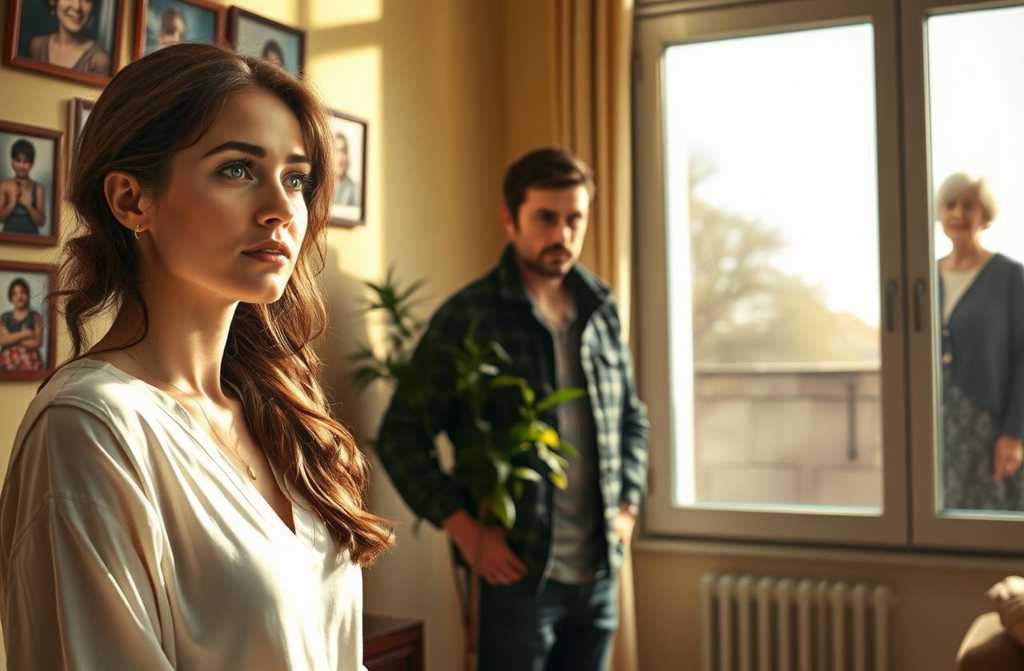
Навіть не знаю, як таке могло статися, але я опинилася в ситуації, від якої аж мурашки по шкірі. Мій чоловік, Тарас, раптом вирішив, що його мати, Марія Іванівна, має переїхати до нас у нашу нову квартиру у Львові. У ту саму квартиру, про яку ми мріяли з 17 років, на яку роками збирали, брали кредит і облаштовували кожен куточок! А я категорично не хочу, щоб вона тут жила. І тепер стою перед вибором: або відстоювати своє, ризикуючи посваритися з Тарасом, або змиритися і перетворити нашу мрію на спільне проживання. Чесно, я в розпачі, але мовчати більше не можу.

Ми з Тарасом почали зустрічатися, коли нам було по 17. Тоді ми були просто закоханими підлітками, які мріяли про майбутнє: своя оселя, затишний дім, де будуть лише ми і, можливо, колись наші діти. Уявляли, як обиратимемо шпалери, ставимо диван, питимемо каву на балконі. Ці мрії тримали нас разом, коли ми вчилися, працювали, затягували пояси, щоб накопичити на перший внесок. І ось, через роки, ми нарешті купили квартиру у Львові — невелику, але свою. Досі пам’ятаю, як ми з Тарасом вперше увійшли до неї: порожні кімнати, запах свіжої фарби і відчуття, що це початок нового життя. Облаштовували її з любов’ю: я вибирала занавіски, Тарас збирав меблі, навіть сперечалися, якого кольору буде килим. Це було наше гніздо, наш маленький світ.

А тепер, місяць тому, Тарас раптом заявив: “Олю, треба забрати маму до нас”. Я спершу подумати не могла, що він серйозно. Марія Іванівна живе в селі за півтори години їзди. У неї є свій дім, город, сусідки, з якими вона п’є чай. Навіщо їй переїжджати? Але Тарас був непохитний. “Вона старіє, — каже, — їй важко самій. А у нас є місце”. Я оніміла. У нас двокімнатна, де одна кімната — наша з Тарасом, а друга поки пустує, але ми планували зробити там дитячу або кабінет. І тепер туди має заселитися свекруха?

Я намагалася пояснити, що це погана ідея. По-перше, Марія Іванівна — жінка з характером. Вона любить, щоб усе було по-їїньому, і не соромиться вказувати, як мені готувати, прибирати чи навіть одягатися. Коли вона приїжджає в гості, я вже за день почуваюся не господинею, а натовпом у власному домі. Вона переставляє мої горщики, критикує мій борщ і вчить, як правильно прати Тарасові сорочки. А тепер уявіть, якщо вона буде тут кожен день! Я з’їду з глузду. По-друге, у нас нарешті з’явилася своя територія, де ми можемо бути собою. Ми молоді, нам хочеться свободи, спонтанних вечорів, тиші. А з Марією Іванівною цього не буде — вона навіть телевізор дивиться на повній гучності.

Але Тарас, схоже, мене не чує. “Олю, це моя мама, — каже. — Ми не можемо її кинути”. Я не заперечую, що про батьків треба піклуватися. Але чому це має коштувати нам нашого простору? Я пропонувала інші варіанти: частіше їздити до неї, допомогти з ремонтом, знайти помічницю. Але Тарас стояв на своєму: “Вона буде з нами, і крапка”. Я навіть запитала: “Ти хоча б запитав, чи я згодна?” Він лише знизав плечима: “Я думав, ти зрозумієш”. Зрозумію? А хто зрозуміє мене?

Я подзвонила подрузі, щоб виговоритися. Вона вислухала і сказала: “Олю, якщо поступишся, потім шкодуватимеш все життя. Це ваш дім, і ти маєш право голосу”. І вона права. Я не проти Марії Іванівни, але не хочу жити з нею під одним дахом. Я знаю, як це буде: вона лізтиме у все — від виховання дітей до того, як я розкладаю продукти у холодильнику. А Тарас замість підтримки скаже: “Ну потерпи, це ж мама”. Я вже бачу, як наша мрія про щасливий дім перетворюється на вічні суперечки.

Вчора я наважилася на серйозну розмову. Сіла з Тарасом і сказала: “Тару, я тебе люблю, але не готова жити з твоєю мамою. Це наш дім, ми його будували для нас. Давай знайдемо інший спосіб допомогти їй”. Він насупився: “Ти що, проти моєї матері?” Я ледь не крикнула. Проти? Ні, я просто хочу зберегти нашу сім’ю і наш спокій! Ми сперечалися майже годину, і врешті він сказав: “Подумай, Олю. Якщо ти так ставиш питання, це може все змінити”. Що змінити? Наш шлюб? Нашу мрію? Я пішла спати з важким серцем, але здаватися не збираюся.

Тепер я думаю, що робити. Може, запропонувати компроміс: нехай Марія Іванівна приїжджає на пару тижнів, але не живе постійно? Або знімемо їй оселю поруч? Я готова допомагати, але не хочу жертвувати своїм домом. І ще я боюся, що Тарас обере сторону мами, і тоді нам доведеться вирішувати, як жити далі. Це страшно, але я не можу мовчати. Ми з ним стільки років йшли до цієї квартири, до нашого спільного життя. І я не дозволю, щоб вона перетворилася на чужу територію.

Моя мати, коли дізналася, сказала: “Олесю, тримайся за своє. Дім — це твій тил, і ти маєш його захищати”. І я з нею згодна. ЯЯ збираю сили і готуюся відстояти нашу мрію, тому що любов має бути не лише терпінням, а й взаємною повагою.

Click to comment

Leave a Reply

Ваша e-mail адреса не оприлюднюватиметься. Обов’язкові поля позначені *

9 − 4 =

Також цікаво:

З життя24 хвилини ago

My Son and His Wife Gave Me a Flat as a Retirement Gift: The Day They Handed Me the Keys, Took Me to the Solicitor, and Transformed My Golden Years—Even Though I Tried to Refuse This Generous Surprise

My son and his wife gifted me a flat when I retired On the day it happened, my son and...

З життя32 хвилини ago

When My Husband Told Me I Was Boring, I Transformed My Life—But Then He Got Bored of Me Instead

Nearly two years ago, I heard something from my husband that Ill never be able to forget. He said, “You...

З життя10 години ago

My Dearest One: A Tale of Family, Lost and Found Marina always believed she had grown up in a loving family—until she learned as an adult that she was adopted. Her foster parents, who had found her as an abandoned toddler in Sherwood Forest, never spoke of her past until her mother’s dying moments. With both parents gone, Marina discovers a hidden folder of letters and newspaper clippings about her origins, still unsure whether the truth should ever come to light. Years later at work, a woman named Hope brings news that a gravely ill retired schoolteacher from Yorkshire—who has been searching for her lost child all her life—believes Marina could be her missing daughter. A DNA test confirms it, leading Marina to the woman’s hospital bedside for a bittersweet reunion. Now torn between the mother who raised her and the one who lost her, Marina must decide whether to reveal a truth that could unsettle the family peace, or keep it hidden and honour the love she has always known. But as the past catches up, Marina realises that, for her, there has only ever been one real mother—a bond defined not by birth, but by love and devotion.

My Dearest One. A Story Sarah had found out, much to her disbelief, that shed grown up in a foster...

З життя10 години ago

I Buy Premium Turkey Meat for Myself and Steam Healthy Cutlets, While He Gets Out-of-Date Pork: After 30 Years of Holding Our Family Together, I Refuse to Share the Good Food with My Lazy Husband

I buy finest British turkey breast for myself and steam up beautiful cutlets, while he gets the expired pork left...

З життя11 години ago

For Five Years, Helena Thought She Was Married to Her Husband—But Realised She Wanted to Live with Him as if He Were Her Mum

For five years, she believed she was living with her husband, but only later did she realise shed been hoping...

З життя11 години ago

The Nuisance Next Door “Keep your hands off my crystal glasses!” shouted the former friend. “Mind your own eyes! You think I don’t see who you’re ogling?” “So you’re jealous, are you?” Tamara Barrington was taken aback. “Just look who you’re after! I know what I’m getting you for Christmas—a lip-zipping machine!” “Why not keep it for yourself?” retorted Lynda, undeterred. “Or have you already worn yours out? You think I don’t notice?” Old Mrs. Tamara swung her legs off the creaky bed and walked over to her home icon shelf to read her morning prayer. Not that she was especially religious—she believed there was something out there running things, but who exactly remained a mystery. This all-powerful force went by many names: the universe, fate, and, of course, the Good Lord—a kindly old gent with a white beard and halo, sitting on his cloud and worrying about folks down on Earth. Besides, Mrs. Barrington was long past life’s halfway mark and edging near seventy. At that age, it was best not to quarrel with the Almighty: If He didn’t exist, believers lost nothing. If He did, non-believers lost everything. At the end of her morning devotions, Tamara added a few words of her own. Ritual, done. Soul at peace. She could start her new day. In Tamara Barrington’s life there were two main troubles. Not, as you might think, the usual English gripes of weather and taxes—those were old hat! Her nightmares were her neighbour, Lynda, and her own grandchildren. The grandchildren were predictable: today’s kids, not an ounce of effort in them. But they had parents to deal with them—let them take that on! Lynda, however, was a classic nerve-shredder of a neighbour! Only in the movies do the spats between national treasures like Dame Judi Dench and Maggie Smith seem sweet and charming. In real life, it’s nowhere near so cute—especially when the nitpicking is personal and persistent. To make matters more colourful, Mrs. Tamara had a chum with the nickname “Pete the Moped.” In full, it was Peter Ephraim Cosgrove—the surname a solid English sort! The origin of his nickname was obvious: In his youth, Pete Cosgrove—such a ring to it, eh?—loved zipping around on his scooter. Or as his mates called it, his “mopette.” In time, the battered moped gathered dust in the shed, but the nickname stuck like only village monikers can. In their younger days, they were family friends: Pete and his wife Nina with Tamara and her late husband. Now both of their spouses were resting peacefully in the village cemetery. So Tamara and Pete, whose friendship went back to school days, carried on together by habit—he was a true, loyal friend. Back in school, their trio—her, Pete, and Lynda—had pulled off friendship splendidly. Real, pure camaraderie—no teenage flirting involved. They always moved as a trio: Their strapping gentleman between two smartly dressed ladies, each on his arm. Like one of those double-handled English tea cups—built not to be dropped! As the years went by, the friendships changed. First came a chill from Lynda, then outright spite. It was as if Lynda had been swapped for someone else—a different script altogether! This switch came after her husband passed away; before that, things had been tolerable. It’s no surprise: time sharpens certain traits. The thrifty turn stingy. Chatty types grow unbearable. And envy—well, it will tear you to pieces. And there was plenty to envy! First, despite her years, Tamara stayed trim and neat, while Lynda had become rather dumpy—a common by-product of time. Tamara always cut a better figure. Second, their old friend Pete now lavished more attention on lively Tamara. They whispered and laughed over private jokes, their silvery heads nearly touching. With Lynda, conversation was limited to short, dry remarks. And Pete visited Tamara far more often, while Lynda had to beg for his company. Perhaps Lynda wasn’t as clever as infuriating Tamara, nor as quick with a joke—Pete had always loved a good laugh. Ah, there’s a fine old English word—”yakking”—which would fit what Lynda did these days: picking fights over every little thing. First, she complained Tamara’s loo was in the wrong spot and stank! “Your privy stinks up the whole place!” grumbled Lynda. “Rubbish! It’s been there for ages—you only just noticed?” Tamara riposted. “Oh yes! And your eye implants were on the NHS! Nothing good comes free, you know!” “Keep your nose out of my cataracts!” shot back Lynda. “Watch who you’re giving the side-eye!” And so it went, again and again. Pete even suggested filling in the old outside toilet and setting one up inside. Tamara’s children pooled money to sort out an indoor loo for their mum. Pete himself helped fill in the old pit—problem solved. Lynda, find something new to complain about! She did: Now she accused Tamara’s grandkids of stealing pears from her tree, whose branches hung well into Tamara’s plot. “They thought it was ours,” Tamara tried to explain, doubting the kids took any—she hadn’t seen any missing. “Besides, your chickens are always scratching round in my veg patch!” “A chicken is a simple creature! Either a broiler or a layer!” Lynda retorted. “And you ought to be raising your grandkids right, not giggling with old men all day!” On it went: the pears, the tree branches, the chickens, and always some new row to pick. In the end, Pete suggested cutting back the offending branches—after all, they were on Tamara’s side of the fence. Under his watchful eye, Lynda kept silent for once. Once that was sorted, Tamara took exception to Lynda’s new breed of chickens, which now truly did dig up her beds. She politely asked Lynda to keep them fenced in. Lynda only smirked: “Sweep away for all I care—see what you can do!” Tamara would never dream of catching a chicken and roasting it to prove a point—she was too soft-hearted for a risky experiment. Instead, clever Pete suggested an idea from the internet: quietly scatter eggs in the beds at night, and collect them next morning. It worked! Lynda, seeing Tamara returning with a full bowl of eggs, was flabbergasted—and her chickens never trespassed again. Couldn’t they just make peace now? Not likely! Now it was the smoke and smell from Tamara’s summer kitchen that bothered Lynda. “Yesterday I didn’t mind it, but today I do! And maybe I’m vegetarian! Haven’t you heard Parliament passed a law about barbecue smoke?” “Where do you even see a barbecue, Lynda?” Tamara tried reasoning. “You might want to wipe your glasses once in a while!” Always patient, Tamara finally lost her cool. Lynda had become utterly impossible—some words just suit her! “Maybe she ought to be sent off for experiments,” Tamara sighed to Pete over tea. “She’s eating me alive!” Weary and thin from the daily stress, Tamara thought she might waste away—but Pete encouraged her to hang in there. One bright morning, Tamara heard a familiar song: “Tammy, Tammy, come out from your cottage!” Outside, Pete stood proudly beside his newly repaired moped. “Why was I so glum before?” he proclaimed. “It’s because my moped was down! Now climb on, darling, let’s relive our youth!” Tamara hopped on. After all, Parliament had officially cancelled old age: everyone was now an active pensioner at sixty-five! She rode off into her new life—literally and figuratively. Before long, Tamara became Mrs. Cosgrove—Pete proposed, and the puzzle was complete. She left her worries (and her cantankerous neighbour) behind and moved in with her new husband. Lynda remained a solitary, grumpy woman—who, with no one left to argue with, turned all her bitterness inwards. But you can bet she found new things to envy. So hold tight, Tamara, and maybe don’t step outside too soon! Village life—it’s a real song, isn’t it? What did you expect? All that fuss over a loo, for nothing…

Annoying Neighbour Dont you touch my reading glasses! screeched my former friend Jean. You ought to mind your own eyesight!...

З життя12 години ago

One Day, I Spotted My Cheerful Sister in a Shop, Walking Hand in Hand with a Distinguished Gentleman—Both Wearing Wedding Rings

One day, I spotted my usually cheerful sister in the local shop, walking hand-in-hand with a distinguished-looking gentleman, both of...

З життя12 години ago

My Wife Packed Her Bags and Vanished Without a Trace: A Brother’s Betrayal, a Mother’s Escape, and the Fight to Reclaim a Life Built on Trust, Not Manipulation

His Wife Packed Her Bags and Disappeared Without a Trace “Stop pretending youre a saint. Itll all work out. Women...