
Connect with us

З життя

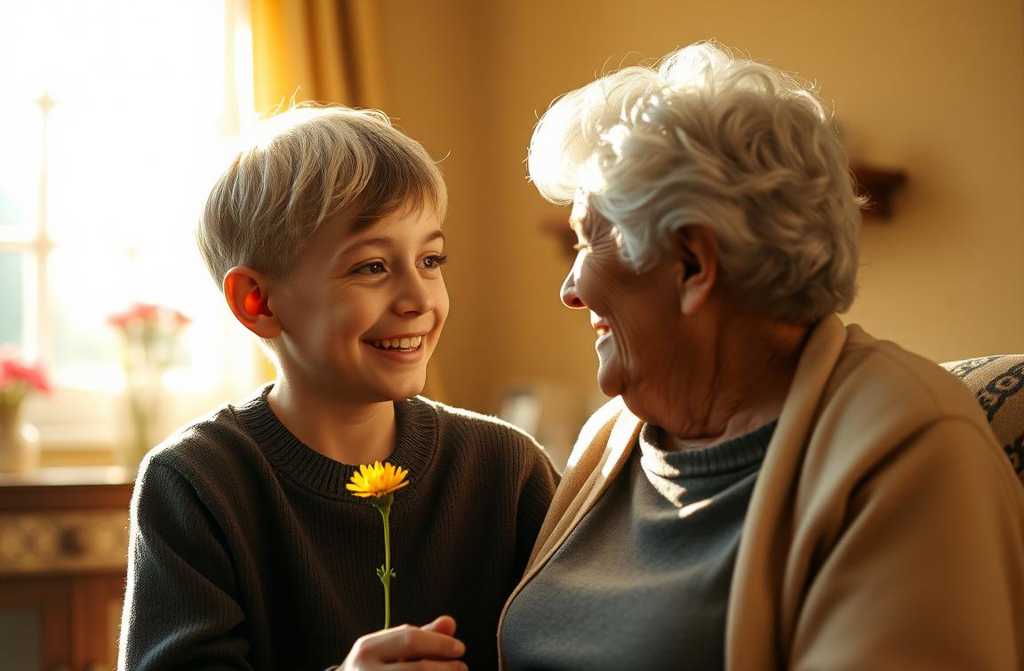
Every afternoon, after leaving high school, Thomas strolled down the cobbled streets with his backpack slung over one shoulder and a wildflower cradled gently between his fingers.

Published

on

Every afternoon, after leaving secondary school, Thomas walked along the cobbled streets with his backpack slung over one shoulder and a wildflower carefully cradled in his fingers.

**The Flower That Never Withered**

The streets of St. Michaels always smelled of warm bread and damp earth after the rain. It was a small village where everyone knew each other, and secrets travelled faster than the wind. Among those streets, a boy of just twelve walked each eveningthin, with a quiet gaze and a steady pace for his age. His name was Thomas Whitmore.

His destination was always the same: Autumn Light Care Home, an old cream-coloured building with tall windows and a garden full of roses. Not a single day passed without him stepping through its rusty gate after school.

He entered slowly, greeting everyoneMrs. Evelyn knitting on the bench by the entrance, Mr. Albert always asking for a sweet, and the staff who watched him with fondness. They knew Thomas wasnt there out of duty but because of a commitment few understood.

He climbed to the second floor, down the hall to Room 214. There, waiting for him, was Mrs. Clara Hartforda silver-haired woman with eyes that sometimes seemed lost, other times full of life.

“Good afternoon, Mrs. Clara,” hed say, setting his bag on a chair. “I brought your favourite flower.”
“And who might you be, dear?” shed often ask with a gentle smile.
“Just a friend,” hed reply.

Clara had once been a literature teacher, elegant and sharp-witted. But Alzheimers had stolen pieces of her memory, one by one. For her, days blurred together, and faces grew unfamiliar. Yet when Thomas visited, a spark flickered in her gaze.

For months, he read her poems by Wordsworth and tales by Dickens. Sometimes he painted her nails peach, other times he carefully braided her hair like she was his grandmother. Shed laugh at his jokes, cry quietly when something touched her, or mistake him for a sweetheart from her youth.

The staff often said Thomas had an old soul in a young body. He wasnt there for charity or school creditshe came because he wanted to.

“That boy hes got a heart of gold,” Nurse Margaret, the longest-serving carer, would say.

**The Secret No One Knew**

In all the time he visited, Thomas never told anyone he wasnt just a “friend” to Clara. He was her grandson. Her only one.

The story was a sad one: when Clara began forgetting, her only sonThomass fatherdecided to place her in care. At first, he visited often, but then the visits grew scarce until one day, he stopped coming. He said seeing her like that hurt too much. Thomas, however, couldnt bear the thought of leaving her alone.

At home, his father avoided speaking of her. “Shes not the same woman,” hed say coldly. “Shes better off there.”

But to Thomas, she was still his grandmother. Even if she didnt remember his name, even if she called him “William” or “George,” he knew somewhere in her mind, love remained.

**The Confession**

One winters day, as he combed her hair by the window, Clara studied him intently. For a moment, recognition flickered in her eyes.

“Youve got my sons eyes,” she whispered.
Thomas smiled.
“Maybe fate lent them to me.”
She lowered her voice like she was sharing a secret.
“My son left when I started forgetting said I wasnt his mother anymore.”

It pained Thomas, but he didnt argue. He squeezed her hand.
“Sometimes, when memory fades, people do too. But not everyone forgets.”

She looked at him as if those words brought peace, then drifted back into her thoughts.

**The Last Summer**

That year, Clara grew weaker. Her good days grew rare, and often she couldnt leave her bed. Thomas still visited, reading to her as she slept or leaving fresh wildflowers on her nightstand.

One evening, the care homes doctor spoke to him.
“Son, your grandmother is very frail. She may not last the winter.”
Thomas bowed his head but didnt cry. Hed known this day would come.

On her last birthday, he arrived with a whole bouquet of wildflowers. The room smelled of the countryside. She looked at him, lucid for the first time in months, and said,
“Thank you for not forgetting me.”
That was the last day they spoke.

**The Farewell**

Clara passed away on a quiet morning. On her nightstand lay a single wildflower, withered yet whole, as if it had clung to life until she was gone.

The funeral was small. Few attendedsome old colleagues, the care home staff and Thomas. His father arrived at the last moment, stern and dry-eyed.

Nurse Margaret, moved by grief, approached Thomas.
“Love, why did you never stop visiting?”
Thomas looked at her with reddened eyes.
“Because she was my grandmother. Everyone left when she fell ill. I didnt. Even if she didnt remember me.”

His father, overhearing, hung his head in shame. He said nothing, but at the end of the service, he placed a hand on Thomass shoulder.
“You did what I couldnt,” he murmured. “Thank you.”

**Epilogue**

Years passed. Thomas grew up, finished university, and became a writer. His first book was titled *The Flower That Never Withered*, dedicated to Claras memory.

In the dedication, he wrote:
*”To my grandmother, who taught me that family isnt bound by memory but by the heart.”*

On the cover was an illustration of a wildflower, just like the ones hed carried to Room 214.

And so, though Alzheimers erased names and dates, it couldnt erase the most important thingthe love that remains when all else is gone.

Click to comment

Leave a Reply

Ваша e-mail адреса не оприлюднюватиметься. Обов’язкові поля позначені *

дев'ять − 4 =

Також цікаво:

З життя17 хвилин ago

“Oh, You Drive Me Mad!… I Eat Wrong, I Dress Wrong, I Do Everything Wrong!”—Pavel’s Voice Broke Into a Shout. “You Can’t Do Anything Right!… Can’t Even Earn a Decent Living… And You’re No Help Around the House, Ever!”—Marina Sobbed, “…And There Are No Children…” She Whispered. Belka, the Ten-Year-Old Ginger-and-White Cat, Watched Silently from Atop the Cupboard as Another Family “Tragedy” Unfolded. She Knew, Even Felt, That Mum and Dad Loved Each Other Dearly—So Why Say Such Hurtful Things? Mum Ran Off Crying, Dad Chain-Smoked by the Window, and Belka Thought to Herself: “What This Home Needs Is Happiness, And Happiness Means Kids… Somehow, We Need to Find Children…” Belka Herself Couldn’t Have Kittens—She’d Been Neutered Long Ago. As for Mum, The Doctors Said It Was Possible, But Something Never Quite Worked Out… The Next Morning, After Mum and Dad Left for Work, Belka Squeezed Out the Window and Went to See Her Neighbour, Whiskers, for Advice. “Why On Earth Would You Want Kids?” Sniffed Whiskers. “Ours Always Come Over—Hide From Them If You Can! They Smear My Muzzle With Lipstick Or Squeeze Me ‘Til I Can’t Breathe!” Belka Sighed, “We Need Proper Children… But Where On Earth Do We Get Them?” “Well… That Stray Molly on the Street Just Had Five… Take Your Pick…” Whiskers Shrugged. On Her Own Daring, Belka Tiptoed Balcony to Balcony Down to the Street, Squeezed Through The Bars of a Basement Window, and Called Out, “Molly, Could You Come Here for Just a Moment?” From Deep Within the Cellar Came the Desperate Squeaking of Kittens. Belka Cautiously Approached. Underneath the Heater, Five Blind, Mismatched Kittens Searched The Air, Wailing Hungrily. Molly Hadn’t Been There for At Least Three Days. The Babies Were Starving… Feeling She Might Cry, Belka Carefully Carried Each Kitten to the Entrance of Her Building. Lying Beside the Screeching, Hungry Bunch, She Waited Anxiously for Mum and Dad to Come Home. When Pavel and Marina Returned from Work, They Were Astonished—There Was Belka, Never Before Out Alone, Being Nursed by Five Noisy Kittens. “How on Earth Did This Happen?” Pavel Stammered. “It’s a Miracle…” Whispered Marina. They Scooped Up Belka and the Kittens and Rushed Inside. As Pavel Watched Their Purring Cat in a Box Full of Babies, He Asked, “So… What Are We Going To Do With Them?” “I’ll Hand-Feed Them… When They’re Grown, We’ll Find Them Homes… I’ll Call My Friends,” Whispered Marina. Three Months Later, Still Stunned By The Miracle, Marina Sat Stroking Her Feline Clan, Repeating to Herself, “This Can’t Be Real… This Can’t Happen…” And Soon After, She and Pavel Wept for Joy, Laughing and Embracing, “I’m So Glad We Finished Building This House!” “Yes! Perfect for a Child to Play Outside!” “And the Kittens Can All Run Around!” “There’s Room for Everyone!” “I Love You!” “Oh, I Love You Even More!” Wise Old Belka Wiped Away a Tear—Life Was Finally Coming Together…

Im so fed up with you! Nothing I do is right for you! The way I eat, what I wearits...

З життя19 хвилин ago

Excuse Me, Sir, Please Don’t Push—Oh, Is That Smell Coming From You? A Chance Encounter, a Perfectly Laid Bathroom Tile, and a Second Wind: How Rita’s Life Changed at 53 When a Homeless Stranger with Sapphire Eyes Built Her Happiness and Challenged Her Son’s Inheritance Plans

– Excuse me, sir, please dont push. Oh, goodness. Is that smell coming from you? – Sorry, the man muttered,...

З життя1 годину ago

Mother-in-Law Anna Peters was sitting in her kitchen, watching the milk quietly simmering on the stove. She had forgotten to stir it three times already, each time remembering too late: the milk would froth, spill over, and she would clean the stove irritably with a cloth. In those moments she felt it keenly: it wasn’t really about the milk. Ever since her second grandchild was born, everything in the family seemed to derail. Her daughter grew tired, thinner, and quieter. Her son-in-law came home late, ate in silence, sometimes heading straight to the bedroom. Anna saw this and thought: how can you just leave a woman to cope alone? She spoke up. At first gently, then more sharply. First to her daughter, then to her son-in-law. And then she noticed something strange: after she spoke, the house didn’t feel lighter, but heavier. Her daughter defended her husband, he grew gloomier, and Anna returned home with a sinking feeling that once again, she hadn’t done things right. That day she went to see their vicar, not for advice, but because there was nowhere else to go with this feeling. “I suppose I’m just not a good person,” she said, not meeting his gaze. “I always do things wrong.” The vicar was sitting at his desk, writing. He set his pen aside. “Why do you think that?” Anna shrugged. “I tried to help. Instead, I only seem to make everyone angry.” He looked at her attentively, but without judgment. “You’re not a bad person. You’re just exhausted. And very anxious.” She sighed. That rang true. “I’m so worried for my daughter,” she said. “She’s so different since the baby. And him…” She waved a hand. “It’s like he doesn’t even notice.” “Do you notice what he does?” the vicar asked. Anna thought for a moment. She remembered how, last week, he washed the dishes late at night when he thought no one saw. How on Sunday he took the pram out for a walk, even though he looked as if he’d rather collapse into bed. “He does help… I suppose,” she replied doubtfully. “But not the way he should.” “And what way is that?” the vicar asked gently. Anna wanted to reply at once, but realised she didn’t know. She could only think: more, better, more attentively. But what, exactly, was hard to explain. “I just want things to be easier for her,” she said. “Then say that,” the vicar replied quietly. “Not to him, but to yourself.” She looked at him. “What do you mean?” “I mean you’re not fighting for your daughter — you’re fighting her husband. And fighting means being tense. That exhausts everyone: you, and them.” Anna was silent for a long while. Then she asked, “So what should I do? Pretend everything’s fine?” “No,” he replied. “Just do what helps. Not words, but actions. And not against someone, but for someone.” On her way home, she thought over his words. Remembered how, when her daughter was a little girl, she would just sit beside her quietly if she cried — never lecturing. Why was it different now? The next day, she arrived unannounced. She brought soup. Her daughter was surprised; her son-in-law embarrassed. “I won’t stay long,” Anna said. “Just wanted to help.” She watched the children while her daughter slept. Left quietly, without a word about how hard things were, or what they ought to do. The next week, she came again. And again, the week after. She still noticed that her son-in-law was far from perfect. But she began to see other things: the way he gently picked up the baby, how at night he tucked a blanket around her daughter when he thought no one was looking. One day, in the kitchen, she couldn’t help herself and asked him, “Is it hard for you right now?” He looked startled, as if no one had ever asked before. “It’s hard,” he answered, after a pause. “Very.” And nothing more. But something sharp in the air between them was gone. Anna realised she’d been waiting for him to change. But it needed to start with her. She stopped discussing him with her daughter. When her daughter complained, she didn’t say “I told you so.” She just listened. Sometimes she took the children to give her daughter a break. Sometimes she called her son-in-law to ask how things were. It wasn’t easy. It was much easier to stay angry. But gradually, the house grew quieter. Not better, not perfect — just quieter. Free of endless tension. One day her daughter said, “Mum, thank you for being with us now, not against us.” Anna thought about those words for a long time. She understood something simple: reconciliation doesn’t come from someone admitting they’re wrong. It comes when someone is willing to stop fighting first. She still wanted her son-in-law to be more attentive. That wish hadn’t gone away. But alongside it lived something more important: for her family to have peace. And every time the old feeling — frustration, resentment, the urge to criticise — rose up, she asked herself: Do I want to be right, or do I want to make things easier for them? Almost always, the answer showed her what to do next.

Mother-in-Law Margaret Williams sat in the kitchen, her eyes resting on the saucepan of milk gently simmering on the hob....

З життя1 годину ago

Excuse Me, Sir, Please Don’t Push—Oh, Is That Smell Coming From You? A Chance Encounter, a Perfectly Laid Bathroom Tile, and a Second Wind: How Rita’s Life Changed at 53 When a Homeless Stranger with Sapphire Eyes Built Her Happiness and Challenged Her Son’s Inheritance Plans

– Excuse me, sir, please dont push. Oh, goodness. Is that smell coming from you? – Sorry, the man muttered,...

З життя2 години ago

“My Grandchildren Only See Fresh Fruit Once a Month, But She Buys Expensive Food for Her Cats!”: My Daughter-in-Law Accuses Me of Being Cold-Hearted for Putting My Pets First, but I Won’t Let Her Guilt Me into Supporting Their Growing Family

My grandchildren only see fresh fruit once a month, yet she spends a fortune on fancy cat food, my daughter-in-law...

З життя2 години ago

Oxana, Are You Busy? – A Festive New Year’s Eve Tale of Family, Holiday Hustle, a Mishap in the Snow, and an Unexpected Encounter with a Doctor That Changed Everything

Annie, are you busy? her mum calls, poking her head through the door to her daughters room. Just a second,...

З життя3 години ago

Vitaly Settles in with Coffee and His Laptop to Finish Work—Until an Unexpected Call from the Maternity Ward Changes Everything: A Stranger’s Baby, a Past Affair in Brighton, and the Decision That Will Change His Life Forever

Edward settled himself at his mahogany desk, laptop open and a steaming mug of tea beside him. He had a...

З життя3 години ago

Igor Never Came Back from Holiday: “Why hasn’t your husband written or called?” “No word, Vera—not after nine days, not after forty,” Lyuda would joke, adjusting her work apron over her broad waist. “So he’s gone off the rails, or worse, then,” her neighbour nodded sympathetically. “Well, wait and see. Have the police said anything?” “Everyone’s silent, Vera—quiet as fish in that sea of his.” “Life, eh… fate.” That conversation weighed heavy on Lyudmila as she swept the autumn leaves from her doorstep in the dreary fall of 1988. Three years into her well-earned retirement, she’d had to take up work as a council cleaner to make ends meet. Life had always been simple—she and her husband, both dutiful workers, had raised a son, no scandal, no sorrow. Then Igor went on a seaside holiday and never returned. She’d phoned every hospital, every police station, even the morgue. Her son, stationed with the military, helped with inquiries—it was discovered Igor checked out of his hotel but never boarded the train home. Lyudmila wanted to go search for her husband, but her son insisted he’d handle it. Weeks passed, and she kept herself busy to stifle her fears. Then, as suddenly as he’d vanished, Igor reappeared—no suitcase, just the same navy suit and a weary silence. As she fussed to feed him and her son, the truth unravelled: Igor had been living with another woman by the sea, seeking “freedom.” The shock, the ache of betrayal—Lyudmila couldn’t bear it. Igor, shamed and lost, tried to return weeks later, but Lyudmila stood firm. It wasn’t just heartbreak—it was the pain of not knowing, of years shared and suddenly made strange. She swept her pathway, watching leaves collect and blow away, knowing sometimes those who hurt us most have already gone with the wind. (Original Title Adapted for English Culture: Igor Never Came Back from Holiday: The Disappearance, the Heartbreak, and the Road Swept Clean)

Yours hasnt written or rung you yet? No, Vera, not a word after nine days, not after forty either, Lydia...