
З життя
Family “Bliss”: A Journey Through Love and Togetherness

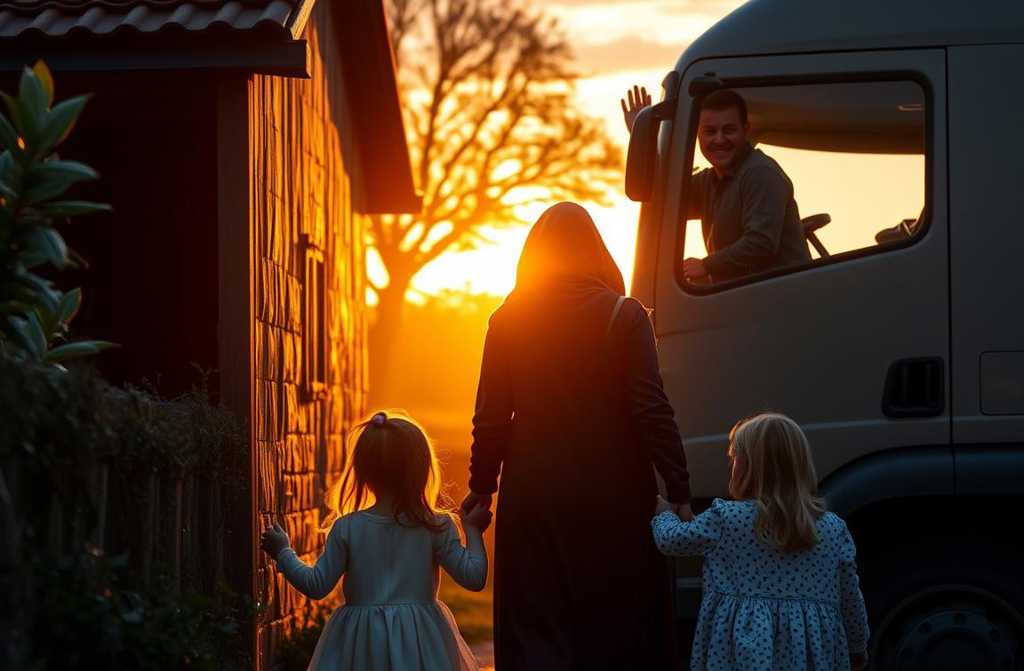
He shoved her out of the doorway with such force that the old oak door slammed shut behind her. Emily staggered across the yard, her foot catching on a loose plank before she tumbled onto the weatherworn floorboards. She brushed the dust from her hands, lowered herself onto the damp boards and gingerly pressed a trembling finger to the hot spot on her cheek, then to the lower lip. A crimson line lingered on her fingertip. It wasnt a surprise Stephen had once again cracked her lip. The cheek hurt even more.
Stephen had lost control of himself again; it happened far too often.
Emily went back to the door, pressed her forehead against the rough timber and tried to catch her breath. From the other side came the frightened sobs of her daughters, Lily and Rosie. Their tiny voices tightened her heart. She could not bear the thought of hurting them any further. She licked the swollen, saltytasting lip, a reminder of yet another argument, another flash of blind, wild jealousy.
All of it began with a single foolish smile. At a village meeting earlier that day, the local councilor a boisterous man in his fifties with a ruddy complexion made a jaunty comment about the harvest. Emily, standing nearby, let out a nervous laugh out of politeness. Gillian, Stephens sister, caught the glimpse. Her sharp, needlelike stare lingered on Emily a fraction too long. That was enough. Without hesitation Gillian relayed the incident to Stephen, and, as usual, added a few of her own insinuations. She knew all too well how Stephen could flare when angered.
Shivering, Emily pushed away from the doorframe and trudged to a low wall. She perched on a cold log. The September evening was unusually warm for the time of day, yet the earth already breathed a night chill. A prickly wind slipped under the thin scarf she wore. All she wanted was the hearth, the children, some comfort but there was nowhere to go. To Stephens house? Gillian would meet her at the threshold with a cutting remark. Her own family was gone; her mother had died a year ago. The thought made her heart contract even tighter, and hot, bitter tears streamed down her cheeks. She missed her mothers scent dried apple jam and the faint smoke of the kitchen and the gentle, soothing words that could ease any wound. Now there was no one left to soothe her pain.
What have I done? she thought, watching the shadows deepen. Why am I locked in my own home like a stray dog, unable to see any way out?
Only seven years ago just seven short years she could close her eyes and picture a different scene: a happy marriage, two families preparing for a wedding.
The air was thick with the sweet scent of cut grass, the evening drawing near. She walked hand in hand with Jack, the man who loved her fiercely.
Tomorrow, Emily whispered, eyes fixed on the setting sun. I can hardly believe it.
Jack squeezed her palm tighter. His large, warm hand enveloped her slender fingers.
I believe it, he replied. Ive believed since the day you dared climb the birch tree for the ball and were terrified to come down. Remember?
Emily laughed.
I remember. You were down below shouting, Jump, Ill catch you. And you did.
Their love was the talk of the whole village. Yet it had never been simple. At the start, Gillian Zander, Stephens sister, had also liked Jack. With her mischievous eyes and stubborn fringe, she was hard to resist. Consumed by envy, she whispered nasty rumors: that Emily was not a suitable match, that their families were poor, that Emily was a troublemaker. She even tried to turn other girls against her, calling her a cold fish and a flighty fool. None of it stuck to Emily; the slanders passed through her like water through a clean pane, leaving her surface untouched. Gillians bitterness grew, and Jack brushed off the gossip with a grin.
I’m no angel, he would say when someone tried to feed him a tale. And Emily? Shes someone else entirely. Dont try to fool me.
Their relationship, despite the chatter, remained innocent late walks home, shy kisses on the cheek, quiet chats at the gate. Everything changed a month before the wedding. Jack seemed different.
Before, he would walk her to the gate, turn back with a light heart and wave. Now he clutched her so tightly she felt as if he might swallow her whole, refusing to let go.
Jack, whats wrong? Emily asked, feeling his muscles tense.
I dont know, he murmured, his face pressed against her hair. If I let go, Im scared Ill never see you again. My heart aches.
Dont be foolish, she whispered, smoothing his cropped hair. Well be together tomorrow.
Tomorrow he sighed, a strange melancholy in his breath.
Later, Emilys mother, with a sigh, said, He sensed it, love. His young heart knew a separation was coming.
On the eve of the celebration, Jack could not hold back.
Just one night, Em, he whispered. Their bodies met beneath a massive willow, its branches shielding them from prying eyes. No one walked that lane at night; the spot felt secluded, intimate. Jacks breaths were hot and uneven, his hands trembling as they tugged at the hem of her dress.
Doesnt matter, I cant wait any longer. Tomorrow youll be my wife. My wife! he declared.
She did not resist; she wanted the same. The starfilled sky swam before her eyes, and Emily felt herself become a woman beneath the willows shade, the earths scent enveloping her.
When the rivers dark water claimed Jack the next day, his body washed ashore far from the bank where the wedding was to be held. The village mourned, and Emilys world shattered. She spent days by the window where Jack once tossed small stones to catch her attention, fingers running over the delicate lace of her wedding dress a white chiffon gown she had painstakingly embroidered during long winter evenings. Her thin, translucent fingers twirled the lace, seeking answers in its rhythm.
Why? she whispered, her voice barely a rustle of curtains. Why?
Her mother, wiping tears with the edge of an apron, feared Emily would break like a dry twig and follow her husbands fate.
When despair settled over the house, Gillian appeared once more, eyes swollen with tears, wearing a simple cotton dress. Her usual sharp gaze softened with remorse.
Emily Em, she cried, falling to her knees and clasping Emilys thin legs. Forgive me! By God, forgive my cruel words! Jack is gone we have nothing left to share. Shall we be friends again, like we were as children?
Emily sat unmoving, like a doll. Her mother, leaning against the doorframe, watched with anxiety. She doubted anyone could change in an instant, shed an old skin. Then Emily inhaled a quiet, broken sigh, and tears streamed down not the silent kind of before, but bitter, healing, loud cries. She embraced Gillian, pressed her head against Gillians shoulder, and wept, releasing all the pain she had held inside.
Very well, her mother murmured softly. Perhaps Gillian will help her. Otherwise, Emily will be left alone after Jack.
Thus began an unlikely friendship. Gillian never left Emilys side, staying the night, talking for hours, becoming a shield against the world for Emily and her daughters.
Soon Stephen, Gillians cousin, entered the picture. He was a respectable, calm young man with steady eyes. He began bringing wildflowers and parcels from the city. At first Emily recoiled, seeing it as betrayal.
I cant, Gillian. It feels like betrayal, Emily protested.
What betrayal? Gillian pressed, smoothing Emilys hair. Life moves on, love. Stephen is a good man; hell love you, I know.
Whether Stephens persistence or Gillians soothing words, Emily finally gave in. She agreed to marry him. The wedding was modest, without music or many guests.
Nine months after Jacks death, rumors swirled through the village like a muddy river, growing louder each day. Neighbors whispered, pointed, and said cruel things:
Shes pretended to mourn! Shes flaunting herself!
Who knows, perhaps she was unfaithful with Jack? What happened in the river?
She disgraced her family.
The sharp words cut deep, but the worst came when Emily and her mother discovered that the source of the gossip was Gillian herself. Over tea at the village well, she had sighed and confided to other women:
Poor Emily, I love her like a sister, but you cant hide the truth Jack died, Stephen rushed into marriage perhaps he wanted to protect her reputation
Her venomous whispers spread, and Emilys fragile peace collapsed.
Stephen, who had seemed gentle, revealed his true nature after the first night together. He snarled, Youre trash, his words like ice shards. The kindness vanished, replaced by a permanent scowl. His jealousy grew absurd: he cursed the shopkeeper who lingered a moment too long, the postman who delivered a letter, even old Mr. Norris, the eightyyearold neighbor who simply waved from his garden.
Was she flirting with the old fool again? Stephen snapped, slamming the door. I see everything!
Emily soon gave birth to a daughter, hoping a son might soften Stephens temper. Instead, he sneered at the tiny girl, Another girl? I need a boy! He later declared the child not his, shouting, Only boys belong in this family! The abuse turned public, though he kept up a respectable façade for the villagers.
When Emilys mother fell ill, she begged, Where will I go, you fool, with a child on the way? Emily, terrified, obeyed, and gave birth to Lucy, a darkeyed little girl. Stephens disappointment was palpable: Again a girl? Bring a boy!
Desperate, Emily gathered what little money she could hide in the lining of an old coat, stitched together a small bundle of savings, spare clothes, and a few toys for her children. She planned to flee the village, to escape Stephens tyranny.
But fate struck again. While packing, she discovered she was pregnant once more. The news filled her with dread rather than joy. She turned to her mother for help.
Mother, I cant stay, she sobbed. Ill leave him.
Where will you go, you fool, with a belly? Youll die out there! Stay, the baby will settle, maybe a boy this time, her mother pleaded, urging patience.
Emily obeyed, and gave birth to another girl, Hannah. Stephens rage flared: Another girl? We need a son! He began shouting that the children were not his, spitting, and beating Emily when she tried to protect them. In public he pretended a model husband, but at home he was a monster. The girls cowered in corners whenever his footsteps echoed.
One night, after a particularly brutal outburst, Stephen locked the door and threw Emily onto the cold hallway, demanding she leave and go stay with old Mr. Norris for warmth. He knew that without children to keep her bound, she might try to run.
Emily sat on the freezing steps, hugging her knees, staring at the black sky. The childrens muffled cries seeped through the door. She clutched her lips, wiped tears, and knocked, pleading to be let back in. Despair hardened into steel. At first cockcrow, as dawn greyed into a bleak morning, she rose, her limbs aching, but a fire burned in her eyes.
When the door finally opened, Stephen stood there, crumpled, his gaze heavy.
What are you standing there for? Get up and make breakfast, he barked, turning away.
Emily entered without a word. She knew Stephen would be out in the fields all day and would not return until nightfall. As soon as the gate shut behind him, she moved with quiet determination. From a hidden compartment under the floorboards she retrieved an old leather satchel, filling it with her modest savings, spare clothes for the girls, a few treasured photographs, and a bundle of blankets.
Mother, where are we going? asked her eldest, Lily, trembling.
To a new life, love, Emily answered, steady.
They slipped past the hedgerows, avoiding the villages watchful eyes, and reached the dusty lane that led out of the county. A lorry roared past, its brakes screeching, and a cheerful young driver leaned out.
Need a lift, love? he shouted.
Emily, scarcely believing her luck, nodded. The driver, Sasha, helped load the satchel and settled the girls on the seat.
The road stretched long. Sasha, a talkative man, tried to draw the quiet woman out of her shell. Emily, watching the fields roll by, finally opened up, recounting her tale of Stephens jealousy, nightly expulsions, and constant fear. Sasha listened, then said, Youre a proper heroine, you are. Listen, theres a place not far from here where a big firm has bought land to build modern greenhouses. Theyre hiring workers, promise rooms.
Emily seized the chance. She arrived at the site, which resembled a sprawling construction camp in the middle of the fields. She first stayed with an elderly lady, Mrs. Harper, who, moved by her story, offered a modest room without charge. Emily laboured in the glasshouses from sunrise to sunset. The work was hard but honest, and the people valued her effort.
When the enterprise expanded and began building housing for staff, Emily received a small, but her own, flat. Holding the key, tears of relief fell down her cheeks.
She no longer dwelled on Stephen; those memories were like old scars that only hurt when touched. She avoided new romances, focusing on what mattered: her daughters being fed, clothed, healthy, and safe. She often thought, Im old enough now, it doesnt matter.
The most important thing now is that her children have a real home a place where no one shouts, no one is jealous of a man in his eighties, and no one is thrown out into the night. She learned that courage, even when forged in suffering, can lead to a fresh start.
In the end, Emily understood that happiness does not come from waiting for others to change, but from taking charge of ones own destiny, no matter how bleak the road may seem.



My Thrifty Friends Invited Me to a Birthday Party—But I Came Home Hungry
I have friends I jokingly call thrifty. They save on almost everythingfrom food to clothes. Its not that theyre hard...


My Daughter-in-Law Won’t Let Me See My Grandchild Unless I Bring Money, and My Son Doesn’t Say a Word
My son isnt divorced. He lives with his girlfriend, but he has no say in anything. Every time I try...


He Doesn’t Love You Anymore. Build Your Own Life Without Him! We’re Happy Together. You Must Admit It’s Not Right to Live Without Feelings. Mark Isn’t Leaving His Child—He’s Leaving You.
Leave me alone! cried Emily to Alice, whose cheeks were streaked with tears. Go and live your own lifewithout him!...


When I Retired, I Downsized from a Three-Bedroom Flat to a Studio—and I Haven’t Regretted It for a Moment
When I finally retired, I found myself living alone in a rather spacious two-bedroom flat. It wasnt just me a...


He Left When She Was Nine Months Pregnant and Asked to Come Back Three Years Later
Its absolutely true what they say: the longer couples date, the more disastrous their marriages often turn out. Irony at...


Yes, the flat is small, but we’ll buy your cousin a bed.
Anyone who works will understand the sense of dread I felt when the doorbell rang early on my one day...
The last message I sent her was brief: “I’m here if you need anything.” It sat with the status “Sent” for exactly eight hundred and forty days.
The final message I sent her was brief: Im here if you need anything. It sat with the status Sent...
“We’re modern people, right?—So I suggested we move in together, but with a catch: expenses 50/50, and all the housework’s yours, since you’re the woman… The room fell silent. I was stunned…”
Were living in the twenty-first century, after all, I said, suggesting we move in togetherwith one condition: we split expenses...