Connect with us

З життя

He Returned After a Year of Silence: He Asked If He Could Be My Husband Again

Published

on

12October2025

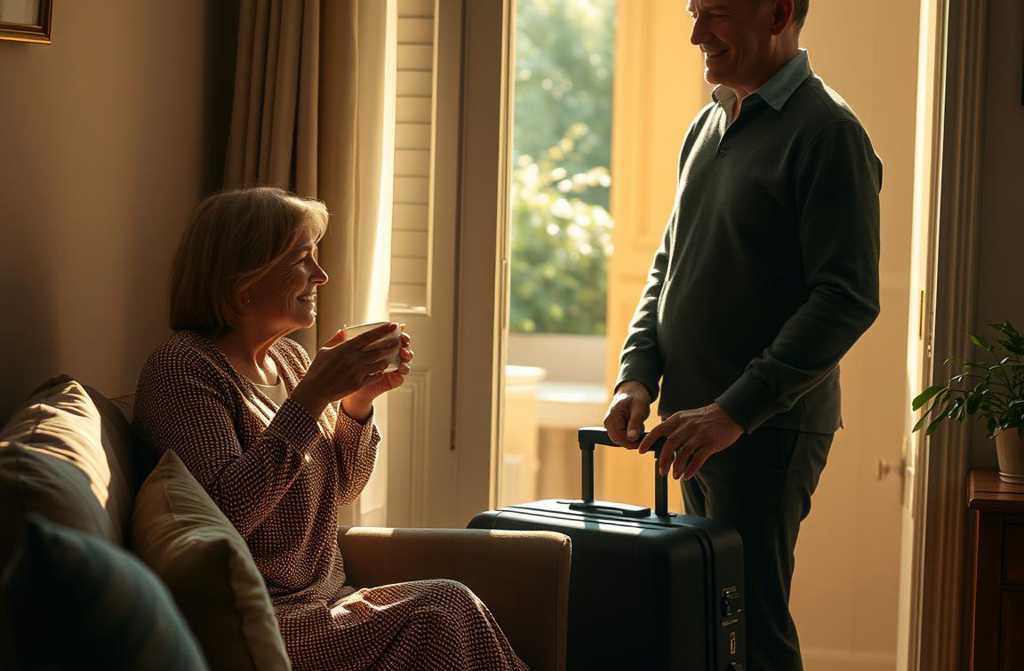
He turned up after a year of silence. He stood in the doorway with the same battered suitcase hed taken when he walked out twelve months ago, as if hed only gone out for a loaf of bread and never really left.

Hi, he said, voice tentative. May I come in?

I said nothing. I stared at him while a torrent of memories surged through my mind: an empty bed, unanswered texts, dozens of frantic calls, holidays spent in a mute house, latenight sobbing in the kitchen after the children were asleep.

He added, as if that could smooth over everything, Ive thought it all through. Id like to come back. Try again. With us.

A wave of dizziness washed over menot because he was there, but because just a few months ago I would have given anything to hear those words. Now I was no longer the woman he had left behind.

In the weeks after he vanished I felt as if I were dyingnot from pain, but from a hollow emptiness, from the bewilderment of his abrupt departure. Hed packed his things one morning, shrugged, I dont know whats next. I have to go, and then he was gone. He blocked my number, ignored the childrens calls, and vanished into the London fog.

Now hes back, as if time had frozen. I met his gaze; he seemed the same man, but I was a different woman. Perhaps he hadnt yet noticed. I let him in, not sure whycuriosity, perhaps, or the belief that after a year of quiet I deserved some answers. Maybe I simply wanted to confirm that I felt nothing for him any more.

He sank into the same sofa spot hed occupied for twenty years, reached for the mug that had once been his favourite, and looked around the living room.

Not much has changed, he said.

Everything has, I replied softly. You just havent realised it yet.

We sat in silence for a moment, then he began to speak. He talked about feeling overwhelmed, about a void, about being lost. He claimed hed left because he felt suffocated in our home, unready for old age, boredom, routine. He said he needed to run away to understand how much he meant to him.

I watched him, feeling an odd indifference. Months ago those words would have shattered my heart; today they barely stirred me. I felt a steady calm and a hardwon certainty: I had survived without him.

Where did you go? I finally asked.

He shrugged. First stayed with a mate, then rented a flat on the outskirts. Picked up odd jobs. Did a lot of thinking.

Alone?

He hesitated. Yes. But I shouldnt lie. I saw someone, briefly. Nothing serious. I thought it would help me forget. It hurt, not so much because it happened, but because Im bringing it up now, as if it were a casual aside. I spent the past year trying to stitch myself back together, piece by piece.

In that year I did for myself what Id never managed during our marriage. I returned to work, reconnected with old school friends, started taking short solo tripssomething he always scoffed at. I learned to play the music that lifts my spirits in the evenings and stopped watching his weary stare. I simply began living to my own rhythm. And now, with his return, he expected everything to rewind?

Do you want to come back to me, or to the version of me you left a year ago? I asked bluntly. Im not the same person you abandoned, and Im not sure I want to be that person again.

He stared at me, disbelief flashing across his face, as if hed just realised I wasnt waiting on a frozen clock, ready to welcome him unconditionally. In that instant I understood something else: I didnt need his explanationsI needed the truth. And the truth was that I no longer existed for his sake; I existed for my own.

After he left, I lingered at the kitchen table, watching the halfdrunk tea cool. The house was quiet, but this silence was no longer the suffocating void of the weeks after his departure. It was a quiet that allowed me to breathe.

He dropped his suitcase in the hall, never even asking permission, as if he assumed Id make space for him. I said nothingnot out of pity, but from a distance, needing first to understand what he truly wantedand what I truly wanted.

Over the next days he sent one or two messages a day, no pressure, sometimes a question, sometimes a memory. Once he sent a photo from our old seaside break with the caption, I didnt know I had everything then. I didnt reply; I wasnt ready.

He suggested meeting over dinner one weekend, a chat, anything. I answered simply, Not now. He left me speechless; now I was the one craving words, truth, perhaps an apologyone that came from genuine maturity, not empty regret.

That evening I sat on the sofa with a novel Id been unable to finish for weeks. My phone buzzed.

If youd like, I can come by tomorrow. Just to talk. Im not expecting anything.

I stared at the screen, thoughts swirling. I no longer loved him as I once had, yet life isnt measured only in the balance of emotions. People sometimes lose themselves to find themselves again.

Maybe its worth trying. Maybe I should. Perhaps it isnt too late for him to return not to the woman he left, but to the woman who, over the past year, learned to value herself again.

£0.00 the only currency that matters now is the one I spend on my own peace.

Click to comment

Leave a Reply

Ваша e-mail адреса не оприлюднюватиметься. Обов’язкові поля позначені *

три × 5 =

Також цікаво:

З життя6 години ago

A Parent’s Love: Family Gatherings, Christmas Surprises, and a Lesson in Protectiveness on a Winter’s Day

Parental Love Mum always said, Children are the flowers of life, shed laugh, and Dad would grin and add, Flowers...

З життя6 години ago

Igor Never Returned From His Holiday: When Your Husband Disappears by the Seaside, a Wife’s Search, Tense Family Reunion, and the Painful Truth That Comes Home

Since his holiday, Stanley never came back Hasnt your husband written or called yet? Not a word, Vera, not after...

З життя7 години ago

“Oh, You Drive Me Mad!… I Eat Wrong, I Dress Wrong, I Do Everything Wrong!”—Pavel’s Voice Broke Into a Shout. “You Can’t Do Anything Right!… Can’t Even Earn a Decent Living… And You’re No Help Around the House, Ever!”—Marina Sobbed, “…And There Are No Children…” She Whispered. Belka, the Ten-Year-Old Ginger-and-White Cat, Watched Silently from Atop the Cupboard as Another Family “Tragedy” Unfolded. She Knew, Even Felt, That Mum and Dad Loved Each Other Dearly—So Why Say Such Hurtful Things? Mum Ran Off Crying, Dad Chain-Smoked by the Window, and Belka Thought to Herself: “What This Home Needs Is Happiness, And Happiness Means Kids… Somehow, We Need to Find Children…” Belka Herself Couldn’t Have Kittens—She’d Been Neutered Long Ago. As for Mum, The Doctors Said It Was Possible, But Something Never Quite Worked Out… The Next Morning, After Mum and Dad Left for Work, Belka Squeezed Out the Window and Went to See Her Neighbour, Whiskers, for Advice. “Why On Earth Would You Want Kids?” Sniffed Whiskers. “Ours Always Come Over—Hide From Them If You Can! They Smear My Muzzle With Lipstick Or Squeeze Me ‘Til I Can’t Breathe!” Belka Sighed, “We Need Proper Children… But Where On Earth Do We Get Them?” “Well… That Stray Molly on the Street Just Had Five… Take Your Pick…” Whiskers Shrugged. On Her Own Daring, Belka Tiptoed Balcony to Balcony Down to the Street, Squeezed Through The Bars of a Basement Window, and Called Out, “Molly, Could You Come Here for Just a Moment?” From Deep Within the Cellar Came the Desperate Squeaking of Kittens. Belka Cautiously Approached. Underneath the Heater, Five Blind, Mismatched Kittens Searched The Air, Wailing Hungrily. Molly Hadn’t Been There for At Least Three Days. The Babies Were Starving… Feeling She Might Cry, Belka Carefully Carried Each Kitten to the Entrance of Her Building. Lying Beside the Screeching, Hungry Bunch, She Waited Anxiously for Mum and Dad to Come Home. When Pavel and Marina Returned from Work, They Were Astonished—There Was Belka, Never Before Out Alone, Being Nursed by Five Noisy Kittens. “How on Earth Did This Happen?” Pavel Stammered. “It’s a Miracle…” Whispered Marina. They Scooped Up Belka and the Kittens and Rushed Inside. As Pavel Watched Their Purring Cat in a Box Full of Babies, He Asked, “So… What Are We Going To Do With Them?” “I’ll Hand-Feed Them… When They’re Grown, We’ll Find Them Homes… I’ll Call My Friends,” Whispered Marina. Three Months Later, Still Stunned By The Miracle, Marina Sat Stroking Her Feline Clan, Repeating to Herself, “This Can’t Be Real… This Can’t Happen…” And Soon After, She and Pavel Wept for Joy, Laughing and Embracing, “I’m So Glad We Finished Building This House!” “Yes! Perfect for a Child to Play Outside!” “And the Kittens Can All Run Around!” “There’s Room for Everyone!” “I Love You!” “Oh, I Love You Even More!” Wise Old Belka Wiped Away a Tear—Life Was Finally Coming Together…

Im so fed up with you! Nothing I do is right for you! The way I eat, what I wearits...

З життя7 години ago

Excuse Me, Sir, Please Don’t Push—Oh, Is That Smell Coming From You? A Chance Encounter, a Perfectly Laid Bathroom Tile, and a Second Wind: How Rita’s Life Changed at 53 When a Homeless Stranger with Sapphire Eyes Built Her Happiness and Challenged Her Son’s Inheritance Plans

– Excuse me, sir, please dont push. Oh, goodness. Is that smell coming from you? – Sorry, the man muttered,...

З життя8 години ago

Mother-in-Law Anna Peters was sitting in her kitchen, watching the milk quietly simmering on the stove. She had forgotten to stir it three times already, each time remembering too late: the milk would froth, spill over, and she would clean the stove irritably with a cloth. In those moments she felt it keenly: it wasn’t really about the milk. Ever since her second grandchild was born, everything in the family seemed to derail. Her daughter grew tired, thinner, and quieter. Her son-in-law came home late, ate in silence, sometimes heading straight to the bedroom. Anna saw this and thought: how can you just leave a woman to cope alone? She spoke up. At first gently, then more sharply. First to her daughter, then to her son-in-law. And then she noticed something strange: after she spoke, the house didn’t feel lighter, but heavier. Her daughter defended her husband, he grew gloomier, and Anna returned home with a sinking feeling that once again, she hadn’t done things right. That day she went to see their vicar, not for advice, but because there was nowhere else to go with this feeling. “I suppose I’m just not a good person,” she said, not meeting his gaze. “I always do things wrong.” The vicar was sitting at his desk, writing. He set his pen aside. “Why do you think that?” Anna shrugged. “I tried to help. Instead, I only seem to make everyone angry.” He looked at her attentively, but without judgment. “You’re not a bad person. You’re just exhausted. And very anxious.” She sighed. That rang true. “I’m so worried for my daughter,” she said. “She’s so different since the baby. And him…” She waved a hand. “It’s like he doesn’t even notice.” “Do you notice what he does?” the vicar asked. Anna thought for a moment. She remembered how, last week, he washed the dishes late at night when he thought no one saw. How on Sunday he took the pram out for a walk, even though he looked as if he’d rather collapse into bed. “He does help… I suppose,” she replied doubtfully. “But not the way he should.” “And what way is that?” the vicar asked gently. Anna wanted to reply at once, but realised she didn’t know. She could only think: more, better, more attentively. But what, exactly, was hard to explain. “I just want things to be easier for her,” she said. “Then say that,” the vicar replied quietly. “Not to him, but to yourself.” She looked at him. “What do you mean?” “I mean you’re not fighting for your daughter — you’re fighting her husband. And fighting means being tense. That exhausts everyone: you, and them.” Anna was silent for a long while. Then she asked, “So what should I do? Pretend everything’s fine?” “No,” he replied. “Just do what helps. Not words, but actions. And not against someone, but for someone.” On her way home, she thought over his words. Remembered how, when her daughter was a little girl, she would just sit beside her quietly if she cried — never lecturing. Why was it different now? The next day, she arrived unannounced. She brought soup. Her daughter was surprised; her son-in-law embarrassed. “I won’t stay long,” Anna said. “Just wanted to help.” She watched the children while her daughter slept. Left quietly, without a word about how hard things were, or what they ought to do. The next week, she came again. And again, the week after. She still noticed that her son-in-law was far from perfect. But she began to see other things: the way he gently picked up the baby, how at night he tucked a blanket around her daughter when he thought no one was looking. One day, in the kitchen, she couldn’t help herself and asked him, “Is it hard for you right now?” He looked startled, as if no one had ever asked before. “It’s hard,” he answered, after a pause. “Very.” And nothing more. But something sharp in the air between them was gone. Anna realised she’d been waiting for him to change. But it needed to start with her. She stopped discussing him with her daughter. When her daughter complained, she didn’t say “I told you so.” She just listened. Sometimes she took the children to give her daughter a break. Sometimes she called her son-in-law to ask how things were. It wasn’t easy. It was much easier to stay angry. But gradually, the house grew quieter. Not better, not perfect — just quieter. Free of endless tension. One day her daughter said, “Mum, thank you for being with us now, not against us.” Anna thought about those words for a long time. She understood something simple: reconciliation doesn’t come from someone admitting they’re wrong. It comes when someone is willing to stop fighting first. She still wanted her son-in-law to be more attentive. That wish hadn’t gone away. But alongside it lived something more important: for her family to have peace. And every time the old feeling — frustration, resentment, the urge to criticise — rose up, she asked herself: Do I want to be right, or do I want to make things easier for them? Almost always, the answer showed her what to do next.

Mother-in-Law Margaret Williams sat in the kitchen, her eyes resting on the saucepan of milk gently simmering on the hob....

З життя8 години ago

Excuse Me, Sir, Please Don’t Push—Oh, Is That Smell Coming From You? A Chance Encounter, a Perfectly Laid Bathroom Tile, and a Second Wind: How Rita’s Life Changed at 53 When a Homeless Stranger with Sapphire Eyes Built Her Happiness and Challenged Her Son’s Inheritance Plans

– Excuse me, sir, please dont push. Oh, goodness. Is that smell coming from you? – Sorry, the man muttered,...

З життя9 години ago

“My Grandchildren Only See Fresh Fruit Once a Month, But She Buys Expensive Food for Her Cats!”: My Daughter-in-Law Accuses Me of Being Cold-Hearted for Putting My Pets First, but I Won’t Let Her Guilt Me into Supporting Their Growing Family

My grandchildren only see fresh fruit once a month, yet she spends a fortune on fancy cat food, my daughter-in-law...

З життя9 години ago

Oxana, Are You Busy? – A Festive New Year’s Eve Tale of Family, Holiday Hustle, a Mishap in the Snow, and an Unexpected Encounter with a Doctor That Changed Everything

Annie, are you busy? her mum calls, poking her head through the door to her daughters room. Just a second,...