
З життя
He Was Ten Years Too Late

He Was Ten Years Too Late
He had done everything right. Or so he thinks, climbing the narrow stairs up to the third floor of an old redbrick block on Forest Road. In the pocket of his overcoat, theres a small velvet ring box from Kings Jewellers, and Henry keeps touching it with his fingers, as if to make sure its still there. The ring was expensive; he spent nearly an hour choosing it, the saleswoman coming back over and over with different trays, while he inspected each one, imagined how Claire would react. She ought to be delighted. Ten years its not nothing.
On the landing, the air smells faintly of someones stew and, less pleasantly, of cat litter. Henry wrinkles his nose and rings the bell. November has been bitter this year; sleet fell since morning, and Henry cant quite get his hands warm. He shifts his weight, thumb finding the box again in his pocket.
Something clinks behind the door. Heavy footsteps, unmistakably male, echo down the hall. It takes Henry a moment to process it; he notes it without thinking, then freezes.
The door swings open.
A man stands in the doorway. About forty-five, stocky, a tartan flannel shirt half tucked into charcoal trousers. He looks at Henry with mild curiosity, the way you look at the postman or a new neighbour you havent seen before.
Who are you here for? the man asks quietly.
Henry blinks.
Im here to see Claire. Is she at home?
The man gives a slight nod, doesnt move aside, just turns his head back into the flat.
Claire, someones here for you.
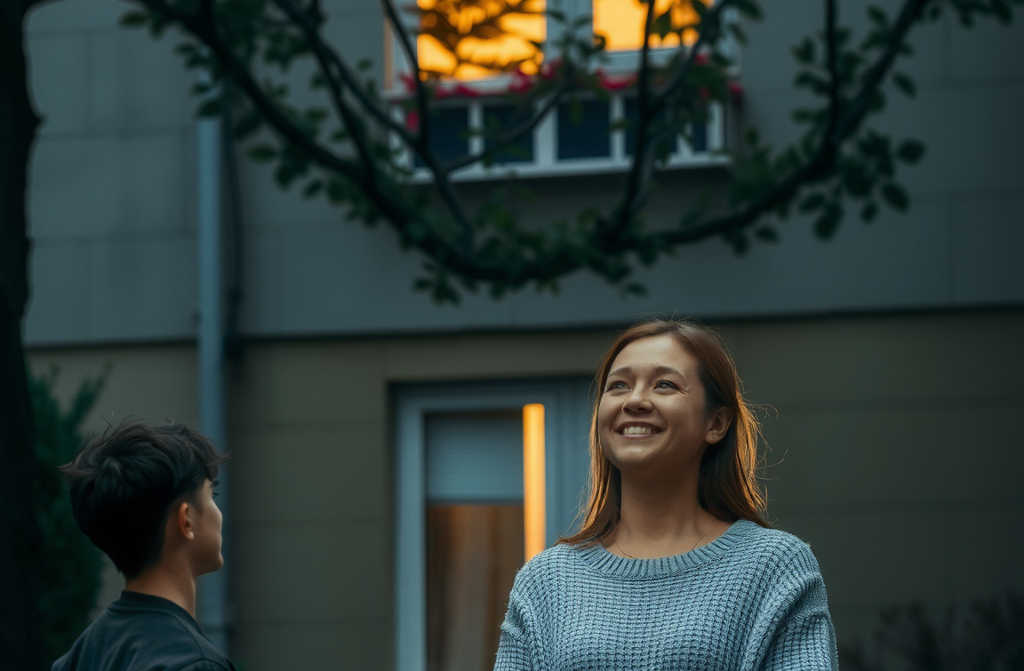
A few long seconds pass. Then Claire appears in the hallway. Shes wearing a soft cream jumper, her hair up, no makeup and strangely, she looks better than he remembers. Not flashier or more dressed up, but somehow transformed; more peaceful, something gentle glowing from within.
She sees Henry and pauses. He cant read her expression theres no joy, no irritation. Just something quiet and distant.
Henry, she says. You shouldnt have come.
He opens his mouth, then shuts it. Glances at the man, then back at Claire.
And whos this? he asks, although hes already starting to realise the answer and just doesnt want to believe it.
This is Richard, she replies evenly. He lives here.
Thats life, isnt it? Sometimes nothing needs explaining. A single phrase spoken calmly, with neither apology nor tears is plenty. He lives here. So there you are, standing on a cold landing in your November coat, with a ring burning a hole in your pocket, shivering against the gust of warmth that floats from the flat and smells suspiciously of homemade stew.
He recognises that smell. Beef stew. Exactly how she used to make it for anniversaries, when he would turn up with a bottle of wine, settle in the kitchen and watch her bustle about, thinking: heres someone who is ready, whos waiting, whos not going anywhere.
He was, as it turned out, very wrong.
She wont go anywhere, hes told himself over the years. Whats she going to do? Thirty-five, then thirty-seven, and almost thirty-eight. Whod want her, if not me? He was sure of these things, just as people are sure of assumptions they never test.
Claire, wait he starts. I need to talk to you. Its important.
Im listening, she says. Say what you need to.
Not here, he mutters, nodding at Richard.
Richard doesnt leave, doesnt budge, stands with a look that says hes not fussed this concerns him, but hes not about to get caught up or fret. Henry feels a spiky wave of something like anger, but more accurately irritation laced with fear.
Richard knows who you are, Claire says evenly. Go on.
Henry hesitates, then pulls the box from his pocket. Its midnight blue, with the Kings Jewellers crest in gold on the lid. He holds it out to Claire.
I want to ask you to marry me, he says. We should have done this years ago. I know Ive left it late. But I want us to get married.
Claire looks at the box but does not reach for it. Her gaze lifts to Henrys, and he is stunned by what he sees not hurt, not triumph, not bitterness. Something close to tired compassion.
Put it away, Henry, she says gently.
Claire
Please. Just put it away.
He places it back in his pocket. Realises his hand is slightly trembling.
So thats it? he asks, his voice almost harsh he cant manage anything else at that moment.
Yes, she says. Im sorry things went this way. But you must have known that one day, something would change.
You could have told me.
I did. Over and over. Maybe with different words, but I did. You werent listening.
She regards him for a moment, then gives a small, definite nod, as if drawing some internal line, and says,
Goodbye, Henry.
The door closes. Not with a slam, not even with a bang. Just quietly, the lock clicking behind it. Inside, he hears the gentle clink of a spoon or plate. Stew scent drifts out for another moment, then silence.
He stands on the landing for another three minutes. Then makes his way down, out to the street, and sits in his grey Vauxhall Vision, his pride of last years model, staring blankly as wet snow splotches the windscreen.
The ring in his pocket burns through his coat.
The first days after, Henry tries convincing himself its all fixable. Hes the kind of man who solves problems. He works at Granite Properties, a commercial real estate firm, adept at negotiation, persuasion, getting what he wants at the meeting table. Lifes taught him theres always a right tool for any job.
So he just needs the right tool this time.
He rings Claire the next day. She answers straight off, which surprises him slightly.
We need to talk, he says.
We talked yesterday.
I mean properly. In person.
What for, Henry?
We cant just throw away ten years. After everything.
A pause. Then she says,
Im not throwing anything away. It happened. But I live in the present now, not the past.
With him?
Yes.
Youve only known him six months. Only six months, Claire.
I knew you for ten years, she replies, voice still calm. And what?
He cant find any answer. She hangs up. Henry sits with his phone for a long time, trying to work out where he went wrong in the conversation. He cant.
Three days later he calls Narcissus Florists on Union Road and orders not just any bouquet, but a grand one: white roses and lisianthus, so big it just fits through a door. One hundred and one roses hes heard women have a thing for odd numbers, something about symbolism. The flowers are delivered to Claires workplace, the library on Birch Avenue, where shes the department manager. Henry thinks that maybe, in front of people, shell be embarrassed, moved, that something will change.
He adds a note: Sorry. I was a fool. Give me a chance.
That evening she texts a single message: No more flowers at work, please. It’s awkward for me.
He reads it three times. Awkward. Not thank you, not that meant a lot, not Ill think about it. Just awkward.
Henry puts the phone aside and goes to the kitchen to make tea. He stands by the window, staring out Novembers still mean, trees stripped, lights dull behind heavy mist, pavements slick. The cold seems to seep in, even though the radiators work fine.
He recalls how it all began. Not in self-defence, just remembers. They met when he was thirty, her twenty-eight. Through mutual friends, some birthday party. He was just starting at Granite, ambitious, impatient; work and money, not much else. Claire stood out to him straightaway not some cinematic infatuation, but she was clever, thoughtful, a good listener, able to be silent together, which he now realises is rare.
They began seeing each other. He didnt rush heavy conversations; she never pressed. He assumed she preferred it like that. He probably never asked properly.
There were times shed say, How do you see things a year from now? Or five? He would brush it aside with I think things are fine why rush? Shed go quiet. He took this as agreement.
Every New Year he sometimes spent with her, sometimes with his mates. Her birthday each February sometimes he came by, sometimes just called with busy at work. Shed say alright, and hed think: heres someone who understands commitment to work.
Now, with cold tea in his hand, he realises hed missed something.
She waited. For years, she waited for him to finally say something. He stayed silent, because he thought everything was clear as it was, nothing needed fixing. Or, if he was honest, part of him kept a door open in case someone shinier or somehow better came along, in case life offered more. Not intending to keep Claire as backup he just never properly chose. And she waited for him to choose.
While she waited, she changed.
He only understands this later, after weeks have passed, after seeing enough of her to compare the present to the past. Claire as hed known her before was gentler, more anxious, her eyes often searching his. Now, she meets his gaze directly, speaks plainly, no extra explanations. As if something inside has grown firmer.
He calls his old mate Leo, who he knew from university.
Shes moved in with this bloke, Henry says. Six months now.
Youve only just heard? Leo asks.
Yeah, Henry pauses. You knew?
Heard something vague. Assumed youd know.
No idea, Henry admits.
Leo is silent. Then, You didnt go out of your way for her, mate. Maybe it makes sense.
Henry doesnt carry on that conversation. Says goodbye and hangs up.
Maybe it makes sense. Leo means well, but Henry doesnt want sense he wants a solution.
What he does next is probably the most ridiculous step of the last few weeks, though he doesnt know it then. Dials her number, says,
Come outside for five minutes. Im outside your place.
Long pause. She asks,
Why?
Just, please. Come out.
She comes. In her jacket, hat, hands in her pockets. Henry, standing by the steps, does what hes planned, drops to one knee right there on the wet pavement, pulls out the Kings Jewellers box and offers it up.
It must be at least minus four; an elderly woman walking her dog stops, smiles sentimentally. Henry thinks Claire must surely feel something too.
She looks at him for three long seconds. Then quietly says,
Please stand up.
Claire
Get up. Youll catch cold.
He gets up. His knee is soaked through, and he feels it instantly. He tucks the box away.
You dont understand, he says. I mean it. Im ready now. I want a family, with you.
Did you want that ten years ago? she asks, and its not accusation but genuine curiosity.
I didnt think about it then the way I do now.
I know, she says, gentle and a bit tired. Henry, Im not angry at you. Truly. Theres nothing left from back then. I live differently now.
What if I tell you that I love you?
She looks at him, then glances away.
It wont change anything, she says softly. Words dont mean a thing by themselves. You love me now because youve lost me. Thats not the same as loving someone when things are easy and you have the choice, but you choose them anyway.
The woman with the dog walks off. The porch lamp flickers erratically. Claire stands before him in her dark coat, and Henry realises he doesnt know what size her coat is, when she bought it, whether she even likes winter. Ten years, and hed missed these basic things.
Go home, Henry, Claire says softly. Its late and freezing.
She turns and goes in. The door clangs shut.
He stands a moment longer, then trudges back to his car.
In December, he calls her again, several times. She answers each time, with composure, never rude, never slamming down the phone, but never leaving hope, either. One time he tries reminiscing: We have so much history. You cant just throw it away. She agrees you cant throw it away, nor should you, but memories are for recalling, not living in.
Another time he tries for sympathy. I cant sleep, works a disaster, I dont know how to go on.
Claire listens. Then,
It gets easier, Henry. Honestly, it does. Youll be fine youre a strong man.
That doesnt help.
I know. But I cannot help how youd like. Thats not in my hands.
Something ugly stirs in him and he blurts,
And this Richard do you really know him? Wheres he from, what does he do?
I do know him, she says, matter-of-fact.
Six months is nothing.
Henry, do you really think you know someone after ten years?
He has no answer.
He feels ashamed of what comes next, but at the time convinces himself its justified. Googles a private investigation firm, Shield, specialists in background checks. He hesitates, argues with himself he has the right to know whos moved in with Claire, its concern, surely?
Shield is a dreary office on the edge of town. Henry enters on his lunch hour. Hes greeted by an older man, Mr. Stevens, balding, tired-eyed, like an accountant.
The jobs straightforward, Stevens says after listening. Background check. Work, finances, social circle, criminal record, references. If you need, we can do a week or twos observation.
Do that, Henry replies.
What are you hoping to find?
I want to know who he is.
Stevens nods, without judgement, collects a deposit and the information Henry knows: name, rough age, address. Henry gives it.
A week and a half later, Shield calls. Stevens keeps it short.
Richard Francis Baker, forty-six. Engineer at Taylor & Sons, twenty years experience. Divorced, grown-up daughter, good relationship with her. Owns a flat in North End, currently living with your friend. No criminal record, no major debts. Calm life, works regular hours, weekends with his daughter, sometimes with your friend. Nothing worrying found.
Henry is silent.
Nothing at all?
Nothing at all. Ordinary chap.
Henry thanks him, pays the balance, drives back to work, mulling over it: an ordinary man, engineer, not wealthy, nothing remarkable by his own standards. And yet, shes with him, sharing life, making meals, making plans.
He realises how much it hurts.
The following week, Henry rings Claire again. He isnt even sure why, just cant help himself, drawn to the familiar sting.
Hes an engineer at Taylor & Sons, Henry says.
A pause, and for the first time a hint of edge in her voice:
How do you know that?
Henry realises hes said too much. But theres no going back.
I looked into it.
Silence. Then, firm as oak:
Thats too much, Henry. Did you have him followed?
I just needed to know.
Why?
To understand what you see in him.
Youll never find that in a report, she replies. Not ever. Thats not where those things are.
Claire
Dont call again, please. I mean it.
Are you serious?
I am. If you ring again, I wont pick up.
She hangs up.
He sits in his car and feels something new not rage, not resentment. Something colder, deeper, as if the grounds turned less solid beneath his feet.
Even so, he rings again. Five days before New Year, when the citys decked in fairy lights and shops are alive with that festive urgency. He stands in Star Market, basket in hand, and suddenly, powerlessly, calls her.
She doesnt answer.
He sends a text: Happy New Year in advance. Im sorry for everything.
She replies an hour later. Two words: You too.
He doesnt know how to read them. Forgiveness? Politeness? Basic kindness? He saves the message and rereads it often.
New Years Eve, he goes to Leos, with Leos wife and a few old mates. Drinks a bit, laughs at the right times. Leos wife Rachel, a kind woman in her forties, watches him with a particular gentleness, knowing something private has gone wrong.
At one, Henry steps out onto the balcony. January is freezing, sky clear, distant fireworks still bursting. He wonders where Claire is probably at home with Richard, celebrating, drinking champagne, laughing at inside jokes. Maybe theyre eating stew, as she loved to on holidays.
He wonders, Where was I last New Year? Off at a ski lodge with friends. Rang Claire the evening of the first, once hed sobered. Said hello. She replied, Thanks, and you, nothing more. Back then, he hadnt noticed how little that was.
Leo joins him, stands quietly beside.
All right?
Yeah.
Doesnt seem it.
Just thinking, says Henry.
About her?
About how things got this way.
Leo waits, then softly,
Dyou realise she was waiting for you, all those years?
I do now.
That mustve been hard for her.
I know.
Shes lovely, Leo says simply. Always said so.
You did, Henry agrees.
They stand a moment in silence, then go back inside.
In January, Henry rings her once more. He knows shes asked him not to, but theres something he needs to ask. This time, she answers.
You did say to me, he starts abruptly, that you wanted a family, a life together. I pretended not to hear.
Yes, she says.
Why didnt you leave sooner? Why wait so long?
Long pause. He thinks she won’t answer, but quietly she does:
Because I loved you. Because I hoped youd change. Because its hard to give up what youve already got, even when you know its not enough. People always wait a long time before realising theres nothing left to wait for.
And then?
Then, one day, I realised I wasnt even waiting for you anymore. Just some version of you I hoped youd become. But that person doesnt exist. Theres just you. So I had to decide.
And you did.
Yes. Not quickly, not easily. But I did.
Henry falls silent.
Is Richard a good man?
She answers without hesitation:
He is. Very.
Are you happy?
Another pause, longer this time.
Im content, she says. Which I think is happiness. Not always bracing for the worst, knowing that someone isnt going anywhere. Just being able to live, not feeling like youre a burden, or asking too much.
Her words squeeze something inside him, but he doesnt linger on it.
You thought you were a burden to me?
I felt it, she says evenly. Not always. But enough. When you ditched plans at the last minute. When you spent holidays with anyone but me. When Id ask about the future and youd dodge. Each thing, small on its own. But they add up.
He listens, doesnt interrupt.
I dont say this to hurt you, she adds. You were never a bad man, Henry. Just not my man.
Not my man. Three words, final, like closing the last page of a novel.
All right, he says. Sorry for disturbing you.
Youre not disturbing, she says. Youre just working things out for yourself. Thats natural.
He says goodbye. She does too, and this time he thinks theres a trace of warmth in her voice not pity, but respect, somehow. As if she appreciates that he called not to change her mind, but to understand.
Afterwards, he stops phoning her. Not because its any easier. But at least now, theres clarity. Not everythings fine, but he can see the edges of what happened.
His sense of time shifts. He used to treat time as a resource, like savings to spend later. Thirty? Still young. Thirty-five? No rush. Forty? Then hed think about settling down. But while he waited, someone else got on with things, without putting life on hold. Came to Claire, said something plain, and she listened.
One afternoon in February, passing through Forest Road on business, Henry slows by her block. Pauses for a second at the curb. Nothing special about the place just a usual redbrick, faded paint, bare trees, playground to the side. A light burns in a window on the third floor and briefly, a figure moves by. He cant tell who, so he drives on.
In March, a colleague named Tom, thirty-five and newly engaged, pops by Henrys office, boasting about the ring, the proposal, the dinner. Henry listens, smiles, congratulates. Tom asks why he looks so pensive.
What do you mean? Henry asks.
Dont know. Just thoughtful.
Just thinking, Henry says.
About what?
That you have to do these things at the right time, Henry answers.
Tom laughs, taking it as a compliment and hurries off to regale someone else with his story.
Spring comes early this year; by late March, the frost is gone, grass pushes up along the roadside, and the city seems lighter. One evening, Henry sits at his kitchen table with coffee, lost in thought, just staring out at the first green blades.
He thinks about keys.
A strange thought but it comes unbidden. Shed had a spare set for his flat; hed given them to Claire six years ago. She never used them unannounced, always called first. Hed forgotten about those keys. But she never gave him keys to hers. He never asked, and she never offered. Only now, in this moment, does he realise that says something. Not that she didnt trust him, but maybe that he never really belonged there, or at least, never asked to belong.
Or maybe, he reflects, he made it feel that way.
Probably the latter.
In April, he runs into Claire by chance, in The Page bookshop on Garden Street, where hes picking up a business title on a partners advice. Shes by the fiction shelves, in a cream mac, leafing through a book, looking simply well. Not overtly so, just at ease, as if all is settled inside her.
They spot each other at the same time. She gives a small nod; he goes over, not really able not to.
Hi, he says.
Hi, she replies.
For a moment, they stand there. He notices she isnt tense, doesnt shrink away, just looks at him neutrally, like a friend she hasnt seen in a while no warmth, no anger, just a faded memory.
How are you? he asks.
Good. You?
Im fine. Still working.
Ah.
The pause is empty but not awkward.
Richard and I are off to Cornwall for the summer, she mentions, and he understands shes not saying it to hurt him just that the conversation needs something real, and she has it to offer. Never been, thought wed give it a try.
Sounds nice, Henry manages.
She smiles slightly and picks her book.
Well then, Henry. All the best.
And you, he says.
She moves to the till. He watches, then heads over for his business book, flicks through it, buys it, steps outside.
April is warm, full of light, tender new leaves budding along the parks. Henry stands outside The Page, watching the street. People pass lots have that unmistakable spring look, distracted and cheerful.
She emerges a minute later, passes him, nods once more, and sets off towards the station. Her step is light, mac swinging, book under her arm. Once, she glances back to answer her phone, laughs at something on the line.
He watches till she disappears around the corner.
He pulls the little velvet box from his jacket pocket. Hes still carrying it, for reasons he cant explain. Opens it. The ring glimmers in the April sun, simple and beautiful, with a small diamond. An excellent ring; he chose it carefully.
He snaps the box shut. Puts it away.
Heads back to his car.
That evening, Henry sits in his flat on Central Street bought four years ago, renovated to his exact taste, everything just so. But theres a unique quiet in the place now, one he never noticed before.
He thinks what it means to miss your chance. Not in an abstract way, but right here, where youve held something real and let it slip through your fingers because you imagined it couldnt go anywhere. But it did. Not out of anger or drama, just quietly left, because living things either grow or wither, and Claire chose to grow.
He wonders: what did I choose?
He chose comfort. Chose to have someone without ever really giving. Chose not to risk certainty, not to speak out words that might commit him. He thought it was clever. Now, it just seems cowardly not out of spite or malice, but a gentleness mislabelled as caution.
He leaves the ring box on his desk, staring at it for a long time.
Then stands, puts the box away in the drawer. Closes it.
Pours himself some water. Drinks.
Outside, April continues on warm, noisy, persistent. Childrens voices carry from the courtyard; someone switches on their music; the evening smells of earth and old leaves. All of it so close, and at the same time, so distant.
He walks to the window, rests his forehead to the cool glass, closes his eyes.
So thats how it is, he thinks. Ten years, and nothing was as it seemed. It turns out, she wasnt the backup plan; it was he who cornered himself, thinking he was in charge. While he imagined freedom, she found real freedom the kind you choose for yourself. Now he stands at the window, hearing a spring that has nothing to do with him.
He has no idea what comes next. Life carries on, as always: work, meetings, maybe some new people, perhaps someone else one day. Maybe hell learn from this, but people say that and keep making new mistakes. Maybe he wont learn, just remember.
He leaves the window, slumps onto the sofa.
Claire is at home now, he imagines. Cooking, perhaps. Or reading the book she bought. Richard is there the calm man in a flannel shirt whod answered the door without hostility, just present. He has something Henry never managed with her: the certainty that he was on time, and did the right things.
Henry realises hes not even jealous. Not quite something stirs there, yes, but beyond envy, theres something else. Almost respect. For her. For what she managed not with a row, not with revenge or flaunting happiness, but simply growing, and choosing.
He remembers what she said by the steps, in the freezing cold: You love me now because youve lost me. Thats not the same as loving someone when you could have chosen them, but didnt.
Dead on, he thinks. She saw straight through it.
Sat in his quiet flat, he thinks: I could have chosen differently, many times. Third year, fifth, even seventh. Every birthday in February, every New Year when he took off for a holiday instead of being with her. Every time she cautiously asked about their future and he dodged.
Could he have chosen differently? Of course. He realises that now more than ever. Trouble is, that wisdom only comes when theres no choice left.
That, he thinks, is what regret is not loud, not a show. Just the quiet knowledge that times gone, and you let it, thinking it was unlimited.
He stands. Walks into the kitchen. Puts the kettle on, stares at the stove, thinks randomly, I should learn to make stew. Silly thought, anchored to nothing; he smiles to himself, wryly.
The kettle boils and clicks.
He pours his tea, adds a spoonful of honey hes read somewhere it calms the nerves. Sits at the kitchen table. Outside, the worlds dark, lit only by streetlamps and other peoples windows.
Across those windows, life goes on. Someones having supper, someone walks from room to room, a television flickers. All of it normal, yet oddly sharp.
He thinks again about keys. That he never asked for keys to her flat. Probably not because he didnt want to just never really thought about needing them. Now the door is shut for good, by something deeper than any lock, and no tool can open it.
The mug warms his hands. He cups it between both palms and sits, perfectly still.
He thinks: Some things you just cant get back. Not because people are unkind or unforgiving, but because time doesnt stand still only we sometimes pretend it does, while we make our mind up. It doesnt. It goes, and people grow, change, choose. If youre slow, you stand by the window and watch someone else walk off with the person you could have chosen, but didnt not betrayal, not cosmic injustice. Just life, unfolding as it must.
He sets down his mug.
Its quiet outside. April is gentler this year, no frost, no bitter winds. Just a warm evening, of which many are ahead.
He thinks: Just get on with living. Not because everything is suddenly fine, or because youve worked out all the mistakes. Just because theres no alternative. Life doesnt pause while you count your losses.
He also thinks that, if ever hes with someone important again, he wont wait. Not because hes wise, but because he knows, now, what a closed door feels like the one you knock on too late.
He rises from the table, washes his mug, places it on the rack.
Thats it, he thinks. No anger, no blame not towards her, nor Richard, nor fate. Just a quiet, clear understanding: it happened, it was honest, and it was right. Not for him, maybe, not right away, but right.
He shuts the lights in the kitchen, heads for the living room.
Somewhere in the drawer, the little velvet box still lies. Tomorrow, hell take it back to Kings Jewellers. Or maybe not tomorrow. When hes ready.



“Where Are My Clean Socks? You Really Need to Pay Attention to This! – Shouted My Husband”
My father always washed his socks by hand, alone, as though it was a sacred duty. He considered his socks...


No Longer a Wife
No Longer a Wife “Tom, Tom, have you checked your blood pressure today? Taken your pills?” Sally poked her head...


I went to my daughter-in-law’s house, cooked, cleaned everywhere, and she still wasn’t satisfied.
You know, my son and his young wife live in a rented flat not too far from me. I asked...


Stop Always Being the People-Pleaser
Enough of Being Agreeable Well, thats all settled then, Elaine! chirped Auntie Judith, dabbing at her lips with a napkin....
The Right to Remain Silent
The scent of perfume in the car was too heavy. Anna wound down the window just a crack, and the...
The Silent Dough
Silent Dough Sarah, do you realise whos coming on Saturday? Victor stood in the kitchen doorway, looking at her as...


He Was Ten Years Too Late
He Was Ten Years Too Late He had done everything right. Or so he thinks, climbing the narrow stairs up...


The Door
The Door Peter Johnson stared blankly at the door in front of him. What on earth was he doing here?...