Connect with us

З життя

Hello, It’s Me – Your Granddaughter

Published

on

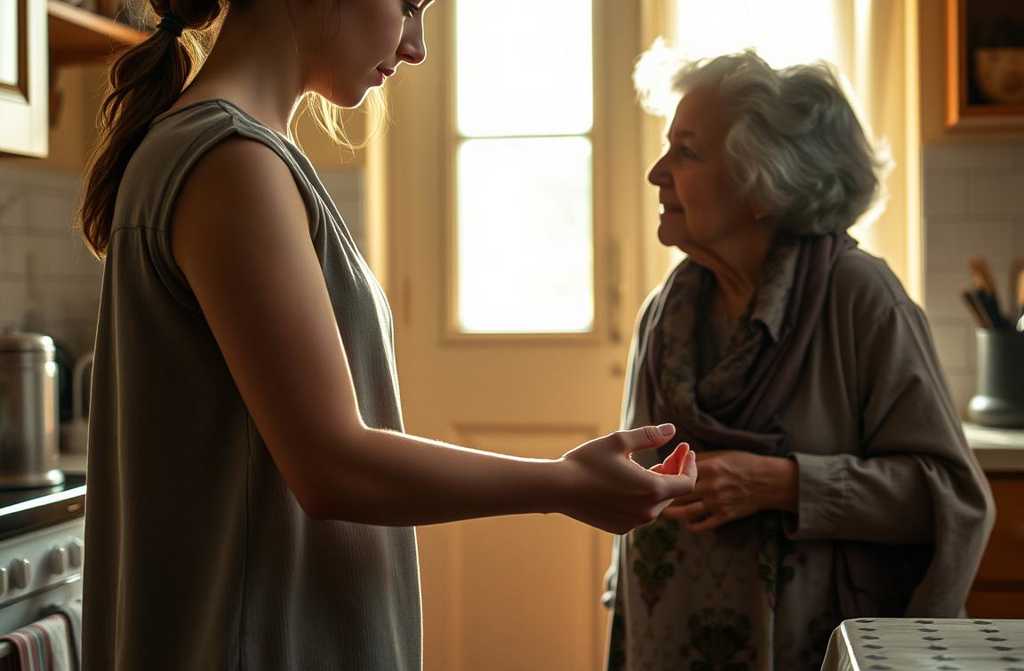
It was my grandmother who opened the door when we knocked.

“Your mothers come for you. Get your things ready,” the matron had said.

They say every child in the orphanage longs to hear those words. But Alice flinched as if struck. “Hurry up, then. Why are you just sitting there?” Miss Eleanor frowned, baffled by the girls lack of joy. Life in the home was no picnicchildren ran away to the streets rather than stay. Yet here was Alice, being returned to her own family, and she acted as though it were a punishment.

“I dont want to go,” Alice muttered, turning to the window. Her friend Emily shot her a sideways glance but stayed silent. She couldnt understand it either. Emily wouldve given anything to go home, if only someone had wanted her there.

“Alice, whats the matter?” Miss Eleanor pressed. “Your mothers waiting.”

“I dont want to see her. And I dont want to go back.”

The other girls had begun to eavesdrop, so Miss Eleanor guided Alice to an empty office, sympathy softening her expression.

“Your mothers made mistakes, yes. But shes clearly trying. They wouldnt let her take you otherwise.”

“You think this is the first time?” Alice scoffed. “This is my second stint in care. Last time, she pretended to turn her life aroundhid the bottles, cleaned the flat, bought food, even got a job. When the social worker checked, everything looked perfect. Then they sent me back, and she slipped right into her old ways. She only cares about the benefits.”

“Alice, theres nothing I can do. Surely home is better than here?”

“Better?” Alices voice cracked. “Do you know what its like to go hungry? To wear ruined trainers in freezing weather? To lock yourself in your room, praying her drunk mates dont come knocking? Why wont they just take her rights away?”

Tears welled in her eyes. The orphanage was no paradise, but at least she was fed, clothed, and safe. Home meant none of those things.

“I cant help you,” Miss Eleanor sighed.

She pitied the girl. Bright, sharp for her ageunusual in a place like this. Maybe her mother had been someone once, before the drink took hold. In seven years of working at the home, Miss Eleanor had never met a child who refused to go home.

“Could I live on my own?” Alice asked. “Id find work, rent a room.”

“Not until youre eighteen.”

“Im nearly sixteen! Im not a child!”

Miss Eleanor agreedAlice was far too grown for her years. But the law was the law.

“You need a proper guardian. Is there anyone else who could take you? Someone who could petition for custody?”

“Theres no one. My nan was alright, but shes gone now.”

“What about your father?”

“Dead. Drank himself to death.”

Alice said it so matter-of-factly. In her world, it was ordinary.

“Any relatives on his side?”

Alice hesitated. “Think he had a mother, but they werent in touch. Cant blame herI wouldnt speak to him either.”

“Listen,” Miss Eleanor leaned in, “go home for now. Ill see if I can find your grandmother. Deal?”

Alice nodded. What choice did she have?

Her mother put on a show, weeping and begging forgiveness when they met. Alice didnt react. She knew the act would drop the moment they stepped through the door.

It did. The first day, her mother kept up pretenses. By the second, she came home with a bottle.

Everything returned to hell. Her mother lost her job, and Alice was back in that flat, listening to the shouts and the clink of glass. When a drunken stranger stumbled into her room one night, and she barely fought him off, Alice had had enough.

Thankfully, Miss Eleanor had given her a number. Alice called, voice shaking. “Its the streets or the home. I cant stay here.”

“I found your grandmother,” Miss Eleanor said. “Ill speak to her. If she agrees, and the homes suitable, she could take custody.”

Alice begged to go along. She didnt know the woman, but she prayed she wouldnt turn her away. Just two more years, and shed be free.

The door opened to a woman in her sixties, tall and striking.

“Can I help you?”

“Margaret Whitmore?” Miss Eleanor asked.

“Yes.”

“Im your granddaughter,” Alice cut in. No point dancing around it.

“Excuse me?”

“Your son was my father.”

Margarets face betrayed nothing. “And what do you want from me?”

“Could we talk?” Miss Eleanor interjected before Alice could speak again.

Margaret sighed but let them in. Tea was poured, though her gaze kept flickering to Alice as if she were some oddity. Miss Eleanor explained the situation.

“Alice will likely go back into care. Unless you take her in.”

“Why should I?”

“Shes your family.”

“I dont know her. And frankly, Id rather forget my son ever existed.”

“Mrs. Whitmore, Alice is living in terrible conditions. If you could just”

Alice interrupted. “You dont know me, and I dont know you. And Id love to forget my parents too. But the law says I cant live alone yet. I need someone to sign papers, let me stay till Im eighteen. Ill buy my own food, clotheseverything. The state allowance youd get for me? Keep it. I dont care. If I had another relative, I wouldnt be here.”

Miss Eleanor shot her a warning look, but Margaret seemed almost impressed.

“They say drinkers children are slow. Clearly not in your case. So youd stay two years, then leave?”

“I promise.”

Margaret exhaled. “Fine. But rules: dont call me Nan, dont touch my things, and no friends in my house. Understood?”

“Crystal.”

Miss Eleanor made the calls. Another inspection was ordered, and this time, Alices mother lost her rights. Margaret signed the papers, and Alice had a new home.

Brave as she acted, Alice was terrified. Two months of school left, no moneywhat if Margaret truly let her starve?

But that first evening, Margaret called her to dinner. Alice hadnt eaten a proper meal in years.

The next day, Margaret grimaced at Alices worn shoes. “After school, were buying you decent clothes,” she said, brooking no argument.

“Ive no money.”

“My money. Id rather spend it than be embarrassed.”

Alice didnt argue.

Margaret bought her everythingeven asked her opinion, which stunned Alice.

A week later, Margaret summoned her. “Hows school?”

“Fine.”

“Let me see your grades.”

“Its all online now.”

“Good grief. As if papers gone extinct. Show me, then.”

Alice did, unashamed. Shed always worked hard, knowing no one would hand her opportunities.

“Well done,” Margaret said, and Alice flushed. “With marks like these, youre staying for sixth form. Then university.”

“Easy for you to say. Wholl pay for it?”

Margaret straightened. “Youll stay here. Through uni. Understood?”

Alice barely believed it. Shed wanted to keep studying but thought it impossible.

Bit by bit, the wall between them crumbled. Margaret asked about Alices life, sometimes even about her sonthough quickly, as if ashamed to care.

Alice finished school, got into uniwith Margaret hiring tutors to help her catch up. That summer, Alice found a job, ready to move out as agreed.

Then Margaret had a heart attack.

Alice found her on the floor, barely breathing, and panicked, certain she was dead.

Thankfully, she recovered. When visiting hours came, Alice rushed in.

“Nan!” she blurted, then froze. “SorryMargaret. How are you?”

Margaret smiled, stroking Alices hair. “Call me Nan. Its nice. Ill be alright, though itll take time.”

“Ill look after you! Ill stay till youre better!”

“I wont be a burden.”

“You put up with me for two years. A stranger dumped on your doorstep. You gave me more than my own mother ever did. And Ill care for you whether you like it or not.”

Margaret drew a shaky breath, eyes glistening.

“Fine. One condition.”

“What?”

“No student halls. Youll live with me.”

Alice hugged her tightsomething shed wanted to do for ages.

“Deal.”

Click to comment

Leave a Reply

Ваша e-mail адреса не оприлюднюватиметься. Обов’язкові поля позначені *

9 + два =

Також цікаво:

З життя15 хвилин ago

“Oh, You Drive Me Mad!… I Eat Wrong, I Dress Wrong, I Do Everything Wrong!”—Pavel’s Voice Broke Into a Shout. “You Can’t Do Anything Right!… Can’t Even Earn a Decent Living… And You’re No Help Around the House, Ever!”—Marina Sobbed, “…And There Are No Children…” She Whispered. Belka, the Ten-Year-Old Ginger-and-White Cat, Watched Silently from Atop the Cupboard as Another Family “Tragedy” Unfolded. She Knew, Even Felt, That Mum and Dad Loved Each Other Dearly—So Why Say Such Hurtful Things? Mum Ran Off Crying, Dad Chain-Smoked by the Window, and Belka Thought to Herself: “What This Home Needs Is Happiness, And Happiness Means Kids… Somehow, We Need to Find Children…” Belka Herself Couldn’t Have Kittens—She’d Been Neutered Long Ago. As for Mum, The Doctors Said It Was Possible, But Something Never Quite Worked Out… The Next Morning, After Mum and Dad Left for Work, Belka Squeezed Out the Window and Went to See Her Neighbour, Whiskers, for Advice. “Why On Earth Would You Want Kids?” Sniffed Whiskers. “Ours Always Come Over—Hide From Them If You Can! They Smear My Muzzle With Lipstick Or Squeeze Me ‘Til I Can’t Breathe!” Belka Sighed, “We Need Proper Children… But Where On Earth Do We Get Them?” “Well… That Stray Molly on the Street Just Had Five… Take Your Pick…” Whiskers Shrugged. On Her Own Daring, Belka Tiptoed Balcony to Balcony Down to the Street, Squeezed Through The Bars of a Basement Window, and Called Out, “Molly, Could You Come Here for Just a Moment?” From Deep Within the Cellar Came the Desperate Squeaking of Kittens. Belka Cautiously Approached. Underneath the Heater, Five Blind, Mismatched Kittens Searched The Air, Wailing Hungrily. Molly Hadn’t Been There for At Least Three Days. The Babies Were Starving… Feeling She Might Cry, Belka Carefully Carried Each Kitten to the Entrance of Her Building. Lying Beside the Screeching, Hungry Bunch, She Waited Anxiously for Mum and Dad to Come Home. When Pavel and Marina Returned from Work, They Were Astonished—There Was Belka, Never Before Out Alone, Being Nursed by Five Noisy Kittens. “How on Earth Did This Happen?” Pavel Stammered. “It’s a Miracle…” Whispered Marina. They Scooped Up Belka and the Kittens and Rushed Inside. As Pavel Watched Their Purring Cat in a Box Full of Babies, He Asked, “So… What Are We Going To Do With Them?” “I’ll Hand-Feed Them… When They’re Grown, We’ll Find Them Homes… I’ll Call My Friends,” Whispered Marina. Three Months Later, Still Stunned By The Miracle, Marina Sat Stroking Her Feline Clan, Repeating to Herself, “This Can’t Be Real… This Can’t Happen…” And Soon After, She and Pavel Wept for Joy, Laughing and Embracing, “I’m So Glad We Finished Building This House!” “Yes! Perfect for a Child to Play Outside!” “And the Kittens Can All Run Around!” “There’s Room for Everyone!” “I Love You!” “Oh, I Love You Even More!” Wise Old Belka Wiped Away a Tear—Life Was Finally Coming Together…

Im so fed up with you! Nothing I do is right for you! The way I eat, what I wearits...

З життя17 хвилин ago

Excuse Me, Sir, Please Don’t Push—Oh, Is That Smell Coming From You? A Chance Encounter, a Perfectly Laid Bathroom Tile, and a Second Wind: How Rita’s Life Changed at 53 When a Homeless Stranger with Sapphire Eyes Built Her Happiness and Challenged Her Son’s Inheritance Plans

– Excuse me, sir, please dont push. Oh, goodness. Is that smell coming from you? – Sorry, the man muttered,...

З життя1 годину ago

Mother-in-Law Anna Peters was sitting in her kitchen, watching the milk quietly simmering on the stove. She had forgotten to stir it three times already, each time remembering too late: the milk would froth, spill over, and she would clean the stove irritably with a cloth. In those moments she felt it keenly: it wasn’t really about the milk. Ever since her second grandchild was born, everything in the family seemed to derail. Her daughter grew tired, thinner, and quieter. Her son-in-law came home late, ate in silence, sometimes heading straight to the bedroom. Anna saw this and thought: how can you just leave a woman to cope alone? She spoke up. At first gently, then more sharply. First to her daughter, then to her son-in-law. And then she noticed something strange: after she spoke, the house didn’t feel lighter, but heavier. Her daughter defended her husband, he grew gloomier, and Anna returned home with a sinking feeling that once again, she hadn’t done things right. That day she went to see their vicar, not for advice, but because there was nowhere else to go with this feeling. “I suppose I’m just not a good person,” she said, not meeting his gaze. “I always do things wrong.” The vicar was sitting at his desk, writing. He set his pen aside. “Why do you think that?” Anna shrugged. “I tried to help. Instead, I only seem to make everyone angry.” He looked at her attentively, but without judgment. “You’re not a bad person. You’re just exhausted. And very anxious.” She sighed. That rang true. “I’m so worried for my daughter,” she said. “She’s so different since the baby. And him…” She waved a hand. “It’s like he doesn’t even notice.” “Do you notice what he does?” the vicar asked. Anna thought for a moment. She remembered how, last week, he washed the dishes late at night when he thought no one saw. How on Sunday he took the pram out for a walk, even though he looked as if he’d rather collapse into bed. “He does help… I suppose,” she replied doubtfully. “But not the way he should.” “And what way is that?” the vicar asked gently. Anna wanted to reply at once, but realised she didn’t know. She could only think: more, better, more attentively. But what, exactly, was hard to explain. “I just want things to be easier for her,” she said. “Then say that,” the vicar replied quietly. “Not to him, but to yourself.” She looked at him. “What do you mean?” “I mean you’re not fighting for your daughter — you’re fighting her husband. And fighting means being tense. That exhausts everyone: you, and them.” Anna was silent for a long while. Then she asked, “So what should I do? Pretend everything’s fine?” “No,” he replied. “Just do what helps. Not words, but actions. And not against someone, but for someone.” On her way home, she thought over his words. Remembered how, when her daughter was a little girl, she would just sit beside her quietly if she cried — never lecturing. Why was it different now? The next day, she arrived unannounced. She brought soup. Her daughter was surprised; her son-in-law embarrassed. “I won’t stay long,” Anna said. “Just wanted to help.” She watched the children while her daughter slept. Left quietly, without a word about how hard things were, or what they ought to do. The next week, she came again. And again, the week after. She still noticed that her son-in-law was far from perfect. But she began to see other things: the way he gently picked up the baby, how at night he tucked a blanket around her daughter when he thought no one was looking. One day, in the kitchen, she couldn’t help herself and asked him, “Is it hard for you right now?” He looked startled, as if no one had ever asked before. “It’s hard,” he answered, after a pause. “Very.” And nothing more. But something sharp in the air between them was gone. Anna realised she’d been waiting for him to change. But it needed to start with her. She stopped discussing him with her daughter. When her daughter complained, she didn’t say “I told you so.” She just listened. Sometimes she took the children to give her daughter a break. Sometimes she called her son-in-law to ask how things were. It wasn’t easy. It was much easier to stay angry. But gradually, the house grew quieter. Not better, not perfect — just quieter. Free of endless tension. One day her daughter said, “Mum, thank you for being with us now, not against us.” Anna thought about those words for a long time. She understood something simple: reconciliation doesn’t come from someone admitting they’re wrong. It comes when someone is willing to stop fighting first. She still wanted her son-in-law to be more attentive. That wish hadn’t gone away. But alongside it lived something more important: for her family to have peace. And every time the old feeling — frustration, resentment, the urge to criticise — rose up, she asked herself: Do I want to be right, or do I want to make things easier for them? Almost always, the answer showed her what to do next.

Mother-in-Law Margaret Williams sat in the kitchen, her eyes resting on the saucepan of milk gently simmering on the hob....

З життя1 годину ago

Excuse Me, Sir, Please Don’t Push—Oh, Is That Smell Coming From You? A Chance Encounter, a Perfectly Laid Bathroom Tile, and a Second Wind: How Rita’s Life Changed at 53 When a Homeless Stranger with Sapphire Eyes Built Her Happiness and Challenged Her Son’s Inheritance Plans

– Excuse me, sir, please dont push. Oh, goodness. Is that smell coming from you? – Sorry, the man muttered,...

З життя2 години ago

“My Grandchildren Only See Fresh Fruit Once a Month, But She Buys Expensive Food for Her Cats!”: My Daughter-in-Law Accuses Me of Being Cold-Hearted for Putting My Pets First, but I Won’t Let Her Guilt Me into Supporting Their Growing Family

My grandchildren only see fresh fruit once a month, yet she spends a fortune on fancy cat food, my daughter-in-law...

З життя2 години ago

Oxana, Are You Busy? – A Festive New Year’s Eve Tale of Family, Holiday Hustle, a Mishap in the Snow, and an Unexpected Encounter with a Doctor That Changed Everything

Annie, are you busy? her mum calls, poking her head through the door to her daughters room. Just a second,...

З життя3 години ago

Vitaly Settles in with Coffee and His Laptop to Finish Work—Until an Unexpected Call from the Maternity Ward Changes Everything: A Stranger’s Baby, a Past Affair in Brighton, and the Decision That Will Change His Life Forever

Edward settled himself at his mahogany desk, laptop open and a steaming mug of tea beside him. He had a...

З життя3 години ago

Igor Never Came Back from Holiday: “Why hasn’t your husband written or called?” “No word, Vera—not after nine days, not after forty,” Lyuda would joke, adjusting her work apron over her broad waist. “So he’s gone off the rails, or worse, then,” her neighbour nodded sympathetically. “Well, wait and see. Have the police said anything?” “Everyone’s silent, Vera—quiet as fish in that sea of his.” “Life, eh… fate.” That conversation weighed heavy on Lyudmila as she swept the autumn leaves from her doorstep in the dreary fall of 1988. Three years into her well-earned retirement, she’d had to take up work as a council cleaner to make ends meet. Life had always been simple—she and her husband, both dutiful workers, had raised a son, no scandal, no sorrow. Then Igor went on a seaside holiday and never returned. She’d phoned every hospital, every police station, even the morgue. Her son, stationed with the military, helped with inquiries—it was discovered Igor checked out of his hotel but never boarded the train home. Lyudmila wanted to go search for her husband, but her son insisted he’d handle it. Weeks passed, and she kept herself busy to stifle her fears. Then, as suddenly as he’d vanished, Igor reappeared—no suitcase, just the same navy suit and a weary silence. As she fussed to feed him and her son, the truth unravelled: Igor had been living with another woman by the sea, seeking “freedom.” The shock, the ache of betrayal—Lyudmila couldn’t bear it. Igor, shamed and lost, tried to return weeks later, but Lyudmila stood firm. It wasn’t just heartbreak—it was the pain of not knowing, of years shared and suddenly made strange. She swept her pathway, watching leaves collect and blow away, knowing sometimes those who hurt us most have already gone with the wind. (Original Title Adapted for English Culture: Igor Never Came Back from Holiday: The Disappearance, the Heartbreak, and the Road Swept Clean)

Yours hasnt written or rung you yet? No, Vera, not a word after nine days, not after forty either, Lydia...