Connect with us

Цiкаво

Як німці стали такими чистоплотними?

Avatar photo

Published

on

Джерело: pixabay

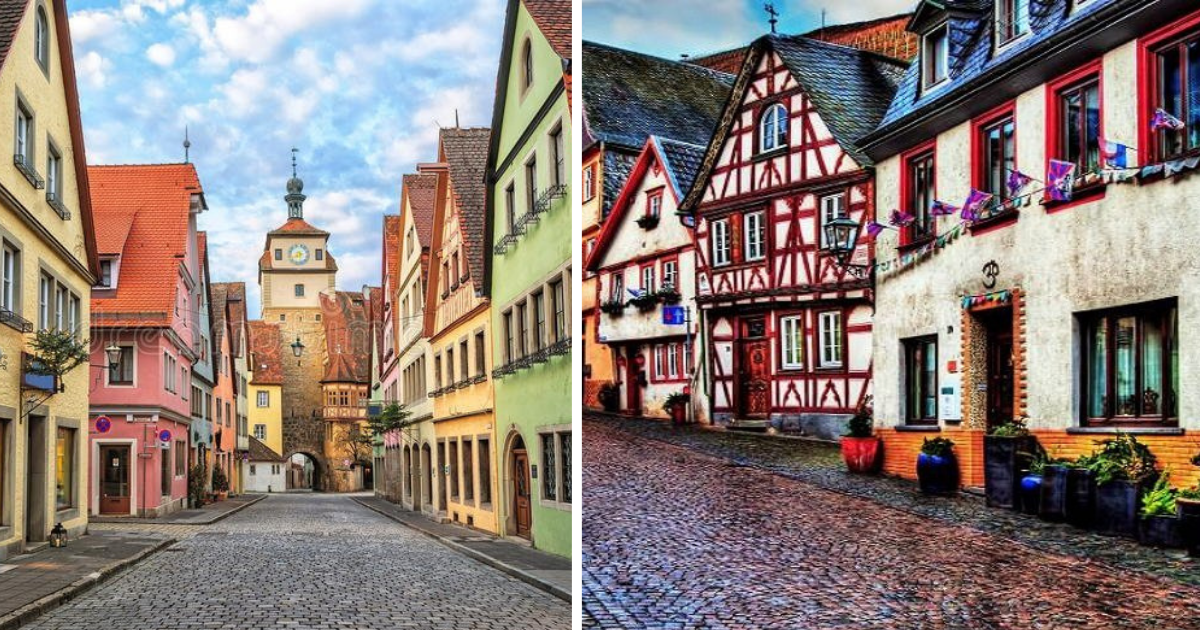
Чому ж навіть у найменшому німецькому місті на вуличках ви не побачите сміття! Як вони дійшли до такого?

Весь секрет ховається не у високих штрафах чи суворих законах, а у справжній німецькій ментальності.  Любов до порядку переходить з покоління в покоління, хоча так було далеко не завжди. Якщо згадати історію, то більша частина Європи буквально тонула у сміттєвих горах. Що там сміття, люди не дотримувались елементарних правил гігієни.

Все змінилось тоді, коли до влади прийшов жорстокий граф Вюртемберг. Його дістало сміття та сморід, тому він видав указ, суть якого полягала у тому, що якщо людина бачить, що його сусід декілька днів поспіль не прибирає, то може донести на нього та отримати частину його землі.

З того часу, німці привикли масово та показово прибирати свої території. Вони полюбили чистоту не тільки у себе вдома, але і на всіх вулицях міста.

Click to comment

Leave a Reply

Ваша e-mail адреса не оприлюднюватиметься. Обов’язкові поля позначені *

три + одинадцять =

Також цікаво:

З життя55 хвилин ago

My Husband’s Relatives Invited Themselves to Our Holiday Cottage – But I Refused to Give Them the Keys

My mum and I were chatting, and we reckon theres no point letting your cottage just sit empty over the...

З життя58 хвилин ago

Nobody’s Home

No Ones Home Robert awoke before his alarm, as he always did, at half six. The flat was hushed; the...

З життя2 години ago

The Letter That Never Arrived Grandma sat by the window for a long time, even though there wasn’t much to see. Dusk fell early outside, the streetlamp beneath her window flickered on and off lazily. Sparse tracks of people and dogs traced the snowy yard; in the distance, the caretaker scraped with her shovel, then silence settled again. On the windowsill lay her thin-rimmed glasses and an old mobile with a cracked screen protector. Sometimes it would buzz gently when new family pictures or voice messages arrived, but tonight it was quiet. The flat was silent. The ticking of the wall clock counted the seconds, louder than she would have liked. She rose, went to the kitchen, turned on the light. A dull yellow circle spilled down from the ceiling bulb. On the table was a bowl of cold dumplings, covered with a plate. She had cooked them earlier, just in case someone popped by. No one did. She sat at the table, picked up a dumpling, took a bite, and immediately put it down. The pastry had gone rubbery with the day. Edible, but joyless. She poured herself tea from the old enamel kettle, listened to the water fill the glass, and, surprising herself, sighed aloud. The sigh came heavy, as if something had come loose in her chest and landed on the stool beside her. Why am I complaining, she scolded herself. Everyone’s alive, thank god. A roof over my head. Still— Still, fragments of recent conversations floated through her mind. Her daughter’s voice, taut as a string: “Mum, I can’t do this anymore. He’s at it again…” And her son-in-law’s, a little mocking: “She complains, huh? Tell her life’s not always how she wants it.” And her grandson Sasha, tossing a terse “yeah” down the line when she asked how he was. It was the “yeahs” that hurt the most. He used to tell her about school and friends for hours. He’d grown up, she knew. But still. They never argued loudly around her, never slammed doors. But something invisible stood between their words—a wall of jabs, omissions, grudges pointedly unadmitted. And she, caught between, sometimes felt to blame: should’ve raised them better, advised differently, kept silent more often. She sipped her tea, scalded her tongue, and suddenly recalled how, years ago when Sasha was small, they’d written a letter to Father Christmas together. In careful, lopsided print, he’d asked, “Please bring me a building set and for Mum and Dad to stop arguing.” She had laughed and stroked his head, promising Father Christmas would hear. Now, remembering, a pang of shame rippled through her—she’d lied. Mum and Dad never did stop; they only learned to quarrel quietly. She moved the mug aside, wiped the already clean table, then made her way to the sitting room and switched on the desk lamp. The yellow pool lit up the old writing desk she rarely used now, fingers more familiar with texting, smileys, voicemails. A pen nestled among pencils in a cup, next to her squared notepad. She hovered, then thought: What if… The idea felt silly, childish, but it warmed her. To write a letter. A real one, on paper—not for a present, but just to ask. Not from people, each tangled in their own scores, but from someone who, in theory, owed nothing to anyone. She smirked at herself. Mad old biddy, writing to Father Christmas. Yet her hand reached for the notepad. She sat, straightened her glasses, picked up the pen. Past scribbles filled the first page, so she found a blank one, hesitated, then started, “Dear Father Christmas.” Her hand trembled. She felt exposed, as if someone peered over her shoulder. She glanced around the empty room: the neatly made bed, wardrobe with doors closed tight. Nobody. “Doesn’t matter,” she murmured and continued: “I know you belong to children, and I’m an old woman. But I won’t ask for a coat, a telly, or things. I have what I need, truly. I wish for just one thing: please, bring peace to our family. Let my daughter and her husband stop quarrelling, let my grandson not stay silent like a stranger. Let us sit at the same table, without fearing who’ll say the wrong thing. I know it’s people’s fault; you’re not to blame. But maybe you can help, somehow, just a little. I probably have no right to ask, but I ask all the same. If you can, help us hear each other. Yours sincerely, Grandma Nina.” Reading it through, she found the words naïve and crooked, like a child’s drawing, but she didn’t cross them out. She felt lighter, as if she’d finally said what needed saying—not to a void. Paper rustled under her fingers. She carefully folded the letter, hesitated, unsure what next. Throw it out the window? Into the postbox? Ridiculous. She fetched her bag in the hallway, remembering she’d planned errands to the shop and post office tomorrow. Well, I’ll drop it in the Father Christmas letterbox—those are everywhere now. Others must do the same, she reasoned. She slipped the letter next to her passport and bills and turned off the lights. The clock ticked in the stillness as she lay awake a long time, listening to the silence, then drifted off to sleep. The next morning, she left earlier than usual to finish before midday. Outside was slippery, the snow creaked. Her neighbour, out walking her little dog, wished her good health. They exchanged a few words, and Nina strode on, gripping her bag’s strap. The post office was busy, queue trailing to the payment window. She joined the back, pulled out her bills and the folded letter. There was no Father Christmas postbox—just regular letterboxes and a display of envelopes. At a loss, she put the letter back, paid her bills, and stepped outside. By the door was a toy stall, decked with tinsel. Hanging from it was a cardboard box labelled “Letters to Father Christmas.” But the seller had just finished taping it shut. “All done for the year, love,” she explained. “Yesterday was the last collection. Too late now.” Nina nodded her thanks, though there was nothing to thank for. She trudged home, the letter nestling in her bag, warm and irksome—a thing you can’t quite forget, and can’t throw away. At home, she took off her boots, hung up her coat, put her bag on the stool to unpack later. Her phone vibrated in her pocket—a message from her daughter: “Mum, hi. We’ll pop round this weekend, yeah? Sash had a school project, says you’ve got good old books.” Something inside clenched, then eased. So—they’d come. Maybe not everything was lost. She replied, “Of course, I’m waiting,” before tidying away her shopping and putting soup on the boil. The letter remained, tucked in her bag on the stool. Come Saturday evening, footsteps and chatter filled the stairwell, then a knock on her door—her daughter with a bag, her son-in-law with a box, Sasha, tall and skinny, slouching under a cap pulled down over untidy hair. “Hi, Gran,” Sasha said, ducking for a peck on her cheek. “Come in, come in!” she fussed, offering them slippers. Suddenly, the hallway was cramped and noisy. The air smelled of cold, snow, something sweet in her daughter’s bag. Her son-in-law grumbled about the un-swept stairs, Sasha shrugged off his trainers, jostling his rucksack. “Mum, we can’t stay late—seeing his folks tomorrow, remember?” “I remember, I remember,” Nina nodded. “Come through, soup’s on.” They clustered in the kitchen, a little stiff. Bowls clinked with only the sound of spoons. Conversation eventually turned to work, traffic, prices. Words flowed smoothly, but below the surface ran a current. “Sash, that book for school, yeah?” his mum prompted when plates were cleared. “Oh, yeah.” He perked up. “Gran, you’ve got any, like, history books? Mine wants something extra for the war topic.” “Of course,” Nina beamed. “I’ve a whole shelf. Come on in, I’ll show you.” In the sitting room, Nina shone the desk lamp on battered spines, hunted for titles. “This covers the Blitz, this one’s survivors’ stories, here are some memoirs… Anything in particular?” “No idea.” Sasha shrugged. “Just something interesting.” He hovered beside her, head tilted. In that moment, she glimpsed the little boy who used to sit on her lap with endless questions. Now he was silent, but interest sparked in his eye. “Try this one,” she suggested, handing him a faded book. “I loved it when I was your age.” He thumbed the pages. “Thanks, Gran.” They chatted about school and his new teacher—a bit strict, Sasha reckoned, but fair. Nina asked more, happy just to listen. Soon his mother called from the doorway, “Sash, we’re off in half an hour.” “’Kay,” he replied, stowed the book in his rucksack, and joined the others. When they left, the hallway was tight again—bags, coats, scarves, reminders to call, to send photos. Nina saw them out, waited for the lift doors to close, then returned to a blanket of silence. She cleared the kitchen. Her bag sat on the stool by the wall—inside, the letter. She absentmindedly checked the pocket, fingers closing around the folded page. For a second, she wanted to tear it up, but instead she tucked it deeper and zipped the bag shut. She didn’t know that, while she had been fetching books, Sasha had brushed against her bag, glimpsed the edge of the white letter poking out. He didn’t take it then: too many grown-ups, too much rush. But that image stuck in his mind like a flashbulb. At home that night, as he unpacked his rucksack, he remembered. The idea that an adult—his grandma—would write to Father Christmas was first funny, then odd, then somehow sad. A couple of days later, on his way home from school, he messaged his grandma: “Gran, can I drop by? Need more for history,” and she replied quickly: “Of course, pop round.” He came round after school, backpack slung over one shoulder, music blasting in his ears. The building smelt of boiled cabbage and bleach. She opened the door as if she’d been standing by it. “Come in, Sash, take your coat off. I made you pancakes,” she said, bustling deeper into the hallway. He took off his trainers, set his rucksack on the same stool beside her bag. The bag was unzipped, just a white slip showing from the pocket. A knot tightened inside him. While she fussed in the kitchen, piling pancakes on a plate, he crouched—as if to tie his laces—pulled out the letter, heart hammering. Something in him knew it wasn’t right, but he couldn’t stop. He hid the letter in his hoodie, stood up, and went to the kitchen. “Pancakes? Awesome,” he said, trying to sound normal. They ate, chatted about school and the weather and the upcoming holidays. She kept checking he wasn’t cold, if his trainers leaked. He brushed her off, joking. Later, they went into the other room—he barely flicked through the book—and left at the usual time. At home, alone, he drew out the letter, sat on his bed with the faded paper on his knees. Neat, swirly handwriting stared up at him. He began to read. It felt embarrassingly intimate, as if overhearing a private conversation. Then, at the line, “so my grandson doesn’t stay silent like a stranger,” a lump formed in his throat. He thought of how lately he’d answered in monosyllables, brushed her calls aside. Not because he didn’t care, but because—well, life. Too much to say, or never the right time. But to her, it must have felt— He read to the end. The wishes for peace, that longed-for table where everyone listened. It wasn’t really a wish for Father Christmas—it was for him. That night, at dinner, he half-started, “Mum, about Gran—” but was interrupted: by his father asking about homework, his mother telling a story about her boss. He clammed up, finished his meal in silence. At night, the letter sat folded in his desk drawer. Knowing it was there left him unsettled. The next day, at break, he told his mate, “Found a letter Gran wrote to Father Christmas.” His friend chuckled: “No way. My grandad doesn’t believe in anything but his pension.” “It’s not funny,” Sasha replied, surprised at the sharpness in his own voice. That evening, he dialled her number but, nerves jangling, hung up as it rang. In the family group chat, he scrolled through recent messages—salad pics, traffic jokes, office parties. All safe, superficial. No letters. He typed, “Mum, why don’t we do New Year’s at Gran’s?” then deleted it. He imagined his mum rolling her eyes: “What, are you mad? We’re seeing Dad’s lot.” It’d just start an argument. He set the letter on his desk again. Re-reading the “one table” line, an idea formed—frighteningly bold, a tad ridiculous: Not New Year’s. Just an ordinary dinner, no fuss. He found his mother on the laptop. “Mum,” he said nervously. “How about we all have dinner with Gran? Like, properly. I could help cook?” She looked up, surprised. “You? Cooking? That’ll be the day. I don’t know—your dad, work, reports—” “We could do the weekend,” he pressed. “It’s not like we’re busy.” She sighed, leaning back. “Look, I’ll talk to your dad. No promises.” He nodded, pulse racing—his first awkward foray. Nothing heroic, but a step. He overheard her later that night. “He’s asking,” she told Dad in the kitchen. “Wants a proper meal with Mum.” “What’s there to do?” Dad grumbled. “More chats about pensions?” “She’s all alone,” she said quietly. “And Sash clearly cares.” Dad was quiet, then sighed himself. “Fine. Saturday, then.” Sasha went to bed feeling he’d won a small victory, though another still loomed—with Gran. The next day, he called her. “Hi Gran, it’s… We’re coming round Saturday, all of us. Like, to actually sit together. I could help with the food?” A pause, then: “Of course, darling. What shall we cook?” “Dunno—whatever you like. Salad? I can chop potatoes.” “Let’s teach you!”, she chuckled. That Saturday, he turned up with two carrier bags he’d helped Mum pack. “Blimey,” she laughed, “feeding an army?” “It’s fine. Leftovers are good.” They peeled, chopped, and chatted. Nina gently corrected his knife grip (“Careful, tuck your fingers in!”) and he grumbled but listened. The kitchen filled with the scent of frying onions and roasting meat. Radio murmured. Outside, dusk crept across the flats. “Gran,” he ventured, slicing cucumbers. “Do you… still believe in Father Christmas?” She jumped so hard her spoon clattered. “Where did that come from?” she asked, carefully blank. He shrugged, feigning indifference. “Dunno. School argument, that’s all.” She stirred the pot, turned and searched his face. “As a kid, sure. Maybe he exists, somehow—not just how you see in adverts. Why?” “No reason. Would just be cool.” They lapsed into companionable silence, neither saying what really mattered, but both knowing. His parents came later. Dad was tired, but less grumpy than usual. Mum brought a homemade cake. “Wow,” Dad joked, eyeing the spread. “Feeding an army, indeed.” “Your son helped,” Nina smiled, and Dad grinned at Sasha. “Well, look at that.” They sat, a little stiff at first, choosing their words cautiously. But the table worked its magic—stories flowed, laughter bubbled up over old tales, mishaps, colleagues’ antics. Nina smiled, hiding her mouth behind her hand. At one point, Mum, pouring tea, said, “Sorry we don’t come more often, Mum. Honestly. Life’s too fast.” Nina traced the rim of her saucer. “I know,” she said gently. “You have your life. I don’t mind.” Sasha felt something sting—he knew she did mind, just didn’t want to push. But her words were not reproach, just a quiet hope. He surprised himself. “We could come, you know,—not just at Christmas or birthdays. Like today. It’s nice.” Dad, uncharacteristically, said, “Yeah. It is.” Mum nodded. “We’ll try,” she promised—not glibly, but with real intent. After dinner, coats were found, bags gathered, thank-yous exchanged. As his parents waited at the door, Sasha paused by her desk, where smooth paper and pen rested—no sign now of the letter, safe in his pocket. He had resolved never to return it. There was too much truth in it to simply tuck away. “Gran,” he said quietly, “if you want anything—us to do something different—just say. You don’t need to write a letter. Just tell us.” She looked at him, gentle surprise giving way to warmth. “Alright then,” she said softly. “If I need to, I will.” He nodded and left. The lift took them away. Nina was alone. She sat in her kitchen, clearing crumbs from the table, the air still scented with roast and tea. In her chest swelled something quiet—not joy, not triumph, but the sense of a window cracked open, letting in a breeze. Troubles hadn’t vanished: her daughter and son-in-law would quarrel again, Sasha would keep his secrets. But for a while, at that table, they’d drawn a little closer. She thought of the letter. She didn’t know if it was still there or had been lost, or maybe found by someone. She caught herself smiling, realising it didn’t matter anymore. She rose, looked out the window. In the courtyard, children played, moulding snow. A boy in a red hat shrieked with laughter, his voice ringing up to the third floor. Nina pressed her forehead to the cold glass and smiled back, faint but sure, as if answering a far-off but familiar sign. In Sasha’s coat pocket, the letter rested—sometimes he took it out and reread a line. Not as a plea to some magical old man, but as a reminder of what mattered to the one who made his soup and waited for his call. He never told anyone about the letter. But later, when his mum said she was too tired to visit Gran, he simply replied, “I’ll go by myself then.” And did. Not for an occasion, not for a reason. Just because. It wasn’t a miracle—just one more small step towards the kind of peace someone once scribbled out on a gridded page. Nina, opening the door for him, looked a little surprised, but asked no questions. She just said, “Come in, Sash, I’ve just boiled the kettle.” And that was enough to make the flat feel warm again.

The Letter That Never Arrived Grandma Edith would sit for hours by her window, even though there wasnt much to...

З життя2 години ago

There Are No Coincidences Four years had passed since the loss of her mother, but Agatha still carried the bitterness and unbearable longing—especially on that evening after the funeral. Her father sat broken and grief-stricken, while Agatha was already exhausted from her tears, and their once cheerful family home was filled with a crushing silence. Agatha was sixteen, old enough to understand the pain she and her father shared, for the three of them had once been so happy together. Ivan hugged his daughter’s shoulders and quietly said: “We must find a way to carry on, darling. Somehow, we’ll get used to things…” Time went by. Agatha completed her training as a paramedic and recently started working at the local clinic. She lived in their family house alone, ever since her father remarried a year ago and moved to a nearby village with his new wife. Agatha had no resentment towards her father—life is what it is, she knew she too would marry someday, and her father was still a young man. On her father’s birthday, Agatha stepped off the bus wearing a beautiful dress and shoes, a gift in hand for her only remaining family. “Hello, Dad!” she said warmly. They embraced in the garden where he greeted her. “Happy birthday!” “Hello, love, come in—the table’s ready,” he replied, and they went inside. “Agatha, you’re finally here!” called out Kate—her stepmother now—from the kitchen. “My kids are already starving!” she added. Ivan had lived with his new family for a year. Kate had two children: Rita, an unpleasant, spiteful girl of thirteen, and an unruly boy of ten. Agatha didn’t visit often—this was only her second time in a year. She tried to ignore Rita’s misbehavior, though the girl’s rudeness went unchecked by her mother. After the birthday wishes, Kate began her interrogation. “So, have you got yourself a boyfriend?” “Yes,” Agatha replied. “And will there be a wedding, then?” Agatha blushed, caught off guard by Kate’s directness. “Well…we’ll see,” she answered evasively. “Here’s the thing, Agatha,” Kate forced a smile, “your father and I have spoken, and he’s decided he’s not going to help you financially anymore. He already gives you too much, and we have a big family now. It’s time you got married and let your husband support you. Your father needs to look after us first. You’re an adult now—and you have a job…” “Kate, hang on,” Ivan interrupted, “it’s not quite like that. I already explained I’m giving Agatha far less than—” But Kate cut him off, shouting, “You’re nothing but a cash machine to your daughter and the rest of us have to suffer!” Ivan fell silent in shame. Agatha felt ill and left the table, slipping outside, needing to calm her nerves. The birthday had been completely ruined. Rita soon followed, plopping beside Agatha on the bench. “You’re pretty, you know,” Rita remarked. Agatha just nodded, not wanting conversation. “Don’t be offended by my mum—she’s just cranky because she’s pregnant,” Rita smirked. “Wait till you get to know her—she’ll show you,” the girl added, laughing as she ran back inside. Agatha got up and left the yard. Glancing back, she saw her father standing on the porch, watching her go. Three days later, Ivan and Kate paid her a surprise visit. “Oh! How lovely to see you both—let’s have some tea,” Agatha offered. Kate eyed the house critically. “It’s a good, solid house—you won’t find many like it around here.” “My dad built it himself, with Uncle Nick from up the road. Right, Dad?” “Oh, I wouldn’t say golden hands for myself, love—the house was for us, after all,” Ivan demurred. Kate continued, “Yes, I know—I got very lucky with him. And actually, we’re here to talk about the house.” At once, Agatha grew wary and squared her shoulders. “I’m not selling my share. I grew up in this house and it means the world to me,” she declared, challenging both Kate and her father with her eyes. “Aren’t you clever!” Kate hissed with undisguised bitterness. “Well, Ivan, tell her.” Ivan looked away. “Love, we need to sort this out. My family’s bigger now, the house is too small, and with another child on the way… If we sell, you can buy a smaller place—they have loans, I’ll help to pay it off.” “Dad, how can you say that?” Agatha was stunned. “Your father’s got a new family now!” Kate yelled, “When will you understand? There’s no such thing as your family’s old house. You’re taking up too much space alone. You’ll just have to move, and no one’s going to ask your permission.” “Don’t you dare shout at me,” Agatha stood up. “Please, leave.” After they left, Agatha was gutted. She understood her father had a right to his own life, but not at her expense. This house, her mother’s home, was not for sale. Later, her boyfriend Artie stopped by and was shocked by the look on her face. “Hey, beautiful, you look awful—what’s happened?” Falling into his arms in tears, Agatha poured her heart out. Artie, a local police officer, listened quietly and reassured her, “Your dad’s a good man. He won’t go against your will—it’s that Kate who’s manipulating him. Don’t worry. I’ll get some city solicitors involved. Don’t agree to anything.” Ivan, meanwhile, was troubled. At first his marriage to Kate had seemed promising, but she’d turned greedy and aggressive, obsessed with selling his old house. Ivan was starting to think marrying her had been a mistake. Then came the news of Kate’s pregnancy. One evening, after Agatha was late home from the clinic, she hurried along in the autumn dusk. Artie, called away on an urgent shift, couldn’t walk her back, but he asked his friend Max to keep an eye out. As she neared her house, a car pulled up beside her. A large man stepped out, forced Agatha into the back seat, and sped off. “Who are you? What do you want with me?” Agatha sobbed. “Surely this is a mistake?” “There are no coincidences in our line of work,” the man replied calmly. “Do what we say and nothing will happen to you or your father. Just sign over your share of the house, and we’ll leave you both alone.” “Why bring my father into this?” “Sign the papers. The buyers are waiting. You’ll get your money in two days.” “This is illegal! I will never agree. I’ll go to the police. I’m not selling my house,” she spat, just before a brutal punch split her lip. “We’re not scared of your precious police—nor your boyfriend,” the man sneered. “If you don’t sign, you won’t live to regret it. And if your boyfriend meddles…” The car pulled off the road and skidded onto the verge as police sirens flashed behind them—first one, then another patrol. In a panic, the driver floored the accelerator but crashed the car into a ditch. Max, who had followed the car and called Artie, had acted quickly, and the police squad intercepted them in time. It later transpired that Kate’s thug was actually her lover and the father of the child she was carrying. With him, she hatched the plan to swindle Ivan out of his family home, which Kate coveted above all else. Agatha’s refusal had threatened the scheme, and Kate was ready to resort to anything, even violence. In the end, justice prevailed. Ivan divorced Kate and returned home. He kept busy running his small auto parts business. One night, Ivan, Agatha, and Artie sat together at the kitchen table. Now, more than ever, the house’s four walls felt precious to Ivan. “Don’t worry, Dad—you’ll never be alone,” Agatha teased. “Come on—are you getting married?” Ivan smiled at her knowingly. “I’ve proposed to Agatha, and she said yes!” Artie grinned. “We’ve already submitted the forms—the wedding’s soon,” the happy couple exchanged a playful glance and burst out laughing. “Even when I move in with Artie, Dad, we’ll visit all the time. We’re only going to be down the road…” Ivan, misty-eyed as he looked at the photo of his late wife, said, “Forgive me, love—I made a mess of things, but I’m sorry.” “It’s alright, Dad,” Agatha replied, “Everything’s going to be just fine.” Thank you so much for reading, subscribing, and for your support. Wishing you happiness in life!

Theres No Such Thing as Coincidence It had been nearly four years since Agathas mum passed away, but the ache...

З життя3 години ago

I Kicked My Brother-in-Law Out from Our Anniversary Dinner After His Offensive Jokes Ruined the Celebration

Oliver, have you found the best china? The set with the gold rim, not our everyday plates. And check the...

З життя3 години ago

My Mother-in-Law Tore Up My Beloved Lawn at Our Holiday Cottage for Vegetable Beds—So I Made Her Put Everything Back the Way It Was

Henry, are you sure we havent forgotten the charcoal? Last time we had to dash to the little village shop...

З життя4 години ago

My Relatives Took Offense When I Refused to Let Them Stay Overnight in My New Flat: Why I Chose My Peace Over Family Drama

Come on, Julia, have you gone completely silent? boomed Auntie Sallys voice from the other end, drowning out even the...

З життя4 години ago

My Husband Invited His Ex-Wife and Kids to Our Holiday Celebration—So I Packed My Bags and Spent New Year’s at My Best Friend’s House

You cant be serious, Oliver. Tell me this is just some stupid joke. Or maybe I misheard you because of...