Connect with us

З життя

Їй було тридцять: нічна зміна, п’яний чоловік і плач доньки: “Не йди!

Published

on

Їй було тридцять. Вона йшла на нічну зміну, на підлозі хропів п’яний чоловік, а донька тримала її за пальто і плакала: — Не йди!
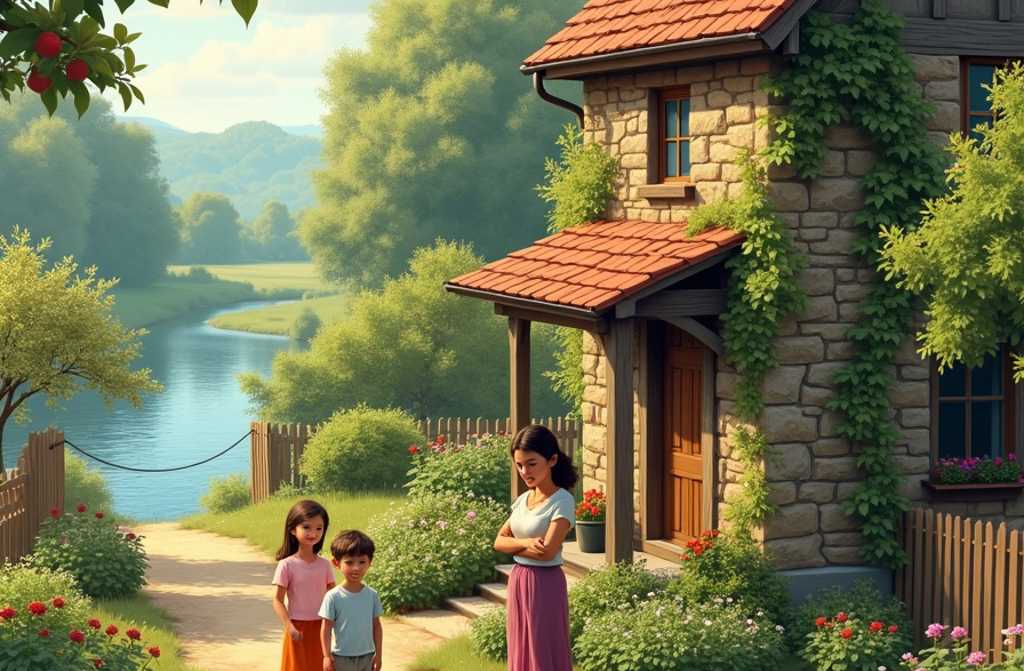
Син мовчки проводжав її поглядом — він був старшим за сестру на цілих півтора роки. Через кілька днів вона дізналася, що в сусідньому містечку, в одному з відділень, потрібна медсестра. Її прийняли. Вдалося купити старий будиночок на околиці. В кредит. Увесь цей час вона була схожою на танк, бульдозер: не можна повертати, лише вперед, не думати про труднощі. Вона отямилась, коли поїхала вантажівка, залишаючи за собою пилюку, що швидко сідає, а в кімнатці з низькими стелями — гора речей. Коли підняла відро чистої смачної води з колодязя. Коли затопила піч і дім наповнився теплом. У цьому маленькому старому будиночку вони мають бути щасливі!
Щастя було багато: сонце у маленькі віконця, ранкові купання в річці, теплий ґанок, на якому приємно стояти босими ногами, перші сходи кропу і моркви на грядці, кава на сніданок. І нічого, що кава була найдешевшою, розчинною, а на вечерю були порожні макарони. Зате на душі було спокійно. Вона берегла їхній маленький світ від спроб чоловіка повернути сім’ю, згадуючи плач доньки. Ніколи!
Після щомісячних платежів банку грошей залишалося небагато, але через пару місяців вона “встала на рейки”, почала планувати залишки зарплати і на їжу, і на речі. Вона вчилася покладатися на себе, не скиглити, просто йти вперед. А діти принесли бездомну собаку.
Підліток-щеня, ледве стояв на лапах, хитався від слабкості та дивився на неї гноїстими очима. Він зробив два ковтки теплого молока і впав. Через 10 хвилин набрався сил і зробив ще кілька ковтків. Вижив. Потім з’явилося кошеня. З діркою в зникаючому тільці, обвугленими залишками вусів. Також вижило. Всі вижили.
Майже одразу, як тільки усвідомила, що вони твердо стоять на ногах, що восени у них будуть власні овочі, посадила яблуню. Завжди вважала, що якщо є свій дім і клаптик землі, обов’язково має бути і яблуня.
— Яку вам? — запитала жінка в розсаднику.
— Не знаю, — відповіла вона і усміхнулася.
— Візьміть цю. Вона несла додому гілку і навіть не уявляла, що через кілька років усі будуть захоплюватися медовими до прозорості яблуками, з яких виходить надзвичайно смачна шарлотка та дивовижне ароматне варення.
Один з куточків ділянки виявився зачарованим: він, попри сонячність і відкритість, був покритий зеленим мохом. Гілки малини тут ставали рахітичними і засихали, ніби їх посадили в піски Сахари, а не в удобрену і политу землю. Саджанець кедра три роки стояв там у стані глибокої коми, потім на тонкому стовбурці виростила велика пухлина і він загинув. Вона плакала над ним, наче над близькою людиною, а потім посадила сливу. Гілочка сливи, прийшовши в себе після галасливої й людної площі, де її виставляли на всеознайомлення, випила багато смачної криничної води, оглянулася, побачила навколо зелений моховий килимок і вигукнула: — Те, що треба! На третій рік життя слива порадувала десятком перших плодів, а морозною малосніжною зимою замерзла. Але не загинула. Наступного літа вона виростила на залишеному в живих залишку стовбура товсті гілки, а на другий рік так обвішалася сливами, що всі дивувалися, не забуваючи при цьому набивати свої кишені величезними щільними і солодкими плодами.
А ще їй віддали саджанець вишні: якщо не візьмеш — викинемо. Посадила. За три роки вишня перетворилася на дерево, але плодоносила мало. Вона підійшла до нього ранньою весною з сокирою, постояла… — Гаразд, живи.
У серпні дерево було так обвішане великими, матово-блискучими на сонці буряковими боками ягід, що знову всі дивувалися і захоплювалися, не забуваючи випльовувати кісточки.
У її житті більше не було чоловіків. Усю чоловічу роботу по дому взяв на себе дорослішаючий син. І ніколи, яким би важким не був час, вона не шкодувала про минуле життя. Мир, щастя і спокій у маленькому старому будиночку краще, ніж життя з алкоголіком у квартирі з усіма зручностями. Вона це знає, як ніхто інший.
Сьогодні вона варить собі вранці дорогу каву. Найкращу. Це їй діти купують. А з чашкою в руках вона любить стояти біля великого вікна. Вже немає тих маленьких віконець, як і самого старенького будиночка з низькими стелями. Бо дім тепер інший: новий, з великими вікнами.
Інший собака тепер лежить на теплому ґанку, а в кріслі — інший кіт…
Але всі ті ж дерева розквітнуть цієї весни, порадують усіх солодкими яблуками, великими сливами і розсипом бордової вишні. А вона буде варити варення і пекти шарлотку. І в домі буде солодко пахнути ваніллю, корицею і щастям…

Click to comment

Leave a Reply

Ваша e-mail адреса не оприлюднюватиметься. Обов’язкові поля позначені *

9 − два =

Також цікаво:

З життя48 хвилин ago

After Telling My Wife That Her Daughter Isn’t My Responsibility, the Truth About Our Family Was Finally Revealed

After I told my wife that her daughter wasnt my responsibility, the truth about our family finally came to light....

З життя49 хвилин ago

“I Had to Get a Separate Fridge So Mum Would Stop Taking My Shopping” — says Anna. “It’s a ridiculous situation, but there’s no other way. I’m not against selling the flat and sharing the money, but she refuses”. Anna recently turned 24. She’s earned her university degree and found work, but hasn’t settled down yet. Living in her own home isn’t easy. Anna owns half of the flat. It used to belong to her father. She and her mother inherited equal shares when Anna was 14. Ten years ago, things were tough for the family—they lost their breadwinner. Anna’s mum quit her job when Anna was small, deciding against maternity leave because her husband earned well and they were comfortable. She focused on being a homemaker. After Anna’s father died, her mother sobbed, “Who’s going to hire a forty-year-old like me now? What, as a cleaner?” Anna continues: “I was getting a family pension, but Mum couldn’t resist trips to the salon and shopping, even though we were barely scraping by. Her brother helped at first, but then he’d had enough. My uncle told Ali (my mum) she’d have to find work. He has his own kids — he can’t support everyone. After about a year, Ali brought a new man home. His name was Derek. She announced he’d be living with us. Mum tried to solve the money problem by getting married again. Derek did earn good money, but he didn’t get along with me at all. Derek would say: ‘All you do is eat. You’d be better off with a load of laundry or cleaning. Why do you have to do homework? University? Forget it—you should work instead. Or do you think I’ll just keep feeding you?’ I couldn’t say anything. Yes, I was getting a pension, but Mum had control of the money. She never defended me from my stepdad. She was afraid of losing her breadwinner. ‘How will we cope without him?’ she asked me. ‘Don’t argue so much, just do what he says. He provides for the family.’ I made it to university and found a job. Even so, Derek thought of me as another mouth to feed and was always counting what he spent on me. “Six months after I started work, I could afford my own fridge,” Anna says. “I put it in my bedroom because Derek locked the kitchen fridge.” ‘You’ve got a job now? Feed yourself,’ Derek said. Ali fell silent again. Even when Derek showed me the utility bills and demanded I pay for everything he’d ever spent on me. Eventually, Derek lost his job. He and Mum began raiding my fridge. The bills all landed on me. At first, I paid. But Derek sat around unemployed for nearly a year. I’d had enough, so I put a padlock on my fridge. Of course, Mum objected, claiming Derek had kept us fed all this time. I said, ‘Help me out, if you want. I’m not the first one sharing everything in this house. Go get a job.’ Derek recently moved out. Mum’s had enough of a man who brings in no money. But I’m still not taking the padlock off my fridge. I believe Mum should work too. What do you think—is she right?

I had to bring in my own fridge just so Mum wouldnt keep taking my groceries. I had no choice...

З життя2 години ago

You Simply Don’t Know What Happiness Is – A Story of Half a Million Pounds, a Mother-in-Law’s Interference, and Escaping a Controlling Marriage for a Second Chance at Love in London

You Just Dont Realise Your Own Luck Half a million? I read the notification on my phone three times before...

З життя2 години ago

Husband Refuses to Give Apartment Inherited from His Aunt to Our Daughter, Sparking a Family Dispute Over Fairness to Our Sons and the Future of Our Children

My husband inherited a small flat in the heart of London from his aunt years ago. The flat isnt spacious,...

З життя2 години ago

You’re the Big Brother, So You Must Help Your Little Sister—You’ve Got Two Flats, Give One to Your Sister! Not long ago, we celebrated my sister-in-law’s birthday. Alina has never had any friendly feelings towards me, and I’ve always felt the same about her. The celebration brought together all our relatives: grandparents, nephews, and of course the birthday girl. Each relative felt obliged to congratulate my husband on his sister’s birthday, while also admiring his generosity. My husband and I graciously accepted the congratulations, but couldn’t grasp what was happening. In my hand was an envelope containing £100 as a present. I thought it was a decent gift for the occasion, though hardly a display of extraordinary generosity. Everything became clear when my mother-in-law began her birthday speech for Alina. “Mark,” she said, “it’s your sister’s birthday today. She’s still single and without a partner, so as her older brother you should look after her and guarantee her security. Now that you own two flats, you’ll give one to Alina.” The room burst into applause while I nearly fell off my chair at the cheekiness of it all. But it didn’t end there. “Brother, make sure you give me the one in the new build! So, when can I move in?” Alina pressed, and I decided it was time for some clarification. My husband and I actually have two flats. One I inherited from my grandmother; we did a bit of redecorating and now rent it out. The money from that pays the mortgage for our flat in the new building—where we actually live. My husband has no rights to the flat I inherited; I’ve always planned to pass it on to our child—my sister-in-law isn’t even in the picture. “Forget it, the rented flat is mine and the one you’re dreaming about is our home.” “Child, you’re quite mistaken. You’re my son’s wife, so all your assets are jointly owned and should be managed by your husband,” my mother-in-law chimed in. “I have no issue with you helping, but not with my assets!” I said. “Mark, do you have anything to add?” “Darling, you and I will earn more money and buy another flat. Let’s just give this one to Alina; it’s her birthday today.” “Are you serious?” I asked, astonished. “If it ever comes to that, you can give her half of our flat after we file for divorce!” “Aren’t you ashamed to speak to your husband like that? If you want a divorce, you’ll get one! Son, pack your things and come home. And you—you’re vile and greedy!” my mother-in-law snapped. After that, I left that crazy house. I wasn’t going to stick around with people who think they have the right to dispose of my property.

You are the elder brother, so you must help your younger sister. You own two flats, give one to your...

З життя3 години ago

My Thrifty Friends Invited Me to a Birthday Party—But I Went Home Hungry

My frugal friends invited me to a birthday party. I came home hungry. I have a particular group of friends...

З життя3 години ago

You Simply Don’t Know What Happiness Is – A Story of Half a Million Pounds, a Mother-in-Law’s Interference, and Escaping a Controlling Marriage for a Second Chance at Love in London

You Just Dont Realise Your Own Luck Half a million? I read the notification on my phone three times before...

З життя4 години ago

Never Fully Forgotten Every day, Prokhor commuted home from work—first the London Underground, then the bus, until finally arriving at his flat. The journey took over an hour each way. His car spent more time parked than driven, as morning and evening traffic in London was so dreadful that taking the tube was much quicker. About two years ago, his family life changed—he and his wife quietly separated. Their daughter, who was seventeen at the time, stayed with her mother. Prokhor wasn’t one for loud arguments—he’d always disliked drama. He noticed his wife had changed for the worse; she grew irritable without reason, disappeared for hours, sometimes coming home late, always claiming she’d been with a friend. One day, Prokhor asked: “Where do you go so late? Most wives are home by this hour.” “None of your business. Those ‘normal wives’ are hens. I’m different—clever and sociable. Being home all the time suffocates me. And I’m not a country bumpkin like you. You were born that way and never changed.” “Then why did you marry a country boy?” “I chose the lesser of two evils,” she snapped, refusing to elaborate. After filing for divorce, she kicked Prokhor out of their flat, so he rented a place instead. He’d gotten used to it, wasn’t in a rush to remarry, but kept his options open. Prokhor travelled by tube, never wasting time, scrolling through his phone just like everyone else. He browsed the usual news, laughed at jokes, watched short clips—until an image made him stop and go back. He peered closer at the advert: “Folk Healer Mary—herbal remedies.” Prokhor stared into the eyes of his first love, gazing out from his mobile. An unrequited, hopeless first love—impossible to forget. He remembered the girl well from their school days. She was a bit eccentric, but beautiful. He nearly missed his stop, hurried off the train, walked home instead of waiting for a bus—he was driven by sudden nostalgia. When he got home, he left his coat in the hallway and sat on the low bench, still staring at his phone screen in the dark. He quickly scribbled down the number from the advert before his phone demanded charging. While waiting for his phone to charge, he tried to eat dinner, but had no appetite. Sitting in his lounge, old memories began to well up. Mary always stood out from day one. A quiet, modest girl with long braids and a skirt below the knee—unlike other girls. In their small village, everyone knew everyone, but nobody really knew anything about her. Mary lived with her grandparents just outside the village, in a beautiful, unusual timber house with ornate windows. As soon as Prokhor saw her, he fell for her—childishly, but seriously, or so he thought. Everything about her was unique. Mary would wear a headscarf outdoors, and had a small, hand-embroidered rucksack, which no one else owned. Instead of “Hello,” she’d say, “Good health to you,” as if from an old fairy tale. She never shouted on break, never ran in the halls; always polite, always calm. One day Mary didn’t come to school—the kids went to check on her after class, worried she might be ill. Prokhor went with them. As they turned the lane, they saw her fairy-tale house, but also a crowd—Mary’s grandmother had passed away. Mary stood, headscarf on, wiping away tears. Her grandfather stood beside her, somber and silent. The procession headed to the cemetery, and the children followed, even joining them for tea afterwards. That day stuck in Prokhor’s mind; it was the first funeral he’d ever attended. Mary returned to school after a day. Time marched on. The girls blossomed, wore makeup, competed with clothes—but Mary remained the same, upright, never painted, radiantly blushing. Boys began courting the girls, and Prokhor tried his luck with Mary. At first, she didn’t react, but at the end of Year 9, he asked: “Let me walk you home from school?” Mary looked at him seriously and quietly replied so no one else could hear: “I’m promised, Prokhor. It’s tradition.” He was disappointed, but didn’t understand the tradition, nor who “they” were. Later, he found out Mary was raised by her Old Believer grandparents—her parents had died long ago. Mary was an excellent student, never wore jewellery. Her classmates whispered behind her back, but Mary never cared and held herself with dignity. She grew more beautiful every year. By Year 10, she was striking. The boys admired her quietly, but never teased. After graduation, everyone scattered. Prokhor left for London to attend university. He knew only that Mary had married—never came home in holidays, went off to work on summer crews. Mary married her betrothed and moved to a rural area, living as a farmer’s wife, raising cattle and hay, running the household. She had a son—none of their classmates saw her again. “So that’s what Mary does,” thought Prokhor, sitting in the lounge. “She heals with herbs. She’s even more beautiful now.” He barely slept that night. At work, memories wouldn’t leave him—Mary’s beauty lingered in his mind. First love really does stir the heart. It never, ever fades. For days, he wandered in a haze, until he couldn’t help himself—he messaged her. “Hi, Mary.” “Good health to you,” she replied, unchanged in this. “What’s on your mind, or is something troubling you?” “Mary, it’s Prokhor—your old classmate. Remember, we used to sit together at school. I saw you online and wanted to write.” “Yes, I remember you, Prokhor. You were the best of the boys in class.” “Mary, your phone’s here—can I call?” “You may. I’ll answer.” That evening, he rang her. They talked, caught up on each other’s lives. “I live and work in London,” he explained. “You’d better tell me about yourself, Mary. Big family? Is your husband good to you? Where are you now?” “I live in my old house—the one I walked to school from. I came back after my husband died. A bear in the woods… And Grandfather passed long ago.” “I’m so sorry, Mary, I never knew…” “That’s alright, it was years ago. I’m at peace about it now. We don’t know about each other’s lives, do we? And you’re only calling as a friend, not looking for herbs? I sometimes advise…” “Just as a friend. I don’t need herbs. I saw you online and nostalgia hit me. I miss our village—mum’s been gone for years.” They talked of this and that, remembered old classmates, and said goodbye. Then silence—work, home, and after a week, Prokhor grew lonely and called Mary again. “Hello, Mary.” “Good health, Prokhor! Missing me, or are you unwell?” “Missed you, Mary. Please don’t be cross, but may I visit you?” he asked, quietly but hopefully, his heart racing. “Come along,” she said, unexpectedly. “Come whenever you wish.” “I’ve got holiday next week,” he said, delighted. “That’s great—come! You know the address.” He sensed she was smiling. He spent the week preparing, buying gifts for Mary, anxious—wondering if she’d changed, or if she was the same. After a week, he set off from London for his childhood village. Six hours on the road, but he didn’t mind—he loved a long drive. He was surprised by the changes when he arrived—new houses, a bustling town centre. He pulled over near a shop. “Wow, I thought our village was like so many others—run down. But it’s thriving!” he said aloud, looking around. “We’re not just a village—it’s a proper borough now,” said an elderly man proudly. “Been that way a while. You mustn’t have visited in years.” “Years, mate. Years,” replied Prokhor. “We’ve got a good mayor—cares about the place. That’s why the old village has blossomed.” Mary waited for Prokhor in the garden—he’d rung her as he approached the borough. Soon, as his car turned into the lane, Mary’s heart thumped wildly. Nobody ever knew she’d secretly loved Prokhor since schooldays. She’d kept it hidden; if he hadn’t come back, it would have remained buried forever. Their reunion was joyful; they talked for hours in the gazebo. The timber house had aged, but was still warm and inviting. “Mary, I’ve come to see you for a reason,” he said, and she looked at him seriously, a little afraid. “I’m listening—what is it?” she asked, tense. “I’ve loved you my whole life. Won’t you answer my love now?” he said, at last. Mary jumped up and hugged him tightly. “Oh, Prokhor—I’ve loved you since childhood, too!” Prokhor spent his holiday with Mary, promising as he left: “I’ll sort everything at work, go remote, and return. I’m never leaving here again. I was born here—here’s where I belong!” he laughed.

Completely letting go was impossible Every evening, Peter heads home from his job in London by Tube, then hops on...