
Connect with us

З життя

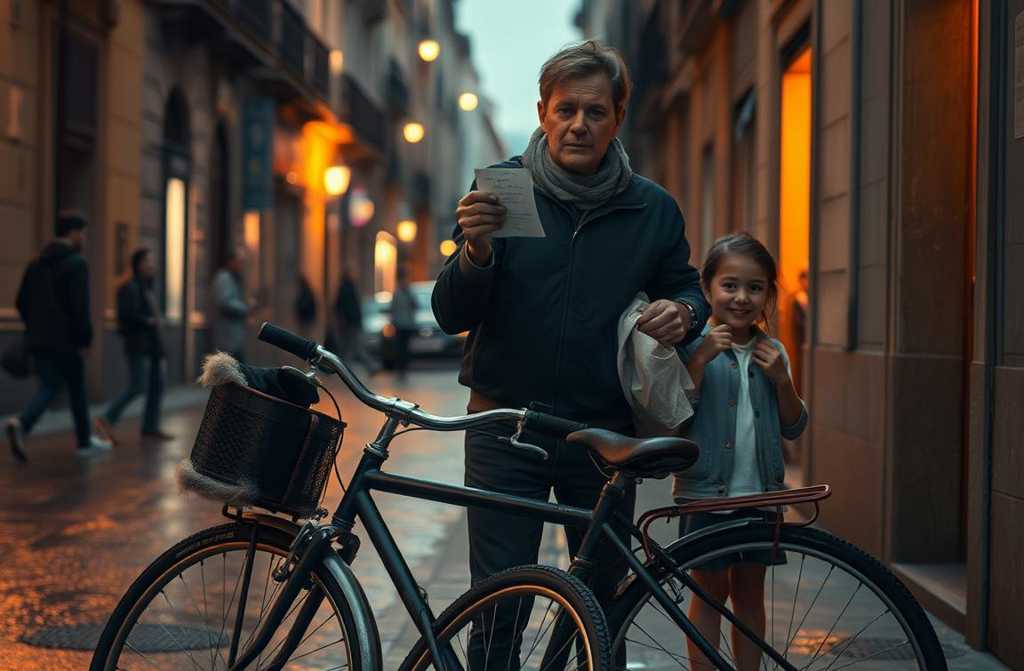
In Any Ordinary City, with Hasty Buildings Racing to Kiss the Sky, Impatient Traffic Lights, and Streets That Smelled of Rain Mixed with Petrol, Worked Angel, a Bicycle Courier

Published

on

In a bustling city, where skyscrapers raced to touch the clouds, traffic lights blinked impatiently, and the streets carried the scent of rain mixed with petrol, there was a bicycle courier named Oliver. His bike was old, rust creeping over the spokes, but he knew it like an old friend. He didnt need fancy lights, a sleek helmet, or a high-tech GPSjust his oversized backpack, a flask of tea in his pocket, and a gaze that seemed to see past the tired faces of the city.

The air was thick and heavy, but when Oliver passed by, something shifted. Not magic, not exactly. It was the way hed nod discreetly, tilt his head slightly when entering a building, how his eyes held the patience needed to wait for the lights, the traffic, the distracted pedestrians. He delivered the usualtakeaway meals, small parcels, important documents, flowers sent to loved ones. But with each delivery, Oliver left something else, something invisible at first glance but felt deep in the hearts of those who received it.

Every now and then, tucked beside the bag or box, thered be a handwritten note. Short, humble phrases that lit up someones ordinary day. *”You matter today, even if no one says it.”* *”Sometimes, just carrying on is its own kind of victory.”* *”Being tired doesnt make you weakit makes you human.”* Each line was meant to touch a forgotten corner of the soul. No one knew who wrote them. No one guessed that behind the rusty bike and the worn backpack was a heart determined to remind the world that quiet kindness still existed.

An elderly widow opened her door one afternoon and found, alongside her order, a small folded note. She read: *”Its never too late to laugh again.”* That evening, she dug out her favourite dress, the one she hadnt worn in years, and danced alone in her sitting room, her old record player spinning scratchy vinyl. No one knew. No one needed to. She just did it, and for a moment, time felt soft, gentle, as though the music had dusted off the neglected corners of her flat.

A teenage boy struggling with anxiety found a scrap of paper in his delivery: *”Youre not falling apartyoure becoming.”* He kept it tucked in his wallet, between schoolbooks and crumpled receipts. Years later, he still carries it like a tiny charm, proof that even on hard days, change can be beautiful.

An exhausted mother, juggling two jobs and endless worries, cried when she read: *”Even when you feel invisible, someone sees your fight.”* Between boiling pots, scattered toys, and childrens shouts, the note was a thin thread connecting her to someone who understood, even if theyd never met.

The notes spread. They were shared online, stuck to fridge doors, tucked into worn-out purses. Strangers began feeling less alone, as though Oliver wasnt just delivering food or parcelshe was delivering hope.

One day, Oliver arrived at a hospital with lunch for a weary nurse. The receptionist stopped him.

*”Are you the one who writes the notes?”*

He froze. Hesitated. Then nodded with a half-smile.

*”My sisters in the ICU,”* the woman said, voice cracking. *”She hasnt spoken in weeks. But yesterday, she mouthed the words from the note I found in the box: There are dark days but there are also candles.”*

Oliver didnt reply. He just looked down and, before leaving, slipped out another note: *”Thank you for reminding me why I do this.”*

That night, a car knocked him off his bike. Nothing seriousjust a broken arm, scrapes, a forced rest. But in the weeks he was gone, deliveries arrived without notes, and people felt his absence like a missing warmth they hadnt realised they needed. Some left messages on their doors: *”Where are you? We miss you.”*

When he returned, someone stopped him in the street.

*”Is it you?”*

Oliver smiled, his arm still in a sling.

*”Depends on the day.”*

The woman handed him an envelope. Inside were hundreds of notesscribbled by neighbours, strangers, friends. Some clumsy, some lovely, all sincere. One read: *”This time, we want to hug you.”* From then on, Oliver didnt just give out notes. He shared hope. Because he understoodlove, like important deliveries, always arrives, even if its late, even if it doesnt knock.

In the weeks that followed, Oliver started noticing the city differently. Not just the buildings and traffic, but the small thingsthe child gazing at the sky from a school window, the elderly couple holding hands as they crossed the road, the woman gently stroking her neighbours cat. Each moment was a reminder that life was more than routine, more than hurry.

One day, delivering to a cosy café, Oliver paused by the window. Inside, a frustrated writer was glaring at his laptop. Oliver left the order on the table with a note: *”Your story matters, even if no one reads it today.”* The writer read it, and something in his face shifted. For the first time in weeks, he smiled.

Another day, a young woman with dark circles under her eyesexhausted from sleepless nightsreceived nappies and formula for her baby. The note said: *”Even when you feel unseen, your love makes the world safer.”* She cried as she rocked her child, feeling less alone, understood by someone, somewhere.

Over time, Oliver became something of a legend. No one knew his face well, but everyone talked about the courier who left more than food. People started leaving notes for strangers in delivery bags, following his lead. Slowly, the city grew kinder, more human, as if those little words had planted a secret garden of empathy.

One rainy afternoon, Oliver arrived at an old building. A little girl stood waiting by the door. She handed him a drawinga smiling sun over a rusty bike. Oliver bent slightly, returning her grin. No words were needed. Just a shared moment, a quiet connection, was enough.

And so he carried on, through wet streets and hurried buildings. Every delivery was a chance, every note a thread between hearts. Because Oliver had learned somethingsometimes, the world just needs a small reminder that its worth carrying on, and that a tiny act of kindness, no matter how small, can change everything.

Click to comment

Leave a Reply

Ваша e-mail адреса не оприлюднюватиметься. Обов’язкові поля позначені *

16 − 5 =

Також цікаво:

З життя6 секунд ago

Excuse Me, Sir, Please Don’t Push—Oh, Is That Smell Coming From You? A Chance Encounter, a Perfectly Laid Bathroom Tile, and a Second Wind: How Rita’s Life Changed at 53 When a Homeless Stranger with Sapphire Eyes Built Her Happiness and Challenged Her Son’s Inheritance Plans

– Excuse me, sir, please dont push. Oh, goodness. Is that smell coming from you? – Sorry, the man muttered,...

З життя59 хвилин ago

“My Grandchildren Only See Fresh Fruit Once a Month, But She Buys Expensive Food for Her Cats!”: My Daughter-in-Law Accuses Me of Being Cold-Hearted for Putting My Pets First, but I Won’t Let Her Guilt Me into Supporting Their Growing Family

My grandchildren only see fresh fruit once a month, yet she spends a fortune on fancy cat food, my daughter-in-law...

З життя1 годину ago

Oxana, Are You Busy? – A Festive New Year’s Eve Tale of Family, Holiday Hustle, a Mishap in the Snow, and an Unexpected Encounter with a Doctor That Changed Everything

Annie, are you busy? her mum calls, poking her head through the door to her daughters room. Just a second,...

З життя2 години ago

Vitaly Settles in with Coffee and His Laptop to Finish Work—Until an Unexpected Call from the Maternity Ward Changes Everything: A Stranger’s Baby, a Past Affair in Brighton, and the Decision That Will Change His Life Forever

Edward settled himself at his mahogany desk, laptop open and a steaming mug of tea beside him. He had a...

З життя2 години ago

Igor Never Came Back from Holiday: “Why hasn’t your husband written or called?” “No word, Vera—not after nine days, not after forty,” Lyuda would joke, adjusting her work apron over her broad waist. “So he’s gone off the rails, or worse, then,” her neighbour nodded sympathetically. “Well, wait and see. Have the police said anything?” “Everyone’s silent, Vera—quiet as fish in that sea of his.” “Life, eh… fate.” That conversation weighed heavy on Lyudmila as she swept the autumn leaves from her doorstep in the dreary fall of 1988. Three years into her well-earned retirement, she’d had to take up work as a council cleaner to make ends meet. Life had always been simple—she and her husband, both dutiful workers, had raised a son, no scandal, no sorrow. Then Igor went on a seaside holiday and never returned. She’d phoned every hospital, every police station, even the morgue. Her son, stationed with the military, helped with inquiries—it was discovered Igor checked out of his hotel but never boarded the train home. Lyudmila wanted to go search for her husband, but her son insisted he’d handle it. Weeks passed, and she kept herself busy to stifle her fears. Then, as suddenly as he’d vanished, Igor reappeared—no suitcase, just the same navy suit and a weary silence. As she fussed to feed him and her son, the truth unravelled: Igor had been living with another woman by the sea, seeking “freedom.” The shock, the ache of betrayal—Lyudmila couldn’t bear it. Igor, shamed and lost, tried to return weeks later, but Lyudmila stood firm. It wasn’t just heartbreak—it was the pain of not knowing, of years shared and suddenly made strange. She swept her pathway, watching leaves collect and blow away, knowing sometimes those who hurt us most have already gone with the wind. (Original Title Adapted for English Culture: Igor Never Came Back from Holiday: The Disappearance, the Heartbreak, and the Road Swept Clean)

Yours hasnt written or rung you yet? No, Vera, not a word after nine days, not after forty either, Lydia...

З життя3 години ago

You Drive Me Up the Wall!… I Can’t Eat Right, Can’t Dress Right, Can’t Do Anything Right! — Pavel’s voice broke into a shout. — You can’t do anything!… Can’t even earn proper money!… We never get any help from you around the house!… — Marina burst into tears, — …And there are no children…, — she whispered. Belka — a white-and-ginger cat of about ten, perched atop the wardrobe, silently witnessed yet another “family tragedy”. She knew, she could sense, that Mum and Dad truly loved each other… But she didn’t understand why they said such cruel words that hurt everyone. Mum, sobbing, locked herself in the bedroom as Dad lit one cigarette after another. Belka, seeing her family falling apart, thought, “There must be happiness in this house… and happiness means children… we need to find some children…” Belka couldn’t have kittens herself — she’d been spayed years ago, and as for Mum… the doctors said she could, but something just wouldn’t work out… The next morning, after her humans left for work, Belka, for the very first time, slipped out the window to visit her neighbour Pawsy — for advice. — Why would you want kids? — scoffed Pawsy. — Ours come with children, and I have to hide from them… they smear lipstick on your face or squeeze you until you can’t breathe! Belka sighed: — We just need normal children… If only we could find some… — Hmmm… That street cat Molly’s had a litter… five of them… — mused Pawsy. — Take your pick… Taking her chances, Belka leapt balcony to balcony to the street. Shivering nervously, she squeezed through the railings of a basement window and called out: — Molly, could you come out for a minute, please… From deep within came desperate squeaks. Carefully crawling through, eyes darting in fear, Belka began to cry. Under the radiator, on the hard gravel, lay five tiny, sightless kittens, nudging the air and wailing for their mum. One sniff told her: Molly hadn’t been back for at least three days. The babies were starving. Fighting tears, Belka gently carried each kitten to the entrance. Trying to calm her hungry, squeaking brood, Belka lay down beside them, anxiously watching the end of the yard, waiting for Mum and Dad. Pavel, silent as he met Marina after work, brought them home. As they reached the doorway, they froze — there was their Belka, (who had never set paw on the street alone), and five multicoloured kittens clambering to nurse from her. — What on earth? — Pavel was stunned. — A miracle…, — echoed Marina, and together they scooped up the cat and kittens and rushed inside… Watching Belka purr happily in a box with her new babies, Pavel asked: — But what do we do with them? — I’ll feed them with a dropper… once they’re bigger, we’ll find them homes… I’ll call my friends…, — Marina whispered. Three months later, still stunned by the turn of events, Marina sat stroking her “cat pack” and murmured, over and over: — Things like this just don’t happen… this just doesn’t happen… Then, she and Pavel broke down in happy tears; he swept her into his arms, and they both laughed and chattered at once: — I’m glad I finished building the house! — Perfect for a child to get some fresh air! — And let the kittens run in the garden! — There’ll be room for everyone! — I love you! — And I love you even more! Wise Belka brushed away a tear — life, it seemed, was finally coming together…

How you get on my nerves! Nothing I do is right not even how I eat, not even what I...

З життя3 години ago

I Called Out the Window: “Mum, Why Are You Up So Early? You’ll Catch Your Death!” — She Turned and Waved Her Shovel Cheerfully: “I’m Doing This for You Lazybones!” — And the Next Day, My Mum Was Gone… I Still Can’t Walk Past Our Garden Gate Without Tears
 Every Time I See That Pathway, My Heart Clenches Like Someone’s Gripped It in Their Fist. I Took That Photo on the Second of January… I Only Stopped When I Noticed Her Footprints in the Snow—Now That Photo Is All I Have Left of Those Days… We’d Spent New Year Together, Just as Always: Mum in Her Favourite Apron I Gave Her at School, the Smell of Fried Burgers, Family Jokes, Dad Arriving with an Enormous Tree, All of Us Decorating, Singing Old Christmas Songs, Laughing Until We Cried… On 2nd January, I Looked Out to See Mum Clearing a Perfect Pathway from the Gate to Our Door, Her Scarf Tied Up, Red-cheeked, Shovelling Snow So We Wouldn’t Have to Struggle Through the Drifts. “It’s for You, My Lazy Lot—Go Put the Kettle On,” She Called, Smiling. That Was the Last Time I Heard Her Voice So Cheerful. The Next Day She Was Gone, So Suddenly It Didn’t Seem Real. Only Her Little Footprints Remain—Marks in the Snow, and In My Heart.

I remember shouting out the window, Mum, what are you doing out there so early? Youll freeze! She turned around,...

З життя4 години ago

THE MOTHER-IN-LAW Anna Petrovna sat in the kitchen, watching the milk quietly simmer on the stove. Three times she’d forgotten to stir it, and each time she remembered too late: the froth would rise and spill over, and she’d wipe the stovetop in irritation. In those moments, she realized: it wasn’t about the milk. Ever since her second grandchild was born, it was as if everything in the family had gone off the rails. Her daughter grew weary, lost weight, and spoke less. Her son-in-law came home late, ate in silence, and sometimes retreated straight to the bedroom. Anna Petrovna noticed all this and thought: how could anyone leave a woman alone like this? She spoke up—first gently, then with more edge. At first to her daughter, then to her son-in-law. But she began to notice a strange thing: after her words, things in the house didn’t get lighter—they got heavier. Her daughter defended her husband, her son-in-law grew more withdrawn, and she herself went home with the feeling she’d once again done the wrong thing. That day, she went to the vicar not for advice, but because she simply had nowhere else to go with these feelings. ‘I suppose I’m just a bad person,’ she said, not looking at him. ‘I do everything wrong.’ The vicar was sitting at his desk, writing. He put down his pen. ‘Why do you think that?’ Anna Petrovna shrugged. ‘I wanted to help. But it seems all I do is make everyone angry.’ He looked at her kindly, without judgment. ‘You’re not a bad person. You’re tired. And very anxious.’ She sighed. That felt like the truth. ‘I’m scared for my daughter,’ she said. ‘She’s so different after giving birth. And him…’ she waved a hand. ‘It’s like he doesn’t even notice.’ ‘And do you notice what he does?’ asked the vicar. Anna Petrovna thought. She remembered last week, when he quietly washed the dishes late at night, thinking no one noticed. Or on Sunday, when he took the pram out for a walk, even though it was clear he just wanted to lie down and sleep. ‘He does things… I think,’ she said uncertainly. ‘But not the way he should.’ ‘And what is “the way he should”?’ asked the vicar calmly. Anna Petrovna wanted to answer right away, but suddenly realized she didn’t know. In her head: more, more often, more attentively. But specifically what, she couldn’t say. ‘I just want it to be easier for her,’ she said. ‘Then say that,’ the vicar responded gently. ‘But say it to yourself, not to him.’ She looked up at him. ‘What do you mean?’ ‘I mean that right now, you aren’t fighting for your daughter—you’re fighting with her husband. And fighting means tension. Everyone gets tired of that. You. Them.’ Anna Petrovna was silent for a long time. Then she asked: ‘So what should I do? Pretend everything’s fine?’ ‘No,’ he said. ‘Just do what helps. Not words, but actions. And not against anyone, but for someone.’ On the way home, she thought about this. Remembered how, when her daughter was little, she didn’t lecture her but just sat beside her when she cried. Why was it different now? The next day she showed up without warning. Brought soup. Her daughter was surprised, her son-in-law awkward. ‘I won’t stay long,’ Anna Petrovna said. ‘Just came to help.’ She watched the children while her daughter slept. Left quietly, without saying a word about how hard things must be or how they ought to live. A week later, she came again. And a week after that. She still saw her son-in-law wasn’t perfect. But she began to notice other things too: how carefully he lifted the youngest, how he tucked a blanket around her daughter at night, thinking no one saw. One day, she couldn’t help herself and asked him in the kitchen: ‘Is it hard for you right now?’ He looked surprised, as if no one had ever asked him that. ‘It’s hard,’ he said after a pause. ‘Really hard.’ And that was it. But after that, something sharp disappeared from the air between them. Anna Petrovna realized: she’d been waiting for him to change. But what needed to change was herself. She stopped discussing him with her daughter. When her daughter complained, she didn’t say, ‘I told you so.’ Just listened. Sometimes she took the children so her daughter could rest. Sometimes she called her son-in-law to ask how he was. It wasn’t easy. It was much easier to get angry. But slowly, the house grew quieter. Not better, not perfect—just quieter. Without the constant strain. One day her daughter said: ‘Mum, thank you for being with us now, not against us.’ Anna Petrovna thought about those words for a long time. She realized something simple: peace isn’t when someone admits they’re wrong. It’s when someone is the first to stop fighting. She still wished her son-in-law was more attentive. That wish didn’t go away. But living alongside it was something more important: wanting peace in the family. And every time the old feelings came up—indignation, bitterness, the urge to say something sharp—she asked herself: Do I want to be right, or do I want life to be easier for them? The answer almost always told her what to do next.

MOTHER-IN-LAW Margaret Brown sat in her kitchen, watching as the milk quietly simmered on the hob. She’d forgotten to stir...