
З життя
It Happened on the Day of Lida the Postwoman’s Wedding.

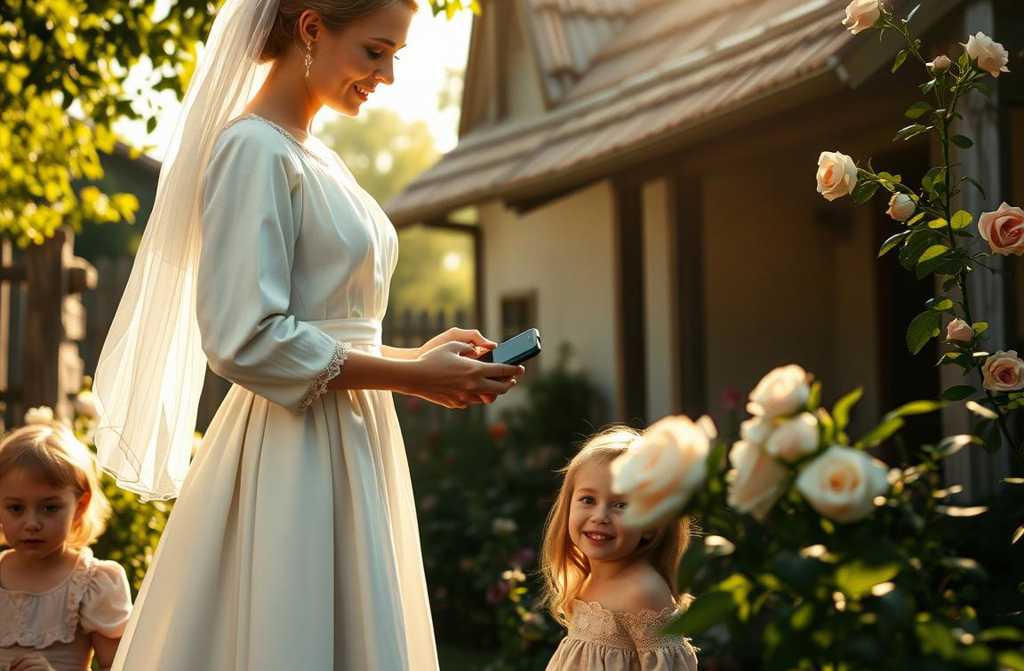
It happened on the day Edith Harper, the village postmistress, was to be married. Oh, what a wedding more like a funeral feast. The whole of Oakshire gathered at the parish hall not to celebrate but to pass judgment. There stood Edith, as thin as a matchstick, in a simple white dress shed sewn herself. Her face was pale, her eyes huge and frightened, yet stubborn. Beside her stood the groom, Arthur Blackwell. Arthur had earned the nickname the Hardman long before anyone could spell his past. Hed returned a year earlier from a job half a mile away no one knew exactly why hed been away, but the gossip was richer than a Sunday roast. Tall, grim, a man of few words, with a scar running the length of his cheek. The local lads greeted him with clenched teeth, the women hid their children from him, and even the dogs tucked their tails when he passed. He lodged in a crumbling old cottage on the outskirts, working the toughest jobs nobody else would touch.
And it was for this very man that our quiet Edith, an orphan raised by Aunt Maud, was about to become a bride. When the village chairwoman finished the ceremony and said, You may congratulate the newlyweds, not a soul stirred. A hush fell over the crowd, broken only by the distant caw of a crow perched on a birch.
In that silence, Ediths first cousin, Tommy Hawkins, stepped forward. Hed taken on the role of brother after their parents died. He stared at her with an icy glare and shouted so everyone could hear:
Youre no longer my sister. From today I have no sister at all. Youve disgraced our family. Ill see you never set foot in my house again!
He spat on the ground at Arthurs feet and marched away, parting the crowd like a clumsy icebreaker. Aunt Maud followed, lips pursed, trailing behind him.
Edith stood stonestill, a single tear tracing its way down her cheek, unwiped. Arthur glared at Tommy, his jaw tight, fists clenched, ready to lunge. But instead he turned his gaze to Edith, as if afraid to break something fragile, took her hand gently and whispered:
Lets get home, Edith.
And off they went, two against the whole of Oakshire. He, tall and dour; she, delicate in her white dress. Around them whistled poisonous whispers and contemptuous looks. My heart swelled then, as if the world had shrunk to a size where breathing felt like a chore. I watched the young pair and thought, Lord, how much strength will they need to stand against everyone?
It all started, as most things do, with something small. Edith delivered the post. A quiet, unassuming girl, always keeping to herself. One rainy autumn afternoon, a pack of stray dogs burst onto the lane outside her cottage. She screamed, dropped her heavy bag, and letters scattered in the muck. Out of nowhere, Arthur appeared. He didnt shout, didnt swing a stick; he simply stepped up to the packs leader, a massive shaggy mastiff, and muttered something low. Believe it or not, the dog lowered its head and the whole pack shuffled off.
Arthur quietly gathered the sodden envelopes, shook them as best he could, and handed them back to Edith. She lifted her tearfilled eyes to him and whispered, Thank you. He only grunted, turned, and walked on.
From that day she saw him differently. Not with the fear the village felt, but with curiosity. She noticed the little things he did: fixing old Mrs. Marrys crooked fence without a word, rescuing a calf that had fallen into the stream, scooping up a freezing kitten and tucking it under his coat. He did all this in secret, as if ashamed of his own kindness. Edith watched, and her solitary heart reached for his equally battered soul.
They began meeting by the faraway spring as dusk fell. He grew quieter, she filled the silence with her simple news. He listened, and his stern face softened. One day he presented her with a wild orchid from a bogdangerous to reach, yet beautiful. Thats when she realised shed fallen.
When she announced to the family that she intended to marry Arthur, the uproar was spectacular. Aunt Maud wept, Tommy threatened to maim the man, yet Edith stood firm like a tin soldier. Hes a good man, she declared. You just havent met him yet.
So they lived together, scraping by, hungry more often than not. Nobody wanted to hire Arthur, and steady work was a myth. They survived on odd jobs. Edith earned a few pence from the post office. Yet in their ramshackle cottage everything was oddly tidy and, surprisingly, cosy. He built shelves for books, repaired the porch, and even shattered a tiny flowerbed under the window (in a goodnatured way). In the evenings, weary and blackeyed from work, he would slump onto the bench while Edith placed a steaming bowl of soup before him. Their silence spoke more love than any passionate speech could.
The village never fully embraced them. The shopkeeper would accidentally shortchange Edith, the baker sold stale bread, and children hurled stones at their windows. Tommy, seeing them together, crossed the lane and kept his distance.
A year passed, then a fire broke out. A dark, windy night saw Tommys barn ignite, and the wind quickly swept the flames onto his house. The blaze roared up like a match struck in a wind tunnel. Villagers scrambled with buckets and shovels, shouting, but the fire leapt skyward, turning the night into a hellish orange. Amid the chaos, Tommys wife, Mary, cradling a baby, screamed in a voice that wasnt entirely her own:
Mary! The childs still inside! Shes sleeping in her room!
Tommy lunged for the door, but tongues of fire licked the rafters. The men held him back: Youll burn yourself! He thrashed, howling in helpless terror.
And just then, as the crowd stood rooted, watching the inferno threaten the little girl, Arthur burst through the throng. He was the last to arrive, his face blackened, his clothes smoking. He scanned the house, caught a glimpse of the frantic father, and without a word drenched himself from a barrel, then stepped straight into the flames.
The onlookers gasped and fell silent. Time seemed to stretch. Beams cracked, the roof collapsed with a roar. No one believed he would make it out. Mary fell to her knees in the dust.
From the smoke emerged a sootcovered figureArthur, hair singed, clothes billowing with ash. He clutched the baby in a damp blanket, staggered a few steps and collapsed, handing the child to the rushing women. The girl was alive, coughing up smoke. Arthurs body was a map of burnshands, back, everything. I rushed to him, tried to give first aid, and he kept murmuring a single name: Edith Edith
When he finally awoke in the village infirmary, the first thing he saw was Tommy on his knees, shoulders shaking, a thin trickle of masculine tears sliding down his unshaven cheeks. He took Arthurs hand, pressed his forehead to it, and that silent apology spoke louder than any words.
From that night the floodgates opened. Warmth that had trickled like a stream now rushed like a river into Arthur and Ediths lives. Arthur healed slowly; the scars stayed, but they were now medals of bravery, not marks of a convict. The villagers began to look at them not with fear but with grudging respect.
The men repaired their cottage. Tommy, once the hostile cousin, grew close to Arthurhelping with the porch, bringing hay for their goat, or popping over with a tin of clotted cream for Edith to spread on scones. His wife, Eleanor, would often bring over a dollop of jam or a fresh apple pie. They watched Arthur and Edith with a kind of apologetic tenderness, as if trying to smooth over old grudges.
A year later a daughter was born, Mollyeyes as blue as the sky, hair the colour of wheat, a perfect little mirror of Edith. A couple of years after that a son arrived, Jack, the spitting image of Arthur, minus the cheek scar, perpetually pouting like a tiny stern man.
Their renovated home filled with childrens laughter. Arthur, once grim, turned out to be the softest father in the county. After a long day, his hands black with soot, his children would swarm him, clamber onto his shoulders, and hed lift them up as if they were the most precious treasure. In the evenings, while Edith tucked little Jack in, Arthur would sit with Molly, carving wooden horses, birds, and goofy little menhis rough fingers producing toys that seemed to breathe.
I remember once popping round to check Ediths blood pressure. In their garden hung an oil painting: Arthur, massive and sturdy, squatting to fix Jacks tiny bicycle, while Tommy held the wheel. The boys, Jack and Tommys son, were busy in the sandbox, building something together. The only sounds were the soft tap of a hammer and the hum of bees around Ediths flowerbeds.
I looked at them, eyes a little misty, and saw Tommywho once cursed his sister and swore off the familystanding shoulder to shoulder with his former hardman brotherinlaw. No bitterness lingered, only a quiet, masculine camaraderie and children playing as if a wall of fear had never existed. It had melted away like spring snow under the sun.
Edith stepped onto the porch, carried two mugs of cold ginger beer for them both, caught my eye, and gave a gentle, bright smile. In that smile, in the way she glanced between her husband, her brother, and the laughing kids, was a happiness earned through hardship, a happiness that made my own heart pause. She had followed her soul against the whole world and won everything.
Now I watch their lane. Their house, once a derelict shack, is a riot of geraniums and petunias. Arthur, his hair now peppered with silver, still teaches teenage Jack to split logs. Molly, already a young lady, helps Edith hang the laundry that smells of fresh sunshine and breezy afternoons. They share a laugh about something only they understand, a soft, almost sisterly giggle.
And that is how a grim village postmistress and a man once called the Hardman built a life together, full of irony, love, and a surprising amount of British resilience.



Monica Fought to Gain Custody of a Young Boy from Her Neighbourhood—Her World Stopped When She Heard the Same Words from Social Services
Margaret, a gentle woman of 67 years, steadfastly maintained her cherished custom of daily strolls through the village green. Yet...


Mum Always Said Dad Never Needed Me, But the Urge to Find Him Haunted Me – And I Finally Did!
My life has always been shaped by the distinct absence of my father. As I grew older, a restless itch...


Susan enjoyed a wealthier life compared to her friend, so she often shared her fortune by giving her money from her comfortable earnings—little did she realise she was unknowingly building a dowry for her friend’s future husband!
From the outside, I must have looked like a happy woman: a mother of three, fluent in several languages, with...


Awkward Situation – Having Children with Different Fathers
There once lived an elderly couple in our neighbourhood, folks I remember well, and with them resided their daughter, Mary,...


What’s Going On with Men These Days? I Invited One Over to My Place, Thought It Would Turn into a Relationship
For reasons lost in the fog, many women seem to think that once theyve passed forty, and especially after a...


I Took a Friend with Me on Holiday, But I Had No Idea How She’d Respond to My Kindness
My husband and I have been married for seven years. Life together has been good, even wonderful at times. My...
“You see, in England, a woman at 50 is considered a liability rather than an asset.” A 57-year-old gentleman explained his viewpoint over dinner. Here’s how I responded
You know, I was sitting across from him in one of those fancy London restaurantsthe kind where the waiters glide...
My Date Suggested a Stroll in -4°F Weather Because “Only Gold Diggers Sit in Cafés”—So I Came Up with a Clever Response…
25th January Todays events deserve to be recorded, if only for posterity and a dash of amusement. My suitor, as...