
З життя
Хто ж то прийшов так рано? – буркнула дівчина, перевертаючись на інший бік.

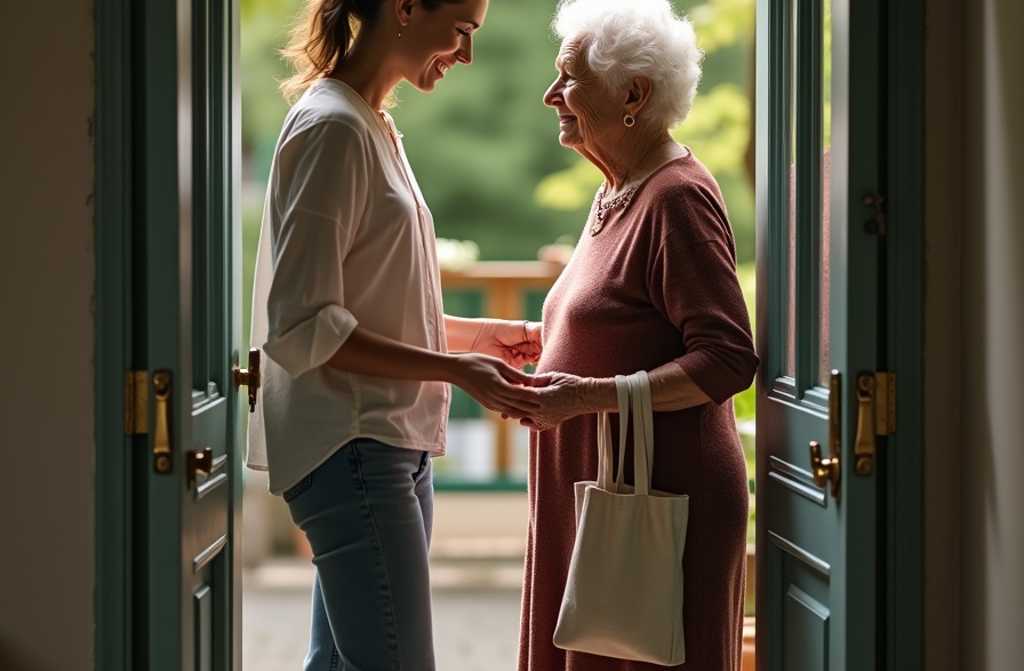
Марта спала як вбита, коли у двері хтось задзвонив.
— Боже мій. Хто це прийшов так рано? — буркотіла дівчина, перевертаючись на інший бік. Але дзвінок не вщухав.
— Ну чого вам треба від мене, — досить роздратовано сказала Марта, піднялася з ліжка, накинула халат і підійшла до дверей, подивилася у вічко. За дверима стояла зморшкувата бабуся з великим котом на руках.
— Хто там? — грізно спитала Марта. Вона не збиралася відкривати двері, бо слухала про різні історії, але раптом бабуся застогнала. Марта подивилася у вічко ще раз і побачила, як бабуся повільно сповзає по стіні. Кіт вислизнув з її рук і неспокійно бігав навколо неї.
— Та за що мені все це, — подумала дівчина і відчинила двері.
— Бабусю, вам погано? Зараз я швидку викличу. Все буде добре, потерпіть.
Вона підхопила бабусю під пахви і допомогла їй зробити кілька кроків у квартиру. Посадивши стареньку на диванчик, вона швидко набрала номер швидкої.
Кіт сидів поруч із бабусею і з цікавістю стежив за дівчиною.
— Все, швидка зараз прибуде. Як вас звати, бабусю?
— Антоніна Семенівна, — прохрипіла старенька. — Документи мої тут, — продовжила вона, вказуючи рукою за спину.
Марта нахилилася, подивилася за спину бабусі і виявила маленький рюкзачок. Вона допомогла старенькій зняти його і дістала документи.
— Тільки, дівчинко, в лікарню я не поїду. Піду, мене онук чекає, я повинна йому грошей принести, а то вижене нас зовсім на вулицю, та й на кого я котика свого залишу?
— Ось лікар приїде і скаже, чи можна вам кудись іти в такому стані. А за вашим котом я догляну. Чому це ви йдете до онука з грішми, а не він до вас?
— О, не питай, дитино, не потрібно тобі це знати.
У цей момент у двері подзвонили, Марта відчинила, і в квартиру зайшли лікар і медсестра. Швидко оцінивши стан бабусі, вони звернулися до Марти.
— Вашу бабулю ми забираємо в лікарню. Поїдемо в п’яту міську. Завтра можете принести передачу і візьміть чашку, тарілку і змінну білизну.
— Нікуди я не поїду, — уперлася бабуся.
— Їдьте, бабусю. Я завтра навідаю вас. А за кота не переживайте. Я обожнюю котів, нам удвох добре буде.
****
Наступного дня Марта встала раніше з однією лише думкою: чому я завжди потрапляю в якісь історії, хоча, з іншого боку, бабуся дуже мила, можливо, ми зможемо потоваришувати.
***
Марта виросла в сім’ї алкоголіків і ніколи не була потрібна своїм батькам, тому з дитинства обожнювала стареньких у дворі. Хтось погладить по голівці, хтось зав’яже бантик. Іноді навіть пирогами нагодують. Ось і зараз ця бабуся нагадала їй про дитинство, і стало сумно. Батьків уже давно не було на цьому світі, вони отруїлися неякісною горілкою, коли дівчинці було всього 13 років. І тільки завдяки сусідській бабусі Марта не почувалася в дитячому будинку так самотньо, як інші діти. Але коли їй було 16 років, сусідка, Марія Іванівна, померла, і Марта залишилася сама на світі.
***
У свої 23 роки Марта була розумною дівчиною. А дитячий будинок навчив її захищати себе самостійно, тому, коли вона вирішила подивитися, що за онук у бабусі, страху у неї не було.
Адресу вона ще вчора подивилася в паспорті бабусі, коли передавала документи медикам.
Йти було недалеко, і Марта швидко опинилася біля потрібного будинку на вулиці Козацькій. Біля під’їзду стояла лавка, на якій сиділи дві старенькі, і дівчина вирішила дізнатися у них, може, вони знають що-небудь.
Розмова зав’язалася швидко, і вже через десять хвилин Марта знала всі подробиці життя своєї нової знайомої.
Виявляється, бабуся жила в цьому будинку багато років і одна виховувала онука, оскільки її дочка і зять загинули, коли хлопчику було близько п’яти років. Потім онук виріс і зв’язався з поганою компанією.
Зараз йому було 18 років, але поводився він жахливо. Виганяв бабусю з дому, якщо вона не приносила йому грошей, змушував жебракувати, погрожуючи вбити її кота. Йому дісталася квартира від батьків, яку він здавав. А сам перебрався туди, де тепліше і ситніше. Скільки разів бабуся викликала міліцію, але вони не приїжджали, мовляв, сімейні розборки. Самі розбирайтеся.
Марта наче розлючена. Швидким кроком вона піднялася по сходах і подзвонила в двері. Їй відкрив сонний молодий чоловік з явним алкогольним сп’янінням.
— Ах ти ж мала поганка. Як ти посмів ображати бабусю, чи тобі не соромно?
Марта йшла прямо на хлопця, не даючи йому вставити й слова, — Значить так, недолуге, зараз ти збереш свої речі і поїдеш до своєї квартири, ти мене зрозумів?
Збентежений хлопець мовчки кивнув.
— І якщо я ще раз почую, що ти бабцю образив, я тебе своїми руками вб’ю.
— Так зрозумів, зрозумів, відчепися вже, ти взагалі хто така?
— Яка тобі різниця, хто я така? Не послухаєшся — знайдуть у тебе цікавий пакетик і поїдеш ти на зону, — цю погрозу Марта чула ще в дитячому будинку, хлопці розповідали.
Через хвилин п’ятнадцять хлопець з великою сумкою вийшов з під’їзду, а Марта залишилася прибирати бабусину квартиру. Треба було швидко закінчити, ще Антоніну Семенівну навідати, та в зоомагазин заскочити. Не одна ж тепер живе, а з котом.
***
Антоніна Семенівна дуже зраділа, побачивши Марту. Дівчина відкрила сумку і почала діставати продукти.
— Це вам поїсти. І не хвилюйтеся. Ваш кіт ситий, а от онука я вигнала в його квартиру, і не сперечайтеся. Не діло це — стару людину на вулицю виганяти і кота ображати.
— Дякую тобі, донечко, думала на вулиці так і помру, кому я потрібна стара.
— Мені ви потрібні й вашому коту. Все, відпочивайте, завтра я знову до вас зайду.
***
Через тиждень Марта забрала бабусю з лікарні і привезла її додому.
— Ой як чисто, донечко, як же мені тебе віддячити.
— А мені від вас нічого не треба. Можна я буду називати вас бабусею?
— Звісно можна, моя хороша, що б я без тебе робила?
Кіт сидів задоволений і дивився на бабусю і дівчину. Його годували, холили і леліяли, і не тягали по холодній мокрій вулиці. Що ще треба коту для щастя. А найголовніше — в будинку більше не було цього мерзенного хлопця, який так і норовив пнути кота.
***
Так минув рік. Марта так звикла, що Антоніна Семенівна їй як бабуся, що майже повірила в це сама, тільки онук періодично затьмарював їй настрій. Тому вони з бабусею вирішили, що Марта переїде до старенької в квартиру, а свою крихітну однокімнатну здасть. Все ж таки гроші.
Марта зразу сказала, що всі гроші від здачі квартири буде віддавати бабусі, що й робила, хоча та й опиралася.
— Бабусю, я й так у шикарній квартирі зараз живу безкоштовно, мені совість не дозволить.
Через рік загинув онук старенької, його вбили в п’яній бійці.
***
Минуло ще два роки, коли Марта зустріла свого майбутнього чоловіка. Це сталося зовсім банально: на дільниці в поліклініці змінився лікар, і до них став приходити молодий хлопець, ненабагато старший за Марту. Він був такий уважний до бабусі і так добре призначав лікування, що бабуся прямо молоділа, а Марта закохалася вперше в житті.
— Ох, дівчинко моя, хороший він хлопець, не упусти. Такий уважний, ввічливий і порядний.
***
Коли Петро зробив Марті пропозицію, вона розцвіла і аж заплакала від щастя. А коли через рік народився їхній первісток, Марта була найщасливішою мамою на світі, а Антоніна Семенівна найщасливішою прабабусею.
Вони прожили разом ще 12 років, коли вночі Антоніна Семенівна тихо пішла в інший світ у віці 95 років. Незважаючи на свій поважний вік, вона до останнього зберігала ясний розум і навіть намагалася допомагати Марті. Марта ридала навзрид. Після похоронів довго не могла прийти до тями. І тільки підтримка Петра та її діти допомогли їй змиритися з горем. Уже давно не було того кота з ними. На його місце прийшов інший, з вулиці.
Минув місяць, потрібно було виїжджати з квартири. Адже вона так і залишилася власністю померлої бабусі. Марта не хотіла, щоб бабуся віддавала їй квартиру, хоча та наполягала.
Розбираючи документи бабусі, Марта несподівано знайшла лист.
«Мартусю, дівчинко моя! Якби ти знала, скільки щастя ти мені подарувала. Ти ніби повернула мені мою донечку Віку. Якби не ти, я б не прожила стільки щасливих років.
Дякую тобі, і, будь ласка, прийми подарунок, він лежить у серванті під ящиками. Ти його заслужила, моя улюблена внученька!»
Марта ридала на всі голоси. Антоніна Семенівна і при житті називала її онукою. Але слова «улюблена внученька» вразили дівчину.
— Що трапилося?
Марта простягнула чоловіку лист.
Петро дочитав його і підійшов до серванту. Вийнявши ящики, він виявив під нижнім імпровізований тайничок. У ньому лежав якийсь документ формату А4 і товстий згорток, а також записка.
«Мартусю, тут дарча на квартиру. Вона зроблена вже давно, тому сперечатися і відмовлятися безглуздо. А ось гроші в пакеті — це твої гроші від здачі квартири. Візьми їх. Я знаю, ти зумієш ними розпорядитися».
Марта і Петро проживуть довге та щасливе життя, оточені дітьми, онуками, а потім і правнуками.



Michael Froze: From Behind the Tree, a Dog He’d Recognise Anywhere Watched Him with Sad, Knowing Eyes
I frozepeering from behind an old oak tree, a dog watched me with a sadness Id have recognised anywhere. Dust...


DO I REMEMBER? I CAN’T FORGET! “Polly, listen… Remember my illegitimate daughter, Anastasia?” My husband spoke in riddles, making me uneasy. “Do I remember? I can’t forget! Why?” I sat down, bracing for bad news. “Well… Anastasia is begging us to take in her daughter—my granddaughter,” he mumbled. “And why on earth should we, Alex? Where’s Anastasia’s husband? Disappeared into thin air?” I was intrigued. “The thing is, Anastasia doesn’t have much time left. She never had a husband. Her mother remarried and lives in America. They’re estranged, and she has no other family. That’s why she’s asking…” Alex couldn’t meet my eyes. “So, what’s your plan?” I had already decided. “Well, I’m asking you, Polly. Whatever you say, that’s what we’ll do,” he finally looked at me. “How convenient. You made mistakes in your youth, and now I’m to shoulder the burden of a stranger’s child? Isn’t that right?” My husband’s feebleness made me furious. “Polly, we’re a family. We should decide together,” Alex pushed back. “Oh, you remembered now! Yet, when you fooled around, did you consult me? I’m your wife!” Tears welled up and I stormed out… In school, I dated a boy named Peter, until a new boy, Alex, arrived and swept me off my feet. I broke up with Peter. Alex noticed me, walked me home, kissed my cheek, and picked flowers for me. A week later, he led me to his bed. I didn’t protest—I fell head over heels for Alex. After we graduated, he went off to serve in the army in another city. We wrote to each other for a year. Then Alex returned on leave. I was overjoyed. He promised we’d marry when he came back for good—already considered me his wife. His sweet words melted me every time, even years later: one loving look from Alex, and I’d melt like chocolate in the sun. Alex went back to the army. I waited, confident I was a betrothed bride. Six months later, a letter arrived: Alex had found “real love” in his garrison town and wasn’t coming back. But I was already carrying Alex’s baby. So much for a wedding—just as my gran warned me. When the time came, I gave birth to my son, Ivan. Peter, my old boyfriend, stepped in to help. Desperate, I accepted. Yes, Peter and I became intimate. I’d long given up hope of seeing Alex again. Then he turned up, surprised to see Peter there. “Can I come in?” Alex asked. “Come on in, since you’re here,” Peter reluctantly allowed. Sensing the tension, Ivan clung to Peter, wailing. “Peter, why don’t you take Ivan for a walk?” I was at a loss. When they left, Alex asked, “Is he your husband?” “What’s it to you? Why are you here?” I was angry and confused. “I missed you. I see you’ve made a life with Peter—you didn’t wait for me. Well, I’ll go—sorry to intrude on your happy family,” he said, heading for the door. “Wait, Alex. Why have you come—just to hurt me? Peter helps me cope with loneliness. He’s been raising your two-year-old son, by the way,” I tried to keep him there. My love for him hadn’t died. “I’ve come back for you, Polly. Will you have me?” Alex asked, hope in his voice. “Come in, dinner’s ready,” my heart leapt—he came back, so he hadn’t forgotten. Why resist? Peter was shoved aside. My Ivan needed his real father. Later, Peter married a lovely woman with two children. A few years passed. Alex could never love Ivan as his own—he was convinced Ivan was Peter’s son. Alex never really cared for Ivan. He always had an eye for the ladies. He was forever chasing after women, easily smitten, just as easily moving on—including some of my own friends. I cried but kept loving him, determined to hold my family together. It was easier for me than for him—the one who loves is always blinded by hope. I never needed to lie or invent excuses; I just loved him. He was my sun. Sometimes I wanted to leave, but then I’d scold myself: Where would I go, who could compare? Besides, Alex would be lost without me. I was wife, lover, and mother to him. Alex lost his own mother at fourteen—she died in her sleep. Maybe that’s why he always looked for lost affection elsewhere. I forgave everything. Once, after a bitter argument, I threw him out. He moved in with his relatives. Months passed—I forgot why we argued—but he didn’t return. At last, I went to his family’s house. His aunt was surprised to see me. “Polly, why do you want Alex? He said you’d divorced—he has a new girlfriend now.” I found out where she lived and paid them a visit. “Hello! Could I see Alex, please?” I asked politely. She just smirked and slammed the door in my face. I left in silence. A year later, Alex came back. By then the girl had given birth to his daughter, Anastasia. To this day, I blame myself for throwing him out—maybe that girl wouldn’t have scooped him up otherwise. I tried harder to please and adore Alex. We never talked about his illegitimate daughter. It seemed if we did, our family would fall apart. We let sleeping dogs lie. After all, what’s one stray child? It happens. I blamed the “temptresses” instead. In time, Alex settled down. Flings ended. He stayed home watching TV. Our son married early, gave us three grandkids. Then, out of nowhere… Anastasia, Alex’s daughter from long ago, reappeared—asking us to take in her daughter. How would I explain a new little girl to Ivan? He never knew about his father’s youthful escapades. In the end, we took legal guardianship of five-year-old Alina. Anastasia passed away, gone at thirty. Graves grow over with grass, but life goes on. Alex spoke to Ivan man-to-man. After hearing his father’s confession, Ivan said, “What’s done is done, you don’t answer to me. But the girl should stay—she’s family.” Alex and I breathed easier. We’d raised a kind son. Now, Alina is sixteen. She adores her Grandpa Alex, whispers secrets to him, calls me Granny, and says she’s my spitting image at her age. I never argue…
DO I REMEMBER? I COULD NEVER FORGET! Polly, darling, theres something I must tell you Well, do you recall my...


Winter had blanketed Andrew’s garden with soft snow, but his loyal dog Duke, a massive German Shepherd, was acting strangely. Instead of curling up in the large kennel Andrew had lovingly built for him last summer, Duke stubbornly insisted on sleeping outside, right in the snow. Watching from his window, Andrew felt a pang of worry—Duke had never behaved like this before. Each morning, as he stepped outside, Andrew noticed Duke watching him tensely. Whenever he approached the kennel, Duke positioned himself between Andrew and the entrance, growling softly and looking at him pleadingly, as if to say: “Please, don’t go in there.” This odd behaviour was so out of character for their years of friendship, it made Andrew uneasy—what was his best friend hiding? Determined to get to the bottom of it, Andrew came up with a plan—he lured Duke into the kitchen with a tempting piece of steak. While the dog, locked inside, barked desperately at the window, Andrew crept towards the kennel and crouched down to peer inside. His heart skipped a beat as his eyes adjusted to the darkness and he saw something that froze him on the spot… …There, curled up in a blanket, was a tiny kitten—dirty, freezing, and barely breathing. Its eyes barely opened, and its frail body shivered with cold. Duke had found it somewhere, and instead of chasing it away or leaving it to its fate, he had sheltered it. He had slept outside to avoid scaring it and guarded the entrance as if there was treasure inside. Andrew held his breath. He reached out, gently lifted the tiny creature and pressed it to his chest. In that moment, Duke raced over and nestled beside his shoulder—not growling, but gently, eager to help. “You’re a good dog, Duke…” Andrew whispered, clutching the kitten. “Better than most people.” From that day on, there were no longer just two friends living in the garden, but three. And the lovingly built kennel found its purpose again—as a little home for souls in need of saving.
Winter had blanketed Davids garden in a soft layer of snow, but his loyal dog Byron, a huge English Mastiff,...


The Little Girl Who Wouldn’t Eat: The Night My Stepdaughter Found Her Voice and Our Family Was Forever Changed
A Little Girl Who Couldn’t Eat: The Night My Stepdaughter Finally Found Her Voice and Everything Changed 8 December 2025...


A 7-Year-Old Boy, Covered in Bruises, Walked Into A&E Carrying His Baby Sister—What He Said Next Broke Everyone’s Heart
Just after one oclock in the morning, a seven-year-old boy, covered in bruises, pushed his way into the A&E at...


My Son Skipped My 70th Birthday, Claiming He Had to Work—That Evening I Saw Him on Social Media Celebrating His Mother-In-Law’s Birthday at a Fancy Restaurant
The phone rang precisely at noon, shattering the careful anticipation that hung in the air. Margaret Palmer hurried to pick...


No Place to Call Home: Nina’s Journey from Heartbreak and Loss to an Unlikely Friendship with a Homeless Gentleman in the English Countryside
HOMELESS There was nowhere left for Emily to go. Nowhere at all, in fact. Perhaps I could stay a couple...


Aunt Rita: The Story of a 47-Year-Old Londoner, a Self-Confessed Cynic, Who Finds Unexpected Purpose and Family in Helping a Struggling Young Mother and Her Children in a Tower Block, Transforming Both Their Lives and Her Own
Aunt Rita I am forty-seven years old. Just an ordinary womanone might say a bit of a plain Jane. Not...