
З життя
Let Someone Else Take You Home

I remember it as if it were a faded photograph, the kind you pull out on a rainy afternoon and stare at until the edges blur. It was the end of August, the air already carrying that thin chill that foretells autumn, and the street lamps in Manchester were being lit earlier than usual. I, Daniel Whitaker, had just finished a double shift at the steelworks, the factory bus groaning its way down the cobbled road as I clambered aboard, my back aching like a badly oiled hinge.
The morning had begun with a frantic call through the gatehouse. Eleanor, Daniels in labour! I cant leave her alone! the voice had cracked with panic and relief. Sure, Id replied, go on, Ill manage. I reached for a cigarette, but a sudden, terrified shriek from a nearby alley pierced the distant hum of traffic, cut short by a coarse male laugh. The cigarette fell from my fingers, and a curse slipped out as I turned toward the sound.
Around the corner, in the shadows of an empty lot, three broadshouldered lads in tracksuits had formed a rough circle. In the centre of their crude game a trembling young woman in a light dress clutched the strap of her handbag. One of the boys tugged at it, another lunged for her waist, while the third jeered, Whats the matter, love? Call the police? Her voice shook, tears spilling over her words: Leave me alone! Ill call them right now! The biggest of the trio laughed, Go ahead, sweetheart, well wait.
A memory Id heard my father repeat in my childhood surged up: Stand up for a lady, protect the weak, never walk past a wrong. Without a thought, I stepped forward, my heart pounding like a drum. Gentlemen, I said, my voice steadier than I felt, what are you doing to a woman?
The three turned, grins slipping away. And who might you be? A hero? the tallest sneered. Back off while youre still whole, the second snarled, fists clenched. I lunged, shoved the girl behind me, and shouted, Run! She fled into the night, her footsteps fading, and I felt a sudden, blinding pain strike my temple. A heavy, precise blow sent me to my knees, a barrage of punches and kicks pummeled me from all sides. I heard my own ribs crack, felt a hot, sticky taste on my lips, and saw a boot descending on my face. In that chaotic moment one thought rang clear: shed escaped. That was something, at least.
Later, in the hospitals trauma ward, my mother hovered over my bed, tears streaking her lined cheeks. Why did you have to get yourself into this mess? You almost got killed, you fool! It was a strangers trouble, not yours! I lay there, swathed in plaster and tubes, unable to turn my head. My eyes were hard, stubborn, and I whispered, I cant just walk past it Father taught me otherwise.
Nurses and doctors hustled around us, whispering hurried prayers, We made it in time I think In that first, desperate battle for life I survived, but the cost was steep. The injuries were severe, and I was chained to a hospital bed for weeks that stretched like endless corridors.
When the gloom finally lifted a little and I began to regain strength, a new visitor appeared on the ward. She was a slender woman with a faint scent of lavender that lingered long after she left. Her name was Maud, the very girl I had shoved out of danger that night. She perched on a chair beside my bed, a thin veil of perfume curling around the stale hospital air. Between us stood an invisible wall; I could see her features, but felt no connection. She seemed to gaze at some distant constellations, as if the world beyond the window held all the answers.
One afternoon her mother arriveda weary lady with deep lines etched by time. She carried a lavish bouquet of bright daffodils, a replacement for the wilted chrysanthemums that had once sat on the bedside table. I stared at the garish stems, wondering why anyone would bring such gaudy grief to a man who was not yet ready to die. I merely nodded, letting my fingers brush the edge of the blanket, and whispered a quiet thanks.
During one of Mauds silent vigils, I could no longer hold back. Why do you keep coming here? I asked, my voice low but steady. Its obvious youre burdened by these visits. She flinched, hastily unwrapping a small parcel. I brought you some grapes and a new bookeveryones raving about it. Weeks slipped by; each day I wrestled back a fragment of health, my mind sharpening as strength returned. When I finally managed to sit up on my own, I asked her to stop coming.
Promise me one thing, I said, looking straight into her eyes. Be more careful. Dont wander alone down dark alleys. Youre too bright for this world. Keep yourself safe for the one youd someday love enough to move mountains and raise a brood. Her eyes welled, she nodded without words, unable to speak.
Enough, I muttered, turning away to the wall. No tears, it makes it all the more nauseating. I forced myself to vow I would rise again, though the prospect still seemed a faroff dream. We said our goodbyes, forever, I thought. Her tears felt like a weight I could not bear, a mothers lament at a bedside I had grown accustomed to.
Maud never returned. That, I later realized, was the only sensible choice. Nothing stood between me and the grueling fight that lay aheadno lingering pain, no lingering doubts, no lingering promises. From that day a steel resolve settled within me. I began a daily, exhausting battle with my own body. Pain became my constant companion, threading through every muscle and nerve, shadowing even the slightest attempt to reclaim control. To lie still, resigned to the fate of a wheelchairbound man, would have been the easy way out. I had to prove, to myself and to the world, that I could once more stand as a whole man, that I deserved happiness, whatever the price.
Doctors praised my progress as a miracle, noting how quickly I could sit up alone. They whispered about the rarity of such recovery, yet only I knew the true costnights drenched in sweat and tears, raw palms ripped open, spasms that felt like my limbs were being turned inside out. Finally, the moment arrived when, clenching my teeth, I saw the faint, coveted twitch of my toes.
But doubt, that insidious worm, whispered in time with my pulse: Who will take you now? Who will love a cripple? My wife, Eleanor, remained a phantom, just as shed askedno attempts at contact, no lingering hope for the life we once shared. Yet my stubborn nature refused surrender.
One spring morning, the sound of rain against the window heralded a new day. Supported by crutches, I managed, after months, to stand and take tentative steps across my flat. My mother, who had watched my ordeal with clenched fists, finally exhaled; hope flickered anew in her eyes.
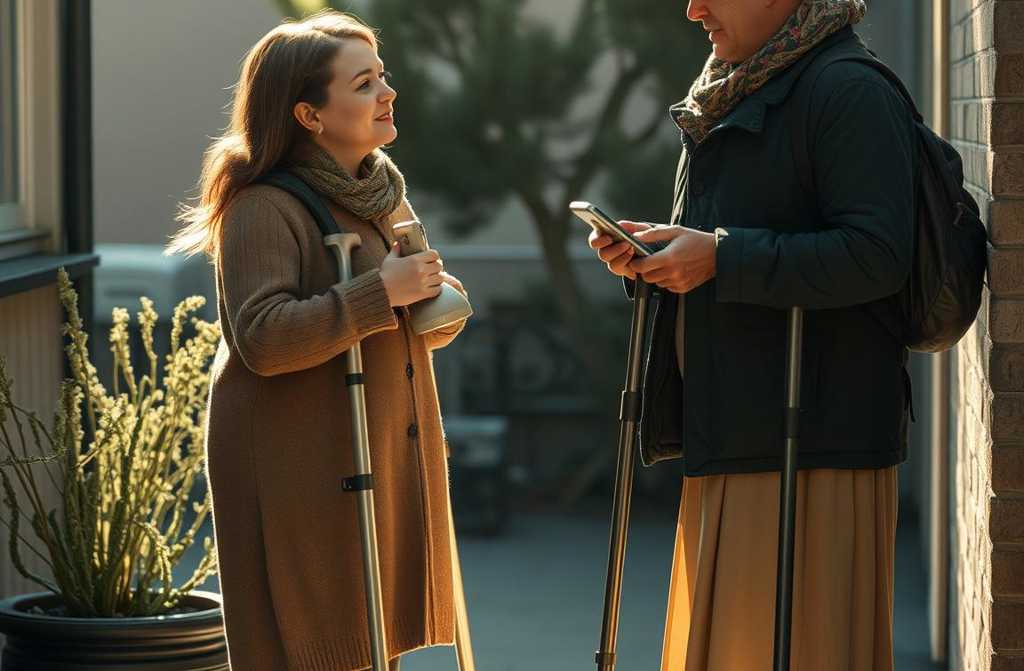
A few weeks later, feeling a surge of courage, I ventured out for my first solo walk. I shuffled through the familiar courtyard of my childhood, leaning on my cane, the fatigue soon catching up and forcing me onto the cool wooden bench. From the fifthfloor window above, a sudden crash sent a young mans silhouette swinging into the yard, shouting something that vanished into the night. In the same instant, a battered flipphone arced through the air. Reflexively, I lunged and grasped the falling device.
It was an old, clicktype phone, not the sleek model most of us now carry. I held it, waiting for its owner to appear, but the courtyard fell silent. Minutes later, an angry teenager sprinted past, eyes fixed elsewhere, ignoring the find.
Half an hour later the phone rang, a shrill tone cutting the stillness. Hello? a womans voice whispered, familiar enough to make my heart stutter. Yes, Im listening, I replied, trying to hide my tremor. Who is this? Wheres Michael? Hes probably at home. I picked up his phonesomeone threw it out of a window half an hour ago. A heavy silence settled on the other end. Its my phone Please tell me where I can collect it.
Soon enough, Maud appeared at the stairwell where I stood, her eyes widening at the sight of me. She rushed forward, clinging to my neck in a sudden, breathless embrace. I brushed her hair, unsure how to calm the surge of emotion. Once steadier, she explained: her former boyfriend Michael had become a pathological jealous fiend, staging scenes for no reason. The day before, he had snatched the phone, convinced shed taken a secret second line. In truth, the device was his fathers old handset, a sentimental relic. It meant so much to me, she choked. It held his last messages from eight years ago, before he passed.
Ive missed you, I whispered, feeling a flush rise on my cheeks. I missed you too, she replied, voice hushed. Just, please, dont push me away again. Cant you see? Without you my life is falling apart.
And so we took that first step toward a shared happiness, two lonely halves that fate had once thrust together, now determined never to be torn apart again.



In Search of a Mistress — “Vera, what are you doing?” gaped her husband as she handed him a pair o…
IN SEARCH OF A MISTRESS Clare, what on earth are you doing? Tom stared bleary-eyed at his wife, who was...


TWO SISTERS… Once upon a time there were two sisters. The eldest, Valerie, was beautiful, successf…
TWO SISTERS Once upon a time, there are two sisters living in England. The elder, Grace, is admired by everyonebeautiful,...


There’s Still Work to Be Done at Home… Grandma Violet fumbled with the gate, struggled to the doo…
Theres Still Work to Be Done at Home Granny Violet struggled to open the old garden gate and wobbled her...


‘Valerie Was Doing the Dishes When John Turned Off the Kitchen Light: “It’s Still Light Outside—No N…
You know, yesterday I was doing the washing up in the kitchen when Andrew strode in. First thing he did...
Three Years After My Divorce: My Ex Has Remarried, His New Wife Demands I Stop Asking Adam for Child…
Three years ago, I divorced my husband. Apart from our son, we had nothing in common. I wasnt even surprised...
Three Years Ago, I Divorced My Husband—We Only Shared Our Son. It Didn’t Surprise Me When a Month La…
Three years ago, I divorced my husband. We had nothing in common anymore, apart from our son. It didnt even...


My Son’s Unforgettable Memory: How a Five-Year-Old Ended Up as a Hilarious Kolobok at the Nursery Ch…
My son has an excellent memory. At nursery, he knows all the lines for every assembly, so right up until...


“YOU’RE TOO LATE, MARINA! THE PLANE’S GONE—AND SO IS YOUR PROMOTION AND YOUR BONUS! YOU’RE FIRED!” S…
YOURE TOO LATE, MARTHA! THE PLANES GONE! AND WITH IT, YOUR POSITION AND YOUR BONUS! YOURE FINISHED! bellowed the boss...