
Connect with us

З життя

My Husband Brought a Colleague to Our Christmas Eve Dinner—So I Asked Them Both to Leave

Published

on

Where have you put the napkins? I told you to get the ones with the silver pattern; they match the tablecloth, murmured Margaret, thinly slicing a lemon, almost transparent, not even bothering to turn her head.

Normally at this hour, her husband, Peter, would already have been sprawled in front of the telly, waiting for the New Year’s Eve concert, but tonight he wasnt even home. Margaret grumbled to herself, filling the cosy kitchen with her muttered complaints. Just three hours left to the midnight chimes. Her special family roast goose was browning in the oven, stuffed with Bramley apples just as her grandmother had done each year. The flat sparkled, the tree twinkled with coloured fairy lights, and inside she felt that unique warmth, the quiet electric hope, waiting for something magical, even at fifty.

She dried her hands, checked the clock. Peter was late, detained, hed said, by picking up a forgotten gift for her from the office. Margaret smiled to herself perhaps hed picked something truly thoughtful this time. Silver wedding this year, twenty-five years together. The plan was a quiet, romantic dinner, just the two of them no noisy families, no grown children scattered far away.

The lock clacked in the hall. Margaret patted her hair, slipped off her apron to reveal a velvet dress, and hurried to greet him.

Pete, where have you been? The goose is nearly

Her words stopped. Peter wasnt alone. Next to him, shaking soft snow off an expensive mink coat, stood a young woman, all boldness and flame-red curls, lips painted scarlet. She carried a bag of clementines, while Peter, flashing a sheepish yet rather forced grin, clutched a bottle of champagne.

Margie, come, greet our guest! Peter announced, too loudly for the calm of their front hall. Meet Alice. Alice Green the new chief accountant at work.

Margaret froze; something in her chest turned icy. She darted her gaze from husband to guest and back again.

Good evening, she managed, voice tight. Were we expecting someone?

Alice, eyes bright, offered a gloved hand unashamedly.

Oh, Margaret, hello! You wouldnt believe my night its like something out of an old British comedy! Peter, I mean Mr Greaves, absolutely rescued me. Im ever so grateful!

Peter fumbled with his shoes, avoiding her gaze.

Listen, Margie you see I popped by the office and found Alice in tears. Poor thing a plumbing disaster, flat flooded, heating off, the electricity gone. And the plumbers not coming until next week! No family nearby, all alone on New Years. I couldnt let her spend the night on some station bench, could I? So I said: Alice, come along! Margarets feast is always lovely, she has a heart of gold.

Margaret half-listened, dreamlike, as her cosy little world seemed to disintegrate. Twenty-five years. Romantic evening. The candles already on the table. And this bold apparition in a fur coat.

Do come in, she replied, woodenly. Her voice sounded foreign to her. Since youre here already.

Alice floated in on a heavy, sweet cloud of expensive perfume, immediately overwhelming the scents of goose and pine.

Oh, your home is adorable! she chirped, brazenly surveying the place. Proper retro style. My granny had a dresser just like that. All very Museum-of-British-Life, isnt it?

Margaret clenched her teeth. The sideboard was Italian, solid oak, worth an arm and a leg; no way was she explaining that to a girl young enough, perhaps, to be her own child.

Pete, help our guest with her coat, she snapped, retreating to the kitchen. Her hands were unsteady.

Peter followed shortly, looking battered but stubborn.

Margaret, please? Be kind, its New Years. She truly has nowhere else. Let her stay for dinner, Ill call a cab for her by midnight or if thats hard she can sleep on the sofa…?

The sofa? She rounded on him, clutching her ladle until her knuckles went white. Are you out of your mind? We wanted to be alone tonight. Youve brought home a stranger, who insults our home the minute she steps in! Museum indeed

She didnt mean anything! Shes just young, a bit blunt. Please, Margaret, dont shame me in front of a colleague. Imagine what shell tell everyone if I kick her out. Shes new. I have to work with her.

Margaret stared at him, searching for the man she had shared her life with. Instead: a weary womanizer, desperate to impress his junior with his wifes hospitality.

All right, she said at last. She can stay. But if she comments again

She wont! I promise! Peter pleaded, moving in to kiss her, but Margaret drew away.

Go entertain your freshness. Ill set a third place.

The dinner began under a suffocating awkwardness. Margaret laid plates in silence. Alice, shed of her coat, revealed an overly tight, low-cut dress, grotesquely out of place for a homely supper. She slouched at the table, legs crossed, swirling her wine glass.

Petey, can we open the bubbly now? To toast the old year goodbye Im simply desperate for a drink, she simpered, languidly eyeing Peter.

Petey. Margaret nearly dropped the salad bowl, slamming down the herring under a fur coat with a clatter.

In our house, champagne is for midnight, when Big Ben strikes. For now, we have homemade cranberry cordial, she declared.

Alice pouted. Cordial? How quaint. I dont drink sweet things watching my figure. Do you have any Brut? Ive heard sweet champagnes just for those with no taste.

Peter jumped in, eager. Wait, I have decent brandy in the cabinet, Alice. Would you like a tipple?

If you insist. Im frozen do you keep your place this chilly on purpose? Saving on heating bills?

Margaret took her seat across from them, feeling surplus at her own celebration. Peter was playing the host pouring drinks, spooning out caviar, offering tired jokes to which Alice erupted in shrill, theatrical laughter.

And what about you, Margaret, do you work? Alice asked, suddenly, breaking off a mouthful.

I do, Margaret replied with calm dignity. Im head technologist at the biscuit factory.

Really? Alices pencilled eyebrows lifted, amazed. Gosh. You look so homey. You know, like the sort of woman who always waits, cooking stews for her husband. Peter said your baking is marvellous, though apparently the conversation at homes a bit flat. But who cares when theres cake, right?

The silence was piercing now, broken only by the clock and television. Peter turned crimson, choking on his brandy.

I I never said that! he croaked, hammering his chest, glaring at Alice. You mustve misunderstood!

Margaret gently set down her fork. The fine thread on which this evening hung snapped, almost audibly. So: Nothing to talk about? Flat life?

Go on, Alice, she said with an icy grin. What else did Peter tell you? Im interested.

Flustered now, Alice rolled back nervously, digging in deeper.

Oh, dont be upset! Men always want a bit of fun, drama. Peter was wild at the office party last Friday! He danced better than anyone we even did the samba, everyone clapped. He moaned that you dont dance at home, said your legs hurt.

Margaret looked at her own feet under the table. They only ached after shed stood, for three days running, preparing the perfect New Years spread for her beloved husband.

Peter sat, petrified, knowing disaster loomed.

Lets have a drink! he blurted, desperate. Peace on Earth, and all that

No, wait, Margaret locked eyes with Alice. What about your plumbing, Alice? Tell us what happened.

Plumbing? Ohyes, dreadful! The pipes burst. Water everywhere! I panicked called Peter right away. Such a reliable man, unlike my ex.

Odd, mused Margaret aloud. Minus five outside tonight. With your pipes gone, no heat, no power, youd hardly arrive here perfect, with salon hair and a flawless manicure. Youd reek of floodwater, not of beauty parlours and luring off other peoples husbands.

Alice flushed, scandalised.

How dare you! Im a guest! Peter, say something!

Peter shrank.

Margie, please, maybe she just had time to change

Enough, Pete, she said, quietly but firm. She stood. Ive ignored your little flings for years: your sidelong glances, your office delays. I thought you cared for family, thought we were partners. But I am just the cook with nothing to say

She strode to the window, yanking the curtain wide to the dark patchwork of suburban gardens, fireworks fizzing over fences.

Right, she turned, addressing them both. Shows over. Miss Green, collect your clementines and kindly leave.

Alice opened her mouth, but Margarets eyes blazed with such wintry resolve, Alice faltered.

Peter! Alice shrieked, clinging to a last hope. Are you really letting her throw me out tonight?

Peter, inspired (or muddled by the brandy), slammed his hand on the table.

Margaret! Enough! This is my house too! I brought a guest. Alice stays. Well see in the New Year like civilised folk

Like what? Margaret prompted. Do go on.

Like harpies! he shouted.

Margaret nodded evenly, without tears or uproar. She opened the sideboard, pulled out the big holdall meant for Christmas parcels to the grandchildren, and upended the sweets and gifts onto the carpet.

Your house, is it? She threw the holdall at Peters knees. Splendid. Im off, then. But heres the detail, Pete this flat belonged to my parents. Youre only a lodger here. And I promise you, first thing Tuesday Ill be seeing the solicitors. And now both of you, out you go.

What? Peter paled, the drink evaporating. Margaret, what do you mean? Go where?

To all that drama you miss. To the samba, to Alices place or help her mop up. Youre a real hero, after all. Its dull here, a house museum.

Margaret, wait! He leapt up, knocking over his chair. Im sorry, Im a fool, Alice is just a colleague! Let her leave, Ill stay!

She looked at him with new contempt. Minutes before, hed have defended Alice to the end; the moment trouble sniffed in, hed cast her aside.

No, Pete. The salads turned. Like our marriage. Gather your things. Five minutes.

Alice, comprehending the hopelessness, and seeing the scandal coming, quietly fetched her coat.

Lunatic, she muttered, pulling on her fur, Ill get my own taxi, Peter. Dont need your reliable with all its extras.

The front door banged shut, leaving the room stinking faintly of perfume and something worse.

Peter loitered, clutching the empty holdall.

Margie he whimpered. Shes gone. Please, can we just forget this? Look, the goose is getting cold.

Margaret walked to the oven, pulled out the roasting tray. The scent of apples and cinnamon rose, but now it made her queasy.

Forget? she repeated. You brought your mistress here on our silver wedding; discussed me behind my back; let her sneer at me in my own kitchen.

She hefted the dish, heavy and ceramic.

Pete, go. Im not joking. If you dont leave Ill call the police and tell them youre drunk and threatening me. And theyll believe me.

He looked at her then and realised she would. In this homely woman, a new force had awakened.

He skulked off to the bedroom. She heard drawers bang, clothing hastily packed. He shuffled back, coat askew, a shirt-sleeve waving forlornly from the bag.

Youll regret this, Margaret! he shouted, trying for grand dignity, already at the door. Youll be left all alone! Who wants you at fifty?

Myself, she replied, double-locking the door behind him.

Peace, blessed silence. Margaret slid down to the floor, her back against the cold wood. Shed expected sobs, but there was only a strange relief, as though some ancient, hulking furniture had been removed, and at last she could breathe.

She stood, swept into the kitchen. The table was set for three all that food, the salads, caviar, goose, now mere props for a cancelled play.

She picked up Alices plate, lipstick-smeared, unfinished sandwich, and hurled it into the bin crash! The sound was almost melody.

Then Peters. Crash!

Two places removed, she left only her own, gilded-edged china. She filled her flute to the rim with icy champagne.

On the television, the Prime Minister began his annual speech. Big Bens hands ticked towards midnight, to a year that had robbed her of illusions but returned her self-respect.

Happy New Year, Margaret, she toasted her reflection in the windows black glass.

She helped herself to the best part of the goose the golden-crisp leg. She heaped some salad; the potato salad, surprisingly, was perfect.

Her phone chimed a message from her daughter, Emily: Happy New Year, Mum! We love you both! See you and Dad next week with the grandkids!

Margaret smiled softly. Real life never left you: children, grandchildren, work, her beloved home. Whatever was gone it must have been rotten through.

A sip of champagne fizzed and sparkled up her nose. For the first time in years, she was not serving, not fussing, not topping up everyones glasses. She simply enjoyed the quiet.

Outside, neighbours whooped Hurrah! and set off fireworks. The world celebrated and so did Margaret. Her own freedom.

Later, she packed up the food she couldnt eat alone, neat and tight in containers. Tomorrow, shed bring it down to Mrs Vale, the concierge, and to Michael, the caretaker. Kind people, deserving a treat.

The goose? Shed eat the rest herself, in her own time. Shed earned it.

Before bed, she wiped off her make-up. A beautiful, cared-for, slightly tired but lively-eyed woman gazed back not some cartoon auntie in curlers.

He wanted more excitement? Margaret gave a wry smile to the mirror. Well, Peter, youve got it now plenty of action ahead, finding a flat, splitting everything, explaining to the children.

She lay in the vast bed, sprawled like a starfish. The pillows didnt smell of anyone elses aftershave, only fresh linen and lavender.

In the morning, the sun woke her. Her very first thought wasnt Must make Peters breakfast but Would I like coffee and cake at that lovely café on the corner? And that was a wonderful thought.

She didnt know what tomorrow would bring thered be divorce, hard talks, sorting out the house. But that all belonged to later. This day was all hers: quiet, delicious food, and peace. No one would ever again call her home a museum or her life, dull.

She finished the last of her champagne, settling into the bright, silent morning. Alone, yes. And more herself than ever.

Click to comment

Leave a Reply

Ваша e-mail адреса не оприлюднюватиметься. Обов’язкові поля позначені *

двадцять − сімнадцять =

Також цікаво:

З життя2 хвилини ago

The Grey Mouse Is Happier Than You

Emily, honestly, are you kidding me right now? Jessica stared at her faded cotton dress with a look reserved for...

З життя4 хвилини ago

She Got My Mother-in-Law Back on Her Feet—Yet I’m Furious Because I Didn’t Weed the Vegetable Beds — “What are you doing here?” Standing in the middle of the swan-shaped flower beds, my mother-in-law shouted, “There’s never been such disgrace here before! I had seven children—never a single weed!” Her shriek drew the neighbours, who clung to the fence like crows and immediately dissected everything they heard. Seeing her audience, my mother-in-law took great pleasure in performing. I stood, speechless, as she went on. At last, worn out from shouting, she drew a breath and said loudly enough for all the neighbours to hear: I didn’t say a word. I walked calmly past my mother-in-law, holding my child even closer. Once inside, I divided up, in a special box, everything my mother-in-law was to take that evening and the next morning. Without folding anything, I tossed my son’s things and mine into a bag. I left without saying a word. Three days later, my mother-in-law called: “What did you do with all those things the professor gave her? I asked the neighbour to buy a few, but she said one jar is very expensive. The ones with foreign labels, well, we don’t use those or exchange them. So what am I to do? You left, offended for some reason, and here I am, about to meet my maker!” I didn’t reply. I turned off my phone and took out the SIM card. That’s it. I can’t go on—I have no physical or emotional strength left. A year ago, just before my son was born, my husband lost control of his car on an icy road. I vaguely remember saying goodbye for the last time, the ambulance taking him away, and waking up the next morning as a new mother… I didn’t care about anything. The world felt empty and pointless without my beloved husband. I nursed and rocked my son like clockwork, because that’s what I was told to do. A phone call snapped me out of my stupor. “Your mother-in-law is in bad shape. Apparently, she won’t last much longer.” I made my decision at once: after settling things, I sold my flat in London. I invested some of the money into building a home, so my son will have something of his own when he grows up. And I went to save my mother-in-law. This past year, I haven’t really lived—I’ve just existed. I had no time for sleep, caring for both my mother-in-law and my baby son. The baby was restless, and my mother-in-law required round-the-clock care. At least I had the money. I called in the best specialists from all over the UK; I bought every medication prescribed. Eventually, my mother-in-law returned to normal life. At first, I wheeled her through the house, then around the garden. By the end, she was strong enough to walk—on her own—as if nothing had happened… I don’t want to know her now, or hear from her ever again. Let her work out everything she needs for her recovery herself. At least I was wise enough not to spend all the money on her recovery. My son and I moved to our new flat. I never imagined it would end like this. I wanted to be close with my husband’s family, since I am an orphan myself. But now it’s just me. I need to teach my son: not everyone deserves kindness. Some people care more about a tidy vegetable patch.

I managed to get my mother-in-law back on her feet. But honestly, Im fuming because I didnt get around to...

З життя1 годину ago

For Two Years, Maria Was Just the Carer for Her Mother-in-Law Maria Managed to Marry a Very Distinguished Gentleman: All Her Friends Were Jealous. Her Husband Owned His Own Business, a Gated Luxury Home, Several Cars and a Cottage in the Countryside, All by Thirty-Two. Maria, Having Just Graduated and Worked as a Teacher for a Year, Married Him That Summer. After the Wedding, Her Husband Said There Was No Need for His Wife to Work for Peanuts. He Asked Her to Stay Home and Prepare for Children, and Maria Did Not Object. The First Year of Marriage Felt Like a Fairy Tale: Maria and Her Husband Travelled, Creating Memories and Buying Expensive Things. Yet Maria Had Nowhere to Wear Her New Clothes—Her Friends Were Busy Working and Spending Weekends With Their Families. Her Husband Often Partied Without Ever Inviting Maria. Maria Was Bored. Unable to Have Children, Her Feelings for Her Husband Faded. After Finishing Her Household Tasks, She Roamed Room to Room, Wondering About Her Future. A Year Passed. Her Husband Was Rarely Home, Often Returning in the Evenings, Exhausted and Irritable, Claiming His Business Was Struggling. First, He Told His Wife to Spend Less. Then He Demanded She Account for Every Purchase and Expense, Calculating and Insisting They Could Live Just as Well for Half the Amount. Maria Grew Worried. She Wanted to Work, But Couldn’t Find a Teaching Position. She Decided to Enrol on a Course, But Then Her Mother-in-Law Fell Ill, and Maria Had to Take Care of Her for Two Years. Her Husband Moved His Mother In. Maria Did Everything, Caring for the Sick. Her Husband Came Home Even Less. When Her Mother-in-Law Passed Away, Her Husband Grew Even More Distant—Barely Speaking to Maria, Withdrawn, Spending Most of His Time at Work and Seldom Returning Home. Maria Couldn’t Understand What Had Happened Until She Visited Her Mother-in-Law’s Old Flat, Where She Hadn’t Been for Ages. Behind Closed Doors, She Heard a Child Crying. Surprised, Maria Rang the Bell. A Young Woman Opened the Door—Maria Learned Her Husband Had Started a Second Family Before His Mother’s Illness, and Then Installed Them in His Mother’s Flat. For Maria, It Was a Shock. She Realised She Couldn’t Save Her Marriage. She Left for Another City, to Her Aunt, Practically With Nothing but a Small Bag—Not Wanting Anything Reminding Her of Her Marriage or How Badly Her Life Had Turned Out…

For two years, Emily was nothing more than a nurse to his mother. Emily managed to marry a man who...

З життя1 годину ago

My Husband Brought a Colleague to Our Christmas Eve Dinner—So I Asked Them Both to Leave
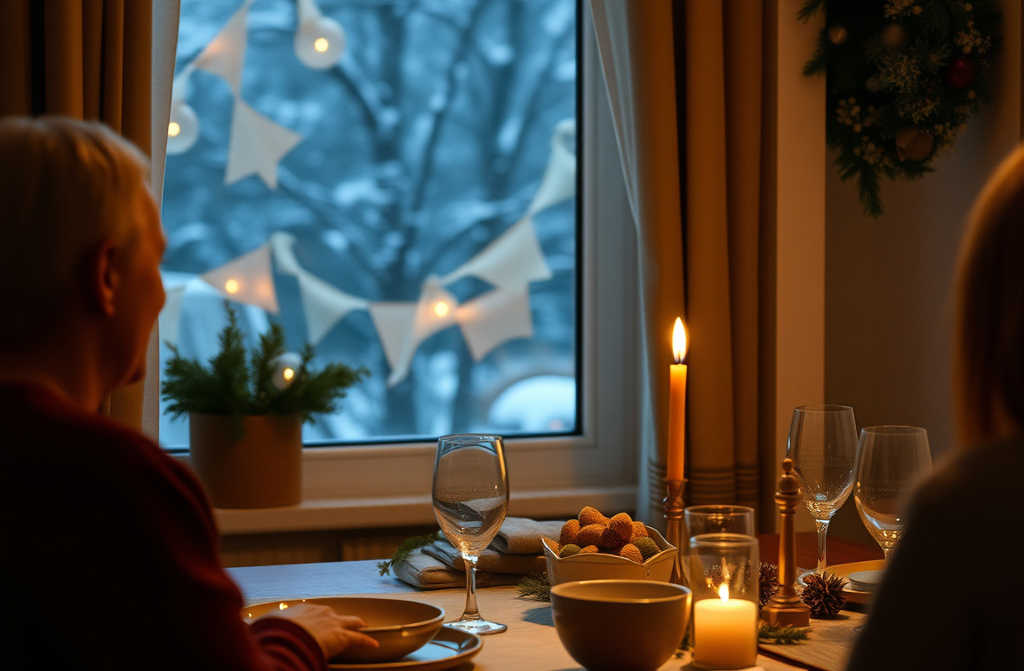
Where have you put the napkins? I told you to get the ones with the silver pattern; they match the...

З життя2 години ago

“We’ll Be Staying With You For A While, We Can’t Afford To Rent A Flat!” – Said My Friend I’m a very active woman. Even though I’m 65, I still manage to visit fascinating places and meet interesting people. I recall my youth with both joy and nostalgia—back then, you could holiday wherever you liked! You could go to the seaside, or camping with friends, or set sail down any river, all for little money. Sadly, those days are gone. I always loved meeting new people, be it on the beach or at the theatre, and many friendships lasted years. One day, I met a woman named Sarah. We were holidaying at the same seaside guesthouse and parted as friends. Years passed and we’d occasionally exchange letters. Then, one day, I received an unsigned telegram: “The train arrives at three in the morning. Meet me!” I couldn’t imagine who would send it. My husband and I didn’t go anywhere, but at four in the morning, there was a knock at our door. Opening it, I was stunned—standing there was Sarah, two teenage girls, her mother, and a man, with a mountain of luggage. My husband and I were bewildered, but we let them in. Then Sarah asked me: “Why didn’t you come to meet us? I sent you a telegram! And you know, that cost me!” “Sorry, but we didn’t know who sent it.” “Well, you gave me your address. So, here I am.” “I thought we’d just write letters, that’s all!” Sarah explained that one of the girls had just finished school and wanted to attend university. The family had come to support her. “We’ll be living with you! We have no money for a flat or hotel!” I was shocked—we weren’t even family! Why should we let them stay with us? We had to feed them three times a day. They’d brought some food, but didn’t cook, just ate ours. I ended up looking after everyone. I couldn’t take it anymore, so after three days I asked Sarah and her family to leave. I didn’t care where to. There was an awful row. Sarah started smashing crockery and screamed hysterically. I was utterly appalled. As they packed up, they managed to steal my bathrobe, several towels, and—astonishingly—even a large saucepan. I still don’t know how they got it out, but that pan simply vanished! And so ended our friendship—thank goodness! I never saw or heard from her again. How can people be so shameless? Now, I’m much more wary when meeting new acquaintances.

Well be staying with you for a while because we havent got the money for a flat! my friend announced...

З життя2 години ago

Snowdrifts of Destiny: How a Reluctant Lawyer and a Quiet Accountant Found Each Other When a Corporate Christmas Party Turned into an Unexpected Night of Confessions, Old Films, and Hopeful New Year Footprints

Snowdrifts of Fate Martin, a thirty-five-year-old solicitor, absolutely loathed New Years Eve. For him, it wasnt a festive celebration, but...

З життя3 години ago

You Don’t Deserve It — “After my divorce, I thought I’d never be able to trust anyone again,” Andrew said, turning an empty espresso cup between his fingers. His voice broke and trembled so convincingly that Ksenia instinctively leaned closer. “You know, when you’ve been betrayed, it’s like losing a part of yourself. She left a scar I’ll never get over. I truly believed I wouldn’t survive it…” Andrew sighed heavily and talked for a long time—about the wife who never appreciated him, about the pain that wouldn’t let go, about how terrified he was to start over. Every word settled in Ksenia’s heart like a warm pebble, and she already imagined she’d be the woman to restore his faith in love. Together, they would heal his wounds. He’d finally see that real happiness was possible—with her. It wasn’t until their second date, between dessert and coffee, that Andrew mentioned Maxim… “I have a son, by the way. He’s seven. He lives with his mother, but spends every weekend with me. The court decided that.” “That’s wonderful!” Ksenia gave a bright smile. “Children are such a blessing.” She pictured Saturday morning breakfasts for three, trips to the park, cozy evenings watching TV. The boy would need a woman’s care, a mother’s warmth. She would be his second mum—not to replace the real one, of course, but to be someone close, someone he could rely on… “You’re really sure you don’t mind?” Andrew looked at her with an odd smirk that Ksenia mistook for distrust. “Most women run for the hills when they hear I have a child.” “I’m not most women,” she replied proudly. …The first weekend with Maxim was a proper celebration. Ksenia made blueberry pancakes—his favourite, as Andrew had warned her. She patiently sat with a maths textbook, making problems easy to understand, washed his dinosaur T-shirt, ironed his school uniform, made sure he was in bed by nine. “You should take a break,” she told Andrew one day, noticing how he sprawled out on the sofa with the remote in his hand. “I’ve got this.” Andrew nodded—gratefully, so she thought at the time. Now she realised it was the nod of a man accepting what was rightfully his. …Months became years. Ksenia worked as a manager in a logistics company—out at eight in the morning, back at seven at night. The pay was pretty decent, as far as London went. Enough for two. But there were three of them. “They’ve delayed the project again,” Andrew would announce as if reporting a natural disaster. “The client bailed. But there’s a big contract just round the corner, I promise.” The big contract hovered on the horizon for a year and a half. Sometimes it seemed closer, sometimes it drifted away, but it never actually arrived. The bills, on the other hand, showed up right on cue. Rent. Electricity. Internet. Groceries. Child maintenance for Marina. New trainers for Max. School fees. Ksenia paid the lot without complaint. She saved on lunches, brought in tubs of pasta, refused to take a taxi even in the pouring rain. She hadn’t splashed out on a manicure for over a year—did her own nails, trying not to think about how she used to afford pampering at the salon. In three years Andrew gave her flowers exactly three times. She remembered each bunch—cheap, slightly withered supermarket roses from the corner stall, the thorns already broken off. Probably a discount… The first bouquet came as an apology after Andrew called her hysterical in front of Max. The second—after a row when her friend visited with no warning. The third was brought home after he missed her birthday because he stayed out with his mates (or simply forgot…) “Andrew, I don’t need expensive presents,” she tried to keep her voice gentle, choosing every word. “But sometimes, I’d just like to know you’re thinking of me. Even a card…” His face twisted instantly. “Money, it’s always about money with you, isn’t it? Presents, presents. Does love mean anything to you? All I’ve been through, and you complain?” “I didn’t mean—” “You don’t deserve it.” Andrew spat the words at her like mud. “After everything I’ve done for you, you still find something to whinge about.” Ksenia fell silent. She always did—it was just easier that way. Easier to live, easier to breathe, easier to pretend everything was fine. Strangely, Andrew always managed to find money for nights out with friends. Pubs, watching the football, café meetups every Thursday. He’d come home tipsy and cheerful, reeking of sweat and cigarettes, falling onto the bed without noticing Ksenia was still awake. She told herself: this is just how things are. Love means sacrifice. Love means patience. He’ll change. Of course he’ll change. I just have to wait a bit longer, love him a bit harder, give him all the support he needs—he’s been through so much… …Any talk of a wedding was like walking through a minefield. “We’re happy as we are—why do we need a piece of paper?” Andrew would shrug off the subject as if batting away a fly. “After what happened with Marina, I need time.” “Three years, Andrew. Three years is a long time.” “You’re putting pressure on me! It’s always the same with you.” He’d storm out of the room and end the conversation. Ksenia really wanted children. Her own, flesh and blood. She was twenty-eight, and her biological clock seemed to tick louder every month. But Andrew wasn’t up for being a father again—he already had a son, and, in his mind, that was plenty. …That Saturday she only asked for one day. Just one single day. “The girls have invited me round. We haven’t seen each other in ages. I’ll be back by evening.” Andrew looked at her as if she’d just announced plans to run off to another continent. “And Max?” “You’re his dad. You can spend the day with your son.” “So now you’re abandoning us? On a Saturday? When I was planning to have a break?” Ksenia blinked. Then blinked again. In three years she had never left them alone. Not once. She cooked, cleaned, helped with schoolwork, did the washing, ironing—all while holding down a full-time job. “I just want to see my friends. For a few hours… And he’s your son, Andrew. Surely you can spend one day with him without me?” “You should love my son as you love me!” Andrew suddenly roared. “You’re living in my flat, eating my food, and now you’re showing your true colours?!” His flat. His food. Ksenia was the one paying the rent. Ksenia bought the food from her wages. For three years she’d supported a man who shouted at her for wanting a day with her friends. She looked at Andrew—at his twisted face, the vein bulging on his forehead, clenched fists—and for the first time, truly saw him. Not the tragic victim of fate, not some lost soul in need of saving, but a grown man who was a master at exploiting someone else’s kindness. To him, Ksenia wasn’t a beloved partner or a future wife—just a financial backer and unpaid housekeeper. Nothing more. When Andrew left to drop Max off with Marina, Ksenia pulled out a travel bag. Her hands moved calmly, confidently—no shaking, no doubt. Passport. Phone. Charger. A couple of T-shirts. Jeans. The rest she could buy later. The rest didn’t matter. She didn’t bother leaving a note. What was the point of explaining things to someone who never really saw her anyway? The door closed quietly behind her. No drama. The phone calls started within the hour. First one, then another, then a deluge—an incessant ringing that made the phone vibrate in her hand. “Ksenia, where are you?! What’s going on?! I come home and you’re not here! How dare you? Where’s dinner? Am I supposed to go hungry? What’s all this nonsense?” She listened to his voice—angry, demanding, full of self-righteous outrage—and was amazed. Even now, when she’d left, Andrew only thought about himself. His inconvenience. Who would cook for him now? Not a single “sorry.” Not one “are you okay?” Just “how dare you.” Ksenia blocked his number. Then she found his profile in her chat app—blocked it. Social media—blocked. Every avenue he could use to reach her, she built a wall. Three years. Three years of living with a man who didn’t love her. Who used her kindness like it was disposable. Who convinced her that sacrificing herself was what love was all about. But love isn’t like that. Love doesn’t humiliate. Love doesn’t turn a living, breathing person into the hired help. Ksenia walked through the London evening—and, for the first time in ages, breathing came easy. She vowed to herself: never again would she confuse love with self-sacrifice. Never again would she rescue those who only trade on pity. Always, from now on, she would choose herself. Only herself.

I honestly thought after my divorce Id never trust anyone again, Alex was turning his empty espresso cup in his...

З життя3 години ago

My Father-in-Law Was Speechless When He Saw the Conditions We Were Living In

My father-in-law was speechless when he saw how we were living I first met my wife at a mutual friends...
