
З життя
My Name is Julia.

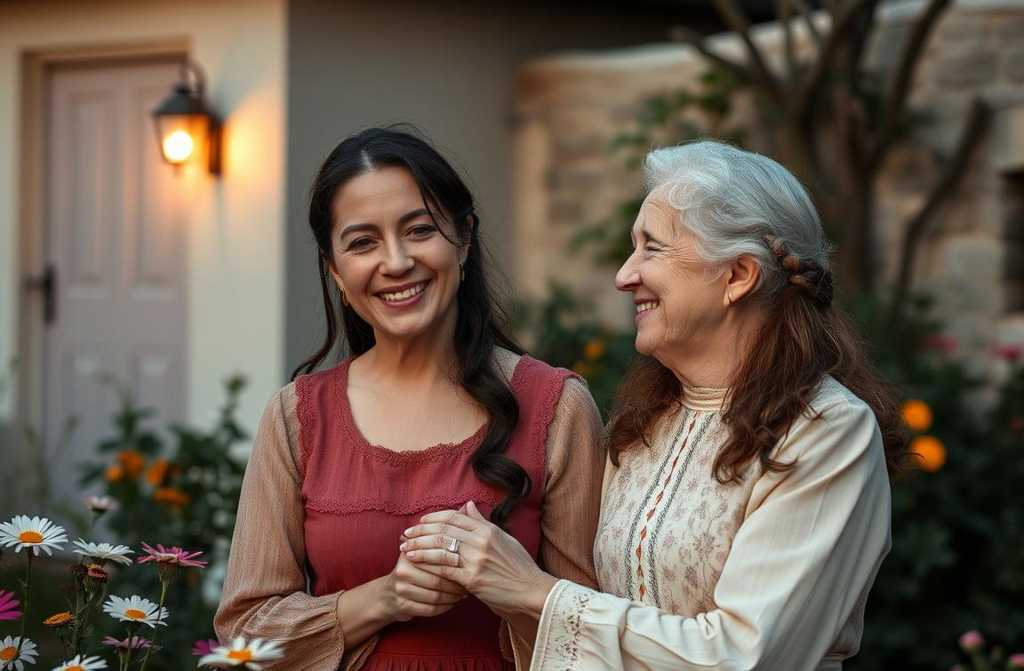
My name is Emily.
When I first met her I was twentytwo, shoulders weighed down by a grief too heavy to bear. I had just lost both my parents, left university, and was drifting without work, without prospects, without a place that felt safe. All that lingered in my heart was a fatigue I could no longer even name to myself.
A friend whispered of a welltodo family up on a hill in Kent, looking for a livein caretaker for their elderly matriarch. £1,050 a month, board and lodging included, she said. All I needed was a roof, a hot meal, a spot where I could simply fade away.
So one day I was introduced to Agnes. Her home was a grand, immaculate country villastately, perfect, but as cold as stone. Her children turned up once a month; her grandchildren never bothered. Feed her, bathe her, give her her medicines, they instructed. She likes to chat, but dont get too familiar. I obeyed, yet I listened to her all the same.
And she, in turn, began to hear me. Though she was ninetytwo, her frail body hid a mind as sharp as a blade. One afternoon she caught me weeping in the kitchen. She called out with surprising vigor, Emily! Come here! I entered her bedroom, and she took my hand.
You remind me of my younger selfstrong on the outside, shattered within. Fear not, child. Things will change. That night she lay awake, as most nights did, and I stayed beside her, listening. She spoke of the war, of a husband who never understood her, of dreams long abandoned. My own children no longer see me, she said, but youyou truly look at me.
It was only tea, soft touches, quiet words, yet for her it was life; for me, it was breath.
One day her daughter scolded me. Why are you always there? Youre hired to work, not to keep her company. I bowed my head and said nothing. Agnes whispered, Let them chatter. They pass me by; you cut through to me.
Later, she led me to a hidden spot. Under the bed is a box. If anything happens to me, you must open it. I promised.
Weeks later Agnes slipped away in her sleep. No one in the family wept at the funeral. During the reception they were already discussing the will, as if her death were merely paperwork. That night I opened the box and found a letter.
My dear Emily,
You gave me back my dignity. When no one else saw me, you made me feel alive. I have altered my will. My little cottage in the countryside is now yours, and in my account there are £30,000. This is not a reward, merely a thankyou.
With love,
Agnes.
When the solicitor read the will, the family erupted. A stranger? Impossible! She must have tricked Mum! The solicitor remained calm. Mrs. Agnes was fully lucid. We even have a video where she says, Emily gave me peace. My family gave me presence. There is a difference.
I left in silence and moved into the modest cottage she had left mea simple, rustic house with an overgrown garden. I mended it piece by piece, planting flower after flower as if each blossom were a memory of her.
Years later Agness granddaughter came to see me. She sat quietly, met my eyes, and said, I judged you. Now I need help for my mother. They say youre special. She lowered her gaze. Im sorry. I smiled and replied, Forgiveness is easy when love points the way.
Every elder I care for now feels like a tribute to Agnes. Every gesture, every word, is a seed planted in the garden she once tended. I was hired to look after an old woman, but it was she who returned my life to me.
This tale is not about a contract, but about two souls whose lonely paths intersected. One, at the end of her road, bearing the wisdom of someone with nothing left to lose; the other, at the beginning, having lost everything she once held dear. They did not exchange care for cash; they exchanged looks that restored humanity, silences that spoke louder than a thousand words. In the empty echo of a luxurious manor they secretly built a cottage of tenderness.
The deepest lesson is not that kindness is repaid with a house or money, but that the simplest acttruly seeing another, cutting through with attention and affectionis a revolutionary deed that revives both giver and receiver.
Emily arrived to disappear, and Agnes, thought by all to be already gone, was the one who found her and showed who she truly was. In the end, the will was not a transfer of assets but a formal acknowledgement of a truth already lived: sometimes family is not those who share your blood, but those who share your spirit.
The garden I now tend is more than a legacy; it is the perfect metaphor for our bond. Together we tended a secret garden of love in a desert of indifference, and that garden, now in full bloom, stands as a homea lasting reminder that in a world of transactions, the greatest luxury is a connection that gives you back your life.



I’m a Pensioner – While Selling Bagels at My Corner Stall, Two Smartly Dressed Conmen Tried to Scam …
I am a pensionerwhile selling my bagels, someone tried to trick me. There I stood at my little stall, on...


Olga Spent All Day Preparing for Her First New Year’s Eve Away from Her Parents, Dreaming of Her Bel…
31st December I spent most of today getting ready for New Years Evetidying up the flat, doing a big shop,...
Monica Hardly Noticed When She Started Tiptoeing Around Her Own Home, Quietly Doing Everything So She Wouldn’t Disturb Her Daughter and Son-In-Law
Oh, Mum, youre frying fish again, said Charlotte, peeking into the kitchen.Yes, but Ive opened the windows and turned on...
While Visiting My Friend Alice, My Husband Suddenly Called Her. I Answered and Heard Something Astonishing—Here’s the Story of Our Relationship, Alice’s Recent Struggles, and an Unexpected Turn of Events
Half a year ago, Mary was left by her husband, and I tried my best to cheer her up through...


I’ll get married one day, but definitely not to this handsome guy. Yes, he’s wonderful in every way—…
I suppose Ill get married one day, but never to that handsome fellow. Yes, hes quite the charming bloke in...


VIC, PLEASE DON’T TAKE IT PERSONALLY, BUT I WANT MY DAD TO WALK ME DOWN THE AISLE — HE’S MY REAL FAT…
JAMES, PLEASE DONT TAKE THIS THE WRONG WAY. BUT I REALLY WANT MY DAD TO WALK ME DOWN THE AISLE....


A Parent’s Love: Elly’s Heart-Stopping Taxi Mix-Up, Grandparent Hugs, Christmas Comforts, and the Fi…
Parental Love Ellie breathed out, tired but content, as she settled her children into a taxi. Millie was four, and...


The Day I Went to Get Divorced Dressed as a Bride
The day I went to get divorced, dressed as a bride. When my husband told me he wanted a divorce,...