
З життя
Natasha Had Long Planned This – Adopting a Child from the Orphanage

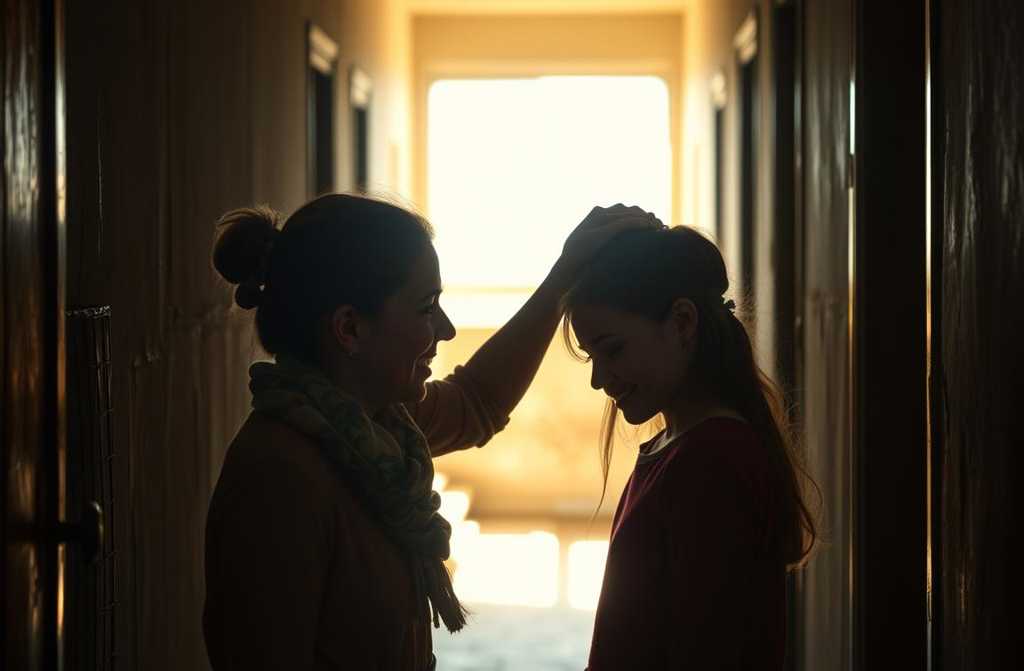
Margaret had long been stewing over a particular planshe would adopt a child from an orphanage. Her husband of six years had deserted her for a younger, more prosperous woman, and the marriage had left her drained of both energy and desire to try again at family life. No more, she had told herself. If she was to expend any warmth or strength, it would be for a soul truly in need, not for another partner.
Thus she set the wheels in motion. She familiarised herself with the local authority’s regulations, gathered the requisite paperwork, and then turned her thoughts to the one boy who might become her son, the extension of her own thirtyeight years of lived experience. She was certain she did not want an infant; the thought of sleepless nights, endless swaddling and lullabies felt beyond her nowworn stamina. Instead she sought a child of three to five years, someone whose own childhood was still fresh.
On the day she boarded the tram to the citys outskirts, her nerves fluttered like a bird on its first flight. She paid the fare in a few crisp shillings and, distracted by her anticipation, barely noticed how the spring had truly arrived in the towncool, gentle breezes and a sun that shone with an almost reckless brilliance. The tram clattered over its iron tracks, its creaks echoing her own anxious thoughts about the little boy who, though not yet born to her, already seemed destined to shape her destiny.
Outside the windows, the town awakened: motorcars glinted in the early light, pedestrians hurried to their errands, and no one could guess that Margaret was on her way to meet a fragment of future happiness. She turned her gaze away from the passing scenery, smiling inwardly at the son she imagined meeting in a few short minutes.
The tram halted at the stop marked Orphanage. She stepped onto the cobbled street and saw, ahead, an aging manor with crumbling plastered columns, the oncewhite stone now mottled in a camouflage of greyperhaps a relic of wartime camouflage, she thought. She entered, explained her purpose to the guard, and was directed to the matrons office.
The matron was an elderly woman, swathed in a worn sweater whose fibres had gathered in tiny knots. Her appearance was provincial, a little untidy, yet her eyes shone with the certainty of a life wellspent in this role. Their conversation was brief; the next day they had spoken on the telephone and already knew the outline.
Shall we have a look, then? the matron said, rising from her seat. Margaret followed, obedient as a shy child. They walked down a long corridor lined with darkblue painted panels. Over her shoulder the matron called, The younger group is out in the playroom, so its best we go there now. She pushed open the door, and both women crossed the threshold together.
Inside, roughly fifteen youngstersgirls and boysfrolicked on a carpeted floor, surrounded by low cupboards brimming with toys. A caregiver sat at a small table by the window, intermittently jotting notes and keeping a vigilant eye on the chaos. As soon as the adults entered, the children swarmed them, clambering onto laps, hoisting their heads, and shouting in unison:
This is my mum! Over here!
No, Im the one! I saw her in a dream last night
Take me! Im your daughter!
The matron absentmindedly patted the childrens heads, offering Margaret brief descriptions of each. Margaret felt overwhelmed; she wanted a boy, yet the room was a sea of potential.
One small boy sat alone on a tiny stool by the window, watching the world outside as if it were a familiar painting. Something drew Margaret to him. She approached and placed a gentle hand on his crown.
From beneath her palm peered a pair of slightly slanted eyes of an indeterminate hue, set in a cheeky face with a broad nose and light, almost invisible eyebrows. He did not match the image Margaret had conjured in her mind; he seemed, to her, the very picture of a mismatch. Yet, as if confirming her suspicion, he spoke in a shy voice:
You wont pick me, will you?
He stared at her with a longing that seemed to beg for something else entirely.
Why say that, child? Margaret asked, keeping her hand on his head.
Because Im a runnynose sort, always getting sick. And I have a little sister, Nell, in the baby group. I go to her every day, pat her head, so she remembers she has an older brother. My names Victor, and without Nell Im not going anywhere.
At that moment, a thin stream of mucus escaped his nosea small, embarrassing leak that made Margaret smile despite herself. In that instant she realised she had been waiting, perhaps all her life, for a snotcovered Victor and his sister Nellpeople she had never met yet already loved in the deepest corners of her heart.

Our Neighbor Loved Blasting Rock Music at 2 AM, So I Bought My Son a Violin and We Started Practicing Scales Right at 8 in the Morning, Just as the Neighbor Was Finally Getting to Sleep
Every night at half past two, the ceiling above my bedroom would come alive with a suspicious amount of activity....


My Father Abandoned Us, Leaving My Mum Buried in Debt—Since Then, I Lost My Right to a Happy Childhood
When I was ten years old and my younger brother was just three, our dad walked out on us. Hed...


My brother and his family wanted to settle in London at my expense, but I made sure they understood from the start that this wasn’t going to happen!
My brother and I have an age gap of six years, with him being the elder. Three years ago, he...
A Coworker Tried to Dump Her Reports on Me, So I Forwarded Her Request to the Manager: “Please Help Mary, She’s Struggling”
Today was another one of those days when my patience in the office was really put to the test, and...


No One Will Ever Forget My Son’s Wedding: Two Shocking Secrets Revealed
My son has just recently gotten married. Of course, before that, he brought his girlfriend over several times so that...


Jack discovered that his colleague’s wife was pregnant, and instantly felt uneasy—after all, he had a good reason for feeling uncomfortable.
When Jack arrived at work, he was taken aback. The staff were having a celebration. Is there a special occasion...


“Wouldn’t You Like to Have a Daughter? I Could Be Your Daughter, If You’d Like.” The Girl Joined Our Family On Her Own
This story takes place 15 years ago. A girl at the orphanage looked up at me with her bright green...


A Friend of Mine Is 35 and Has Never Worked—Now He’s Running for a Top Management Position with a High Salary
Theres this woman I went to school withlets call her Charlotte. Charlotte was, in a word, the star of our...