
З життя
Не стій у мене на шляху! ― Він замахнувся, бажаючи завдати удару дружині.

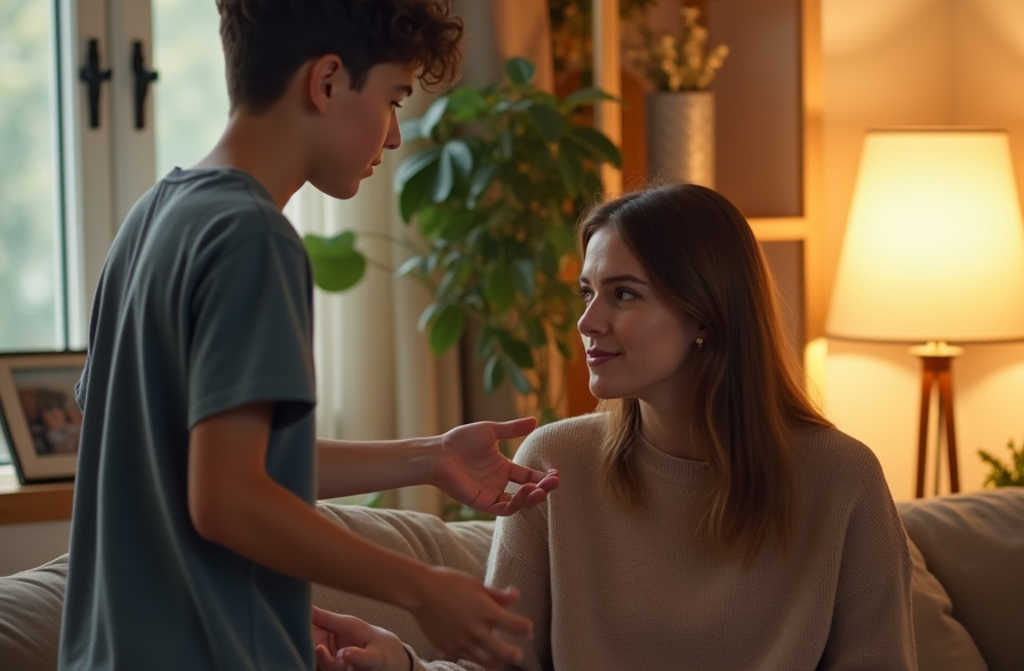
Вистачить стояти у мене на шляху! — Олексій замахнувся і хотів ударити дружину. Дарина скрикнула і прикрилась рукою, але Олексій навіть не встиг доторкнутися до неї — їхній син Андрій раптово з’явився поруч і схопив батька за руку.
— Не смій чіпати маму!
Олексій строго подивився на сина і вилаявся. Колись він міг підняти руку й на Андрія, але ті часи давно минули. Зараз перед ним стояв не маленький хлопчик, а дужий шістнадцятирічний хлопець.
— Щеня! — все ж кинув Олексій.
— Та пішов ти! — не залишився в боргу Андрій.
Олексій ударив кулаком по одвірку і вийшов за двері. Дарина всхлипнула і закрила обличчя руками. Андрій ніяково тупцявся поруч, він ніколи не знав, як поводитися з матір’ю, яка плаче, але все ж потім обійняв її.
— Ох, Андрійчику, як же нам далі жити?..
Андрію було ясно — мама запитує, як вчинити з батьком. Той давно пив, і як би мама його не вмовляла, не ставала йому на дорозі й не плакала, раз по раз обирав пляшку замість сім’ї.
— Мам, чому ти просто не підеш від нього? — похмуро запитав Андрій.
— Ти що? Як же я Олексія залишу? Він же без мене зовсім пропаде!
Дарина махнула рукою, витерла мокрі очі і пішла на кухню — готувати вечерю. Вона знала, що Олексій прийде пізно, а вранці обов’язково буде голодний, тому й старалась для нього.
Андрію було незрозуміло, чому мама так старається для батька. Батько щойно ледве не побив її, а вона продовжує піклуватися про нього. Навіщо? Заради чого все це? Андрій не витримав і увійшов на кухню з похмурим запитанням:
— Мам, у тебе самоповаги взагалі немає?
— У сенсі? Синку, це ж мій чоловік! Як я можу залишити його одного? Та й їжу все одно треба готувати. Я обіцяла Олексію, що буду йому вірною дружиною в будь-якій ситуації, і тримаю своє слово.
— Мам, але це ж безглуздо! Він-то своє слово взагалі не тримає! На весіллі він теж клявся! Обіцяв кохати тебе і не ображати. І що тепер?
Андрій уперто називав Олексія «він» або по імені, не бажаючи називати батьком. Хлопець давно для себе вирішив, що батьки так себе не повинні поводити.
— Андрію, не засуджуй тата так суворо. У нього свої проблеми, і він не справляється. Так буває.
— Мам, це просто виправдання! У всіх є в житті проблеми! Це ж не означає, що потрібно бити тебе чи мене і пити.
Дарина опустила руки, стоячи біля плити. Вона знала, що син правий і добре все розуміє. Але водночас не могла змусити себе відступити, відпустити, подати на розлучення… Дариї ще здавалося, що ось-ось — і чоловік зміниться. Кине пити і буде кохати її та Андрійка. Але такими надіями Дарина жила вже близько десяти років. І що? Хіба щось змінилося?
— Андрію, мені треба подумати, — тихо сказала Дарина.
Андрій вважав, що думати нічого, але сперечатися не став, бачачи, що мама насправді про щось розмірковує.
Андрій пішов по своїх справах. Він знав, що батько повернеться ще не скоро, а значить, за маму можна не хвилюватися. Андрій давно звик її захищати, тому для нього це здавалось чимось буденним, хоча він і розумів, що так бути не повинно. Олексій був небезпечний, тільки коли йому потрібно було випити, а п’яним він добрішав і не чіпав дружину та сина.
Андрій до вечора гуляв з друзями і займався на турніках. Додому йти йому не дуже хотілося, хоч було вже темно і прохолодно. Вдень можна було гуляти у футболці, але з настанням темряви приходив і холод.
У тонкому светрi Андрій швидко змерз і, нарешті, попрямував додому, вже знаючи, що його там чекає. П’яний батько, який хропе на дивані у залі, та засмучена мама на кухні.
Андрій вбіг по сходах і застиг в здивуванні. Двері були відчинені. Йому це не сподобалось, адже мама завжди закривала двері за батьком. Він щось накоїв? Андрій стиснув кулаки і крокнув у передпокій, тихо прикривши за собою двері.
— Мам, ти де? Все добре?
Андрій увімкнув світло у залі, навіть не думаючи, що може розбудити батька, але його там не було. Олексія не було і у спальні. Це ще більше напружило Андрія, він кинувся на кухню, сподіваючись, що мама там.
— Мам, ти тут? — він клацнув вимикачем і тихо викляв.
Мама лежала на підлозі, вочевидь, вдарившись головою об стільницю. Вона була без свідомості, і Андрій з полегшенням зітхнув, коли зрозумів, що вона ще дихає.
— Алло, швидка? Приїжджайте, тут людині погано, — Андрій толком не тямив, що треба говорити.
— Що сталося? Кому погано? — почувся досить байдужий голос.
— Мою маму побили… Вона без свідомості, приїжджайте швидше…
Андрій назвав адресу, потім викликав поліцію. Він твердо вирішив не залишати батька без покарання. Чи може спокійно жити людина, яка б’є слабших? Тих, кого має захищати?
Невдовзі Андрій вже давав свідчення, Дарина прийшла до тями і тихо сиділа на дивані, намагаючись усвідомити, що сталося. Андрій іноді кидав на неї погляди і, нарешті, запитав:
— Мам, що сталося?
Поліцейський теж уважно подивився на неї. До цього він не розпитував Дарину, бачачи, що вона не в стані відповідати, але тепер можна поговорити й з нею.
Дарина повільно повернулася до сина і тихо сказала:
— Андрію, ти тільки не сердься на тата.
— Що? Мам, що ти таке несеш? Та хай тільки спробує сюди прийти! Що він з тобою зробив? Він же не повинен був повернутися так швидко!
— Олексій забув гроші, а коли повернувся за ними, я спробувала ще раз поговорити. Нічого не вийшло, а Олексій тільки розлютився.
— Олексій! — виплюнув Андрій і скривився. Він не розумів, як мама ще може так називати монстра, який її побив.
— Андрію, твій тато нещасна людина, він заслуговує співчуття.
— Ні, мам, він заслуговує лише ненависті! У мене до нього немає жодних почуттів.
Поліцейському набридло слухати сімейну сварку. Він був частим свідком таких ситуацій і здогадувався, що дружина не буде звинувачувати чоловіка.
— Ви будете писати заяву?
— Ні! — Дарина відразу підняла голову, і поліцейський усміхнувся. Нічого іншого він і не очікував. Але він не врахував, що Андрій вже дещо придумав і зараз холодно дивився на матір.
— Якщо ти не напишеш заяву на батька, він повернеться сюди, і я його поб’ю. Тоді заберуть мене, а він буде скалічений. Тобі це потрібно? Хочеш, щоб я сів, а він став інвалідом?
Настала тиша, Дарина зважувала слова сина і відчувала, що він правду каже. Занадто далеко зайшов Олексій. Андрій правильно витлумачив її мовчання й натиснув:
— Мам, тобі ж самій це набридло! Ти молода, красива жінка! Навіщо ти мучишся з цим алкоголіком? Розлучись з ним, вижени з дому і будемо з тобою нормально жити!
Дарина уважно подивилася на Андрія і раптом зрозуміла, що той давно подорослішав і втомився жити, рятуючи її від п’яного батька. А ще Андрій правий — якщо Олексій не виконує свої обіцянки, то навіщо їй мучитися й намагатися бути гарною дружиною?
Давно вже минули часи, коли Олексій хоча б вибачався за свою поведінку. Зараз він вважав п’яні крики та образи нормальною справою.
— Я напишу заяву, — рішуче промовила Дарина, і Андрій задоволено усміхнувся, радіючи, що достукався до матері.
Поліцейський здивовано підняв брову. Не часто побиті дружини писали заяви на чоловіків.
— Можна якось огородити нас від нього? — тим часом запитала Дарина. — Мені б не хотілося, щоб він заважав нам жити.
— Ми його посадимо за побиття. Це загроза життю, адже ви ледь не загинули, і так просто ваш чоловік не відбудеться.
— Чудово! Я встигну розлучитися, поки він буде сидіти?
— Встигнете знову заміж вийти, — усміхнувся поліцейський.
Андрій усміхався, слухаючи матір. Він давно не бачив її такою рішучою і діловою. Нарешті мама скинула з себе гніт Олексія і знову стала собою!
— Чого усміхаєшся? — Дарина злегка вдарила сина по потилиці, коли вони залишилися наодинці. — Я і за тебе візьмусь! Взяв собі за звичку вночі десь нишпорити.
Андрій засміявся, він ні крапельки не боявся таких загроз. Дарина теж усміхнулася, дивлячись на сина.
— Синку, дякую, що змусив мене це зробити. Я б сама не наважилася…
Андрій не став нічого казати, тільки збентежено обійняв матір і втік у кімнату. Він не любив бурхливого прояву емоцій, але в душі теж був щасливий.
Тепер усе мало налагодитись. Андрій навіть пообіцяв собі, що буде краще навчатися і більше допомагати матері. Тепер, коли Олексія не було в їхньому житті, йому і вдома хотілося бувати частіше, ніж раніше.
Дарина розцвіла, коли зрозуміла, що їй більше нікого боятися. Олексія затримали в той же вечір, і тепер він сидів у слідчому ізоляторі. Дарина відвідала його лише один раз, щоб попрощатись і попередити про розлучення. Звичайно, Олексій плакав і просив пробачити його.
— Я тобі пробачила, ще того вечора, — промовила Дарина. — Але я тебе більше не люблю. Більше не приходь до нас. У нас тепер інше життя.
Дарина пішла з в’язниці і довго йшла додому пішки, далекою дорогою, щоб побути на самоті з собою. Майбутнє здавалося їй легким і безтурботним, а життя заграло яскравими барвами. Дарина жаліла тільки про одне — що не пішла від Олексія раніше.



A STRAY CAT SNEAKED INTO THE BILLIONAIRE’S HOSPITAL ROOM WHILE HE WAS IN A COMA… AND WHAT HAPPENED NEXT WAS A MIRACLE EVEN THE DOCTORS COULDN’T EXPLAIN…
A STRAY CAT slipped into the room of the comatose billionaireand what happened next was a miracle the doctors couldnt...


Michael Stood Still: From Behind the Tree, a Dog Gave Him That Heartbroken Look—A Dog He Could Recognise Among a Thousand
James frozeby the old oak, a dog was staring at him with such sadness, hed have recognised her from a...


The Little Girl Who Wouldn’t Eat: The Night My Stepdaughter Found Her Voice—and Our Family Was Changed Forever
The Little Girl Who Couldnt Eat: The Night My Stepdaughter Finally Found Her Voice and Our Lives Changed 8 December...


The Manor Smelled of French Perfume and Lovelessness. Little Lizzie Knew Only One Pair of Warm Hands—Those of the Housekeeper, Nora. But One Day Money Disappeared from the Safe, and Those Hands Were Gone Forever. Twenty Years Passed. Now Lizzie Stands on a Doorstep, Her Child in Her Arms and a Truth Burning in Her Throat… *** The Dough Smelled Like Home. Not the home with a marble staircase and three-tiered crystal chandelier where Lizzie grew up, but a real home—the kind she invented for herself, sitting on a kitchen stool, watching Nora’s hands, red from washing, knead springy dough. “Mum, why is dough alive?” she would ask at five years old. “Because it breathes,” Nora replied without looking up. “See how it bubbles? It’s happy—it knows it’ll soon be in the oven. Strange, isn’t it? To rejoice at fire.” Lizzie didn’t understand then. Now—she got it. She stood by the side of a battered country lane, clutching four-year-old Micky to her chest. The bus had spat them out into the grey February dusk; all around, just silence—the singular village quiet where you can hear snow creak under a stranger’s boots three houses away. Micky didn’t cry. He had almost stopped crying altogether in the last six months—he’d learned. He just looked at her with dark, uncannily grave eyes, and every time Lizzie flinched: her ex’s eyes. His chin. His silences—the kind that always hid something. Don’t think of him. Not now. “Mum, I’m cold.” “I know, sweetheart. We’ll find it soon.” She didn’t know the address. Didn’t even know if Nora was alive—twenty years had passed, a lifetime. All she remembered: “Pinewood, Oxfordshire.” And the scent of dough. The warmth of those hands—the only ones in that whole big house that ever stroked her hair just because. The lane led them past tilting fences; in some windows, lights glowed—dull yellow, but alive. Lizzie stopped at the last cottage, simply because her legs would go no further and Micky had grown too heavy. The gate creaked. Two snow-covered steps up to the porch. A weathered, peeling door. She knocked. Silence. Then—shuffling footsteps. The sound of a bolt dragging. And a voice—hoarse, aged, yet so unmistakable that Lizzie’s breath caught— “Who’s out in this darkness?” The door swung open. On the threshold was a tiny old lady in a knitted cardigan over her nightie. Her face—like a baked apple, a thousand wrinkles. But the eyes—the same. Faded, blue, still full of life. “Nora…” The old woman froze. Then slowly lifted the very same hand—knotted and work-worn—and touched Lizzie’s cheek. “Merciful heavens… Lissie?” Lizzie’s knees buckled. She stood there, clutching her son, unable to speak, tears streaming hot down her frozen cheeks. Nora asked nothing. Not “where from?” Not “why?” Not “what’s happened?” She simply unhooked her old wool coat and threw it round Lizzie’s shoulders. Then gently lifted Micky—he didn’t even flinch, only watched with those solemn eyes—and pulled him close. “Well, you’re home now, my darling,” Nora said. “Come in. Come in, love.” *** Twenty years. It’s enough time to build an empire and lose it. To forget your native tongue. To bury your parents—though Lizzie’s were still alive, just as distant as hired furniture. As a child, she thought their house was the whole world. Four storeys of happiness: a lounge with a fireplace, her father’s wood-panelled study, which smelled of cigars and sternness, her mother’s plush bedroom with velvet drapes, and—down in the basement—the kitchen. Nora’s kingdom. “Lizzie, don’t be in here,” nannies and tutors would chide. “You should be upstairs, with Mummy.” But Mummy was always on the phone. Always. With friends, with business partners, with lovers—Lizzie didn’t understand, but she sensed: something was wrong. Something not right in the way her mother laughed into the phone and how her face changed when Dad walked in. But in the kitchen, things were right. Nora taught her to pinch pierogis—crooked, lumpy, ragged seams. They watched the dough rise together—“Hush, Lizzie, don’t make a sound or you’ll upset it.” When shouts started upstairs, Nora would sit her on her knee and sing—something simple, wordless, just a melody. “Nora, are you my mother?” she once asked at six. “Of course not, miss. I’m just the help.” “Then why do I love you more than Mummy?” Nora fell silent, stroking Lizzie’s hair. Then she whispered, “Love doesn’t ask, see. It just comes, and that’s it. You love your mum, too—just different.” But Lizzie didn’t. She knew it, even then—with a child’s forbidden clarity. Mum was beautiful, Mum was important, Mum bought her dresses and took her to Paris. But Mum never sat up when Lizzie was ill. That was Nora—nights on end, her cool hand on Lizzie’s brow. Then came that night. *** “Eighty thousand,” Lizzie overheard from behind a half-closed door. “From the safe. I know I put it there.” “Maybe you spent it and forgot?” “Edward!” Her father’s voice was tired, flat, like everything about him in those years. “All right, all right. Who had access?” “Nora cleaned the study. She knows the code—I told her to dust.” A pause. Lizzie pressed herself to the wall, feeling something vital tear inside. “Her mother has cancer,” Dad said. “Treatment’s expensive. She asked for an advance last month.” “I didn’t give it.” “Why?” “Because she’s staff, Edward. If staff gets handouts for every mum, dad, brother—” “Harriet.” “What, Harriet? You can see for yourself. She needed the money. She had access—” “We don’t know for sure.” “Do you want the police? A scandal? For everyone to know we have thieves in our house?” More silence. Lizzie closed her eyes. She was nine—old enough to understand, too young to change a thing. Next morning, Nora packed her things. Lizzie watched from behind a door—a small girl in teddy bear pyjamas, barefoot on the cold floor. Nora folded her few possessions: a robe, slippers, a worn Saint Nicholas icon from her bedside. “Nora…” Nora turned. Calm face, just puffy, reddened eyes. “Lissie. Why aren’t you asleep?” “You’re leaving?” “I am, love. To my mother—she’s not well.” “What about me?” Nora knelt—so their eyes were level. She always smelled of dough—even when she hadn’t baked. “You’ll grow up, Lizzie. Grow into a good person. Maybe one day you’ll visit me in Pinewood. Remember?” “Pinewood.” “Good girl.” She kissed Lizzie’s forehead—quick, secretive—and left. The door closed. The lock clicked. That smell—the dough, the warmth, home—vanished forever. *** The cottage was tiny. One room, a stove in the corner, a table with an oilcloth, two beds behind a faded floral curtain. On the wall, that familiar Saint Nicholas icon, blackened by time and candle smoke. Nora bustled—putting the kettle on, fetching jam from the larder, making up the bed for Micky. “Sit, sit, Lissie. There’s no truth in tired feet. Warm up, we’ll talk after.” But Lizzie couldn’t sit. She stood in this poor, shabby hut—she, whose parents once owned a four-storey mansion—and felt something strange. Peace. For the first time in years—real, solid peace. As if something pulled tight within her had finally gone slack. “Nora,” she managed, voice cracking, “Nora, I’m sorry.” “For what, love?” “For not protecting you. For saying nothing for all these years. For…” She faltered. How to say it? How to explain? Micky was already asleep—gone the instant his head hit the pillow. Nora sat opposite her, tea cup in gnarled hands, waiting. So Lizzie told her. How after Nora left, the house became utterly foreign. Her parents divorced two years later—her father’s empire was a house of cards, lost in the crash, their flat, their cars, their country cottage vanished. Her mother fled to Germany with a new husband; her father drank himself to death in a bedsit when Lizzie was twenty-three. She was all alone. “Then there was Tom,” she said, staring at the table. “We knew each other since school. He used to visit us—you remember? Skinny, messy, always stealing sweets from the bowl.” Nora nodded. “I thought—this is it. Family, at last. Mine. But… he was a gambler, Nora. Cards, slots, you name it. I never knew. He hid it. By the time I found out—it was too late. Debts. Lenders. Micky…” She trailed off. Logs crackled in the stove. The candle-mote flickered against the icon, its shadow trembling up the wall. “When I said I was filing for divorce, he… he thought a confession would save him. That I’d forgive. Appreciate his honesty.” “Confess what, love?” Lizzie met her eyes. “He took the money. All those years ago. From the safe. Saw the code—peeked when visiting. He needed… I can’t even remember why. But yes—for his debts. And you were blamed.” Silence. Nora sat motionless. Her face unreadable. Only her hands around the mug whitened at the knuckles. “Nora, I’m sorry. I only found out last week. I didn’t know, I—” “Hush now.” Nora got up, slowly knelt—creaking with age—as she had twenty years before, meeting Lizzie eye to eye. “My darling. What are you guilty of?” “But your mother… You needed money for her treatment—” “She passed a year later, poor soul.” Nora crossed herself. “What of it? I live. Veg patch, goats. Good neighbours. I never needed much.” “They shoved you out—like a thief!” “Doesn’t life sometimes take us to the truth through a lie?” Nora whispered. “If I’d stayed, I’d have missed my mother’s last year. Being with her then—that was worth everything.” Lizzie was quiet. Her chest burned—shame, sorrow, relief, gratitude—all in a tangle. “I was angry,” said Nora. “Of course I was. I’d never so much as scuffed a penny in my life. Yet there I was—a common thief. But after a while… the anger faded. Not right away. Took years. But it did. Because if you carry bitterness, it eats you alive. I wanted to live.” She took Lizzie’s hands—cold, rough, knotted. “And here you are now. With your boy. At my old door. That means you remembered. Means you loved. And that’s worth more than any safeful of cash.” Lizzie cried. Not like adults do—quietly, to themselves. Like children. Sobbing, face pressed to Nora’s thin shoulder. *** In the morning, Lizzie woke to a smell. Dough. She opened her eyes. Micky snored beside her on the pillow. Behind the curtain, Nora clattered softly. “Nora?” “You’re up, sweetheart? Come, the pies will go cold.” Pies. Lizzie got up and, dream-like, stepped into the kitchen. On yesterday’s newspaper sat a tray of golden, misshapen pies, crimped at the edges just like when she was small. And they smelled—like home. “I was thinking,” said Nora, pouring tea into a chipped mug, “they need help at the village library. Pays little, but you don’t need much here. We’ll get Micky into nursery—Val’s in charge, she’s lovely. After that—we’ll see.” She said this so simply, as though everything was settled, everything perfectly natural. “Nora,” Lizzie faltered, “I’m… I’m nobody to you. All these years. Why did you—?” “Why what?” “Why take me in? No questions? Just like that?” Nora looked at her—that same childhood gaze. Clear, wise, kind. “Remember asking why dough is alive?” “Because it breathes.” “Exactly, love. And so does love. You can’t fire it, can’t dismiss it. If it settles in, it stays. Twenty years, thirty—you only have to wait.” She set a pie before Lizzie—warm, soft, filled with apple. “Come on. You’re skin and bone, dear.” Lizzie took a bite. For the first time in years—she smiled. The sky lightened. Snow shimmered under the first rays, and the world—vast, unfair, complicated—seemed briefly simple and kind. Like Nora’s pies. Like her hands. Like the quiet, steadfast love that cannot be sacked. Micky tumbled out, rubbing his eyes. “Mum, it smells yummy.” “Grandma Nora baked for us.” “Grand-ma?” He mouthed the word, studying Nora. She smiled—crinkles scattering, her eyes lighting up. “That’s right, love. Come eat.” And he joined them. For the first time in months, he laughed—when Nora showed him how to shape silly dough men. Lizzie watched—her son and the woman she once called mother—and understood: here was home. Not walls, marble, chandeliers. Just warm hands. Just the smell of dough. Just love—plain, earthy, unspoken. Love that can’t be bought or sold, that just is—while ever a single heart still beats. Funny thing, the memory of the heart. We forget dates, faces, whole eras, yet the aroma of mum’s pies lingers to our last breath. Maybe because love doesn’t live in the mind. It’s somewhere deeper, where neither hurt nor years can reach it. And sometimes you have to lose everything—status, money, pride—just to remember the way home. To the hands that wait.
The manor always smelled of French perfumeand something colder than loneliness. Little Emily knew only one truly loving pair of...


“Please… Don’t Leave Me Alone Tonight: The Heart-Stopping Night Retired Officer Calvin Hale’s Loyal German Shepherd Ranger Refused to Say Goodbye”
Pleasedont leave me on my own. Not tonight. Those were the last words 68-year-old retired officer Douglas Turner quietly uttered...


A Bruised 7-Year-Old Boy Walks Into A&E Carrying His Baby Sister—What He Said Next Broke Every Heart In The Room
It was just past one in the morning, many years ago now, when young William Turner, a boy of only...


A Stray Cat Sneaks Into the Hospital Room of a Billionaire in a Coma—What Happened Next Was a Miracle That Even the Doctors Couldn’t Explain…
12th April It amazes me how a wandering cat, slipping into a place where he shouldnt have been, utterly changed...


Three O’Clock in the Morning Mum’s Phone Rings: How a Stray German Shepherd and Four Cats Taught a Stubborn Son the True Meaning of Kindness
Margaret Eleanor was woken abruptly at three oclock in the morning by the insistent buzzing of her old-fashioned mobile on...