
З життя
Несподіване відкриття вдома: колись подарований кошеня виріс!

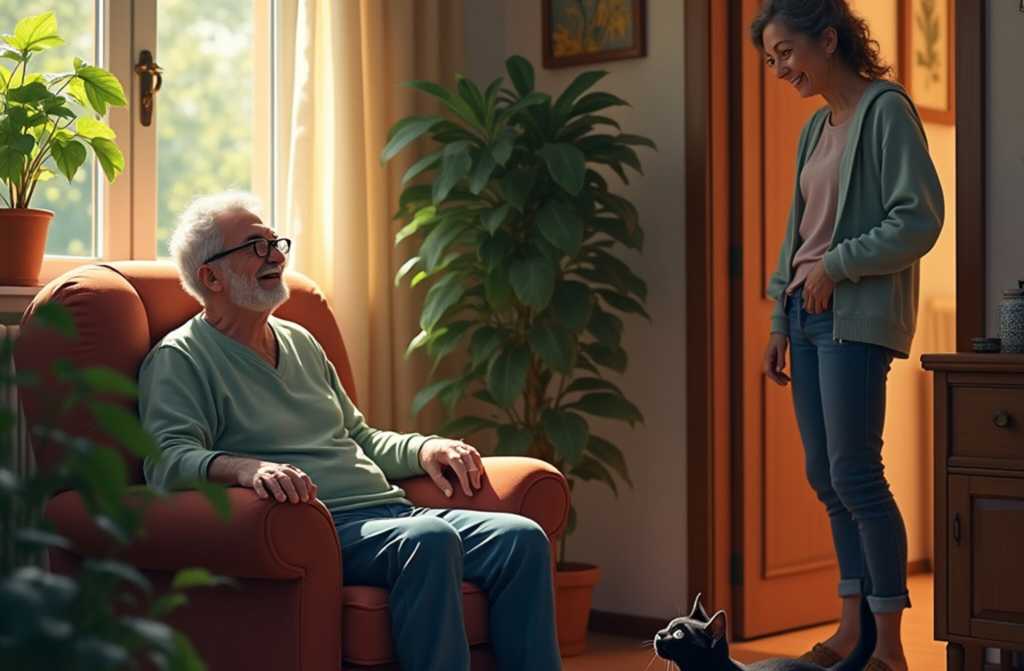
Василь повернувся додому і ахнув…
Півроку тому йому подарували маленьке кошеня, якого назвали Куля. Племінниця, інколи навідувалася до нього в гості з родиною, знайшла малюка на вулиці. І, передаючи з рук в руки, сказала:
— Ти ж живеш самотньо. Пару ніяк не знайдеш. Робота у тебе нервова — водій автобуса. Прийдеш додому, а тут на тебе чекають. Коти — вони створюють затишок і спокій…
Ну, як! Він повірив. Чому б і ні, думає. Можливо, і насправді так. Повертаєшся додому, весь вимотаний пасажирами і водіями, які не бажають поступитися дорогою, а тут поряд — спокійно лежить на дивані. Муркоче й гладитись хоче.
Ну, ви, звісно, розумієте, пані та панове, це він з неопитності так думав. Кіт не виправдав його очікувань і з слухняного й приємного малюка перетворився на підлітка-неслуха. На руках сидіти він не любив, а от пустувати… Скільки хочеш!
З неопитності Василь купив мухобійку, якою ловив мух. Маленьких вертких чи величезних, яких чомусь називають гноєвими. І слідкував Куля за Василем, що бив мух наполегливо, дуже уважно. Запам’ятовував, напевно, інформацію збирав. І одного разу вирішив догодити своєму людині. І догодив…
Ну, так ось, повертаємося до того моменту, з якого почали.
***
Василь зайшов до хати і ахнув. Нічого! Цілком нічого не лежало і не стояло в його квартирі. Розгром був такий, що можна було припустити, що дві банди гангстерів влаштували розбірки прямо у нього дома, і вони працювали… бітами!
Столи були перевернені. Вазони, келихи і загалом усе, що стояло чи лежало на столі, підвіконнях і тумбочках, тепер вкрило підлогу, рівномірно розподіливши осколки скла, глини та пластмаси…
Штори нагадували смужки спідниці якоїсь модниці, а на кухні… Кетчуп перетік в солоні помідори і варення. Там же акуратними гірками були розсипані сіль, цукор і перець. Вилки та ложки валялися купками. Штори на кухні були оборвані разом з карнизом і лежали у всьому цьому розкішному безладі, а на абсолютно порожньому обідньому столі…
Сидів дуже задоволений Куля, і перед ним лежала муха. Величезна, як літак. Куля дивився на Василя очима переможця і задоволено муркотів.
От зараз! Зараз Василь похвалить його. Цілий день, не змикаючи лап і не шкодуючи зусиль, він ганявся по квартирі, ловлячи цю нахабну муху. Зморився надзвичайно, але спіймав! І тепер може виставити її напоказ і отримати заслужену нагороду.
Від таких приємних думок Куля аж лапками затрусив.
Василь підняв стілець і сів на нього. Він не знав, що робити спочатку: прибирати, вечеряти чи лаятися з Кулею, але довго думати не довелося. Бо в двері подзвонили. Він піднявся і, пройшовши в коридор, відкрив. Тепер його здивування зросло.
У коридорі стояли троє поліцейських, а за ними — чоловік десять сусідів. Поліцейські тримали руки на рукоятках пістолетів.
— Нам подзвонили… — почав один із них.
— Багато разів, — додав інший. — І повідомили, що у вас в квартирі відбувається щось дуже погане. Падають меблі і ламаються тарілки. Чується страшний вереск і виття. Чи не могли б ви дозволити нам увійти в квартиру і переконатися, що все гаразд, а ви… про всяк випадок… підніміть руки, будь ласка, схрестіть їх на голові й відійдіть у дальній кут кімнати.
Сусіди дивилися на Василя з острахом і засудженням.
— Ось воно як вийшло, — сказав Василь. І додав: — Проходьте, прошу!
Він відійшов у дальній кут кімнати і схрестив руки на голові. Поліцейські обходили квартиру, спостерігаючи страшний розгром і щось шукаючи, переходячи з кімнати в кімнату.
— Що ви шукаєте? — поцікавився Василь.
— Тіло, — відповів один з поліцейських. — І ваше пояснення того, що сталося.
— Ах, тіло! Тіло я вам зараз покажу, — погодився Василь.
Поліцейські миттєво насторожилися і опустили руки на рукоятки пістолетів. Обережно, по стіні, намагаючись не робити різких рухів, Василь пройшов до кухні. І, розчинивши двері, зробив широкий жест.
— Прошу! — сказав він. — Ось тіло.
Поліцейські відштовхнули його в бік і ввалилися на кухню. Тіло сиділо на столі і нахабно усміхалося. Тілу подобалася увага. А перед ним лежала муха.
Кілька секунд у кімнаті запанувала тиша, поки поліцейські приходили до тями і оглядалися. А потім в їхніх очах почало означатися розуміння. Першим засміявся той, який почав розмову, а слідом за ним розвеселилися й інші.
Вони реготали і не могли зупинитися, а Куля дивився на них і на Василя переможним поглядом, наче кажучи: «Ну от. Бачиш? Всі задоволені. А отже, я старався не дарма!».
Потім поліцейські ще півгодини робили фотографії з мухою і Кулею на руках на фоні влаштованого ним розгрому. Всі сміялися і були дуже задоволені. Найбільше був задоволений кіт. Ще би! Усі оцінили його старання належним чином.
***
Коли поліція та сусіди пішли, Василь знову сів на стілець.
— Я вам допоможу, — почув він голос і обернувся. Поруч стояла жінка з першого поверху.
— У мене сьогодні вихідний, — сказала вона і усміхнулася. — Ви самі провозитесь до ночі, а разом ми швиденько впораємося.
— Мені так незручно вас турбувати, — зніяковів Василь.
— Що ви! — усміхнулася йому у відповідь жінка. — Все нормально. Мені все одно нічого робити. Я одна. Нікого у мене немає. Тільки мама. У неї квартира поблизу. А ви будете якось карати цього шибеника, ну, чи хоч трохи сварити? — спитала вона з кивком на Кулю.
Той сидів на столі на кухні й ганяв правою лапою величезну муху.
— Що ж, сварити… — Зітхнув Василь. — Зараз посварю…
Він піднявся і, підійшовши до Кулі, взяв його на руки:
— Ти ж якийсь шибеник! Хіба так можна? Ні. Не можна.
Куля перебирал лапами — тато сварив його. Причому так красиво й ласкаво, що втриматися було неможливо, і він, потягнувшись угору, лизнув свого чоловіка прямо в ліву щоку, а Василь… Поцілував його в ніс.
— Ну й добре. Ось і молодець, — сказав він Кулі. — Значить, все правильно зрозумів. Щоб більше такого не робив.
І опустив кота на підлогу. Куля задер хвіст і пішов тертися об ноги жінки. Та сміялась.
— Ох як гарно ви його посварили, — посміхнулася вона. — А чому я вас раніше не помічала?
— Не знаю, — відповів Василь. — Може, тому що я раніше нещасний був, а тепер, як у мене з’явився Куля, щастя додалося.
І він рукою показав на розгром, влаштований котом.
Жінка набрала телефон знайомого майстра, і на наступний день Василю поставили міцну сітку на всі вікна. І Куля тепер міг спокійно лежати на підвіконні і дивитися на пташок і великих жирних мух.
А жінка і Василь прибрали весь безлад, винесли і викинули всі розбиті тарілки, помили підлогу, зняли порвані штори. І поїхали по магазинах вибирати нові.
Повернулися вони ввечері, Василь накупив різних закусок і дуже смачний тортик. І пляшку шампанського. Ну, ви розумієте, пані та панове. Щоб відсвяткувати новосілля. У стару квартиру. Разом з жінкою.
Вони сиділи за столом на кухні, їли, пили і розмовляли. І їм було добре, а особливо добре було Кулі. Він лежав на колінах у жінки і замислив… нову допомогу татові.
***
Загалом, все закінчилося відмінно. І Куля, звичайно, відчайдушно допомагає двом. Татові і новій мамі. Яка прийшла в їхню квартиру єдино тому, що знайшла його, Кулю. І визнала в ньому свого рідненького кота.
І тепер тато з мамою разом усувають наслідки його допомоги.
А що ж ви собі думаєте?
А як інакше?
А інакше ніяк…



Just a Childhood Friend — Are you seriously planning to spend all Saturday sorting junk in the garage? The entire Saturday? — Alena speared a piece of cheesecake with her fork, raising a skeptical eyebrow at the tall ginger-haired man. Ivan leaned back in his chair, warming his hands around a mug of cooling cappuccino. — Alena… That’s not junk, those are childhood treasures. I’ve still got a collection of “Love is…” gum wrappers in there somewhere, I’ll have you know. Can you imagine what riches those must be? — Oh my God. You kept gum wrappers? Since when? Alena snorted, her shoulders shaking with barely suppressed laughter. This little café, with its worn-out plum-colored sofas and eternally steamed-up windows, had long ago become their personal territory. The waitress, Mary, never even asked what they wanted anymore — she just brought out Ivan’s cappuccino, Alena’s latte, and the dessert of the day for them to share. Fifteen years of friendship had rehearsed this ritual into muscle memory. — Fine, I admit it, — Ivan toasted her with his mug, — the garage can wait, and so can the treasures. By the way, Chris invited us for a barbecue on Sunday. — I know. He spent three hours last night picking out a new grill online. Three. Hours. I thought my eyes would bleed from boredom. Their laughter dissolved into the whirr of the coffee machine and the gentle hum of conversation at the neighbouring tables… …There were never awkward silences or unspoken words between them — Alena knew Ivan as well as her own palm. She still remembered how skinny little Ivan, shoes perpetually untied, was the first to talk to her in the new class. Ivan remembered how she was the only one who didn’t laugh at his thick-rimmed glasses. Chris had accepted their friendship without questions or suspicion from the very first day. He watched his wife and her childhood friend with the calm confidence of a man secure in himself and those he loved. On their Friday nights of Monopoly and Uno, Chris laughed the loudest when Ivan lost to Alena for the hundredth time at Scrabble, and poured the tea while those two squabbled over game rules. — He’s cheating, that’s why he wins, — Alena declared once, tossing a handful of cards at her husband. — That’s called strategy, my dearly beloved, — Chris replied placidly, collecting the scattered cards. Ivan watched them with a warm smile. He liked Chris — grounded, reliable, with that dry humour that left you guessing, joke or not. Alena blossomed with Chris, grew softer and happier, and Ivan was genuinely glad for her, as only a true friend could be. The balance was upset when Vera barged into their close-knit world… …Chris’s sister appeared at their flat’s doorstep a month ago, eyes puffy, determined to start afresh. Divorce had wrung her dry, leaving bitterness and a gaping emptiness where there’d once been a semblance of stability. That first evening, when Ivan dropped by for their traditional games, Vera looked up from her phone and studied him appraisingly. Something clicked in her brain, like a rusty mechanism springing to life. Here was a man — steady, kind eyes, a smile you couldn’t help but answer. — This is Ivan, my friend from school days, — Alena introduced. — And Vera, Chris’s sister. — Lovely to meet you, — Ivan offered his hand. Vera held his hand a moment longer than etiquette called for. — Likewise. From that point, Vera’s “accidental” appearances became routine. She popped up at their café sessions precisely when Ivan and Alena were there. She waltzed in with a plate of biscuits just as Ivan arrived. She sat at the game table so close their shoulders touched. — Could you pass me that card there? — Vera leaned across his arm, her hair “accidentally” brushing his neck. — Oh, sorry. Ivan shifted politely away, mumbling something courteous. Alena exchanged looks with Chris, who shrugged — his sister had always been a bit much. The flirting grew more obvious. Vera held Ivan’s gaze, paid him compliments, found reasons to touch him. She laughed so loud at his jokes that Alena’s ears rang. — You have such lovely hands, such elegant fingers, so aristocratic, — Vera remarked one evening, catching his hand atop the game tokens. — Play an instrument? — Er… I’m a software developer. — Still, very nice hands. Ivan gently extricated himself and feigned intense concentration on his cards. His ears turned pink. After the third invitation for “just a friendly coffee chat,” Ivan relented. He liked Vera — she was vibrant, exuberant, alive. Maybe, he thought, if they dated, she’d stop looking at him like a starving wolf at every encounter, and things would go back to normal. Their romance began well enough. Vera glowed with happiness, Ivan relaxed, family game nights became family game nights again. But then Vera noticed what she wished she hadn’t. She saw how Ivan lit up when Alena arrived. How his face softened, became warmer. How easily they picked up each other’s jokes, finished one another’s sentences, shared a bond she couldn’t reach. Jealousy blossomed inside Vera, poisonous and wild. — Why are you always with her? — Vera blocked his way to the door, arms crossed. — She’s my friend, Vera. Fifteen years. That’s… — But I’m your girlfriend! Me! Not her! The arguments came in waves. Vera sobbed, accused, demanded. Ivan explained, placated, reassured. — You think about her more than me! — Vera, that’s absurd. We’re just friends. — Just friends don’t look at each other like that! Ivan’s phone rang every time he met Alena. — Where are you? When will you be home? Why aren’t you answering? With her again? He learned to put his phone on silent, but Vera started tracking him. She’d appear at the café, in the park, outside Alena’s house — wild-eyed, tearful with rage. — Vera, please, — Ivan rubbed his temples, weary. — This isn’t healthy. — What’s not healthy is you spending more time with someone else’s wife than with your own girlfriend! Alena grew tired too. Each meeting with her childhood friend became a test. How long before Vera showed up, with what accusations, what scene this time? — Maybe I should see you less— — Alena began once, but Ivan cut her off: — No. Absolutely not. You’re not changing your life over her tantrums. None of us will. But Vera had made her decision. If honesty won’t work, then maybe dishonesty would… Chris was on the kitchen when Vera glided into the room. — Hey, big brother… I need to tell you something. I didn’t want to, but… you deserve the truth… …Bit by bit, she spun her lies, punctuated with practiced sobs. Secret meetings. Lingering looks. How Ivan held Alena’s hand when he thought no one was looking. Chris listened silently, without interrupting, his expression unreadable. When Alena and Ivan returned an hour later, the atmosphere in the lounge was thick as molasses. Chris reclined in his armchair like a man awaiting a gripping show. — Sit down, — he said, gesturing at the couch. — My sister’s just shared a fascinating story about your secret affair. Alena froze mid-step. Ivan’s jaw clenched. — What the— — She claims she’s seen some pretty compromising things. Vera hunched down, refusing to meet anyone’s gaze. Ivan spun towards her so sharply that Vera recoiled. — That’s enough, Vera. I’ve put up with your drama way too long! His face blanched with anger. The patient, kind Ivan was gone — in his place stood a man at boiling point. — We’re done. Right now. — You can’t— This time, her tears were real. — It’s her! — Vera jabbed a finger at Alena. — It’s always her! You always pick her over me! Alena paused, giving her sister-in-law time to empty her venom. — You know, Vera, — she said evenly, — if you hadn’t tried to control every second of his life, if you hadn’t created drama out of nothing, none of this would have happened. You destroyed what you were trying to save all by yourself. Vera snatched up her bag and stormed out, slamming the door behind her. Chris laughed — genuine, from deep in his chest, head thrown back. — Thank God, at last. He stood and pulled Alena close, wrapping her in his arms. — You didn’t believe her, did you? — Alena asked with her face against his neck. — Not for a second. I’ve watched you two for years. It’s like seeing brother and sister argue over who ate the last chocolate. Ivan exhaled, the tension finally leaving him. — Sorry for dragging you into all this circus. — Nonsense. Vera’s a grown woman — her choices are her own. Now let’s eat. The lasagne’s getting cold and I refuse to reheat it just because of someone else’s drama. Alena laughed softly, relieved. Her family was whole. Her friendship with Ivan was unbroken. And her husband had once again proven his trust was stronger than any rumour. They headed into the kitchen, where the lasagne’s golden crust gleamed in the light, and life took its usual, comforting shape again.
Are you really planning to waste your Saturday rummaging through junk in your dads garage? The entire day? Emily prods...


Do I Remember? I Can’t Forget! — Pauline, there’s a situation… Remember my illegitimate daughter, Natalie? — my husband spoke in riddles, which made me uneasy. — Hmm… Do I remember? I couldn’t possibly forget! What’s going on? — I sat down, bracing myself for trouble. — I’m not sure how to put this… Natalie is begging us to take in her little girl, which would make her my granddaughter, — my husband stammered. — And why exactly should we, Alex? What about Natalie’s husband? Can’t he take care of her? — Now I was intrigued. — Well, Natalie doesn’t have much time left. There never was a husband. Her mother remarried years ago and lives in America, they’re on terrible terms and haven’t spoken in ages. There’s nobody else. That’s why she’s asking us, — Alex avoided my eyes, embarrassed. — So? What are you thinking? What will you do? — I had already made up my mind. — I want your advice, Pauline. Whatever you say, that’s what we’ll do, — finally, he looked at me hopefully. — How convenient. So, your wild youth is now my problem, and I’m supposed to take responsibility for a child that’s not my own. Is that it? — My husband’s weak-willed attitude drove me mad. — Pauline, we’re a family. We have to decide together, — Alex pressed on. — Oh, look who remembers we’re family! Why didn’t you consult me when you were running around with that girl all those years ago? I’m your wife! — Tears filled my eyes and I ran to another room… — INCLUDES: Unforgettable family secrets, a husband’s confession, and the unexpected arrival of an estranged granddaughter, all set against the backdrop of British suburbia, as Pauline faces a decision that will redefine forgiveness, loyalty, and the true meaning of family.
DO I REMEMBER? I CAN NEVER FORGET! Polly, theres something I need to talk to you about… Well, do you...


Winter had blanketed Andrew’s garden in a soft layer of snow, but his loyal dog Duke, a giant German Shepherd, was behaving strangely. Instead of curling up in the spacious kennel Andrew had lovingly built for him last summer, Duke stubbornly insisted on sleeping outside, right on the snow. Watching from his window, Andrew felt a pang in his chest—Duke had never acted like this before. Each morning, when Andrew went out to him, Duke fixed him with a tense stare. Every time Andrew neared the kennel, the dog wedged himself between Andrew and the entrance, growling softly and gazing at him pleadingly, as if to say, “Please, don’t go in there.” This behaviour—so out of character after years of close friendship—left Andrew unsettled. What was his best friend hiding? Determined to get to the bottom of things, Andrew came up with a plan—he lured Duke into the kitchen with a tempting steak. While the big dog, locked indoors, barked at the window in protest, Andrew carefully approached the kennel and crouched down to take a look inside. His heart skipped a beat as his eyes adjusted to the darkness and he saw something that chilled him to the bone… …Inside, huddled in a blanket, was a tiny kitten—dirty, frozen, and barely breathing. Its eyes opened with difficulty, and its little body trembled from the cold. Duke must have found it somewhere—and instead of chasing it off or leaving it to fend for itself, he had taken it in. He’d slept outside so as not to frighten the kitten, guarding the entrance as though the kennel sheltered a precious treasure. Andrew held his breath. He reached in gently and gathered the little creature to his chest. At that moment, Duke rushed over and pressed himself by Andrew’s shoulder—no longer growling, just quietly, ready to help. “You’re a good dog, Duke…” Andrew whispered, holding the kitten tight. “Better than many people I know.” From that day on, there weren’t just two friends living in the garden, but three. And the kennel, lovingly built, regained its purpose—as a tiny house for rescued souls.
Winter had draped my garden in a thick, sparkling blanket of snow, but my loyal dog Max, a massive old...


Every Love Has Its Own Shape On a blustery September day, little Annie stepped outside into the chill without her coat, shivering as the wind slipped right through her thin jumper. She stood at the garden gate, casting quiet glances around, not even noticing the silent tears streaming down her cheeks. “Annie, why are you crying?” came a gentle voice. She jumped, finding Mikey, the boy from next door, a little older, with his hair sticking up at the back. “I’m not crying, it’s just…” Annie fibbed, wiping her eyes. Mikey watched her for a moment, then dug three sweets from his pocket. “Here—don’t tell anyone, or all the kids will come running. Off you go, get inside,” he said firmly, and Annie obeyed. “Thank you,” she whispered, “but I’m not even hungry… just…” Mikey understood and simply nodded, walking off. Everyone in the village knew Annie’s dad, Andrew, drank too much. He often went to the only shop in the village to ask the shopkeeper, Val, for credit until payday. Though she scolded him, she still gave him what he asked for. Annie returned home, her stomach rumbling. The house was quiet—her father was out cold on the sofa, empty bottles on the kitchen table and floor, a heaviness filling the air. She opened the cupboard, but there wasn’t a crumb of bread. Weak with hunger, Annie ate the sweets Mikey had given her and moved to her homework, perching on a stool and pulling her knees to her chest. Numbers blurred in her maths book as she gazed at the wind whipping golden leaves around the yard. Out the window stood the vegetable patch—once lush and green, now grey and unkempt, the strawberry bed empty and even the old apple tree withered. Her mum used to care for it all, making sure every sprout thrived. The apples, always sweet, were picked early this summer by her dad, and sold at market with a muttered, “Need the money.” Once, life had been full of laughter—her dad cheerful, her mum baking apple jam buns and magic heart-shaped rolls that granted a wish if eaten warm from the oven. But when her mum’s heart failed, she vanished into the hospital and never came home. “Mum’s watching from above now,” her father cried, clutching Annie tight, before he started to drink, drifting away, and letting strangers fill the house. Clutching her battered old bunny, Timmy—her mum’s last gift—Annie whispered, “Do you remember Mum, Timmy?” She thought he must—just as she did—and closed her eyes to comforting memories of her mother in her apron, hair tied back, making heart-shaped rolls and promising that “every love has its own shape.” On weekends Annie wandered to the edge of the woods, to the long abandoned gardener’s cottage, where she would gather fallen apples and pears from the late old Mr. George’s garden, reassuring herself, “I’m not stealing, they’re only rotting on the ground.” This time, as Annie picked up an apple, a woman’s voice stopped her short. “Oi, who’s that over there?” The lady in the long coat approached. “Who are you?” “Annie… I was just picking up fruit from the ground. I thought no one lived here anymore. I didn’t mean any harm…” “I’m George’s granddaughter, Anna. I just moved in. How long have you been collecting fruit here?” “Since Mum died,” Annie’s voice broke and her tears fell. Anna wrapped an arm around her. “Come inside, love. Let’s get you warm. I’m Anna, just like you—but when you grow up, everyone will call you Anna too.” Inside the tidy kitchen, bowls of steaming chicken soup and thick slices of bread revived Annie, followed by a basket of heart-shaped vanilla rolls, just like the ones her mother made. “They’re just like Mum’s buns,” Annie said, tears stinging her eyes. Anna insisted on walking her home. Annie pleaded, “Please don’t tell anyone what our house is like. Dad’s good—he just can’t pull himself together, not since Mum left. If they find out, they’ll take me away, and I couldn’t stand to leave him.” “I promise, love,” Anna said and hugged her close. Time passed. Annie, now with neat plaits, a smart new coat, and shiny boots, hurried to school, friends asking if it was true her dad had remarried. “It’s true,” Annie smiled proudly. “Now I have another mum—Auntie Anna!” Her dad, Andrew, finally stopped drinking with Anna’s help, and their house became warm and cheerful again. Annie grew up, went off to university, and always came home at holidays, rushing through the door with a shout, “Mum, I’m back!” Anna would greet her with a tight hug: “Welcome home, my clever girl!” And in the evening, Andrew would join them too, all of them happy—and Annie knew indeed: every love has its own shape.
Every Love Has Its Own Shape Annie steps out into the garden and shivers as a biting wind cuts straight...


To See With Her Own Eyes After a devastating tragedy in which Ksenia lost her husband and six-year-old daughter in a car accident, she struggled to recover. She spent nearly six months in a clinic, refusing to see anyone, with only her patient mother by her side. One day, her mother gently told her: “Ksenia, your husband’s business may be on the brink of collapse—Yegor is barely managing. He called me and asked that I tell you. Thankfully, Yegor is an honest man, but…” These words finally sparked something in Ksenia. “Yes, Mum, I need to keep busy; my Denis would have been glad to see me continue his work. Thankfully, I understand the business—he must have sensed it, bringing me into the office.” Ksenia returned to work and managed to save the struggling family business. Yet, despite her professional success, she missed her late daughter terribly. “My dear, I want to suggest you consider adopting a little girl from an orphanage—someone who has it even harder than you. You can help her, and someday, you’ll understand that this is your salvation.” After careful thought, Ksenia realised her mother was right. Soon she visited the orphanage, knowing she could never replace her own child but hoping to help another. Arisha had been almost completely blind since birth. Her parents, both well-educated and from respectable families, abandoned her when they learned of her diagnosis, unwilling to shoulder the responsibility. Even the most upstanding can succumb to cowardice and betrayal. Thus Arisha came to the nursery, where she was named Arina. She grew up hardly able to see, perceiving only faint shadows. At the orphanage, she learned to read, adored fairy tales, and believed that one day a kind fairy godmother would come for her. On the eve of her seventh birthday, her fairy arrived—a beautiful, striking, wealthy, but deeply unhappy woman. Arina couldn’t see her clearly but sensed her kindness. When Ksenia came to the orphanage, the director was surprised that anyone would ask for a child with health issues. Ksenia avoided explaining, fearing misunderstanding, and gave the usual assurances that she had the resources and desire to help a disabled child. A caretaker led Arina out by the hand. Ksenia, upon seeing her, instantly knew—this was her child. She was angelic, with golden curls and huge blue eyes—pure, deep, and sightless. “And who is this?” Ksenia asked, unable to tear her eyes away. “Our Arisha—such a lovely, gentle soul,” the caretaker replied. “She’s mine. That’s certain,” Ksenia decided at once. Ksenia and Arina became devoted to each other, filling essential roles in each other’s lives. After Arina joined the family, Ksenia’s world changed and gained new purpose. Upon consulting doctors, she learned that an operation might restore Arina’s sight, though she’d need glasses. Clinging to hope, Ksenia arranged the operation before school started. Though Arina’s vision saw little improvement, another chance awaited when she was older. Time passed. Ksenia lavished love on her daughter, while her business flourished; though young and beautiful, she had no interest in men—her life revolved solely around Arina. Arina blossomed into a rare beauty and graduated from university. Grateful and unspoilt, she began working for her mother’s company. Ksenia guarded her daughter’s circle warily, fearing that some opportunist would prey on Arina’s naivety and covet her dowry—ample though it was—and always made it clear such schemes would never succeed. Then, Arina fell in love. Ksenia met Anton and, seeing nothing amiss, approved of their relationship. Before long, Anton proposed, and wedding preparations began. Six months after the wedding, Arina was scheduled for her final eye operation. Anton was affectionate and attentive, though occasionally Ksenia sensed something off, which she dismissed. The young couple visited the countryside restaurant where their wedding would be held to discuss décor. It was nearly empty that afternoon. Seated at a table, Anton placed his phone down, but then the alarm on his car went off, prompting him to step outside. While Arina waited, his phone rang persistently. At first, she hesitated to answer, but the ringing continued. She picked up and, before she could speak, heard the booming voice of Anton’s mother, Inna Sergeevna. “Son, I’ve figured out how we can rid ourselves of that blind girl quickly. My friend at the travel agency has two tickets held back for you. After the wedding, tell your little wife you want to see the mountains together. Go hiking, just the two of you, and arrange a little ‘accident’—she slips, she falls. Then go to the police and say your wife’s missing. Say you argued and she stormed off alone. Cry, act devastated, demand a search. When they find her, they’ll think she fell. Who’s going to investigate a foreign tourist’s accident? I know you can play the grieving husband—everyone will believe you, even her mother. If they restore her sight, it’ll be harder to get rid of her—don’t lose all that money, son. Think about it. I’ll hang up now.” Inna Sergeevna disconnected. Arina, shaking, dropped the phone as if it had burned her. “So Anton and his mother want me dead,” Arina thought in horror. A moment ago, she’d been a blissful bride-to-be. Now, the people she and her mother had come to trust were plotting her murder. Arina realised Anton hadn’t overheard the call and tried to keep her composure as he returned. “That’s odd—the alarm must’ve been a cat, but there’s no sign of damage,” Anton said, picking up his phone as it rang again. “Yes, Roman, I’ll be right there,” he said into the phone. Hanging up, he added, “Bad luck—Roman needs me urgently at the office.” “Go ahead,” Arina whispered, “I’ll wait for Mum and we’ll sort everything out.” “Right, I’ll head off. See you.” Arina sat weeping at the table. The restaurant manager, Katya, came over, recognising her. “Arina, are you all right? Where did Anton dash off to—you were just discussing—?” “It’s okay, Katya. Mum’s on her way, just a misunderstanding. Anton was called into work.” “Shall I bring you some tea? You seem shaken.” Arina nodded. Ksenia knew her daughter was meeting Anton at the restaurant and was surprised by Arina’s call. “What could have happened? My poor girl sounded distraught,” she thought, driving over. Twenty minutes later, she joined Arina at the table. “Arina, I was worried sick driving here.” “Mum, Mummy—” Arina’s tears flowed. “They want to kill me.” “Who?” her mother asked, bewildered. “Anton and Inna Sergeevna. I heard it myself. She called, and he’d left his phone on the table when he went outside. She told him to take me to the mountains and push me off a cliff. She pushed him to hurry, so we wouldn’t have time for the operation.” “Darling, what are you saying? Are you sure? Are you okay?” “Mum, please believe me, I heard it myself. Inna Sergeevna never realised she was speaking to me instead of Anton. I hung up before she suspected. Anton was called in to work.” Ksenia was in shock. Had they been so wrong about Anton? What now? As they discussed their next move, Anton phoned Arina. “Well, Arisha, did your mum arrive? Have you sorted out the décor?” Ksenia took the phone. “Hello, Anton. Good thing we learned about your and your mother’s plans in time. Listen carefully—your trips, your plans in the mountains…” “What plans? What trips?” Anton either truly didn’t understand, or he was playing the part very well. “You know—the mountains, where Arina was meant to die in a tragic accident. You realise if your phone goes to the police, they can retrieve everything, even deleted messages. Understand?” There was a pause. “I understand, but it wasn’t me, it was my mother…” “Right. Not only a scoundrel, but a coward too. Goodbye, Anton.” The next day, Anton fled town, blaming his mother for ruining their scheme, grabbing her money, and disappearing, terrified that Ksenia and Arina would go to the police. Inna Sergeevna left as well, rushing to a friend in another city. Shocked by What She Saw With Her Own Eyes At the eye clinic, Arina underwent another operation. Ksenia remained by her side, the bandages still covering her daughter’s eyes. Dr. Dmitry Igorevich, a young surgeon, took great care of Arina—the surgeon who’d performed her operation—and gently supported his beautiful patient. Dmitry blushed when speaking to her, obviously taken. Ksenia watched protectively, yet he seemed sincere and smitten. When Arina’s bandages were finally removed, he brought her a huge bouquet of roses. Arina was overwhelmed when she could truly see for the first time—she wept, finally able to take in the beauty of the flowers and the handsome, tall blond man with grey eyes. “Oh, I’m so happy—I can finally see everything!” Arina sobbed as Dmitry rushed to console her. Arina needed glasses for life, but that hardly seemed a hardship now. Time passed. Arina and Dmitry’s wedding was beautiful. A year later, they had a lovely daughter with her father’s grey eyes. Arina is truly happy—with a caring, reliable husband who will never let harm come to her. Thank you for reading, subscribing, and for your support. Wishing you happiness in your own life!
Seeing it With My Own Eyes After that terrible tragedy losing her husband and six-year-old daughter in a car accident...


My Son Skipped My 70th Birthday Claiming He Was Busy at Work—That Evening I Saw Him on Social Media Celebrating His Mother-in-Law’s Birthday at a Restaurant
The phone rang at precisely midday, slicing through the strained anticipation in my kitchen. I grabbed the receiver, running a...


Aunt Rita I’m 47 years old. Just an ordinary woman—a bit of a wallflower, not attractive, not blessed with a great figure. Lonely. Never been married, never wanted to be, because I believe most men are all the same—interested only in stuffing their faces and lounging on the sofa. Not that anyone’s ever proposed or asked me out, for that matter. My elderly parents live up in Newcastle. I’m an only child—no brothers or sisters. I do have cousins, but I don’t keep in touch. Nor do I want to. I’ve lived and worked in London for 15 years, in a regular office job. Each day is work and home, work and home. I live in a standard block of flats in a typical residential neighbourhood. I’m bitter, cynical—I don’t love anyone. I don’t like children. At Christmas, I went to visit my parents in Newcastle, as I do once a year. When I got back, I decided to clean out my fridge, throwing away old frozen food—dumplings, burgers, things I’d bought and never liked. I bundled it all up in a box to toss it out. In the lift, there was a little boy, maybe seven; I’d seen him with his mum and a baby sibling before. I even thought, “Some people—she’s gone and had another one!” The boy stared at my box. When we got out, he quietly followed me to the bins and asked in a timid voice if he could have the food. I warned it was old, but let him take it—none of it was rotten, after all. As I turned to leave, I watched him gently pick up the packets, close them up, and clutch them to his chest. I asked where his mum was. He told me she and his sister were ill—couldn’t get out of bed. I went back home and started cooking dinner, but couldn’t get that boy out of my mind. I’m not usually inclined to help, but something nudged me. I grabbed what I had in the kitchen: sausage, cheese, milk, biscuits, potatoes, onions, even some meat from the freezer. I realised I hadn’t a clue what floor their flat was on, but knew it was above mine, so I worked my way up, floor by floor. I got lucky; after two flights, the boy opened the door. He hesitated, but let me in. The flat was poor but spotless. His mum lay curled up on the bed next to her youngest, a bowl of water and cloths on the table. High fever, trying to cool her daughter down. The medicine they had was long out-of-date. I felt her mum’s forehead—hot as a stove. She woke and stared at me in confusion, then suddenly sat up, asking where her son was. I explained I was a neighbour and quickly got the details before calling for a paramedic. While we waited, I gave her tea and sausage—she wolfed it down, must have been starving. Barely able to feed herself, yet still breastfeeding her baby. The ambulance came, checked them over, wrote out a long list of medicines and injections needed for the little girl. I went out, picked up everything from the pharmacy and groceries for them, plus—on a whim—a ridiculous neon yellow monkey toy. I’ve never bought a child a present before. Her name’s Anna, she’s 26. She grew up in Manchester’s outskirts. Her mum and gran were Londoners, but her mum married a local and moved up there to work in a factory. Anna’s dad died in an accident at work. Her mum was left alone, jobless, and quickly spiralled into trouble. By the time Anna was three, neighbours contacted her granny in London, who took her in. When Anna was 15, her gran told her the truth—her mother died of tuberculosis. The gran hardly spoke, was miserly, and chain-smoked. At 16, Anna took a job at the nearest shop, first as a shelf-stacker, then at the till. Her gran died a year later. At 18, Anna dated a boy who promised everything but disappeared as soon as she became pregnant. She kept working, saving up, knowing there was no one to help. When her son was a month old, she’d started leaving him on his own so she could clean stairways and make ends meet. As for her daughter—the shop owner she went back to, when her son was older, raped her repeatedly and threatened to have her fired so she could never work again. When he found out she was pregnant, he gave her £100 and told her never to come back. Anna told me all this that night—thanked me, said she’d repay me by cleaning or cooking. I stopped her, said goodnight, and left. I couldn’t sleep at all, thinking, “Why do I live like this? Why am I so cold? I don’t care for anyone, not even my own parents. I have all this money saved with no one to spend it on, and here’s a little family with nothing—not even enough to get well.” The next morning, the little boy, Anton, brought me a plate of homemade pancakes and dashed off. I stood there, plate in hand, feeling warmth coming from the food, spreading through me as if I were thawing out. Suddenly, I wanted everything at once: to cry, to laugh, to eat. Not far from our block is a small shopping centre. The owner of a children’s shop there, after some confusion over sizes, even offered to come with me to Anna’s flat. I don’t know if she wanted the business, having seen I’d buy a lot, or was just moved by my mission. An hour later, four huge bags of clothes for the kids stood in Anna’s hallway. I bought bedding, food, vitamins, even toys. I wanted to buy everything—I finally felt needed. It’s been 10 days now. They call me Aunt Rita. Anna is quite the crafty homemaker—my flat feels cosier already. I’ve started calling my parents. I even text ‘KINDNESS’ to children’s charity fundraisers. I can’t believe how I lived before. Every day after work I hurry home, because I know someone’s waiting. And this spring, we’re all heading up to Newcastle together—tickets have already been bought.
Aunt Rita I’m 47 years old. Just an ordinary woman, nothing remarkable about me. You could say Im a bit...


My Husband and I Came to the Countryside to Meet His Parents for the First Time — The Warm Welcome, Home-Cooked Meals, and Tall Tales Around the Kitchen Table Would Change Everything
My husband and I have just arrived in the countryside to meet his parents for the first time. Harrys mum...