
З життя
No One’s Home

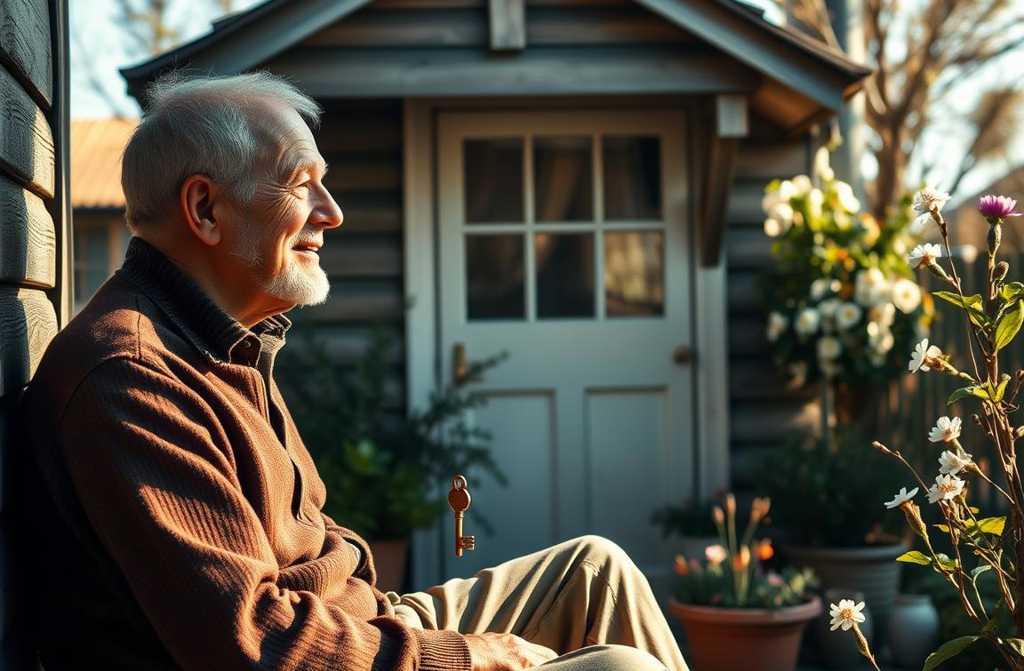
Nobodys House
Henry would wake, just as he always had, without an alarm, at half past six. Silence filled the flat, save for the low hum of the fridge in the kitchen. Lying for a minute and listening to it, he reached out for his specs on the windowsill. Outside, first light pressed against the glass, and a couple of cars whispered over the wet road below.
In the old days, hed be getting ready for work nowshuffling into the bathroom, hearing the neighbours radio click on through the wall. The neighbour still turned it on, but Henry, now, lay and wondered what to do with himself today. Hed been retired three years already, at least on paper, but habit kept him living by the clock.
He got up, pulled on some old trackies, and made his way to the kitchen. Boiled the kettle, pulled out a slice of yesterdays bread from the bread bin. As the water heated, he went to the window and looked down. Seventh floor, postwar council building, a courtyard with a tired old playground. His faithful Ford Cortina, gathering dust, sat beneath the window. He noted, absently, that he ought to pop by the lock-up in town, just to make sure the rain hadnt seeped through the roof.
The garageone of those co-operative sheds in a little block beyond the high streetwas three stops away on the bus. He used to spend half his weekends there, tinkering with the car, changing oil, moaning about petrol prices and swapping football banter with the lads. These days, even tune-ups and tyres were handled in a click at the service centre. Still, Henry hadnt let go of the old garage. The shelves held his tools, spare tyres, boxes of wires and bits he called a proper mans hoard.
And the allotment cabin. A timber hut in a little allotment patch just outside town. Narrow front porch, two rooms and a poky kitchenette. When he shut his eyes, he still saw those old boards, heard the patter of rain on the roof, smelled the must of the floor. The allotment had come from his wifes parents, over twenty years ago, back when weekends were always spent with the kids, digging spuds, frying eggs, and playing cassettes on the old tape player balanced on a stool.
His wife had passed, four years gone. The children grown and gone too, with their families spread out in little flats all over. The allotment and garage, though, theyd stayed with him. They anchored his days: the flat, the allotment, the garage. All as they should be.
The kettle whistled. Henry brewed his tea and sat at the table. Yesterdays jumper lay folded on the chair opposite. He nibbled his toast, staring at it, thinking about last nights conversation.
The children had come roundhis son Matthew, with his wife and boisterous young lad, his grandson; and his daughter Lucy and her husband. Tea, biscuits, talk about holidays. Then, as always lately, the chat turned to money.
Matthew complained about the mortgagerates up again. Lucy sighed about nursery fees, the cost of clubs and school shoes. Henry nodded, remembering how hed once counted pennies to payday, except then thered been no allotment, no garagejust a rented room and hope.
Then Matthew, fidgeting, had broached it:
Dad, weve been thinkingLucy and Sophie too. Maybeits time to sell something? The allotment perhaps, or the garage. You hardly go.
Henry had joked, batted it away. But that phrase, You hardly go, swirled in his head long after dark. Sleep eluded him.
He finished his toast, drank his tea, and put the mug away. Eight. Hed go to the allotment today, see how everything had fared after winterprove something, if only to himself.
He dressed warm, found his keys to the garage and allotment in the hall, pressing them into his jacket pocket. He lingered at the old mirror in its thin wooden frame: a man, silver at the temples, eyes grown tired, sturdy still. Not an old man yet. He shrugged his collar up, left.
He detoured by the garage, picking up some tools. The padlock squeaked as he forced it open. Inside: the air thick with dust, petrol, old rags. Jars of screws, boxes of wire, a cassette marked in fading biro. Cobwebs, drifting in the rafters.
There was the jack for his first car. There the neat pile of plankshe once meant to make a bench for the allotment, never got round to it, but the planks waited, just in case.
Tool box in hand, a few plastic cans, he locked up and set off.
The road out skirted endless hedges patched with dirty old snow and blackening ground. The allotment was still, too early for most. Eileen, the caretaker, nodded at the gates in her bobble hat.
The hut met him with that same stillness, out of season: slanting fence, gate a touch askew. He pushed through, crunched along the path, treading last years leaves.
Inside, the air was close and sharp with wood and dust. Henry cracked the windows wide. Stripped the musty cover from the bed, shook it out. In the kitchen, the enamel pot sat on the tablethe one theyd boiled fruit in for summer drinks. A ring of keys hung by the doorone for the old toolshed round back.
He wandered from room to room, laying his hands on the cool wall, the handles of creaky doors. The tiny room the children had once claimed, complete with ancient bunk bed. On the top, a one-eared teddyhe remembered Matthew wailing over that ear, and Henry, having no glue, had fastened it with a length of tape.
Back outside. The snow had mostly gone, beds puddled soggy and black. The barbecue, a rusting relic, stood sentinel at the plots edge. He recalled the laughter, the scent of grilled meat. He and his wife on the porch, sipping tea from glass mugs as a neighbours laughter floated on the breeze.
He sighed, rolled up his sleeves and set about his chores: swept the path, fixed a rattling board on the porch, checked the shed roof. He unearthed a battered plastic chair, set it down, sat. The sun, clearing the rooftops, brought warmth.
He thumbed his phone. Missed call from Matthew; Lucy had messaged about meeting to talk things over. We dont mind the allotment, Dad, just want to think sensibly, shed written.
Sensibly. That word cropped up more and more. Sensibly meant money shouldnt sit idle. Sensibly meant an old chap shouldnt wear himself out. Sensibly, help the young ones whilst he could.
He understood, honestly. But sitting there, listening to some distant dog bark and the tap of drip on tin, sensible receded into the mist. Here, it was about something other than pounds and pence.
He walked the plot, locked up at last, the heavy padlock clicking on the door. Then back to the town.
Home by noon. He hung his coat, set the bag of tools in the hall. Only then did he spot the notejust a scrap, Dad, well come by tonight to talk. M.
He sat, hands on the table. So it would be tonighta real conversation, no jokes.
That evening, they all arrived: Matthew and his wife, Lucy. Grandson left with the mother-in-law. Henry welcomed them, nodded as Matthew, out of habit, hung up his jacketsame as hed done as a lad.
They sat at the kitchen table. Henry set out tea, biscuits, sweets. No one touched them. They spoke about trifling thingsthe boys school, work, traffic in town.
Then Lucy caught her brothers eye. He nodded, so she began.
Dad, we really ought to talk. We dont want to put pressure on you. Butwe just need to know.
Something knotted inside him. He nodded. Speak.
Matthew began.
Youve got the flat, the allotment, the garage. The flat is yoursno ones asking, its home. But the allotment you say yourself, its hard work. The beds, the roof, the fence. It costs, every year.
I went today, Henry said softly. Its fine.
Well, fine for now, said Matthews wife. But what about five, ten years on? You wont be going forever. Sorry, but we have to think ahead.
He turned away. The talk of him not lasting forever stung, though she probably meant well.
Lucy tried with more gentleness:
Were not saying give it all up. We just think, sell the allotment and garage, split the money. Some for you to live comfortably, some for us. Itd help Matthew, with the mortgage. You always said you wanted to help.
He had said it, back when retirement meant agency jobs were still possible and his back didnt give him trouble. Then, hed expected to stay spry forever.
I do help, he replied. I pick up the little one now and then, get your shopping sometimes.
Matthew gave a wry laugh.
Dad, its not the same. We just need a lump sum, breathe a little. You know how bad the rates are. Were not asking for all of itjust, the things sitting empty.
That word, property, echoed foreign in his kitchen. He sensed yet another divide: all figures and forms between them.
He sipped cold tea.
For you its property, he said, deliberately. For me
He paused, searchingdidnt wish to be grand.
Theyre pieces of life, he finished. I built that garage, with Granddad. He was alive then. We hauled the bricks together. The allotmentwell, you two grew up there.
Lucy looked away, Matthew was quiet. Then, gentle:
We get it, we do. But you dont go much anymore. Everything justsits. You cant keep it all up.
I was there today, Henry repeated. Everythings in order.
Today, said Matthew. But when before that? Last autumn? Dad, really.
A silence. Henry could hear the clock in the next room. How strange, to sit at his own table and talk of his getting old as if it was a business strategy: optimise expenses, redistribute property.
So, what do you suggest? he asked.
Matthew perked uptheyd clearly planned this.
Weve met an agent. She said the allotment would fetch a good price. The garage too. Well handle viewings, the paperwork. Youll just sign. Nothing stressful.
The flat? Henry asked.
Not touching the flat, Lucy replied. Thats your home.
Home. The word sounded different all of a sudden. Was home just these walls, or also the little cabin? The garage where hed spent so many hours cursing a stuck bolt, yet felt so needed?
He stood, walked to the window. The lights had come on in the court below. The scene was nearly unchanged from twenty years agoonly the cars different, kids on the playground with mobile phones now.
And suppose I dont want to sell? he said quietly, back still turned.
The silence thickened. Then Lucy said, gentle:
Its yours, Dad. The decision is yours. We cant force you. We just we worry. Youve said yourself you cant do as much.
Less strength, yes, he conceded. But I still choose how I spend my days.
Matthew sighed.
We just dont want to argue. But honestly, it looks like youre clinging to things, and its hard for us, too. Financially, morally. Were always thinking, what if you fell ill? Wholl sort it all out?
There was guilt. Hed wondered, tooif he were gone in a flash, the kids would be tangled with lawyers, inheritance, the question of who gets what. It would be a struggle.
He returned to the table.
What if he began, hesitated. What if the allotment was in your names, but I kept going, while I could?
Matthew and Lucy exchanged a look. Matthews wife frowned.
But Dad, then its still a problem. We cant visit that oftenwork, children, life.
I wouldnt ask. Ill keep going myself. AfterI wont mind.
It was a compromise: for himself, the right to keep going; for them, certainty over the paperwork.
Lucy thought it over.
Its an idea. But lets be honest, Dad. We probably wont use it ourselves. Were thinking of movingto a different city, cheaper, works better.
Henry flinched; hed not known that. Matthew too looked surprised.
You never said, he told Lucy.
Were still thinking, she waved it aside. Thats not the point. Justthe allotment, for us, its not what it was for you. We cant picture the future there.
That wordfuturestruck him. For the children, the future was elsewhereother cities, houses, jobs. For him, it was as tiny as a handful of places: the flat, the garage, the cabin. Places he knew every inch of.
The debate circled for another twenty minutes. They brought up numbers; he, memories. They talked health; he, the risk of fading away if he had nothing to do. In the end, Matthew, tired, said, sharper than he meant:
Dad, you wont be lugging spades around forever. One day you wont manage. And then what? Itll just rot? Well visit once a year to see it falling apart?
Henry felt anger rise in his chest.
Falling apart, is it? You spent your childhood in those ruins.
Childhood, yes, Matthew answered. But Im not a child now. Ive my own family, my job.
Those words hung between them. Lucy tried to smooth things:
Matt, please
But it was too late. Henry saw, in a flash, they spoke different languages. For him, the place was a life lived. For them, a pleasant past, no longer necessary.
He stood.
Lets do this: Ill think. Not today, not tomorrow. I need time.
Dad, Lucy pleaded, we cant wait forever. The next mortgage payments
I see, he broke in. But you must see too. Its not like selling an old sideboard.
They fell silent, then packed up to leave. Shoes, coats, long familiar motions in the hall. At the door, Lucy hugged him, cheek warm against his.
Were not against the cabin, truly, she whispered. We just want you safe.
He nodded, voice wavering.
When the door closed, the flat filled with silence. Henry sat at the table, looking at the mugs, the orphaned biscuits. Suddenly, a wave of fatigue.
He sat in the dusk, lights kindling outside in other flats. At last, he rose and fetched a folder of documents from the wardrobe. Passport, deeds for the allotment, garage. He paused over the scrappy plot planrectangle split into beds. He traced the ink pathways with his finger, as though they were real.
Next morning, back to the garage. He needed something to doreal work. He threw the doors wide for air, unpacked tools, sorted boxes. He chucked out piles of junk: broken bits, rusty bolts, wires hed kept just in case.
Old Tom, his neighbouring garage mate, poked his head round.
Chucking it all, eh?
Tidy up, Henry answered. Seeing what I really need.
Right, Tom nodded. I sold mine last year. Boy needed a deposit for his car. No garage now, but the lads happy.
Henry said nothing. Tom wandered off, leaving Henry with his thoughts and his boxes. Soldboys happyso easy to say, as if it were a worn-out coat.
He picked up a heavy spanner, palm worn smooth, remembered Matthew as a toddler, wanting a go. Back then, he imagined theyd always be together, the garage and car a conversation only they spoke.
Now, it seemed, the dialect was dead.
That evening, again the documents. He called Lucy.
Ive decided. Lets put the allotment in your and Matthews names. Youll split it. But not sell, not yet. Ill keep using it as long as I can. Afterwarddo as you like.
A pause at the other end.
Are you sure, Dad?
I am, he said, though deep inside, he felt like he was amputating something vital. But there was no alternative.
Alright. Lets meet tomorrow, sort the papers.
He hung up. Quiet filled the room. Tiredyes. Yet, oddly, a touch lighter, as though hed done what was unavoidable.
A week later, at the solicitors, they signed it over. Henrys hand shook a little as he put his name down. The solicitor was brisk, the children thankful.
Thank you, Dad, Matthew said. Youve really helped us.
He nodded, though he felt it wasnt just the children he was helpingmaybe himself, too, freeing him from what next? The answer was on paper now.
He kept the garage. The children hinted it too could be sold, but he refused. He needed it to keep active, not slumping in front of the telly all day. That they still understood.
Life, on the surface, barely changed. Still in his flat, sometimes visiting the allotmentthe guest now, not the proprietor, but the keys were his and nobody stopped him.
The first time he went, a soft April morning, he knew the cabin was no longer his. Anothers asset. Yet, unlocking the gate, hearing its squeal, treading the familiar path to the porch, the feeling faded.
He hung his coat on the old nail, stood by the bunk beds, the mended bear still watching. At the window, a bar of sunshine lit the dust. Henry ran his palm over the wood, knowing every dent.
He thought of his children, their lives full of calculations and forward plans, whilst his own thoughts circled seasons not years: to see one more spring, dig the beds again, sit on the porch once more.
He realised, one day the cabin would be soldmaybe in a year, or five, when he could no longer make the journey. Theyd say it made no sense to let it stand, and theyd be right, by their own lights.
But for now, the roof still held. Spades still rested in the shed. The first green shoots poked through the earth. He could still stoop, dig, pick things up.
He walked the plot, stopped at the fence, watched the neighbours. On one plot, someone was crouched, planting seedlings; a line of washing fluttered next door. Life, unchanged.
Suddenly, staring at the fence, Henry understoodhis fear wasnt just about the allotment or garage. It was about being left out, surplus, to his children or himself. These places proved to him that he still had a rolea use. Something to tinker with, to fix, to dig and make.
That proof was fragile now, the deed at the solicitor’s saying one thing, his habits another. But, sitting on the porch, he saw not everything is settled by paperwork.
He poured himself a mug of tea from his flask, sipped, sat with his feelings. A touch bitter, but much less than on that kitchen night. The matter settled, the price paid. He’d given the children something hed thought was his, in exchange for something else: the right to be in that place, not by law, but by memory.
He eyed the old door, the lock, the key in his handworn, rough at the edges. One day, it would sit in Matthews or Lucys pocket, or pass to strangers when theyd sold the cabin. Theyd twist it in the old lock, never guessing what went with the motion.
It made him both sad and comforted. Things change, pass from hand to hand. What matters is to live in your places, while you are there, not just by title, but by feeling.
He finished his tea and stood. Time to dig. Not for future owners, nor for the children counting their share, but for himself, to feel the ground in his palms and under his boots.
He pushed the spade into the earth, leaned on it, turned the clod. Damp black soil glistened in the light. He breathed it in, bent low.
Work went slow. His back ached, hands twinged, but something in him eased with every lift of the spade. As if he was digging away not just the ground, but his sorrow too.
By evening, he sat on the porch, wiped sweat from his brow, surveyed the bedstidy rows of turned earth. The sky pinked overhead. A bird shrieked somewhere close.
He gazed at the cabin, his footprints on the path, spade propped against the step. Wondered about tomorrow, next year, five years. There was no clear answer. But he knew, for now, he was exactly where he should be.
He rose, locked up, stood a moment in the calm. Then turned the key in the old door. The lock clicked.
Henry slipped the key in his pocket and made his way to the car, careful not to tread the earth hed just turned.



Annie, come get her! I can’t take it anymore! I can’t even stand to touch her!
Sarah, please take her! I simply cant do it any longer. Even touching her is unbearable for me! Lizzies hands...


I Didn’t Know About the Chair Theory While I Was With Him. I Just Felt Tired—Not Physically, But Emo…
I never knew about the chair theory when I was with him. Back then, I just felt tirednot physically, but...


Daughter-in-Law Endured Her Mother-in-Law—Here’s Where It Led — “Twins?!” blurted out Irene Middlet…
The Daughter-in-Law Endured Her Mother-in-Law: What Came of It Twins?! exclaimed Margaret. Margaret did her best to conceal her disapproval,...


I’m 55 Years Old and Two Months Ago My Wife Asked for a Divorce Because She Said She “Needs to Feel Alive Again”—She Told Me This on an Ordinary Afternoon as We Sat at the Kitchen Table, Coffee Growing Cold, and the Neighbour’s Rooster Crowed Just Like Every Other Day
Im 55 now, and about two months ago, my wife asked me for a divorce. She told me she needed...


My Husband Forced Me to Choose Between My Sick Mother and Our Marriage, and I Still Can’t Believe He Said Those Words—We’d Been Married Eight Years When My Mum Fell Seriously Ill, and as Her Only Daughter, I Had No One Else to Turn To
My husband forced me to choose between my ailing mother and our marriage, and I still cant believe those words...


I Realized My Ex-Husband Was Cheating Because He Suddenly Started Sweeping the Road — How a Suburban…
You know, I figured out my ex-husband was cheating on me because he started sweeping the street. I know it...


I Quit My Job for a Man: After a Year and a Half Living Together, I Miss Earning My Own Money – I Used to Work Long Shifts in a Shopping Centre Clothing Store, Covering Weekends, and Though I Wasn’t Making a Fortune, I Paid for My Phone, Transport, and Contributed to Our Household Without Ever Asking Him for a Penny
I gave up my job for a man. Weve lived together for a year and a half. Before that, I...


— Button? Oh, I called her Holly. She was running around here all morning—could tell right away she …
Button? I actually named her Holly. She spent the whole morning scampering about out here. You could just telllost as...