
З життя
Nobody’s Home

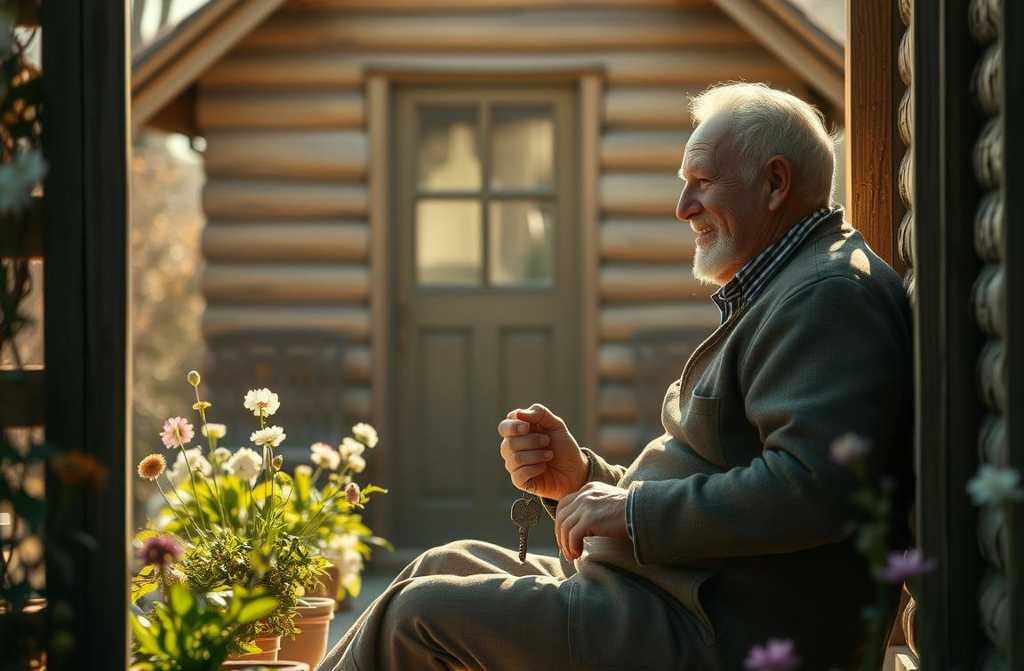
No Ones Home
Robert awoke before his alarm, as he always did, at half six. The flat was hushed; the only sound was the gentle drone of the kettle downstairs, though he hadnt put it on yet. He lay there for a moment, listening, then stretched out for his spectacles on the sill. Outside, dawn crept greyly down the rows of terraces, and the street below breathed quietly: a single black cab slipping through rain-washed tarmac.
Once, mornings were for work. Hed rise, head to the bathroom, hear the neighbours kitchen radio burst into lifea brassy, chattering thing through the thin wall. Now, the radio still blared next door, but Robert just lay there, wondering how hed fill the day. Technically, hed been retired almost three years. Still, he clung to his routines, as though they might anchor him somewhere real.
He got up, pulled on his joggers, padded into the kitchen. He set the kettle rumbling and fetched half a loaf of last nights bread. As it came to the boil, he wandered over to the window. Seventh floor, brick council block, a playground in the square below. Down amongst the sodden bins and the swings stood his old Ford Mondeo, dust grazing its roof. He made a mental note: he ought to get down to the lock-up garage, check the leaky roof.
His garage was in a run-down lot, three bus stops away. He used to spend most weekends in there, fiddling under the hood, changing oil, jawing about petrol prices and football with the other men. The world had shifted since: online shopping, car-servicing by appointment, tyres in thirty minutes. But hed not given up the garage. That was where he kept his tools, sacks of compost, cans and cables and the odd plank of wooda sort of kingdom of odds and ends.
And then, the allotment. A little wooden shed in a scatter of gardens outside the city. Two poky rooms, a lopsided porch, and a kitchen no wider than a wardrobe. He only had to close his eyes to smell the damp floor boards and hear the sharp hammering of rain on the tin roof. The allotment had come from Sarahs parents, a quarter of a century back. Theyd spent whole weekends there with the childrendigging beans, roasting potatoes, balancing a radio on a stool to blast out the cricket.
Sarah had passed four years ago. The children had scatteredgrown marriages, their own flats in south London and beyond. Only the allotment and the garage remained: his compass points. Here was the flat; there was the garden; over that way, the lock-up. The map of it was branded onto his heart.
The kettle shrieked. Robert made his tea, dropped a teabag into a mug, sat down at the table. On the opposite chair, his pullover, still folded from yesterday, watched him. He chewed his toast, staring at the wool, thinking about last nights row.
The kids had been bySimon and his wife, their little boy in tow; his daughter Laura and her husband. Theyd had tea, bickered about holiday plans, and theninevitablytalked money. They always did these days.
Simon had the mortgage around his neck, the interest rates were biting. Laura grumbled about nursery fees, ballet lessons, new shoes. Robert nodded along; he remembered counting coppers to the next payslip. Then hed only a single rented room, and a faint, delicious hope.
At last, Simon had shifted in his chair and said, Dad, weve been thinkingand we talked to Lauramaybe its time you sold something? The allotment perhaps. Or the garage. You barely make use of either nowadays.
Robert had laughed it off, turned the conversation round. But when night pressed in, he couldnt sleep for the circling refrain: you barely use it anymore.
He finished his toast, sank the last of his tea, placed the cup in the sink. Eight oclock. He decided hed go to the allotment today. Check up after winter. Perhapswithout saying it aloudto prove something to himself.
He wrapped up warm, gathering the keys to both the garden and garage into his coat pocket. In the hallway, he lingered, glancing into the old mirror, silvered at the edges, encased in painted oak. The man looking back at himgreying at the temples, tired-eyed but solid enough. Not an old man yet. He straightened his collar, turned the lock, and left.
He stopped at the garage first, collected some tools. The lock squealed, the door gave under his hand, just as it always had. Inside, the familiar whiff: petrol, dust, mouldy rags. Whole shelves sagged with jars of screws, tangled extension leads, a tape cassette with the label long smudged into nothing. Cobwebs spun between the rafters.
Robert scanned the shelves. There was the jack from his first car. Piled timbers, stacked up years ago for a bench he never got around to building. The boards were waiting still, like polite children.
He loaded a toolbox, grabbed a petrol can, locked up, drove away.
It took nearly an hour to reach the outskirts. Along the hedged lanes, snow still clung, smeared with grime; black earth gaped through where spring was gnawing in. The garden estate was sleeping, silent. Too early for the crowds. At the gate, the old warden in her fleece nodded as he passed.
The allotment hut greeted him with its annual stillness. Slatted fence, sagging gate. He nudged it open and shuffled up the narrow path, last autumns leaves fracturing underfoot.
Inside, the air was stale must and pine. Robert flung the sash, let new air rush in. He stripped back the faded counterpane from the bed, shook it out. There was a chipped enamel pan on the kitchen tableonce upon a time, it took buckets of stewed apples and blackberries. On the nail by the door, a sheaf of jangling keys: one for the shed, where the spades and forks languished.
He wandered, running his fingers along the walls, the handles, the chipped paint. In the bunk room, the ancient set of bunks stood in shadow; up top, a tatty old bear with one ear ragged from childhood heartbreak. Robert could still see Simons crumpled face the day the ear went, how hed mended it with a curl of tape.
He stepped outside. The snow had withered; earth black and slick. In the far corner, the rusty barbecue wore a crown of twigs. He remembered firing it upSarah laughing on the steps, tin mug in hand, children tumbling over the grass and the neighbours dog barking away the dusk.
He sighed and set to work, sweeping the path clean of debris, hammering the porch step tighter. He checked the shed roof for leaks, found an old green deckchair, and unfolded it into the sun. The air was warmer now.
He glanced at his phone. Missed call from Simon. A message from LauraWe really should all talk it over, Dad. Were not against you keeping the allotment, just need to think it through, reasonably.
Reasonably. That word, again and again. Reasonablemoney shouldnt just sit, gathering dust. Reasonablea pensioner shouldnt be straining at gardens and garages. Reasonablehelp the young ones while youre still here to enjoy it.
He knew they meant well. Of course he did. But sitting in that plastic chair, hearing a distant dog bark, the drip of water off the roof, he realised that reasonable didnt belong here. Here was for something else.
Robert rose, circled the patch once more, locked the door, placed the heavy padlock on the latch. Back behind the wheel, he drove to town.
He reached home for lunch, hung up his jacket, set his toolbox in the hall. Clicking the kettle, he noticed a note on the table: Dad, well pop in tonight, have a talk. S.
He pressed his palms to the Formica, breathing out. So this would be it. Tonight was the night of reckoning, with no jokes to worm away behind.
Evening. The three of them came: Simon, his wife, and Laura. Grandson was with his in-laws. Robert opened the door, let them in. Simon hung his anorak, kicked off his shoesjust like hed done as a boy, years before.
They gathered in the kitchen, all round the table. Tea, digestives, some chocolates. Nobody touched a thing. They swapped small talk for a few minuteswork, the traffic, the familiar grind.
And then Laura looked at Simon. He nodded; she cleared her throat.
Dad, lets just talk openly. We dont want to pressurise you, but we all need to be clear about the future.
Robert felt a pang in his chest. He nodded.
Go on, then.
Simon started: Youve got the flat, the garage, the allotment. No ones questioning the flat, thats yours. But the allotment you say yourself its getting too much. Every year, the fence, the roof, the beds. It eats up a chunk of money.
I was there today, Robert said quietly. Everythings fine.
For now, Simons wife jumped in. But give it five years, ten? You wont be around forever, and sorry, but thats just the truth.
Robert looked down. Those wordswont be around foreverrattled like pennies in a saucer.
Lauras voice softened. Were not saying to tear it all up. But if the allotment and the garage went, the money could make things better. Some for you to live easily, some for uswe could finally dig ourselves out of this mortgage. You always said you wanted to help.
Hed said it, yes. In the flush of early retirement, contracts on the side, thinking hed stay strong for decades yet, always able to chip in, always their safe port.
I do help, he muttered. I take the lad sometimes. Pick up your groceries.
Simon gave a weary little smile. Dad, its not enough. We need a lump sum, something real. You can see interest rates are punishing us. Youve assets just sitting there
Assets. The word sounded sour, foreign in his kitchen. Robert heard a pillar growing between them, made of direct debits and mortgage statements, all cold arithmetic, none of it meaning home.
He reached for cold tea, sipped.
To you, those are assets, he said heavily. To me
He stopped, at a loss for the right word.
Theyre bits of a life, he finished at last. I built that garage by hand, with your granddad. He was alive then. Both of us, passing bricks. And the allotment thats where you kids grew up. Both of you.
Laura lowered her eyes. Simon paused, and when he spoke it was softer. We know, Dad. We do. But you hardly go anymore. It just sits there. You cant manage alone.
I was there today. Its fine.
Today, said Simon. And before that? Last autumn?
A silence. The living room clock ticked and ticked. Robert saw them all at this table, talking of his old age like a city plannermaking the numbers neat, the lines straight, eliminating waste.
Alright, then, he said suddenly. What exactly do you want?
Simon straightened. Weve got an estate agent lined up. She says the allotment should fetch a decent price, the garage too. Well handle everythingviewings, paperwork. All you need is to sign the forms.
And the flat? Robert asked.
The flats sacred, Laura was quick to say. Thats your home. No question.
He nodded. The word home felt odd in the mouth. Was it only these four walls? Or did the allotment count? The garage, with its sleepy brickwork and secret afternoons?
He got up, walked to the window. Outside, streetlamps blinked on. The estate below was unchanged, but the faces running round the playground were different nowchildren on their phones, cars parked in every inch.
And if I dont want to? he said to the glass.
Silence. Then Laura said, careful as ever: Its your property, your decision. Of course, Dad. We wont force you. Were justworried for you, is allyou even said yourself, its harder now.
It is, Robert agreed. But Im not finished yet. Ill decide what to do.
Simon sighed. We dont want a row, Dad. But it looks, from where we sit, like youre clinging to things, and meanwhile were strugglinga lot. We worry about what happens if you suddenly get ill. Wholl take care of it all then?
Robert felt that familiar guilt flicker. He too had wonderedwas it fair to leave them a scramble, a burden? All the paperwork, the keyrings, the boxes of belongings. It would be a nightmare, he supposed.
He returned to the table, sat back down.
Supposing, he managed, I put the allotment in your names, but keep the right to go thereas long as Im able?
Simon and Laura exchanged glances. Simons wife scowled.
But then its still a worry, she said. We cant visit as often as you likejobs, the kids, you know.
Im not asking anyone to go, Robert replied. Ill handle it. When I cant, you do as you must.
He understood he was brokeringnot winning. This kept what the place meant to him alive, but moved all the dull decisions over to them, sparing them the inheritance red tape.
Laura considered.
Thats an option, she said. But to be honest, Dadwe probably wont keep it. Weve got other plans. Were half-thinking of moving out of Londoncheaper houses, better jobs.
Roberts heart stumbled. He hadnt known. Simon looked surprised too.
You never mentioned that, he said to Laura.
Were only thinking, she replied. But really, the allotment isnt our future. We dont see ourselves there.
He heard the wordfuture. For them, a horizon somewhere else: other houses, other cities, careers. For him, the future shrank: flat, garage, allotment. Landmarks hed mapped so carefully.
The debate bounced around twenty more minutesa see-saw of numbers and memories. They mentioned health, he claimed activity; they counted monthly bills, he talked about the slow dying from doing nothing at all. At last, Simon muttered, Youve got to face it, Dad, you cant keep digging beds and painting fences forever. What happens then? The whole place crumbles and we drive past once a year to stare at the ruins?
Anger burned suddenly in Robert.
Ruins? You called them ruins? You grew up thereyou, Laura, both of you.
That was childhood, Dad. Im different now. Ive got my own responsibilities.
The words hung, suspended. Laura tried to soothe, but the restless edge wouldnt go away.
Robert rose. Alright, he said. Lets leave it here. Give me some time. Not tonight. Ill think.
Only, Dad, said Laura, our mortgage bills due next month
I understand. But you have to understand me: this isnt selling a cupboard.
They fell silent, then started gathering their things. In the hall, laces and scarves were fiddled with forever. Laura hugged him at the door, once, cheek against his.
We do care, Dadhonestly. Were just scared for you.
He nodded, voiceless.
Once theyd gone, the flat expanded with silence. Robert sat at the kitchen table, staring at their untouched cups, a half-eaten biscuit. Weariness swept into him, strange and deep.
He sat in growing darkness, refusing to turn on the light. In the dark outside, other flats flickered alive, one by one. At length, Robert got up, rummaged out a folder of papers from the cabinetpassport, title deeds, insurance guff. He lingered over a yellowed plan of the allotment, running his finger over the little boxesthe beds, the shed, the row of gooseberries.
The next morning, he escaped to the garage just to work with his hands. It was still cold; he threw the doors wide and let in the pale March light. He sorted boxesruthlessly now. Broken pieces of fence, leftover lead, bolts kept just in caseall bagged and ready for the skip.
His neighbour, Bert, poked his head around the door.
Thinning out your junk, then?
Just tidying up, Robert said. Thinking what I really need, what I really dont.
Rightly so, said Bert. I flogged mine last year. Gave the money to my lad. Bought himself a car. I dont miss it. And off he went.
Robert stayed, holding an old spanner, the handle rubbed smooth as a pebble. He turned it in his hands, memory flickering: Simon as a boy, begging to twist the nuts for him. Robert had thought theyd always be together in the garage, a shared language. Now, the language had nowhere to go.
Evening fell. Robert took out the deeds again, then dialled Laura.
Ive made up my mind, he said. Well put the allotment in you and Simons namessplit it. But we wont sell, not yet. Ill visit as long as I can. After thatits up to you.
A pause.
Are you sure, Dad?
Yes. The word felt unsteady, as though a wire had snapped deep inside. Still, there was no other way.
Alright, Laura said. Well meet the solicitor and sort it.
He hung up, sat in the hush. The room pressed close, but a strange relief hovered near. A decision made, the future folded neat into an envelope, waiting.
They went to the solicitor the next week. Deed of gift, she called it. Robert wrote his name in blue ink three times, his hand almost trembling. The clerk went through it with perfect calm. The children thanked him, grateful, each in their turn.
Thanks, Dad. Youre really helping us out.
He nodded. It wasnt just him rescuing them. They were rescuing him from the ache of tomorrow.
He held on to the garage, for now. The kids hinted he might sell it one day, but he refused. Lets me get out, keeps me from sitting glued to the telly all day, he explained, and for once they saw sense.
Outwardly, nothing changed. Still the same block, the same walk to the corner, the same bronze bunch of keys. He went to the allotment sometimes, not owner now but guest, yet his key always worked.
The first time he returned after the paperwork was a sun-washed afternoon in April. As he drove, it struck him: the garden wasnt his anymore. Other peoples on-paper. Yet, when the old gate creaked and the familiar path wound home, the strangeness evaporated.
Inside, everything waitedthe iron bed, wobbly table, the bear perched watchful. He perched on the stool by the window; a golden stripe of sun danced on the sill, rippling through the dust.
He thought of Simon and Laura, plotting repayments, tallying budgets, spinning futures. His own future, by contrast, mapped out only in seasons. Live to see another spring; dig the beds again; one more mug of tea on the porch.
He knew the day was comingsale inevitable. Perhaps in a year, or five. When visits became too hard, theyd sell the garden, say it made no sense to hold a place so empty. Theyd be right, in their way.
But for now, the shed stood. The roof held. The spades idled in the outbuilding. Shoots rasped green in the blackness of the soil. He still had earth to walk, clods to turn with his hands.
He stepped outside, walked the fenceline, gazed over the neighbours plots. At one, someone was already on their knees, tucking seedlings in. On another, laundry flapped like ghosts. Life, ordinary and relentless, muddled on.
Fear, he knew, wasnt about gardens or garagesit was about mattering. Not being surplus to requirements, not yet. These were his proofs: he could mend, paint, plant.
It was fragile, that proofon bent paper now instead of hope. But, settling himself on the porch, Robert understood: no document could measure which places belonged, truly, to whom.
He drew a flask from his rucksack and poured tea. He sipped, listening to the birds. Under the taste, something sharp, but not quite pain. He had given, and received in returnliberty to linger, not as proprietor, but as memory.
He eyed the door, the rusted lock, his own battered key. It was warm with age, shaped by his grip. One day, Simon or Laura, or someone else unknown, would twist the key, never guessing how much lived in that turn.
The thought brought a hush and an odd peace. The world went on, things slid from hand to hand. The best you could wish for was to dwell in your own corners, as long as they felt like homenot by law, but by the heartbeat of memory.
Robert finished his tea and stood. He fetched a spade from the shed; there was time to dig one bed. Not for the next owner, nor for the children, already dreaming in new currencies. For himself, for the feel of earth under boot and nail.
He pressed the blade into the groundthe soil yielded. The first turn split the black clod, scent rising sharp, heady. Robert leaned in, gripped again.
It was slow work. His back protested, his hands scuffed. Each shovelful eased something inside him. As though the act of digging made wayif not for more years, at least for this hour.
At dusk, he wiped his brow, surveying the neat, upturned rows. The sky burned faintly pink, a bird screamed overhead.
He looked at the hut, the muddy footprints behind him, the spade against the wall. Tomorrow, next yeareven five years onhe had no answer. He only knew that now, in the strange, drifting centre of his story, he was still at home.
Robert entered the hut, turned off the lamp, locked up tight. He lingered on the porch, listening to the silent tangle of garden and dusk. At last, he turned the key. The metal clicked.
He pocketed the key and followed the narrow path back, careful not to tread on the earth hed just freshly turned.



Daughter-in-Law Endured Her Mother-in-Law—Here’s Where It Led — “Twins?!” blurted out Irene Middlet…
The Daughter-in-Law Endured Her Mother-in-Law: What Came of It Twins?! exclaimed Margaret. Margaret did her best to conceal her disapproval,...


I’m 55 Years Old and Two Months Ago My Wife Asked for a Divorce Because She Said She “Needs to Feel Alive Again”—She Told Me This on an Ordinary Afternoon as We Sat at the Kitchen Table, Coffee Growing Cold, and the Neighbour’s Rooster Crowed Just Like Every Other Day
Im 55 now, and about two months ago, my wife asked me for a divorce. She told me she needed...


My Husband Forced Me to Choose Between My Sick Mother and Our Marriage, and I Still Can’t Believe He Said Those Words—We’d Been Married Eight Years When My Mum Fell Seriously Ill, and as Her Only Daughter, I Had No One Else to Turn To
My husband forced me to choose between my ailing mother and our marriage, and I still cant believe those words...


I Realized My Ex-Husband Was Cheating Because He Suddenly Started Sweeping the Road — How a Suburban…
You know, I figured out my ex-husband was cheating on me because he started sweeping the street. I know it...


I Quit My Job for a Man: After a Year and a Half Living Together, I Miss Earning My Own Money – I Used to Work Long Shifts in a Shopping Centre Clothing Store, Covering Weekends, and Though I Wasn’t Making a Fortune, I Paid for My Phone, Transport, and Contributed to Our Household Without Ever Asking Him for a Penny
I gave up my job for a man. Weve lived together for a year and a half. Before that, I...


— Button? Oh, I called her Holly. She was running around here all morning—could tell right away she …
Button? I actually named her Holly. She spent the whole morning scampering about out here. You could just telllost as...
My Thirty-Year-Old Son Arrived Home at Eight O’Clock in the Evening, Dragging Two Suitcases Along the Pavement as If Returning from a Very Long Journey.
My thirty-year-old son arrived home at eight oclock in the evening, dragging two suitcases along the pavement as if returning...
I Became a Surrogate Mother for My Sister and Her Husband… But Just Days After the Birth, They Abandoned the Baby on My Doorstep
I once became a surrogate mother for my sister and her husband, wanting nothing more than to give them the...