
З життя
Not Our Child

Not Our Child
Millions of children grow up in foster homes, and well be theirs, Victoria told herself, clutching Arthurs arm. Why not find another family?
Arthurs face flushed. Because we are us. Here no one will hurt him, and elsewhere they might, and we wouldn’t even know it! Where one is, another follows
Victoria had never imagined her husband could be so tender. The loss of his friends had shaken him more than anyone elses grief. No one wanted to take the boy, and Arthur begged her, pleading.
***
Lucy was a lateborn child. Her parents were already in their midthirties, and her grandparents were well past their sixties. Late, yes, but longawaited, beloved, andlets be honestspoiled. Whatever she wanted, she got.
Every morning began the same way. Her mother, Margaret, nudged her awake, called her down for breakfast, and laid out her clothes. Today was no exception.
Morning, sleepyhead! Margaret chirped. Did you sleep well? Any funny dreams?
Even at seven oclock, Margarets energy never waned.
Morning, Mum. I think I cant remember, Lucy mumbled.
Youll recall later, then tell us. Now lets eat, weve a busy day ahead.
On the table sat towering stacks of fluffy pancakesstill warm from the night before, when Grandma had rushed them out before her appointment at the GPand a bowl of freshly cut fruit, neatly sliced by Arthur before work. Lucy perched on her high chair, scooping pancakes while spilling her morning discoveries.
Mum, what should I wear to the school concert? she asked, dipping a pancake into jam.
In a yellow dress, Margaret replied.
Again the yellow
Do you want red? Margaret suggested.
Yes! Red, please!
A month still stood between her and the concert, but Lucy was already buzzing with anticipation.
After breakfast they stepped outside. Lucy bounced onto the driveway, excitement crackling because today was the day she would finally try the new scooter Granddad had given her for his birthday. The snow had finally melted, and the air was tolerably warmgood, because Lucy could not have endured another week of frost.
Laced up in trainers, she bolted into the garden, with Margaret barely keeping pace.
All the neighbourhood kids swarmed around the shiny scooter, eyes wide. Lucy, grinning, showed off its tricks.
Watch this! she shouted, pushing off with one foot, wobbling along the pavement. Who wants a turn?
She lost her balance and tumbled. It was only her fifth attempt; her experience consisted of a handful of short rides with a friends sister in nursery.
Nobody laughed.
Want to try? Lucy brushed herself off, offering the scooter as if nothing had happened.
The other children, eager, took turns, each trying to mimic what theyd seen. Lucy was their idol all afternoon. By the time they left, many begged their parents for the same scooter.
Evening slipped in, and James returned from work. Lucy raced to meet him, a routine she cherished, expecting his usual surprise.
Surprise! James announced, holding a small box. A sweet smell drifted out.
Whats inside? Whats inside? Lucy demanded, eyes bright.
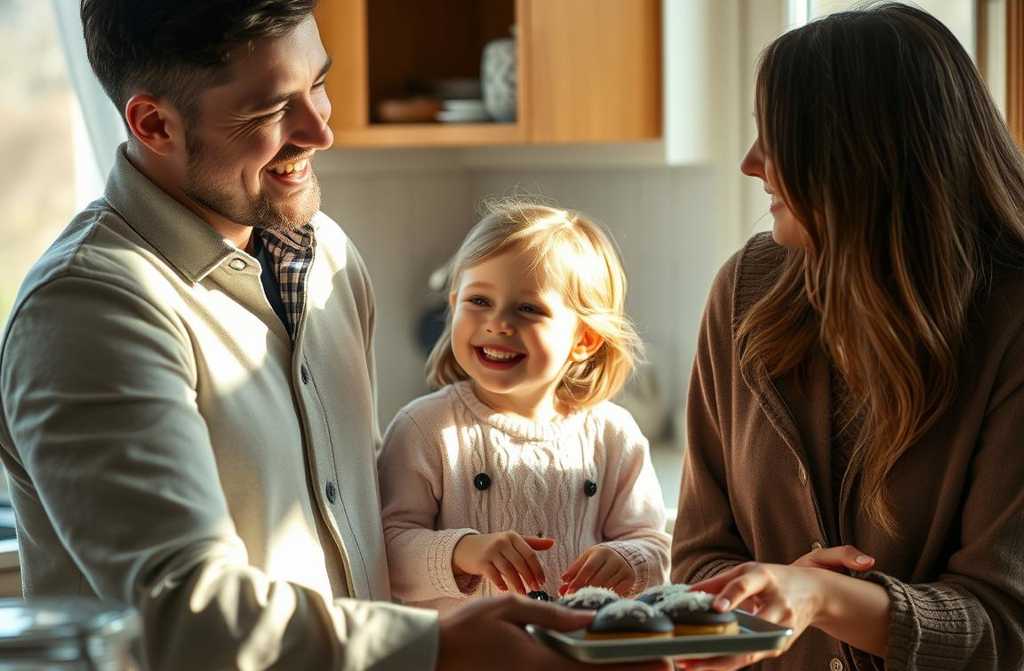
James handed her the parcel. Inside lay a tray of chocolate eclairs, the richest shed ever tasted.
Youre the best, Dad! she squealed.
After the treats, Lucy sank onto the floor of her bedroom, spreading out a sea of coloured building blocks. She busily assembled a princesss castle, glancing now and then at the picture in a magazine that had inspired her.
Until she turned seven, Lucy knew no worries. Everyone adored her, showered her with gifts, and catered to her whims.
But at six oclock one Saturday, as she waited for Margaret to collect her from the nursery, something shifted. Victoria arrived half an hour earlya rarity that Lucy instantly noticed. The nursery nurse, a longtime friend of Margarets, tried to start a chat.
I watched that film you mentioned last week. Not really my cup of tea, but there was something about the actor
Victoria cut her off sharply. Sorry, were in a rush. Well talk later.
Lucy, distracted, forgot her favourite doll on the nursery bench, staring at Margaret with wide, pleading eyes. She had never seen her mother flustered, angry, or scared. Her childhood had been a sunlit meadow.
Back home, Victoria, hair tied in a practical ponytail, set Lucy down to eat in the sittingroom instead of the kitchen, serving her curd with sliced fruit.
Sit here, have a bite, and turn on the cartoons, she instructed.
Lucy nodded, already picturing the cartoon characters, indifferent to whatever adult conversation lingered. Victoria, trying to be patient, drifted to the kitchen where James was already sitting.
She began where shed left off before shed gone to fetch Lucy.
Arthur, we just cant adopt another child, she said, her tone clipped, eyes narrowed. Its impossible. Its sudden If we had more time, Id weigh the pros and cons
Arthur, however, was unwavering.
What cons? Whats there to discuss? This boy is the son of our closest friends. He has no close relatives, no grandparents like Lucys. Theres a distant uncle, but hed never take in an unknown child. If he ends up in a care home what if it were Lucy?
Victoria shivered, imagining her daughters future, but answered, Theyll find a good foster family
And how do you know that? Arthur pressed. Because millions of children are already in foster families. We could be theirs. Why look elsewhere?
Because were us, Arthur snapped, face flushing. Here hell be safe; elsewhere he might be hurt, and we wouldnt even hear about it! Where one is, another follows
Victoria had never realised Arthur could be so sensitive. The deaths of his friends had moved him more than anyone elses loss. No one wanted to take the child, and Arthur was pleading with her.
Im not ready, Victoria confessed, voice trembling. I love Lucy, but I dont know how to handle another baby. Hed need more attention, hes still a toddler, and that would mean another maternity leave for me
Isnt it worth it for Elise and Vera? Arthur asked, referring to their two older dogs. Well manage, Vic. Lucys big enough to help. Money isnt a problem. We already know how to deal with kids. A second child will come to mind sooner or later
When? At fortyfive? Victoria muttered, already resigned to a single child.
Even at fifty!
She hesitated, then finally gave in.
Six months later, after endless paperwork, they returned home not alone. In the back seat of their estate car, theyd brought a little boy named Charlie.
Lucy, now in primary school, braced herself for a new brother. Her parents tried to reassure her, insisting theyd love her just the same.
But when Lucy saw James cooing over the newborn, an unfamiliar knot tightened in her chest. She realised that James was now a father to two.
That night Lucy refused to join the celebration.
Victoria, bring more sliced fruit! Arthur shouted from the dining room, where relatives buzzed about, setting the table.
Im on it! someone replied.
Victoria, grab another spoon! called her mother, Agatha, from the kitchen.
Lucy stayed in her room, hopping at every shout as if the voices were calling her name.
Eventually they noticed her absence.
Wheres our little party queen? asked her grandfather, Harold. Lucy?
Lucy? Victoria looked around, Probably in her room with that tablet shes glued to. Once shes got it, you cant get her out.
But Lucy had already declared a boycott.
Grandparents tried to coax her out, but she stayed put. Her parents seemed to have forgotten her entirely, their attention glued to Charlie.
It was as if the chapter where she reigned supreme in the household had closed.
Now everything had to be shared: affection, entertainment, gifts.
James, who once always found time for her, now spent most of his evenings putting Charlie to sleep, playing with him, or showing him picture books and teaching his first words. Margaret, once Lucys confidante, was now perpetually occupied with the baby.
One afternoon James came home with a bright plastic tractor for Charlie. Lucy saw it, ran over, and shouted, What about me? Did you buy something for me?
Arthur, caught offguard, forced a nervous smile. Oh, love, Im sorry. Ill get you something tomorrow, I promise.
From then on Lucy stopped meeting James at the door. He seemed to have forgotten her.
When Lucy asked for help with maths, Margaret would reply, One sec, love, Im trying to get Charlie to brush his teeth. Hold on, Ill be right with you. Lucy often fell asleep before Margaret could finish calming Charlie, then woke to start the washing and prep for the next days meals.
When Lucy tried to talk about school, Margaret would apologise and ask her to wait while she soothed a feverish Charlie, whod been crying since dawn, his little face flushed, a doctors visit looming.
As the years passed, Lucys resentment toward Charlie grew to a fever pitch. The boy who should have been a brother became, in her eyes, a rival for parental attention.
Its a relief we dont have to share a room, Lucy told her friends as they grew older.
Yeah, lucky you, replied Annie.
Whats lucky about it?
Not sharing a room! Youve got a threebedroom house. Ive got to cram with two younger sisters! Whos worse?
Lets argue about whos worse, shall we?
Charlie turned seven. Lucy was on the brink of thirteen, and the hatred only deepened. Earlier, Charlie had merely stolen glimpses of attention; now, as a firstgrader, he demanded it outright.
Lucy, what are you doing? he asked, peeking into her room.
Sleeping! she snapped.
Wanna play?
No.
One day Charlie burst in with a watergun, gleeful. His father had bought it as a surprise. Usually Charlie wasnt allowed to play with it indoors, but today he was determined.
He aimed at the curtain just above Lucys head, missed, and sprayed her notebook.
Dont you dare come into my room! Lucy shouted, flinging him out.
It was an accident! he protested.
It was YOU who messed up! she roared.
Ill tell Mum, he warned.
She can tell, Lucy sneered. Well see what happens. Youre the adopted one, after all! You were taken in out of pity! she cried, slamming the door.
That was how Charlie learned he was adopted. He would find out the truth later, when he was ready, but for now he was clueless.
That evening, when the parents returned, Lucy was punished.
No phones or tablets, James declared. For a monthno, six months! And youll never see another gift from us again! How could you say such a thing?
Charlie burst into tears on the sofa, clutching Margarets hand.
What? How could we say that? You brought in a baby, and suddenly you forget your own daughter!
Arthur, for the first time, raised his hand at Lucy.
The next morning he tried to apologise, to speak to her, but Lucy, ignoring him, grabbed her shoes and jacket and fled to school.
Victoria clanged a fork against a plate, laughing cruelly. Bravo, she said to her husband. What a spectacular performance. Now, as far as Im concerned, youve got no daughter left.
Dont be ridiculous. Well talk later, James muttered.
It wont be forgiven, Victoria replied, wrapping her arms around herself. Its not that you hit her; its how we treat her. I try to talk to her, but its never enough. And you never loved Charlie. By saving him, weve lost Lucy.
Do you want to change your mind? James asked.
I dont know! she shouted back. Im attached to Charlie; hes a wonderful boy, but it still feels like he isnt my child.
Good mother! Arthur scoffed. Five years raising a son and not loving him!
I warned you this was too much, Victoria retorted, I twisted myself upsidedown all these years to keep Charlie in a normal family, and it never worked! Bon appétit.
Their marriage, already strained, now teetered on the brink. Victoria sensed something wrong.
Each year Charlie grew more like Arthurhair, eyes, gait, even mannerisms. Victoria couldnt shake the suspicion that Arthur had once been involved with Charlies mother, the friend whod died tragically. Arthur had mourned her deeply perhaps too deeply.
One afternoon Victoria, gathering courage, ordered a DNA test.
The result arrived quickly, confirming her worst fear: Charlie was Arthurs biological son.
She drove Lucy home from school and went straight to her own mothers house. There was no desire to see Arthur. The truth was that Arthur had been having an affair with Vera, Charlies mother, behind Victorias back. First Arthur raised anothers child, now Victoria faced the same betrayal.
Her elderly mother, frail, tried to comfort her. Victoria, dont tear everything apart. Think of the children. You have two. Charlie is now yours. What will you say to him? Im sorry, I cant be your mother any longer?
Ill still see Charlie, Victoria replied.
And Lucy? What will she think?
Victoria could not admit it, but Lucy seemed unaffected by the split, still unaware of the growing rift. The childhood they all knew was over.



My Aunt Refused to Lend Me Money for My Business, but I Still Got What I Wanted
When I was just an average worker, slogging away like everyone else for a measly wage, every single one of...


For My Mum, Looking After Her Granddaughter Feels Like an “Impossible” Task
All my friends have mothers who can effortlessly look after their little ones. For my mother, however, the prospect of...


Once again, I visited my stepsister Melissa to drop off groceries and supplies, only to be stunned by the sight of a luxury car parked in the driveway. In that moment, everything became clear to me.
Charlotte and I seldom speak, even though we both live in the same town. Through shared acquaintances, Id heard whispers...


My Son Doesn’t Care That If I Give Him My Flat, I’ll Have Nothing Left to Live On
They say we’re responsible for everything that happens in our lives, that whatever choices we make will shape the way...
My date suggested a walk in minus 20 degrees because “only gold diggers sit in cafés”—but I wasn’t thrown off…
His name was Oliver. In his photos, he looked like your typical thirty-five-year-old Englishmantidy, nothing outlandish. His profile was full...
The last message I sent her was brief: “I’m here if you need anything.” It sat with the status “Sent” for exactly eight hundred and forty days.
The last message I sent her was brief: Im here if you need anything. It floated, stuck at Delivered, for...


Brilliant! Husband Spends Nights with His Current Wife and Days with His Ex-Wife
Im 38 years old, and for the past two years Ive been living with a man whos five years my...


You Stay Home All Day Doing Nothing – After Hearing These Words, I Decided It Was Time to Teach Him a Lesson
So, right before I got married, my friends used to warn me. Theyd say, You know, once a bloke ties...