
З життя
Out of This World: A Journey Beyond the Ordinary

I have kept a diary ever since I was a lad, and today I feel compelled to record the life of Evelyn Whitaker, a woman whose kindness has taught me more than any book could.
From the moment she was born, Evelyns mother would say, Our girl has inherited her father Georges generous heart; he helped anyone who asked, though his own time was short. Now Evelyn, even as a child, rescues every little creature she sees. Evelyn grew up, finished her schooling, found work, and moved into her grandfather Georges flat in a modest block of council houses in Manchester. She remained the same warmhearted, fairminded soul, always ready to lend a hand to people and animals alike, even when some neighbours muttered that she was a bit odd, as if she werent of this world.
One rainy autumn Saturday, as Evelyn was returning from the local grocer, she spotted an elderly lady dragging two halfempty shopping bags up the stairwell. The old womans hands trembled, her back bowed under the weight of years. Evelyn recognised her at once it was Mrs Margaret Iles, who lived a few doors down. Good afternoon, let me help you, Evelyn called, taking the bags from the strangers frail grip. Mrs Iles startled at first, then gave a shy smile and replied, Thank you, dear, but I have to reach the fourth floor.
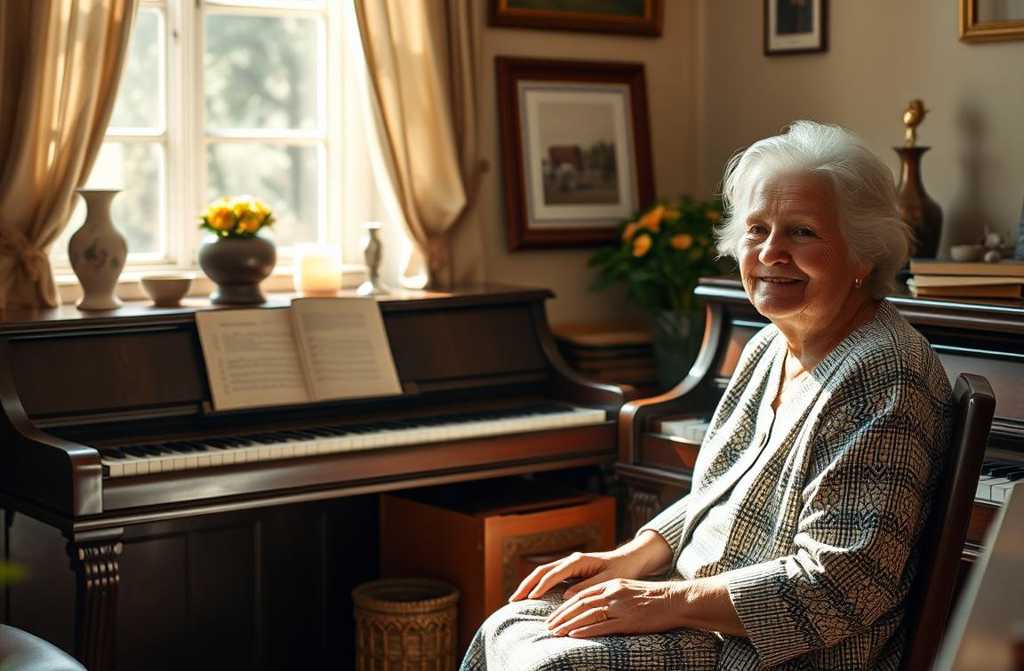
Im on the second floor, Evelyn replied, brightening. She carried the bags up, glanced around the cramped flat and saw a mess that had long been ignored. May I give you a hand with the cleaning? she offered. Mrs Iles hesitated, then shook her head, saying she didnt want Evelyn to waste her time. Im on my day off, and I live alone, Evelyn said, so its no trouble at all. From that day forward Evelyn visited Mrs Iles regularly, sometimes sharing a pot of tea in the evenings. The old woman would play a battered piano a gift her late husband had bought when their son was born. Evelyn, who had once studied at the local music academy, never pursued a career in music, but she could play a few simple tunes.
Later, as Evelyn passed the landing, she met Mrs Tamara Collins from the fifth floor. Evelyn, youre doing a fine thing looking after Margaret, Tamara said, though its a shame about the piano. Her son lives in Germany, welloff, and the grandchildren are in London. They visit hardly at all they only talk about inheriting whats left. Evelyn merely nodded, thinking, What wealth could Margaret really have beyond that sturdy piano and a few decent pieces of furniture?
That evening Evelyn brought a homemade cake, set the kettle on, and cheerfully said, Lets have some tea. Margarets eyes sparkled despite her frailty. Youre a dear, Evelyn, she murmured, Im glad youre here. Over tea, Margaret recounted her wartime childhood, the loss of her husband long ago, and the rare visits of her son and his wife. My grandchildren think Im a useless old lady, she sighed. Last year my son Gary came, gruff as ever, and left with a comment that I was a bother. He never stays long.
Winter settled over Manchester, and Margaret fell ill. Evelyn began stopping by each night after work, bringing soup, medicine, and a smile. One night Margaret asked, Sweetheart, could you play the piano for me? Id love to hear music again. Evelyn sat at the instrument, her fingers lightly touching the keys. A gentle melody floated through the room, and Margaret closed her eyes, a look of peace crossing her face.
Their evenings fell into a rhythm: Margaret would tell a simple story, and Evelyn would follow with a soft piano piece. As Margarets health waned, she called a visiting doctor and clung to the routine. One afternoon, while dusting the floor, Margaret turned to Evelyn and said, Darling, Ive written my will. Ill leave the flat to my grandchildren, but the piano belongs to you. I want you to have it. Evelyn was taken aback. Im just a neighbour, I dont need anything, she protested. Its my way of saying thank you, Margaret replied, firm as ever.
Spring arrived and Margarets condition deteriorated rapidly. She passed away alone in the night, whispering to Evelyn, Dont forget the piano, love. Its yours now. The next morning, Evelyn raced to the flat before work, only to find the flat empty, the furniture gone, and the piano standing solemnly in the centre of the room. Gary, tall and selfassured, arrived with movers and said, Well get the piano over to your flat, Evelyn. Your aunt would have wanted that. His tone hinted at a smug gratitude for her devotion, and his siblings snickered, Shes as odd as a ghost, just like our dear mother.
The piano was now in Evelyns own modest flat. She wiped away the dust, tears slipping down her cheeks perhaps from sorrow, perhaps from gratitude for the memory of Margaret. Thank you, Margaret, she whispered, for your kind heart. For several days she could not bring herself to sit at the keys. One evening, after a long shift, she finally opened the lid, pressed a chord, and discovered a small compartment hidden beneath the strings. Inside lay a silk-wrapped bundle a tiny jewellery box. Inside the box were rings, earrings, bracelets, two delicate necklaces, and a photograph of a young Margaret. A note read:
Evelyn dear, these belong to you for being such a gentle soul. Thank you for the last year of my life. Keep one ring as a memory; the rest may be sold if you wish.
She closed her eyes, feeling the weight of the unexpected riches. She chose a single gold band, slipped it onto her finger, and played a tender melody.
The next Saturday she took the box to a pawnshop on Deansgate. These are family heirlooms? the evaluator asked, surprised. Yes, theyre quite valuable. He handed her a modest sum in pounds. With that cash she bought a derelict twostorey house on the outskirts of the town a solid brick building with a large garden, its plaster cracked but its structure sound. She cleared the dust, repaired the roof, and turned the rooms into a cozy haven for lonely seniors.
Within eight months the house opened as Our Home, a residential sanctuary for the elderly. The spacious sittingroom held Evelyns piano and comfortable armchairs. The first residents were Mr Ivan Sampson, a retired railway worker, and sisters Anna Blake and Gloria Harper, who had lost their home in a fire. Over time more guests arrived a widower, a former schoolteacher, a pair of twins who had never married. They often asked, Evelyn, could you play something for us? and she obliged, letting the keys sing. Between the notes she felt Margarets approving whisper, Well done, love.
Journalists began to write about the place, marveling at how a former pawnshop visit had birthed a refuge for the frail. One reporter asked, Did you ever regret selling the jewellery? Evelyn smiled, Not a drop of regret. Watching these people smile, knitting, playing chess, brings me more wealth than any gold ever could.
Two years later I married my longtime friend Stephen, who has a generous heart and a steady hand, and together we run the house. The lessons I have learned from Evelyns story are simple yet profound: generosity never truly disappears; it circles back in ways we could never anticipate. Kindness, even when it seems to cost nothing, may one day return as a priceless gift. I shall remember this always.



My Aunt Refused to Lend Me Money for My Business, but I Still Got What I Wanted
When I was just an average worker, slogging away like everyone else for a measly wage, every single one of...


For My Mum, Looking After Her Granddaughter Feels Like an “Impossible” Task
All my friends have mothers who can effortlessly look after their little ones. For my mother, however, the prospect of...


Once again, I visited my stepsister Melissa to drop off groceries and supplies, only to be stunned by the sight of a luxury car parked in the driveway. In that moment, everything became clear to me.
Charlotte and I seldom speak, even though we both live in the same town. Through shared acquaintances, Id heard whispers...


My Son Doesn’t Care That If I Give Him My Flat, I’ll Have Nothing Left to Live On
They say we’re responsible for everything that happens in our lives, that whatever choices we make will shape the way...
My date suggested a walk in minus 20 degrees because “only gold diggers sit in cafés”—but I wasn’t thrown off…
His name was Oliver. In his photos, he looked like your typical thirty-five-year-old Englishmantidy, nothing outlandish. His profile was full...
The last message I sent her was brief: “I’m here if you need anything.” It sat with the status “Sent” for exactly eight hundred and forty days.
The last message I sent her was brief: Im here if you need anything. It floated, stuck at Delivered, for...


Brilliant! Husband Spends Nights with His Current Wife and Days with His Ex-Wife
Im 38 years old, and for the past two years Ive been living with a man whos five years my...


You Stay Home All Day Doing Nothing – After Hearing These Words, I Decided It Was Time to Teach Him a Lesson
So, right before I got married, my friends used to warn me. Theyd say, You know, once a bloke ties...