
З життя
Повернення до рідного села після втрати коханої.

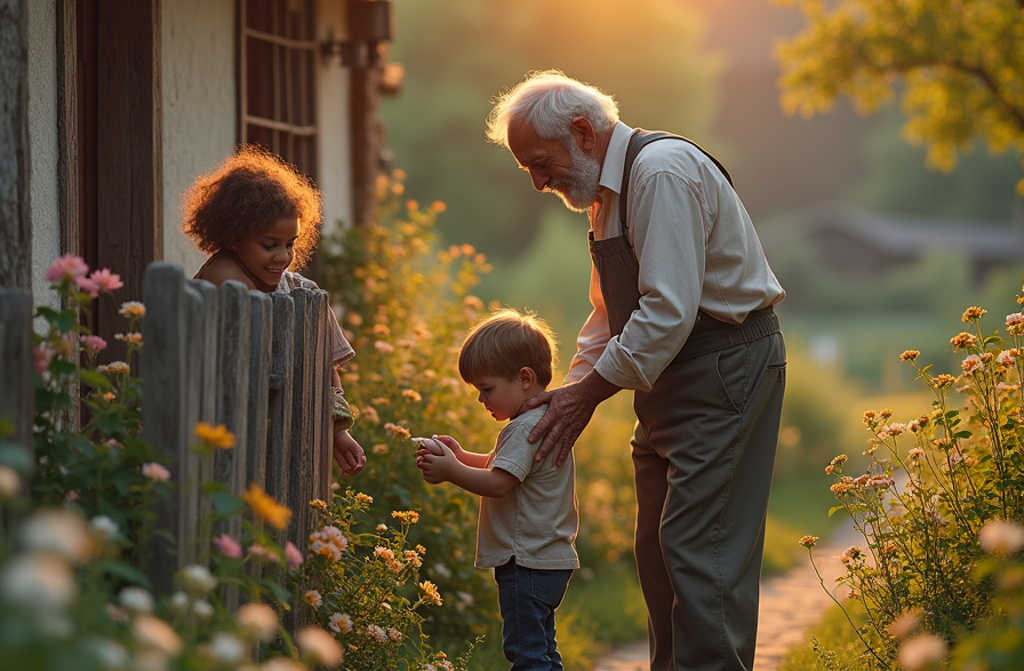
З похорону своєї Валентини Олександр Степанович вирушив прямо до рідного села. У квартирі, де він жив із дружиною до останньої хвилини її життя, залишатися більше не міг, до того ж незабаром вона перейде у власність сина його дорогоцінної Валечки, адже спільних дітей у них не було…
Полинула на небеса мила, ніжна, незамінна… Залишила Олександра Степановича вдовцем доживати свого віку. Ось і крокував він від траси до села, де жили й померли його батьки, і в якому він не був уже багато років. Що там з хатою? Чи не занепала зовсім, не зруйнувалася?
Стояли останні травневі дні, пил ще не встиг затемнити яскравість молодого листя, а небо різали крилами невтомні ластівки… “Як добре, що життя триває навіть після нашого відходу!” – думав Олександр Степанович.
Два стенти в серці та перенесений інфаркт дозволяли сподіватися, що розлука з Валентиною довгою не буде.
Але побутові турботи ніхто не скасовував… Проходячи повз сусідський будинок, він зупинився біля Єгоровича, що сидів на лавці. “Треба б у магазин сходити, горілки купити та пом’янути з Єгоровичем Валентину”, – подумав Олександр Степанович.
– Пригощати мене не треба, я сьогодні свою норму виконав, – ніби прочитав думки Єгорович. – Завтра мене похмелиш!
Зрозумів Олександр Степанович, що звідси допомоги не дочекатися, тож пішов до хати своєї троюрідної сестри Віри – по інструмент, аби відламати дошки, що прибиті до дому.
Та й заночував у неї, а вранці з її сином Льошкою взялися до роботи. За кілька днів привели хату в доволі житловий стан. От тільки напівзгнилі наличники Віра суворо-настійливо наказала замінити, бо наличники – це ж вхід до душі господаря…
Збережений від батька столярний інструмент радував руки й грів душу. Олександр Степанович сам узявся майструвати нові наличники. Вирішив для себе: “Невже я, колишній льотчик-випробувач, підполковник у відставці, не впораюся з роботою, яку має вміти робити кожен нормальний чоловік?!”.
Упораавсь. А коли на його вікнах засяяли новенькі жовті різьблені наличники, з’явилися замовники. І приїжджі, і місцеві. Пенсії Олександрові Степановичу цілком вистачало, та від того, що люди потребували плодів його праці, на душі ставало тепліше… Привіз із міста свій спрацьований, але доглянутий “Таврію”, і справа пішла.
Одного разу наснився йому сон, після якого його весь день не залишало відчуття образи. Приснилось йому, що стоїть він на порозі тієї квартири, в якій жив з Валечкою, а вона йому й каже, так суворо: “Іди звідси, я тебе не пущу! Не треба тут без діла тинятися!”
Ніколи Олександр Степанович таких слів від Валентини не чув. І ще що ображало – це те, що в домі повно якихось людей, які там живуть, а йому місця не знайшлося! Смішно, звісно, сон же ж, але образа довго трималася в душі…
Ввечері того ж дня, повертаючись з магазину, ледве не натрапив на хлопчика років восьми, що сидів на ґанку. Хлопчик був худенький і чумазий. На щічках відмиті борозенки – видно, плакав. Назвався Грицьком.
На запитання, чому він увечері не вдома, відповів, що мама набила, розсердився й пішов.
Бачив Олександр Степанович, що щось тут не так… Кросівки на хлопчикові різні, хоч від бруду це й не дуже помітно. Штани теж брудні, рвані…
Годував його, напоїв молоком, принесеним від Віри, і відправив до матері. А вранці не здивувався тому, що Грицько спить на його ґанку, загорнувшись у половик. Взяв його на руки й переніс на диван, а хлопчик так і не прокинувся.
Коли гість усе ж таки прокинувся, відмив його – бруд так і відлетала шматками. Вернувся, сказав вночі. Прийшов додому, а мами там нема – замість неї п’яні чоловіки сваряться. Залишив Олександр Степанович гостя за сніданком і пішов прояснити ситуацію до Віри.
– Знаю, знаю, про що будеш питати, – відповіла сестра. – Мати у нього наркоманка. За два роки після загибелі батька Грицька зовсім скотилася. Та тут таких повно! Ні опікунство, ні захист прав дитини у нас не працюють! Минулого року тут парочка по п’янці дітей у хаті заморозила – в коморі закрили, а відкрити забули. І Грицько у Ельвіри цю зиму не переживе – загубить вона його. Зовсім одуріла!
Олександр Степанович вирушив на інший кінець села до Ельвіри. Те, що він побачив, перевищило його найгірші очікування: щось брудне, обсмикане, синювато-фіолетового кольору, колись, мабуть, жінка, зажадала з нього горілку за право виховувати і годувати її сина.
Тремтячи від огиди, Олександр Степанович пішов додому. Біля ґанку Грицько домивав останнє колесо “Таврії”. Машина блищала на сонці, як новенька…
Увечері, укладаючись спати на надувному матраці, Грицько попросив дозволу називати Олександра Степановича батьком Сашком.
– Тато Сашко, адже ми тепер сім’я, – з надією заглядаючи в очі Олександру Степановичу, питав Грицько.
– Ну, звісно, сім’я! – відповів ставши раптом татом Олександр Степанович.
– А добре, коли в сім’ї є жінка!
– Ти мене, мабуть, одружити хочеш, друже? – спитав новоспечений тато.
– Та ні, не одружити! Ну, я потім тобі все розкажу!
Наступного дня, повернувшись від замовника, Олександр Степанович побачив біля хати вже двох працівників. Невелика ділянка землі, розміром два квадратних метри, була ретельно оброблена. У свіжовскопану землю Грицько і худюща дівчина в гумових чоботах саджали цибулю.
– Ось, приятелька моя, Лізка! – зніяковіло пояснив Грицько. – Банку цибулі вкрала – саджає. Жінки ж і повинні щось саджати й вирощувати, або дітей народжувати – а то які ж вони жінки! А Лізка – вона хороша, у своїх не краде!
Десятирічна Лізка розповіла, що мати її відправила з сусіднього села до бабусі, а бабуся вже рік як померла, і будинок її заколочений.
– А як же…?
– А мама забула, що бабуся померла. Вона на похорони п’яна приїхала, а з похорону її теж п’яну привезли і біля будинку викинули з машини. А я подумала, ну, раз мама з дому виганяє, то що – буду жити самостійно! А можна, я в вашій сім’ї жити буду? Я все вмію, все буду робити – і прати, і їсти готувати, і на городі працювати!
Вид у Лізки був такий жалюгідний і винуватий, ніби вона щось украла у Олександра Степановича…
“От чому мені Валентина не дозволяла прийти! – зрозумів Олександр Степанович. – Тут, на Землі, у мене ще є справи…”
Увечері відбулася важлива розмова з Вірою.
– Ну, добре, прогодуєш ти цих бездомних, а з законом як?! Адже у них матері є! – попереджала Віра.
– Та не в тому справа! Я б уладнав ці справи, та скільки проживу – не знаю! Ось приніс я тобі, Віра, свою заначку – якщо раптом щось станеться зі мною, знайди їм дитячий дім кращий або на себе опіку оформ.
І простягнув їй загорнуту в газетний папір пачку грошей: “Тут п’ятдесят тисяч гривень.”
“От чому мене Валечка до себе не пускала! Значить, поживу ще, отже, мої земні справи поки не завершені! – думав Олександр Степанович, крокуючи до свого дому. – Так, краще не скажеш, ніж Шевченко – дні наші злічені не нами!”.



Aunt Rita I’m 47 years old. Just an ordinary woman—a bit of a wallflower, not attractive, not blessed with a great figure. Lonely. Never been married, never wanted to be, because I believe most men are all the same—interested only in stuffing their faces and lounging on the sofa. Not that anyone’s ever proposed or asked me out, for that matter. My elderly parents live up in Newcastle. I’m an only child—no brothers or sisters. I do have cousins, but I don’t keep in touch. Nor do I want to. I’ve lived and worked in London for 15 years, in a regular office job. Each day is work and home, work and home. I live in a standard block of flats in a typical residential neighbourhood. I’m bitter, cynical—I don’t love anyone. I don’t like children. At Christmas, I went to visit my parents in Newcastle, as I do once a year. When I got back, I decided to clean out my fridge, throwing away old frozen food—dumplings, burgers, things I’d bought and never liked. I bundled it all up in a box to toss it out. In the lift, there was a little boy, maybe seven; I’d seen him with his mum and a baby sibling before. I even thought, “Some people—she’s gone and had another one!” The boy stared at my box. When we got out, he quietly followed me to the bins and asked in a timid voice if he could have the food. I warned it was old, but let him take it—none of it was rotten, after all. As I turned to leave, I watched him gently pick up the packets, close them up, and clutch them to his chest. I asked where his mum was. He told me she and his sister were ill—couldn’t get out of bed. I went back home and started cooking dinner, but couldn’t get that boy out of my mind. I’m not usually inclined to help, but something nudged me. I grabbed what I had in the kitchen: sausage, cheese, milk, biscuits, potatoes, onions, even some meat from the freezer. I realised I hadn’t a clue what floor their flat was on, but knew it was above mine, so I worked my way up, floor by floor. I got lucky; after two flights, the boy opened the door. He hesitated, but let me in. The flat was poor but spotless. His mum lay curled up on the bed next to her youngest, a bowl of water and cloths on the table. High fever, trying to cool her daughter down. The medicine they had was long out-of-date. I felt her mum’s forehead—hot as a stove. She woke and stared at me in confusion, then suddenly sat up, asking where her son was. I explained I was a neighbour and quickly got the details before calling for a paramedic. While we waited, I gave her tea and sausage—she wolfed it down, must have been starving. Barely able to feed herself, yet still breastfeeding her baby. The ambulance came, checked them over, wrote out a long list of medicines and injections needed for the little girl. I went out, picked up everything from the pharmacy and groceries for them, plus—on a whim—a ridiculous neon yellow monkey toy. I’ve never bought a child a present before. Her name’s Anna, she’s 26. She grew up in Manchester’s outskirts. Her mum and gran were Londoners, but her mum married a local and moved up there to work in a factory. Anna’s dad died in an accident at work. Her mum was left alone, jobless, and quickly spiralled into trouble. By the time Anna was three, neighbours contacted her granny in London, who took her in. When Anna was 15, her gran told her the truth—her mother died of tuberculosis. The gran hardly spoke, was miserly, and chain-smoked. At 16, Anna took a job at the nearest shop, first as a shelf-stacker, then at the till. Her gran died a year later. At 18, Anna dated a boy who promised everything but disappeared as soon as she became pregnant. She kept working, saving up, knowing there was no one to help. When her son was a month old, she’d started leaving him on his own so she could clean stairways and make ends meet. As for her daughter—the shop owner she went back to, when her son was older, raped her repeatedly and threatened to have her fired so she could never work again. When he found out she was pregnant, he gave her £100 and told her never to come back. Anna told me all this that night—thanked me, said she’d repay me by cleaning or cooking. I stopped her, said goodnight, and left. I couldn’t sleep at all, thinking, “Why do I live like this? Why am I so cold? I don’t care for anyone, not even my own parents. I have all this money saved with no one to spend it on, and here’s a little family with nothing—not even enough to get well.” The next morning, the little boy, Anton, brought me a plate of homemade pancakes and dashed off. I stood there, plate in hand, feeling warmth coming from the food, spreading through me as if I were thawing out. Suddenly, I wanted everything at once: to cry, to laugh, to eat. Not far from our block is a small shopping centre. The owner of a children’s shop there, after some confusion over sizes, even offered to come with me to Anna’s flat. I don’t know if she wanted the business, having seen I’d buy a lot, or was just moved by my mission. An hour later, four huge bags of clothes for the kids stood in Anna’s hallway. I bought bedding, food, vitamins, even toys. I wanted to buy everything—I finally felt needed. It’s been 10 days now. They call me Aunt Rita. Anna is quite the crafty homemaker—my flat feels cosier already. I’ve started calling my parents. I even text ‘KINDNESS’ to children’s charity fundraisers. I can’t believe how I lived before. Every day after work I hurry home, because I know someone’s waiting. And this spring, we’re all heading up to Newcastle together—tickets have already been bought.
Aunt Rita I’m 47 years old. Just an ordinary woman, nothing remarkable about me. You could say Im a bit...


My Husband and I Came to the Countryside to Meet His Parents for the First Time — The Warm Welcome, Home-Cooked Meals, and Tall Tales Around the Kitchen Table Would Change Everything
My husband and I have just arrived in the countryside to meet his parents for the first time. Harrys mum...


Michael Froze: From Behind the Tree, a Dog He’d Recognise Anywhere Watched Him with Sad, Knowing Eyes
I frozepeering from behind an old oak tree, a dog watched me with a sadness Id have recognised anywhere. Dust...


DO I REMEMBER? I CAN’T FORGET! “Polly, listen… Remember my illegitimate daughter, Anastasia?” My husband spoke in riddles, making me uneasy. “Do I remember? I can’t forget! Why?” I sat down, bracing for bad news. “Well… Anastasia is begging us to take in her daughter—my granddaughter,” he mumbled. “And why on earth should we, Alex? Where’s Anastasia’s husband? Disappeared into thin air?” I was intrigued. “The thing is, Anastasia doesn’t have much time left. She never had a husband. Her mother remarried and lives in America. They’re estranged, and she has no other family. That’s why she’s asking…” Alex couldn’t meet my eyes. “So, what’s your plan?” I had already decided. “Well, I’m asking you, Polly. Whatever you say, that’s what we’ll do,” he finally looked at me. “How convenient. You made mistakes in your youth, and now I’m to shoulder the burden of a stranger’s child? Isn’t that right?” My husband’s feebleness made me furious. “Polly, we’re a family. We should decide together,” Alex pushed back. “Oh, you remembered now! Yet, when you fooled around, did you consult me? I’m your wife!” Tears welled up and I stormed out… In school, I dated a boy named Peter, until a new boy, Alex, arrived and swept me off my feet. I broke up with Peter. Alex noticed me, walked me home, kissed my cheek, and picked flowers for me. A week later, he led me to his bed. I didn’t protest—I fell head over heels for Alex. After we graduated, he went off to serve in the army in another city. We wrote to each other for a year. Then Alex returned on leave. I was overjoyed. He promised we’d marry when he came back for good—already considered me his wife. His sweet words melted me every time, even years later: one loving look from Alex, and I’d melt like chocolate in the sun. Alex went back to the army. I waited, confident I was a betrothed bride. Six months later, a letter arrived: Alex had found “real love” in his garrison town and wasn’t coming back. But I was already carrying Alex’s baby. So much for a wedding—just as my gran warned me. When the time came, I gave birth to my son, Ivan. Peter, my old boyfriend, stepped in to help. Desperate, I accepted. Yes, Peter and I became intimate. I’d long given up hope of seeing Alex again. Then he turned up, surprised to see Peter there. “Can I come in?” Alex asked. “Come on in, since you’re here,” Peter reluctantly allowed. Sensing the tension, Ivan clung to Peter, wailing. “Peter, why don’t you take Ivan for a walk?” I was at a loss. When they left, Alex asked, “Is he your husband?” “What’s it to you? Why are you here?” I was angry and confused. “I missed you. I see you’ve made a life with Peter—you didn’t wait for me. Well, I’ll go—sorry to intrude on your happy family,” he said, heading for the door. “Wait, Alex. Why have you come—just to hurt me? Peter helps me cope with loneliness. He’s been raising your two-year-old son, by the way,” I tried to keep him there. My love for him hadn’t died. “I’ve come back for you, Polly. Will you have me?” Alex asked, hope in his voice. “Come in, dinner’s ready,” my heart leapt—he came back, so he hadn’t forgotten. Why resist? Peter was shoved aside. My Ivan needed his real father. Later, Peter married a lovely woman with two children. A few years passed. Alex could never love Ivan as his own—he was convinced Ivan was Peter’s son. Alex never really cared for Ivan. He always had an eye for the ladies. He was forever chasing after women, easily smitten, just as easily moving on—including some of my own friends. I cried but kept loving him, determined to hold my family together. It was easier for me than for him—the one who loves is always blinded by hope. I never needed to lie or invent excuses; I just loved him. He was my sun. Sometimes I wanted to leave, but then I’d scold myself: Where would I go, who could compare? Besides, Alex would be lost without me. I was wife, lover, and mother to him. Alex lost his own mother at fourteen—she died in her sleep. Maybe that’s why he always looked for lost affection elsewhere. I forgave everything. Once, after a bitter argument, I threw him out. He moved in with his relatives. Months passed—I forgot why we argued—but he didn’t return. At last, I went to his family’s house. His aunt was surprised to see me. “Polly, why do you want Alex? He said you’d divorced—he has a new girlfriend now.” I found out where she lived and paid them a visit. “Hello! Could I see Alex, please?” I asked politely. She just smirked and slammed the door in my face. I left in silence. A year later, Alex came back. By then the girl had given birth to his daughter, Anastasia. To this day, I blame myself for throwing him out—maybe that girl wouldn’t have scooped him up otherwise. I tried harder to please and adore Alex. We never talked about his illegitimate daughter. It seemed if we did, our family would fall apart. We let sleeping dogs lie. After all, what’s one stray child? It happens. I blamed the “temptresses” instead. In time, Alex settled down. Flings ended. He stayed home watching TV. Our son married early, gave us three grandkids. Then, out of nowhere… Anastasia, Alex’s daughter from long ago, reappeared—asking us to take in her daughter. How would I explain a new little girl to Ivan? He never knew about his father’s youthful escapades. In the end, we took legal guardianship of five-year-old Alina. Anastasia passed away, gone at thirty. Graves grow over with grass, but life goes on. Alex spoke to Ivan man-to-man. After hearing his father’s confession, Ivan said, “What’s done is done, you don’t answer to me. But the girl should stay—she’s family.” Alex and I breathed easier. We’d raised a kind son. Now, Alina is sixteen. She adores her Grandpa Alex, whispers secrets to him, calls me Granny, and says she’s my spitting image at her age. I never argue…
DO I REMEMBER? I COULD NEVER FORGET! Polly, darling, theres something I must tell you Well, do you recall my...


Winter had blanketed Andrew’s garden with soft snow, but his loyal dog Duke, a massive German Shepherd, was acting strangely. Instead of curling up in the large kennel Andrew had lovingly built for him last summer, Duke stubbornly insisted on sleeping outside, right in the snow. Watching from his window, Andrew felt a pang of worry—Duke had never behaved like this before. Each morning, as he stepped outside, Andrew noticed Duke watching him tensely. Whenever he approached the kennel, Duke positioned himself between Andrew and the entrance, growling softly and looking at him pleadingly, as if to say: “Please, don’t go in there.” This odd behaviour was so out of character for their years of friendship, it made Andrew uneasy—what was his best friend hiding? Determined to get to the bottom of it, Andrew came up with a plan—he lured Duke into the kitchen with a tempting piece of steak. While the dog, locked inside, barked desperately at the window, Andrew crept towards the kennel and crouched down to peer inside. His heart skipped a beat as his eyes adjusted to the darkness and he saw something that froze him on the spot… …There, curled up in a blanket, was a tiny kitten—dirty, freezing, and barely breathing. Its eyes barely opened, and its frail body shivered with cold. Duke had found it somewhere, and instead of chasing it away or leaving it to its fate, he had sheltered it. He had slept outside to avoid scaring it and guarded the entrance as if there was treasure inside. Andrew held his breath. He reached out, gently lifted the tiny creature and pressed it to his chest. In that moment, Duke raced over and nestled beside his shoulder—not growling, but gently, eager to help. “You’re a good dog, Duke…” Andrew whispered, clutching the kitten. “Better than most people.” From that day on, there were no longer just two friends living in the garden, but three. And the lovingly built kennel found its purpose again—as a little home for souls in need of saving.
Winter had blanketed Davids garden in a soft layer of snow, but his loyal dog Byron, a huge English Mastiff,...


The Little Girl Who Wouldn’t Eat: The Night My Stepdaughter Found Her Voice and Our Family Was Forever Changed
A Little Girl Who Couldn’t Eat: The Night My Stepdaughter Finally Found Her Voice and Everything Changed 8 December 2025...


A 7-Year-Old Boy, Covered in Bruises, Walked Into A&E Carrying His Baby Sister—What He Said Next Broke Everyone’s Heart
Just after one oclock in the morning, a seven-year-old boy, covered in bruises, pushed his way into the A&E at...


My Son Skipped My 70th Birthday, Claiming He Had to Work—That Evening I Saw Him on Social Media Celebrating His Mother-In-Law’s Birthday at a Fancy Restaurant
The phone rang precisely at noon, shattering the careful anticipation that hung in the air. Margaret Palmer hurried to pick...