
З життя
Прощання з коханкою: ніжно висадив з машини і повернувся додому…

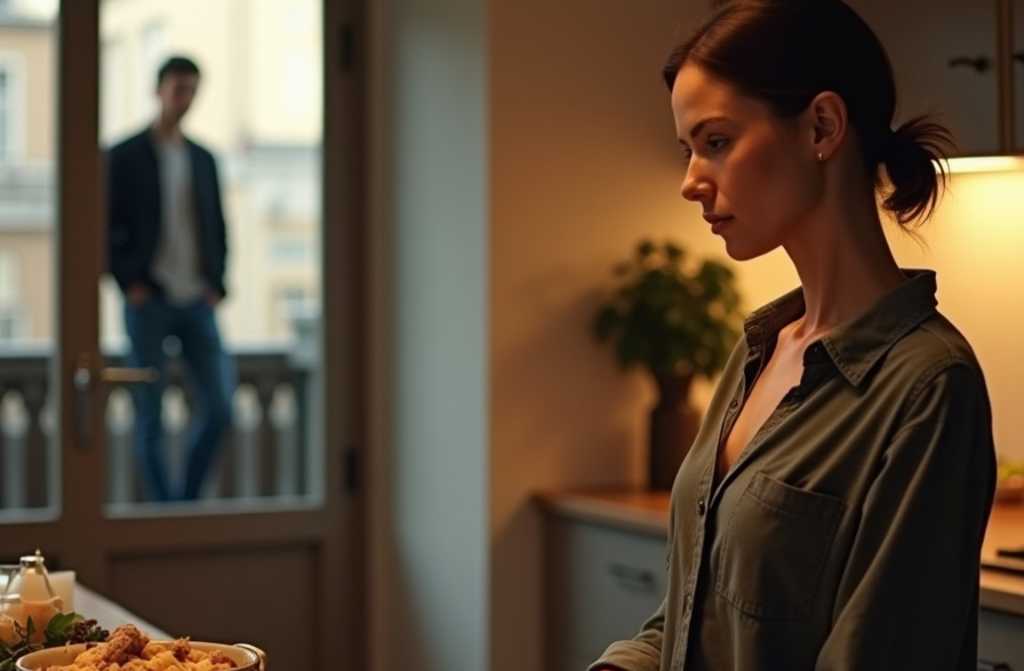
Висадив коханку з машини, Бучко ніжно попрощався з нею і поїхав додому…
Біля під’їзду трохи постояв, обмірковуючи, що саме скаже дружині. Піднявся сходами та відчинив двері.
– Привіт, – сказав Бучко. – Олено, ти вдома?
– Вдома, – флегматично відповіла дружина. – Привіт. Ну що, йти смажити відбивні?
Бучко вирішив діяти прямо — впевнено, різко, по-чоловічому! Поставити крапку у своєму подвійний житті, поки на губах ще не охолонули поцілунки коханки, поки його знову не затягнуло буденне болото.
– Олено, – почистив горло Бучко. – Я прийшов сказати тобі… що нам треба розлучитися.
Звістку Олена сприйняла більш ніж спокійно. Взагалі, вивести Олену Бучко з рівноваги було нелегко. Колись Бучко навіть дражнив її «Оленою Холодною».
– Тобто що? – спитала Олена у дверях кухні. – То мені не смажити відбивні?
– На твій розсуд, – сказав Бучко. – Хочеш – смаж, не хочеш – не смаж. А я йду до іншої жінки.
Після такої заяви більшість дружин кидаються на чоловіків з пательнею або влаштовують бурхливу сцену. Але Олена до них не належала.
– Подумаєш, якась там інша, – сказала вона. – Ти мої чоботи з ремонту приніс?
– Ні, – зніяковів Бучко. – Якщо це так важливо – зараз же поїду до майстерні і заберу!
– Охохо… – пробурмотіла Олена. – Такий ти і є, Бучко. Пошли дурня за чобітьми – він старі й принесе.
Бучко образився. Йому здалося, що пояснення про розрив сімейних стосунків йде не так. Не вистачає емоцій, пристрастей, гнівних звинувачень! Хоча що ще чекати від такої дружини, як Олена Холодна?
– Мені здається, Олено, ти мене не чуєш! – сказав Бучко. – Я офіційно оголошую, що йду до іншої жінки, залишаю тебе, а ти про якісь чоботи!
– Правильно, – сказала Олена. – На відміну від мене ти можеш йти куди завгодно. Твої чоботи ж не в ремонті. Чому б не ходити?
Вони прожили разом довго, але Бучко досі не міг зрозуміти, коли його дружина іронізує, а коли говорить серйозно. У свій час він саме закохався в Олену через її рівний характер, безконфліктність і немногослівність. Плюс важливу роль зіграла її господарність і приємні форми.
Олена була надійна, віддана і холоднокровна, як тридцятитонний корабельний якір. Але тепер Бучко кохав іншу. Кохав гаряче, гріховно і солодко! Тому належало вирішити питання і розпочати нове життя.
– І ось, Олено, – сказав Бучко з ноткою урочистості, жалю і скорботи. – Я вдячний тобі за все, але йду, бо кохаю іншу жінку. А тебе не кохаю.
– Та треба ж, – сказала Олена. – Не кохаєш мене, напівоксамитова фігурка! Моя мама, наприклад, кохала сусіда. А батько любив доміно і горілку. І що? Дивись, яка врешті чудова вийшла я.
Бучко знав, що сперечатися з Оленою дуже важко. У неї кожне слово – як гирька. Весь його початковий запал кудись випарувався, не хотілося сваритися.
– Оленко, ти й справді чудова, – кисло сказав Бучко. – Але я кохаю іншу. Кохаю гаряче, гріховно і солодко. І маю намір піти до неї, розумієш?
– Іншу – це кого? – спитала дружина. – Наталку Крапівину, ніби?
Бучко відступив. Рік тому у нього дійсно був таємний роман з Крапівиною, але він навіть не припускав, що Олена з нею знайома!
– А звідки ти її?… – почав він і замовк. – Втім, неважливо. Ні, Олено, мова не про Крапівину.
Олена позіхнула.
– Тоді, може, Світлану Бурбульську? До неї ж намилюєшся?
У Бучка похолола спина. Бурбульська теж була його коханкою, але це залишилося в минулому. А якщо Олена знала – чому мовчала? Ах так, вона ж кремінь, слова не витягнеш.
– Не вгадала, – сказав Бучко. – Не Бурбульська і не Крапівина. Це зовсім інша, чудова жінка, вершина моєї мрії. Я не можу без неї жити і збираюся піти до неї. І не відмовляй!
– Значить, найімовірніше, Майка, – сказала дружина. – Ох, Бучко-Бучко… органік ти тріснутий. Теж мені – секрет Полішинеля. Вершина твоєї мрії – Майя Валентинівна Гусєва. Тридцять п’ять років, одна дитина, два аборти… Так?
Бучко схопився за голову. Це був точний удар! Він дійсно мав роман з Майєю Гусєвою.
– Але як? – пролепетав Бучко. – Хто нас здав? Ти стежила за мною?
– Елементарно, Бучко, – сказала Олена. – Батечко мій, я гінеколог зі стажем. І я обмацала всіх жінок у цьому клятому місті, в той час як ти – лише малу їх частину. Мені досить просто заглянути куди треба, щоб зрозуміти, що ти там був, чучело горохове!
Бучко зібрався з силами.
– Припустимо, ти вгадала! – незалежно сказав він. – Хай це навіть Гусєва. Це нічого не змінює, я йду до неї.
– Дурнику ти, Бучко, – сказала Олена. – Хоч би зі злості у мене поцікавився! До речі, нічого надзвичайного в Гусєвій не помічено, усіма жінками як жінками, це я як лікар кажу. А медичну картку своєї вершини мрії ти бачив?
– Н-ні… – визнав Бучко.
– То-то! По-перше, негайно йди в душ. По-друге, завтра я зідзвонюся з Семеновичем, щоб прийняв тебе в диспансері без черги, – сказала Олена. – А потім поговоримо. Це ж ганьба: чоловік гінеколога не може знайти собі здорову жінку!
– І що мені робити? – жалібно сказав Бучко.
– Я пішла смажити відбивні, – сказала Олена.
– А ти мийся і роби, що хочеш. Якщо тобі потрібна вершина мрії без всяких болячок – звертайся, порекомендую…



Michael Froze: From Behind the Tree, a Dog He’d Recognise Anywhere Watched Him with Sad, Knowing Eyes
I frozepeering from behind an old oak tree, a dog watched me with a sadness Id have recognised anywhere. Dust...


DO I REMEMBER? I CAN’T FORGET! “Polly, listen… Remember my illegitimate daughter, Anastasia?” My husband spoke in riddles, making me uneasy. “Do I remember? I can’t forget! Why?” I sat down, bracing for bad news. “Well… Anastasia is begging us to take in her daughter—my granddaughter,” he mumbled. “And why on earth should we, Alex? Where’s Anastasia’s husband? Disappeared into thin air?” I was intrigued. “The thing is, Anastasia doesn’t have much time left. She never had a husband. Her mother remarried and lives in America. They’re estranged, and she has no other family. That’s why she’s asking…” Alex couldn’t meet my eyes. “So, what’s your plan?” I had already decided. “Well, I’m asking you, Polly. Whatever you say, that’s what we’ll do,” he finally looked at me. “How convenient. You made mistakes in your youth, and now I’m to shoulder the burden of a stranger’s child? Isn’t that right?” My husband’s feebleness made me furious. “Polly, we’re a family. We should decide together,” Alex pushed back. “Oh, you remembered now! Yet, when you fooled around, did you consult me? I’m your wife!” Tears welled up and I stormed out… In school, I dated a boy named Peter, until a new boy, Alex, arrived and swept me off my feet. I broke up with Peter. Alex noticed me, walked me home, kissed my cheek, and picked flowers for me. A week later, he led me to his bed. I didn’t protest—I fell head over heels for Alex. After we graduated, he went off to serve in the army in another city. We wrote to each other for a year. Then Alex returned on leave. I was overjoyed. He promised we’d marry when he came back for good—already considered me his wife. His sweet words melted me every time, even years later: one loving look from Alex, and I’d melt like chocolate in the sun. Alex went back to the army. I waited, confident I was a betrothed bride. Six months later, a letter arrived: Alex had found “real love” in his garrison town and wasn’t coming back. But I was already carrying Alex’s baby. So much for a wedding—just as my gran warned me. When the time came, I gave birth to my son, Ivan. Peter, my old boyfriend, stepped in to help. Desperate, I accepted. Yes, Peter and I became intimate. I’d long given up hope of seeing Alex again. Then he turned up, surprised to see Peter there. “Can I come in?” Alex asked. “Come on in, since you’re here,” Peter reluctantly allowed. Sensing the tension, Ivan clung to Peter, wailing. “Peter, why don’t you take Ivan for a walk?” I was at a loss. When they left, Alex asked, “Is he your husband?” “What’s it to you? Why are you here?” I was angry and confused. “I missed you. I see you’ve made a life with Peter—you didn’t wait for me. Well, I’ll go—sorry to intrude on your happy family,” he said, heading for the door. “Wait, Alex. Why have you come—just to hurt me? Peter helps me cope with loneliness. He’s been raising your two-year-old son, by the way,” I tried to keep him there. My love for him hadn’t died. “I’ve come back for you, Polly. Will you have me?” Alex asked, hope in his voice. “Come in, dinner’s ready,” my heart leapt—he came back, so he hadn’t forgotten. Why resist? Peter was shoved aside. My Ivan needed his real father. Later, Peter married a lovely woman with two children. A few years passed. Alex could never love Ivan as his own—he was convinced Ivan was Peter’s son. Alex never really cared for Ivan. He always had an eye for the ladies. He was forever chasing after women, easily smitten, just as easily moving on—including some of my own friends. I cried but kept loving him, determined to hold my family together. It was easier for me than for him—the one who loves is always blinded by hope. I never needed to lie or invent excuses; I just loved him. He was my sun. Sometimes I wanted to leave, but then I’d scold myself: Where would I go, who could compare? Besides, Alex would be lost without me. I was wife, lover, and mother to him. Alex lost his own mother at fourteen—she died in her sleep. Maybe that’s why he always looked for lost affection elsewhere. I forgave everything. Once, after a bitter argument, I threw him out. He moved in with his relatives. Months passed—I forgot why we argued—but he didn’t return. At last, I went to his family’s house. His aunt was surprised to see me. “Polly, why do you want Alex? He said you’d divorced—he has a new girlfriend now.” I found out where she lived and paid them a visit. “Hello! Could I see Alex, please?” I asked politely. She just smirked and slammed the door in my face. I left in silence. A year later, Alex came back. By then the girl had given birth to his daughter, Anastasia. To this day, I blame myself for throwing him out—maybe that girl wouldn’t have scooped him up otherwise. I tried harder to please and adore Alex. We never talked about his illegitimate daughter. It seemed if we did, our family would fall apart. We let sleeping dogs lie. After all, what’s one stray child? It happens. I blamed the “temptresses” instead. In time, Alex settled down. Flings ended. He stayed home watching TV. Our son married early, gave us three grandkids. Then, out of nowhere… Anastasia, Alex’s daughter from long ago, reappeared—asking us to take in her daughter. How would I explain a new little girl to Ivan? He never knew about his father’s youthful escapades. In the end, we took legal guardianship of five-year-old Alina. Anastasia passed away, gone at thirty. Graves grow over with grass, but life goes on. Alex spoke to Ivan man-to-man. After hearing his father’s confession, Ivan said, “What’s done is done, you don’t answer to me. But the girl should stay—she’s family.” Alex and I breathed easier. We’d raised a kind son. Now, Alina is sixteen. She adores her Grandpa Alex, whispers secrets to him, calls me Granny, and says she’s my spitting image at her age. I never argue…
DO I REMEMBER? I COULD NEVER FORGET! Polly, darling, theres something I must tell you Well, do you recall my...


Winter had blanketed Andrew’s garden with soft snow, but his loyal dog Duke, a massive German Shepherd, was acting strangely. Instead of curling up in the large kennel Andrew had lovingly built for him last summer, Duke stubbornly insisted on sleeping outside, right in the snow. Watching from his window, Andrew felt a pang of worry—Duke had never behaved like this before. Each morning, as he stepped outside, Andrew noticed Duke watching him tensely. Whenever he approached the kennel, Duke positioned himself between Andrew and the entrance, growling softly and looking at him pleadingly, as if to say: “Please, don’t go in there.” This odd behaviour was so out of character for their years of friendship, it made Andrew uneasy—what was his best friend hiding? Determined to get to the bottom of it, Andrew came up with a plan—he lured Duke into the kitchen with a tempting piece of steak. While the dog, locked inside, barked desperately at the window, Andrew crept towards the kennel and crouched down to peer inside. His heart skipped a beat as his eyes adjusted to the darkness and he saw something that froze him on the spot… …There, curled up in a blanket, was a tiny kitten—dirty, freezing, and barely breathing. Its eyes barely opened, and its frail body shivered with cold. Duke had found it somewhere, and instead of chasing it away or leaving it to its fate, he had sheltered it. He had slept outside to avoid scaring it and guarded the entrance as if there was treasure inside. Andrew held his breath. He reached out, gently lifted the tiny creature and pressed it to his chest. In that moment, Duke raced over and nestled beside his shoulder—not growling, but gently, eager to help. “You’re a good dog, Duke…” Andrew whispered, clutching the kitten. “Better than most people.” From that day on, there were no longer just two friends living in the garden, but three. And the lovingly built kennel found its purpose again—as a little home for souls in need of saving.
Winter had blanketed Davids garden in a soft layer of snow, but his loyal dog Byron, a huge English Mastiff,...


The Little Girl Who Wouldn’t Eat: The Night My Stepdaughter Found Her Voice and Our Family Was Forever Changed
A Little Girl Who Couldn’t Eat: The Night My Stepdaughter Finally Found Her Voice and Everything Changed 8 December 2025...


A 7-Year-Old Boy, Covered in Bruises, Walked Into A&E Carrying His Baby Sister—What He Said Next Broke Everyone’s Heart
Just after one oclock in the morning, a seven-year-old boy, covered in bruises, pushed his way into the A&E at...


My Son Skipped My 70th Birthday, Claiming He Had to Work—That Evening I Saw Him on Social Media Celebrating His Mother-In-Law’s Birthday at a Fancy Restaurant
The phone rang precisely at noon, shattering the careful anticipation that hung in the air. Margaret Palmer hurried to pick...


No Place to Call Home: Nina’s Journey from Heartbreak and Loss to an Unlikely Friendship with a Homeless Gentleman in the English Countryside
HOMELESS There was nowhere left for Emily to go. Nowhere at all, in fact. Perhaps I could stay a couple...


Aunt Rita: The Story of a 47-Year-Old Londoner, a Self-Confessed Cynic, Who Finds Unexpected Purpose and Family in Helping a Struggling Young Mother and Her Children in a Tower Block, Transforming Both Their Lives and Her Own
Aunt Rita I am forty-seven years old. Just an ordinary womanone might say a bit of a plain Jane. Not...