
З життя
She Cleaned the Stairs of Old Flats to Build a Future for Her Son, Whom She Raised Alone, but What Happened Next Will Leave You in Tears.

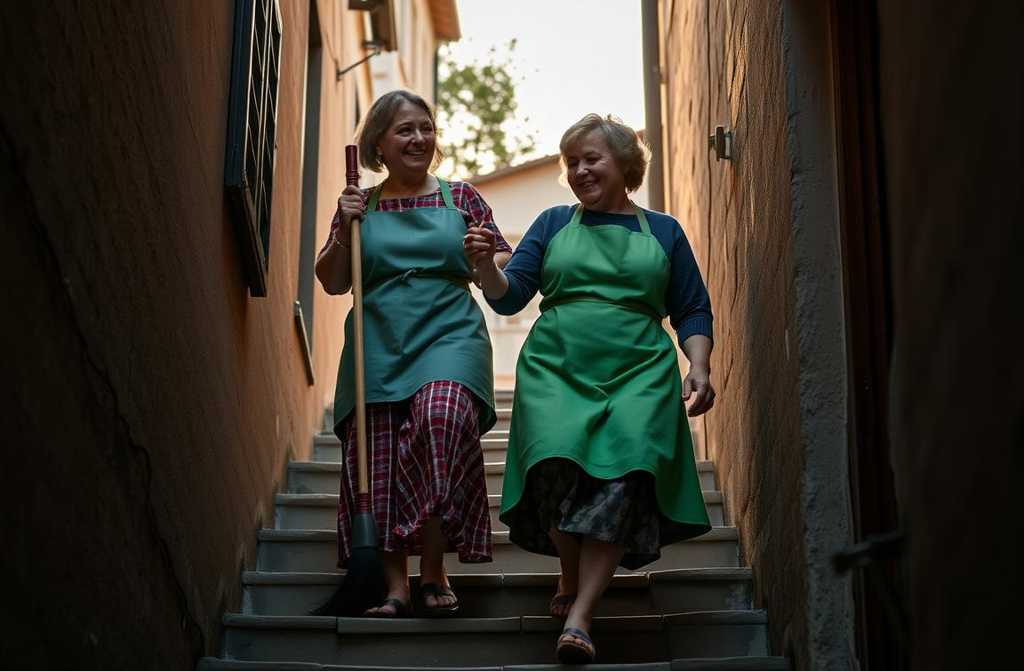
Mabel spent her days scrubbing the stairwells of an ageing council block, hoping the effort would build a brighter future for the son she raised on her own. What happened next will bring a tear to your eye.
Each morning, as the building lingered between night and day, Mabel tied her hair back, slipped on a green apron and set off up the stairs. At thirtyfive she wore a smile that lit the landing better than any flickering neon sign. Six years earlier, when little James was born, her world narrowed to one purpose: make it good for him. His father had vanished early, as if he never got to finish the first sentence of his life, and Mabel learned in a long, hard night what it means to be both mother and father and never allow herself to tire.
The mop slipped across the tiled steps, the bucket trailed dutifully, and Mabel counted each footfall in her mindnot as a chore but as a journey. Every landing meant another paid day, another meal set on the table, another notebook for James. Though the water soaked the cuffs of her sleeves, she never lost her grin; she saved it for the afternoon when he would burst through the school gates, backpack bouncing.
Mum, I read out loud today! he would announce.
And the stairs are waiting for you to read them too, Mabel replied with a wink, and James laughed.
After school she took his hand and they walked back to the block she tended. In one hand she held the mops rag, in the other Jamess warm fingers. He already knew the rhythm: she wiped the banisters, he opened the postbox doors and shut them neatly, one after another, like books waiting to be read. When he grew tired he would sit on a step and read aloud from his favourite book, his voice filling the stairwell with simple, clean music.
Some neighbours hurried past, shrugging; others lowered their eyes, embarrassed to see a child studying beside a bucket of water. Yet a few left apples at the landing or a note that read Well done, champion! which made James straighten his back.
Mum, I like it here, he sometimes said. It feels warm when you read me a well done from your eyes.
Mabel sighed inside. She loved seeing her boy happy beside her, but she longed for a happiness of his own, free of detergent scent. She dreamed of a childhood with grass under his knees and notebooks full of stories, not endless loops of stairs that began and ended in the same place.
One chilly November afternoon, when the light was short and the air sharp, James was reading on the third step. Mabel was scrubbing a stubborn stain when an elderly lady in a navy coat entered the hallway. She paused, listening to the boys careful syllables, then watched him grow steadier, his words rounding out beautifully.
You read very well, dear, the lady said. Whats your name?
James, he answered, his eyes sparkling.
And yours?
Mabel.
The lady smiled, glancing at the mop, the bucket, Mabels tired but clean hands.
Im Mrs. Anne, she continued. I taught English for forty years. If you like, I could test James a bit on the stairs. I promise not to grade him too harshly.
The three of them laughed. The test turned into a conversation. James spoke of his characters, of how sometimes bad people are just tired, and how heroes dont shout, they just get on with the work. Mrs. Anne listened, asked questions, and finally pulled a small notebook from her bag.
James, write ten lines a day, about anythingstairs, rain, Mum. And if youll have it, Ill visit now and then. I miss children who love to learn.
Mabel felt a new light flicker in her chest. She whispered a soft thank you, as if it were a prayer.
That evening they ate soup at home and took turns reading a line from the notebook. From then on James wrote every day. He made mistakes, asked questions, always wanted one more line. Between two blocks, between two landings, Mabel found her breath in his words.
A few weeks after meeting Mrs. Anne, the blocks manager arrived in the hallway with a young man in a corporate blazer. He asked briefly who the lady who cleans so well was. Mabel rose, her heart fluttering at the unexpected compliment.
We represent a property firm that manages several new developments nearby, the young man explained. The neighbours recommended you. We need someone reliable: fixed hours, a contract salary, health cover. And (he glanced at James) we could arrange for you to have afternoons off to be with your son.
Mabel felt her knees soften, not for the moneythough it was welcomebut for the hours that would open like bright windows: homework done at a desk, books read on a sofa, not between the second and third flights.
I accept, she managed. Thank you. Know that I dont just clean. I make sure people dont step through life with dust on their souls.
The young man smiled, his hurried demeanor softening.
Exactly the kind of person we need.
From that day the routine shifted. James went to school in the morning, Mabel to the new buildings. At lunch she waited at the gate, still with the mops rag in her bag but her hands less weary. Afternoons became theirs.
Mrs. Anne kept appearing now and then, like a kindly season. She helped James with reading and writing, and his confidence grew. At the winter concert he was chosen to read an entire page in front of the parents. Mabel stood in the third row, hands clasped as if in a church without icons, while her sons voice filled the hall. When he finished, the applause felt natural. He looked for her, found her, smiled, and lifted his notebook for a fleeting moment.
After the performance the headteacher took James by the shoulders gently.
We have a reading circle and a partnership with the city library. Wed like to enrol him. He has an ear for words and a heart for people.
Mabel nodded, tears held back at the corners of her eyes.
Time passed. One evening, returning from the library, James stopped his mother in the middle of the pavement.
Mum, you know what Ive realised?
Whats that, love?
That I didnt grow up on staircases. I grew up on steps. And steps always lead somewhere.
Mabel laughed, a laugh that rose from her soles to her crown. She pulled him close and answered,
Yes. And where they lead isnt an address. Its a person. Its you.
Spring arrived, and the old manager called Mabel just to congratulate her. Neighbours had pooled money and bought James a large set of books. For the boy who reads the stairs, read the card. Mabel cradled the gift as if it were a fledgling light.
That summer the firm increased her pay and asked her to lead a small team. She was no longer alone with a mop; she taught other women to share the load, to claim their rights, to respect themselves. Between instructions she always recalled the beginnings: the flickering neon, the orange bucket, the boy reading on the third step, and she thanked silently for every climb.
One Sunday at noon, James came bearing a crumpled poster.
Mum, theres a story competition at the library. The theme is My Hero. Can I write about you?
If your heart feels right, write it, Mabel replied, holding back her emotion.
Ill write: My hero didnt save the world. He cleaned it. And every night he showed me that from the simplest hallway you can make a classroom, if you have a book and love.
Mabel turned her head to wipe her eyes discreetly, not wanting to ruin his perfect line with her own tears.
Jamess story won a special mention, not for fancy words but for its truth. At the ceremony Mrs. Anne embraced Mabel.
See? she whispered. You have polished not only the stairs but his future.
That night they walked home on foot, climbing their own steps. No bucket, just a bag of books and hearts full.
Sometimes the road to goodness doesnt look like a motorway. It looks like a council block staircase you ascend daily, one hand holding a mop, the other a small hand. But when you climb together, the end isnt a door; its a fulfilled person.



I’m 70 Years Old, a Mother of Three Sons and Grandchildren—I’ve Always Dreamed of Having a Daughter, and Then Life Surprised Me
I recently turned seventy. My wife, sadly, wasnt there to celebrate with me; she passed away before her birthday. On...


After the Divorce, the Father Outrages His Daughter
My daughter and I survive on the child support from her biological father. My ex-husband is entirely to blame for...
A Wealthy Businessman Brought a Cleaner as a ‘Front’ to His Negotiations—One Question from Her Upended the Deal and Changed His Career Forever
Sebastian strode into the janitor’s closet without knocking. Emily was mopping the floor, and when she stood up straight, he...
Our neighbour loved blasting rock music at 2am. So I bought my son a violin and we started practising scales at exactly 8am—just as the neighbour was finally falling asleep.
My neighbour adored listening to rock music precisely at 2 oclock in the morning. One day, I bought my son...
Our Neighbor Loved Blasting Rock Music at 2 AM, So I Bought My Son a Violin and We Started Practicing Scales Right at 8 in the Morning, Just as the Neighbor Was Finally Getting to Sleep
Every night at half past two, the ceiling above my bedroom would come alive with a suspicious amount of activity....


My Father Abandoned Us, Leaving My Mum Buried in Debt—Since Then, I Lost My Right to a Happy Childhood
When I was ten years old and my younger brother was just three, our dad walked out on us. Hed...


My brother and his family wanted to settle in London at my expense, but I made sure they understood from the start that this wasn’t going to happen!
My brother and I have an age gap of six years, with him being the elder. Three years ago, he...
A Coworker Tried to Dump Her Reports on Me, So I Forwarded Her Request to the Manager: “Please Help Mary, She’s Struggling”
Today was another one of those days when my patience in the office was really put to the test, and...