
З життя
Spanner No. 13 He called me in the morning, sounding as if it were nothing: — Can you pop over? Ne…

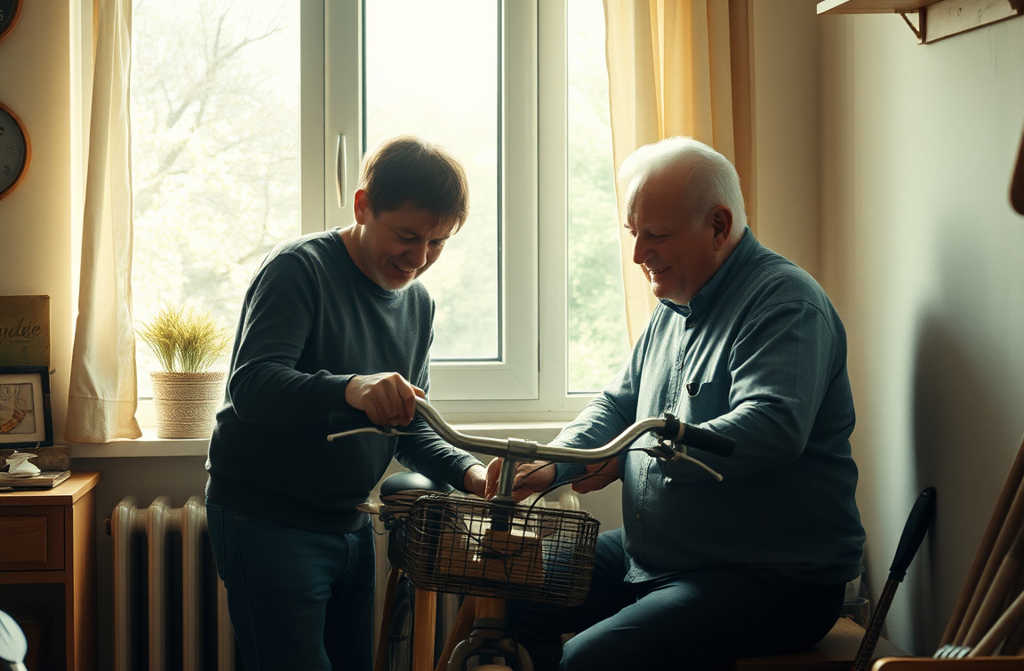
The Thirteen Spanner
He rang up in the morning, his voice light, as if it were nothing at all:
Will you pop round? Got a bike that needs lifting, Id rather not fuss with it on my own.
The words will you and rather not caught oddly together in the airhis father usually said must and Ill manage myself. The son, a grown man with silver at his temples, caught himself waiting for a catchsome old riddle lurking. But there was no catch, only a short request, and that, for some reason, made him uneasy.
He arrived near midday and climbed the stairs to the third floor, lingering on the landing while the key turned in the lock. The door opened at once, as though his father had been stood waiting just behind.
Come in, shoes off if you dont mind, Father said, stepping back.
Everything in the hall was perfectly placed: little rug, shoe cupboard, neatly stacked Times and Telegraphs. His father looked much the same as ever, only his shoulders seemed narrower, his handswhen he adjusted a sleevetrembled, just a second.
Wheres the bike? his son asked, so as not to ask anything else.
Balcony. I shoved it out there, didnt want it in the way. Thought Id sort it myself but Father waved a hand, led the way.
The balcony, cold behind the single-glazed panes, was cluttered with biscuit tins, cardboard boxes. The bicycle stood by the wall shrouded in an old floral sheet. Father pulled it off with the care of unveiling something solemn, then brushed his hand gently over the frame.
Yours, remember? he said. We got it for your birthday.
He remembered. He remembered riding on the green, falling off, how Father would silently pick him up, pat the sand from grazed knees, check the chain. Father rarely praised but always eyed things as if they were creatures he was responsible for.
Tyres flat, the son observed.
Thats nothing. Theres a rattle in the hub, and the back brakes gone soft. Gave it a spin yesterday, nearly stopped my heart, his father chuckled, the smile brief.
Together, they took the bike into what his father called his workshopjust a corner really, with a table at the window, mat, lamp, and tools, each hung in regimental order on the wall: pliers, screwdrivers, spanners polished and arranged. Without thinking, the son took in the solid, certain neatnessFather kept his order where he could.
Can you find the thirteen spanner? Father asked.
He opened the box: neat rows, but the thirteen was missing.
Twelve here, fourteen No thirteen.
Fathers eyebrows rose.
How dyou mean? Its always and then he stopped, as if refusing to say always.
The son sifted deeper, slid open a drawernuts, washers, masking tape, a scrap of sandpaper. The spanner turned up under a wad of blue Marigolds.
Here it is, he said.
Father took it and weighed it thoughtfully.
So I put it there. My memory, eh, he grunted. Right, get the bike here.
He set the bike down on its side, a rag under the pedal. His father crouched, slow, cautious, as if his knees might betray him. The son pretended not to notice.
Wheel off first, Father said. You steady it, Ill loosen the nuts.
He gripped the spanner and wrenched; the nut stuck, his shoulders tensed, jaw dead set. The son took over, nut gave way.
I was getting it, Father mumbled.
I just
Mm. Hold it steady.
They worked silently, only the shuffle and click of tools and drawn breaths, trading brief instructionshold this, not so hard, here, mind the washer. The son thought how much easier this wasto be left with only the work, nothing behind the words to unpack.
They set the wheel on the carpet. Father fetched the pump, tested the hose. The pump was an old one, handle twice-patched with black tape.
Tyres alright, just a bit parched, said Father.
The son wanted to ask how he knew, but left it. Father always said things solidly, whether he knew for certain or not.
While Father pumped, the son inspected the brakepads worn thin, cable rusted stiff.
Ill have to change the cable, he said.
Cable wheres the spare. Father paused, rubbed a palm on his trousers. He rummaged in the little cupboard beneath the table, pulling out boxes, each fiddly box filled with bits, neatly labelled slips on every one. Watching him sort, the son thought it was more than simple orderit was a way of keeping time itself at bay. As long as things were labelled and arranged, nothing could scatter.
Not here, Father snapped the lid shut in irritation.
Cupboard under the stairs? the son suggested.
Its a pigsty in there, Father admitted with a grimace, as if confessing to burglary.
The son grinned.
A pigsty? You? Thatll be the day.
His father gave him a look, but in his eyes flashed somethingsomething like thanks for the joke.
Go on then, have a look. Ill keep pumping.
The cupboard under the stairs was little, jammed tight. The son flipped on the light, pushed aside carrier bags, reached abovethere, on the top shelf, a coil of cable wrapped in last years Daily Mail.
Found it! he called.
Knew it was somewhere, Father replied.
He brought the cable. Father turned it over, checked both ends.
Looks good. Just need the end caps.
Back to his boxes, Father retrieved tiny metal caps, rolling them between his fingers.
Lets take the brake apart, he said.
The son steadied the frame, Father unscrewed the bolt. His fathers hands were dry, nicked at the knuckles, nails cut short. He remembered when those hands seemed the strongest things in the world. Now there was still strengthpatient, measured, careful.
Why are you staring at me like that? Father asked, head down.
Just wondering how you remember all this.
His father snorted.
I remember the important bits. Not where I leave my blasted tools. Silly, isnt it?
The son wanted to say not sillyrealised Father meant something else entirely. He meant frightening.
Its normal, the son said quietly. Happens to me too, sometimes.
Father nodded, like hed accepted permission to be fallible.
Once theyd taken the brake apart, a spring was missing. Father stared at the empty spot a long time, then looked up.
I was picking at it yesterdaymustve dropped it. Searched the carpet, didnt find a thing.
Lets check again, the son said.
Together, they got down on their knees, hands combing through tufts, checking under the table legs. There it was, near the skirting board, beside a chair leg.
Got it!
Father took the spring, held it close.
Thank God. For a minute I thought and he didnt finish.
The son knew what he was thinking, though: for a minute, I thought Id lost it, properly lost it.
Do you want a cuppa? Father asked sharply, as if tea might smooth that awkward silence.
Gladly.
The kettle rumbled in the kitchen. Father set out two mugs, shuffled a plate of shortbread to the table. The son sat, watching the careful, familiar movementsslower, maybe, but recognisably his. When tea was poured, Father nudged the biscuits nearer.
Eat something. Youre looking thin.
The son might have said it was the jacket, not him, but left it. Inside that one small phrase, he heard all the caring his father knew how to speak.
Hows work? Father asked.
Alright. And, so the word wouldnt linger empty: The project folded, onto the next one now.
Hm. Just make sure they pay you properly.
The son gave him a crooked smile.
Always thinking about money.
What else am I supposed to think about? his father shot back, direct. Feelings?
Something in the son twisted. He hadnt expected his father to say that word.
I dont know, he admitted.
Father sipped his tea, then gripped the mug in both hands.
You know he began softly, then paused, weighing it. Sometimes I think you only come by because you have to. Tick the box, drive off again.
The son put his cup down. The tea was hot, numbing his fingers, but he didnt draw away.
And you think its easy, coming round here? he replied. Every time Im back, it feels like Im a kid again. Like you know best. Always.
Father gave a brief, unbothered laugh.
Well, I did always think I knew best. Old habit.
And you never really asked me. Not properly.
Father held his mug, staring in, searching for whatever answer might float there.
I was scared to ask. If you ask, you have to listen. And I he looked up. Im not always good at listening.
The son felt something in his chest easesimple honest words, no grand apologies. Father didnt say sorry, didnt explain it all away. He just owned what was true, and that was somehow more real.
Im not good at it, either.
Father nodded.
Well just have to learn. With the bike, by the looks. And a flicker of dry humour lifted his voice, as if even he was surprised by the notion.
They finished their tea and returned to the little room. The bicycle was still where theyd left it, wheel off, cable on the table. Father settled in, eyes bright with renewed purpose.
Right then. Thread the cable, Ill sort the brake pads.
The son fumbled at the cable, fingers less nimble than his fathers. He felt a little angry at himself. Father noticed.
No hurry. What you need here isnt strength. Just patience.
The son looked up.
Just for the cable?
For everything, Father replied, turning away, as if that admission cost him.
They set the pads, tightened the nuts. Father squeezed the brake lever several times, tested the pull.
Much better.
The son pumped the tyre full, pressed his ear for air hiss. Not a whimperthe inner tube held strong. They fitted the wheel, tightened the nuts, tools darting between them. Father reached for the thirteen spannerthe son handed it over wordlessly, perfectly timed. It fell into Fathers palm like it belonged there.
There we are, Father finally said. Lets give it a go.
They carried the bike out to the bit of green behind the flats. Father held the handlebars, the son at his side. There was no one about, just Mrs Partridge from number six, nodding as she passed with her shopping bag.
Go on, you ride it, Father instructed.
Me?
Who else? Im past the circus tricks now.
The son got on. The saddle was too low, his knees up like a childs. He circled the flowerbed, pressed the brake. The bike stopped obediently.
Works a treat, he said, dismounting.
Father rolled the bike a few yards himself, slow, cautious, then stopped, foot firm on the ground.
Thats sorted then. Good job we bothered.
The son looked at him, suddenly sensing his father wasnt talking about the bike at all.
Keep this, Father said abruptly. The kit. He nodded at the spanners and screwdriers, the rag-wrapped bundle. Ive got what I need. Youll make use of them, you actually do these things on your own.
The son wanted to say something, but recognised ithis fathers way of giving, instead of saying I love you, an offer to make things easier.
Alright, Ill keep them. But Im leaving the thirteen with you. Its the boss key.
Father chuckled.
Ill put it back where it belongs, this time.
They climbed the stairs again. In the hall, as the son grabbed his jacket, his father lingered nearby, not rushing the goodbye.
Will you come by next week? Father asked, offhand. The loft doors squeaking. Id oil it myself butwell, hands arent what they were.
He said it gently, not apologising. The son heard an invitation, not a burden.
Ill come. Just ring aheadI dont want to barge in at a sprint.
Father nodded, and as he closed the door, murmured softly:
Thanks for coming.
The son walked down the stairs, spanners and screwdrivers bundled in a tea towel, heavy in his hands but oddly weightless. Outside, he glanced up at the window of the third floor. The net curtain fluttered, as if his father still watched. The son didnt wave. He simply walked towards his car, knowing now he could visit not merely for chores, but for the uncertain work both of them, at last, understood to be essential.



The Flat Was Purchased by My Son: Mother-in-law’s Declaration
The flat was bought by my son: a mother-in-laws declaration I first met my husband while we were both at...


We All Judged Her: The Woman in the Church with Her Dogs, Tears, and a Secret Longing for Motherhood…
WE ALL JUDGED HER Amelia stands in the cathedral, tears quietly running down her cheeks for over fifteen minutes now....
My Husband’s Poor Grandmother Left Her House to Him – When We Opened Her Wardrobes, We Couldn’t Believe Our Eyes
My husband had a grandmother. He would spend every summer at her place. She never minded it. Back in those...
28 Years of Marriage Shattered in an Instant – All It Took Was a Message from Her Husband’s Mistress
Everything changed in a heartbeat, honestly. That day, we were having a little family do me, my husband, and our...


Spanner No. 13 He called me in the morning, sounding as if it were nothing: — Can you pop over? Ne…
The Thirteen Spanner He rang up in the morning, his voice light, as if it were nothing at all: Will...


Olga Spent All Day Preparing for Her First New Year’s Eve Away from Her Parents and with Her Beloved…
Olivia had spent the whole day preparing for the New Years celebration: cleaning, cooking, setting the table. This was her...


Stay Away from Me! I Never Promised to Marry You—And Besides, I Don’t Even Know If That Child Is Min…
Keep away from me! I never promised to marry you! In fact, I dont even know whose child that is!...


I’m 58 and I’ve run out of patience with my nosey neighbour across the street—she monitors my every …
Im fifty-eight and honestly, Im at my wits end with my neighbour across the road. It feels as though her...