Connect with us

З життя

Стала ли я чужой навсегда?

Published

on

Разве я теперь чужая?

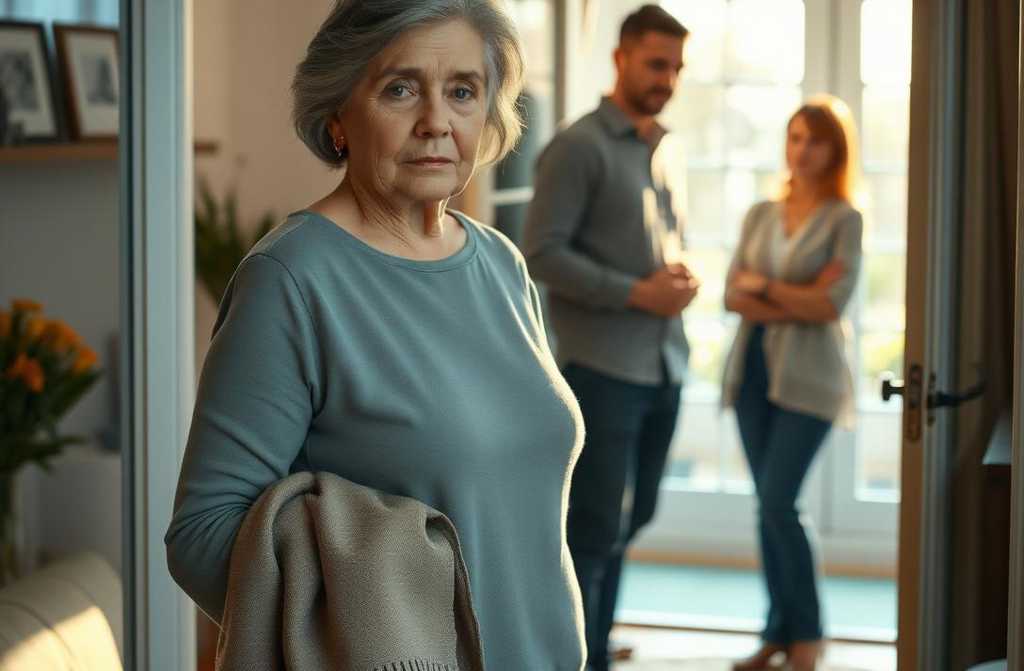
Сегодня утро началось с тяжёлого камня на душе. Я стояла у дверей дома своего сына, Ильи, и не могла поверить, что мне придётся просить, чтобы меня впустили. В руках — скромный узелок с пожитками, а внутри — усталость, обида и тлеющая надежда. Дорога выдалась долгой: почти семь часов в душной маршрутке из Твери. Всё, чего хотелось, — помыться, перекусить и немного передохнуть перед походом на кладбище, где лежит моя покойная мать, Лидия Семёновна. Но фраза, которую я прошептала Илье, до сих пор жжёт горло: «Сынок, пусти хоть ненадолго. Умойться, поесть, если Алина не против, а потом пойду к маме, свечку поставлю. Неужели так теперь?»

Илья смотрел на меня смущённо. В его глазах читалось и тепло, и неловкость, будто я случайный гость, а не мать. Он быстро кивнул: «Мама, да заходи, конечно!» — но я-то знала — не всё так просто. Его жена, Алина, всегда была вежлива, однако в последние годы мои приезды явно её тяготили. Не то чтобы она показывала это открыто, но я замечала: долгие разговоры о прошлом, деревенские привычки — всё это ей словно мешало. И вот я, родившая его, стою на пороге и чуть ли не умоляю о милости.

Войдя, я старалась не шуметь. Алина хлопотала на кухне, варила борщ. Улыбнулась, предложила чаю, но я отказалась — не хотела беспокоить. Попросилась только в душ. Илья проводил меня, принёс чистое полотенце, сказал: «Отдыхай, мам, всё в порядке». Но я уловила, как он украдкой взглянул на кухню — проверял, слышит ли Алина. Ещё один укол. Когда-то мы с ним делились всем, а теперь я словно просительница в его доме.

После душа стало легче. Сидя за столом с тарелкой горячего супа, который Алина всё же настояла мне подать, я вспоминала, как всё было раньше. Когда Илья рос, я крутилась на трёх работах, чтобы он ни в чём не знал нужды. Жили бедно, но он всегда был одет, обут, сыт. Помню, как он, лет тринадцати, говорил: «Мама, когда я вырасту, куплю тебе квартиру в Москве!» Я смеялась, гладила его по голове и отвечала, что мне нужно только его счастье. Теперь он взрослый, с семьёй, хорошей зарплатой в «Газпроме»… а я стучусь в его дверь как нищая родственница.

Поев, собралась на кладбище. Главная цель поездки. Мама умерла шесть лет назад, и я каждый год приезжаю привести могилу в порядок, поставить свечку, посидеть в тишине. Илья хотел отвезти меня на машине, но я отказалась — нужно было побыть одной. Шла пешком, вдыхала осенний воздух. На погосте убрала опавшие листья, положила новые гвоздики, зажгла лампадку. Сидя у холмика, шептала: «Мама, неужели я стала чужой для своего сына? Или это мне только кажется?»

Вернувшись, почувствовала: в доме потеплело. Алина предложила остаться ночевать, но я вежливо отказалась — не хотела мешать. Поблагодарила за хлеб-соль, обняла Илью крепко, пообещала скоро приехать снова. В его глазах светилась любовь, но и какая-то виноватая грусть. Может, он тоже чувствует, что между нами выросла эта незримая стена?

В маршрутке обратно в деревню думала о том, как всё меняется. Дети вырастают, заводят свои семьи — это закон жизни. Но как же больно осознавать, что ты, мать, отдавшая всё, теперь должна просить, чтобы тебя впустили. Я не виню ни Илью, ни Алину — у них своя жизнь. Но втайне надеюсь: может, когда-нибудь мы снова станем близкими, как раньше. А пока буду приезжать, навещать маму, обнимать сына и верить, что наша любовь — жива.

Click to comment

Leave a Reply

Ваша e-mail адреса не оприлюднюватиметься. Обов’язкові поля позначені *

п'ять × 3 =

Також цікаво:

З життя41 хвилина ago

My Mother-in-Law’s Offer to Move into Her Flat Was Clearly Calculated – Why We Refused Her “Generous” Proposal and Chose Our Own Home Over Family Drama

The morning fog in London was thick, more marmalade than mist, pulling the city into a soft, surreal hush. Julias...

З життя2 години ago

Setting Things Straight with Shameless Relatives on a ‘Family Holiday’ That’s Anything But Relaxing: Two Weeks Enduring Aunt Nina, Her Out-of-Control Son, Mummy’s Favourites, and Finally Reaching the Boiling Point in a Run-Down British Seaside B&B

On Holiday with Brazen Family: Putting Everything in Its Place Its been two weeks, Alex! Two weeks in this dump...

З життя3 години ago

A Bench for Two: An English Tale of Shared Steps, Silent Rooms, and Friendship Found in Later Life

A Bench for Two The snow had melted, but the earth in the small park behind the terraced houses still...

З життя4 години ago

When I Boarded the Plane, I Found Our Seats Taken: How My Wife and I Dealt with a Mother Who Refused to Move After Taking Our Reserved Window Seats for Her Child—A Lesson in Courtesy and Planning on a Flight to Rome

When I boarded the aeroplane, I found our seats had already been claimed. My wife and I had planned to...

З життя5 години ago

You’re Taking Advantage of Gran—She Looks After Your Child but Refuses to Help with Mine, Not Even at the Weekends

Youre taking advantage of Grandma. She helps with your child and wont even take mine at weekends. Sometimes life tosses...

З життя6 години ago

My Mother-in-Law Is Celebrating Her Birthday in Our Flat Tomorrow — Navigating a Strained Relationship, New Baby Duties, and Family Expectations in Our Shared London Home

Tomorrow is my mother-in-laws birthday. My little one is just over four months old. At first, she invited us to...

З життя7 години ago

The Children Came to Visit and Called Me a Poor Housekeeper The day before my birthday, I started preparing dishes for the party. I asked my husband to peel the vegetables and chop the salads while I browned the meat and made the rest of the food myself. I thought I had prepared a wonderful, hearty feast to treat my big family. On my birthday morning, my husband and I went to the bakery to buy a large, especially fresh cake we knew our grandchildren would love. The first to arrive were my son, his wife, and their child, followed by my eldest daughter with her two children, and finally my middle daughter with her husband and their kids. Everyone gathered around the table, clattering with spoons and forks. It seemed like everyone enjoyed themselves and that there was enough food to go around. The grandchildren were so full they smeared the wallpaper with their sticky hands, and the adults managed to stain the tablecloth. During tea, my eldest daughter turned to me and said, — “You hardly put anything on the table… We ate, and now what?” Her words really struck me. Even though it was meant as a joke that made the others laugh, I felt hurt. It’s true I always try to pack a little something for the children, but it’s hard to cook for such a big family with just a few pots and a small oven, and I can’t spend my whole pension on a single party. — “Don’t worry, my dear,” my husband whispered to me in the kitchen as we fetched the cake, “if everything’s gone, it means they enjoyed it. You can just give them the recipes when they’ve got some free time, let them cook. And honestly, next time, they should bring something to contribute. There’s so many of them, and only the two of us.”

The children came to visit and called me a poor housekeeper. The day before my birthday, I started preparing dishes...

З життя7 години ago

The Key in His Hand Rain drummed against the window of the flat with the bleak consistency of a metronome, each beat ticking out the time left. Michael sat hunched on the edge of his sagging bed, as if by shrinking he could disappear altogether from the notice of fate. His large hands—once strong, shaped by years on the factory floor—now lay powerless in his lap. His fingers curled and uncurled in vain, desperate for something solid to hold on to. He wasn’t looking at the wall; he was seeing a map traced on the faded wallpaper—a map of hopeless journeys: trips from the NHS surgery to the private diagnostic clinic. His gaze, like an old film stuck on a single frame, was dulled and washed out. Another doctor, another kind but weary “Well, you have to understand—you’re not as young as you once were.” He couldn’t muster any anger. Anger took energy, and he had none left. Only fatigue remained. The pain in his back had become more than a symptom—it was the backdrop to every thought and action, a white noise of helplessness drowning everything else out. He did everything he was told: swallowed pills, slathered on gels, lay on the chilly table in the physio clinic, feeling like discarded machinery on the scrapheap. And all that time—he waited. Passive, almost devout, for the lifeline he hoped someone—perhaps the government, or a brilliant doctor, or clever professor—would throw out to him as he sank slowly into the muck. He stared into the horizon of his life and saw only rain-soaked greyness beyond the glass. His own will, once so sharp and practical on the job and at home, was reduced to a single function: to endure and hope for a miracle from somewhere else. Family… There had been family, but it had slipped away, vanishing quickly and with a strange clarity. His daughter Katie was first to go—clever Katie, off to London in search of something more. He’d never begrudged her ambition; if anything, he’d encouraged her to chase it. “Dad, I’ll help you as soon as I’m settled,” she’d said over the phone. He’d known even then that it wasn’t important. Then his wife left—Raia. Not to the shops, but forever. Cancer took her so fast. It was as if her absence magnified the weight in his spine, leaving him, halfway between the chair and the bed, still breathing, but blaming himself for it. She, the wellspring of his strength, faded in three months. He’d nursed her until the end, until her cough turned desperate and her eyes dulled to a distant shine. Her last words, gripping his hand in the hospital: “Hang on, Mike…” He wasn’t able to. He broke. Katie called, begged him to stay with her in her tiny rented flat, but what use was he to her there? In a stranger’s home, a burden. She wouldn’t be coming back. Now only Raia’s younger sister, Val, visited, once a week by the clock—bringing soup in Tupperware, pasta with a lukewarm cutlet and a fresh pack of painkillers. “How are you, Mike?” Val would ask, peeling off her coat. He’d nod, “Alright.” They’d sit in silence, her bustling around, tidying his little room, as if the order of things could somehow restore the order of his life. Eventually, she’d leave behind the scent of another woman’s perfume, and the soft, near-tangible weight of a duty performed. He was grateful. Yet also, crushingly alone. It wasn’t just physical loneliness—it was a prison built from helplessness, grief, and a subdued rage at unfairness. One melancholy night, his wandering gaze fell on a key lying on the tattered rug. He must have dropped it the last time he shuffled in from the surgery. Just a key. Nothing special. A bit of metal. He stared at it as though seeing it for the first time. He remembered his grandfather—brightly, as if someone had turned on a light in a dark corner of memory. Grandad Peter—one sleeve empty and pinned—would sit on the stool and tie his laces with a lone hand and a broken fork. Patient, focused, quirkily triumphant when he managed it. “Look, Mikey,” Grandad would say with a gleam of victory in his eye, “A tool is always close by. Sometimes a tool looks like junk. The trick is spotting the friend in the rubbish.” As a boy, Michael had thought this was just old man talk—a comforting fable. Grandad was a hero, and heroes could always manage. Michael, he decided, was ordinary; his battles with pain and loneliness weren’t fit for brave stories. But now, staring at the key, the old scene rang not like consolation, but as a quiet rebuke. His grandfather never waited for help. He used what he had—a bent fork—and beat back helplessness itself. So what had Michael chosen? Only waiting, bitter and passive, sitting by the door of someone else’s charity. The thought jarred him. Suddenly, the key—the chunk of metal, echoing his grandad’s words—became a silent command. Michael stood, groaning as his body objected, almost shame-faced in the empty flat. He took two shuffling steps, picked up the key. His attempt to straighten was met with the familiar knife of pain. He froze, waiting for it to pass, but this time, instead of collapsing back onto the bed, he pressed on. Moving slowly, he went to the wall. He turned his back to it, pressed the blunt bit of the key to the wallpaper right where the pain sat, and gently, gingerly leant in, applying pressure. There was no plan to ‘massage’ or ‘treat’—just the act of pushing back. Pressure against pain, reality against reality. He found a spot where, miraculously, this struggle brought not agony, but the slightest, dull relief—something inside relented, softened a fraction. He moved the key, tried again, higher then lower, with the same careful experiment. Each movement was slow, full of listening to his own body. It wasn’t treatment—it was negotiation. The key, not some medical gadget, was his tool. It seemed foolish. A key was no miracle. But the next evening, when pain returned, he tried again. And again. He discovered places where pressure brought not more pain, but relief—a sense of opening a vice by fractions. He began leaning against the doorframe to stretch. Drank a glass of water when the empty cup reminded him—something free, at least. Michael had stopped waiting, hands idle. He started using whatever was at hand: the key, the doorframe, the floor for simple stretches, his own resolve. He kept a notebook—not a pain diary, but a list of ‘key victories’: “Today managed five minutes by the cooker.” On the sill, he placed three old baked bean tins—planned for the bin. He filled them with earth from the front garden and planted a few onion bulbs. Not a vegetable plot, but a tiny patch of life that he was now responsible for. A month passed. At the next appointment, the doctor’s eyebrows went up at what he saw in the new scans. “There’s some improvement. Have you been doing the exercises?” “Yes,” Michael said. “I’ve been using what I’ve got.” He didn’t mention the key—the doctor wouldn’t have understood. But Michael knew. Salvation hadn’t come by ship. It had simply lain on the floor, ignored while he watched the wall, waiting for someone else to turn on the light. One Wednesday, when Val appeared with soup, she stopped in the doorway. On the windowsill, in those tin cans, green shoots of spring onion pointed skywards. The room no longer reeked of medicine and defeat, but of something almost hopeful. “You… what’s this?” she managed, seeing him standing confidently at the window. “Kitchen garden,” he replied. After a moment, he added, “Want some for your soup? Home-grown, fresh.” That evening, she stayed longer than usual. Over tea, without discussing his aches and pains, he told her about the stairs—the single extra flight he now climbed each day. His rescue didn’t come from Doctor Dolittle with a magic potion. It had hidden itself as a key, a doorframe, an empty can, and a concrete staircase. It hadn’t removed pain, loss, or age. But it put tools in his hands—not to win a war all at once, but to fight his small daily battles. And it turns out, if you stop waiting for a golden ladder from heaven and see the plain, concrete one at your feet, you might find the climb itself is already a life. Slowly, carefully, step by step—but always upward. And on the windowsill, in those three battered cans, grew the finest green onions in the world.

The rain was tapping against the flat window, steady as a grandfather clock, counting down the hours to something you...