
З життя
The Empty Bench

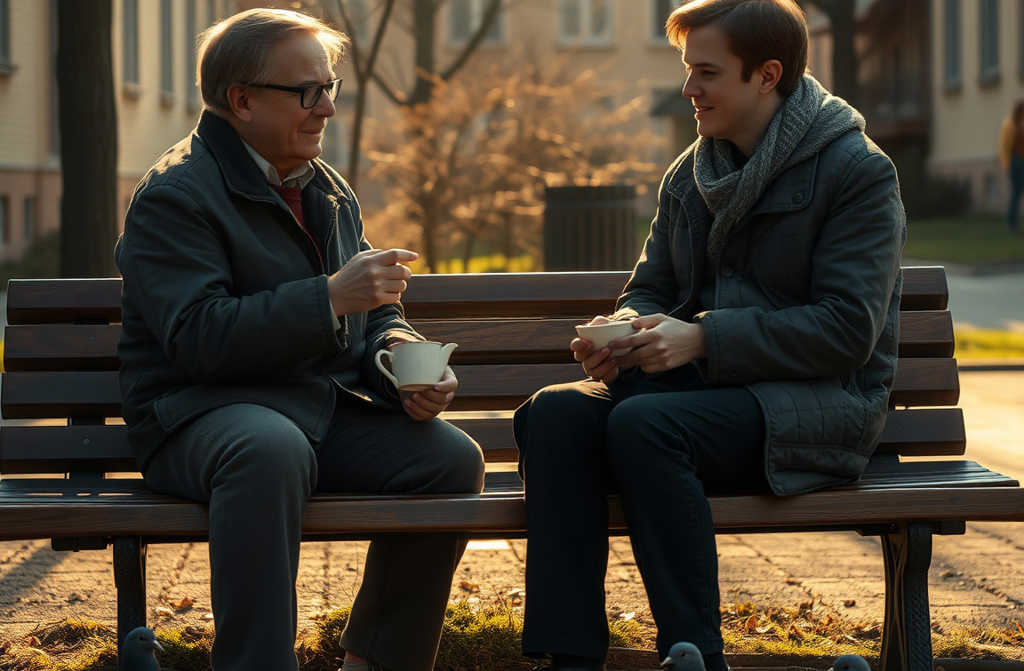
The Empty Bench
Mr. George Bennett balanced his thermos on his knees and checked the lidwas it leaking? It held firm, but habit outweighed trust. He perched on the far end of the bench outside the village primary school, an edge where parents didnt jostle and bags didnt thump. In his jacket pocket, a wrinkled packet of dry crumbs for the pigeons waited; in the other, a folded timetable listing his granddaughter Emilys after-school clubs and music lessons. He knew it by heart, but the scrap of paper was a comfort.
Beside him, as ever, sat Mr. Richard Chambers. He held a small pouch of sunflower seeds, cracking them one by one and counting silently, never eating them. When George approached, Richard nodded and shuffled a little, offering space. Their greetings were quiet, as if wary of disturbing school rules.
Theyre doing a maths test today, Richard murmured, eyes drifting to the upstairs windows.
Ours is reading, George replied, surprised by his own ours.
He liked that Richard didnt laugh at his choice of words.
Their friendship began without ceremony. First, their arrival times happened to coincide, then they recognized each other by the cut of their coats, the way they held their hands. Richard always arrived ten minutes before the bell, chose the same bench, and glanced at the gate as if checking it was locked. George used to hover, then one chilly morning, he sat down too. Since then, it was their spot.
The schoolyard was reliably identical each day: the caretaker ducking out to smoke, then returning without ever meeting anyones eye. The junior teacher rushed by, folder pressed tight, talking briskly into her phoneyes, yes, after class. Parents debated swimming lessons and homework. Children dashed to the windows at break, waving. George caught himself anticipating not only his granddaughter, but the repetition of it all.
One day, Richard brought a second cup and placed it next to Georges thermos.
I dont pour myself any, he explained, sheepish. Too much for the blood pressure.
I can have some, George replied, and hesitated before tipping a little into the cup. Fancy a sniff?
Richards lip twitched in amusement.
A sniff is allowed.
After that, a ritual evolved. George poured tea, Richard held the cup to steady the pour, then handed it back empty. Sometimes they shared a biscuit; often, just silence. George noticed silence near Richard wasnt heavyit was the pause in a conversation that would resume soon enough.
They discussed grandchildren with gentle caution, the way people do the weather. Richard confided his Daniel disliked PE and always found an excuse to linger indoors. George chuckled and said his Emily was the opposite, dashing about so much the teacher pleaded, Do try not to run everywhere! Gradually, the talk broadened. Richard once admitted that after his wife died, he hadnt left his house for weeks, until school became a necessityone must. George didnt echo the sentiment at once, but later, scrubbing dishes, he realized he wanted to share more.
He lived with his daughter and granddaughter in a two-bedroom flat on the edge of town. His daughter, an accountant, came home weary, spoke in clipped phrases. Emily was noisy, but her racket was childlike, harmless. George tried to be useful, unobtrusive; sometimes he felt like an extra chair at the tableserving no harm, yet a reminder of how small the room was.
On the school bench, he first felt people wanted him for more than his practical help. Richard would ask about his blood pressure, if hed been to the GPquestions not asked out of politeness. George found himself answering honestly.
One day, Richard brought a little packet of bird feed.
The pigeons expect it now, he said. Look how they gather.
George tipped a handful onto the tarmac. Instantly, pigeons swept down, their feet scratching at the grit. George felt a curious comfortit was such a simple act, but it made things a shade better for someone.
In time, these meetings became essential. Not just while Emilys at school, not if theres time, but a piece of the day he couldnt imagine removing. He even started arriving earlier, claiming their place and watching Richard approach, pull off his gloves, scan the windows.
Come Monday, George arrived as usualand found the bench empty. He stopped, unsure hed chosen the right playground. Nights rain had left the bench damp, a yellow leaf stuck to the timber. George drew out his handkerchief, wiped the edge, and sat. His thermos stood nearby, crumbs on his lap. He saw the caretaker bent over his phone, oblivious.
Late, maybe, George mused. Richard sometimes got delayed at the chemist. George poured his tea, sipped, and waited. The bell rang; Richard didnt appear.
Next daythe bench was still empty. This time, George didnt bother to wipe it, sat on a dry patch with the morning paper under him, watching the gate, scanning every elderly gent in a dark coat. No one came.
On the third day, frustration grewnot for Richard, but for the unanswered absence. He muttered, Well, maybe Im not needed, then, but was shamed by the thought. He had no right to demand. Yet somewhere inside, he did.
Richard had one of those chunky old phones. George had watched him squint at the tiny keys, searching for numbershed jotted Richards mobile down ages ago when theyd discussed booking a taxi for Daniels cricket match. That evening, George opened his notebook and dialed. Rings, then a short beep, then silence. He tried again. The same.
On the fourth day, George approached the caretaker.
Excuse me, about Mr. ChambersDaniels granddad, he always sat here. Have you seen him?
Caretaker looked up, as if George had asked for a secret password.
Theres lots of old chaps about, he said. Cant remember them all.
Well, hes tall, with a moustache George heard the pity in his own voice.
No idea, caretaker mumbled, back to his phone.
George tried the woman who often waited by the gate, often scolding teachers about homework.
Do you know Mr. Chambers?
I dont know anyone, she snapped. I just want my own, thanks.
He approached a young mother with a pram who sometimes smiled his way.
Sorry, do you know Daniel? Boy in Year Three?
Daniel? she frowned, thinking. Quiet lad, yes. Why?
His granddads stopped coming.
She shrugged. Might be ill. Everyones down with something.
George returned to the bench, anxiety fluttering up his throat. He kept repeatingits not my business. But every glance at the empty patch beside him felt like a small betrayaljust sitting, pretending nothing had changed.
That night, as his daughter diced vegetables, he spoke up.
Dad, it could be anything, she replied, not looking up. Maybe hes visiting family.
Hed have told me, George murmured.
You dont know that. She sighed. Dont work yourself up. Your pressures bad enough.
Emily listened at the table, pencil poised.
Granddad Dick? she piped up. Hes funny. He once told me I read quicker than he thinks.
George smileda sore, aching smile.
There you are, said Emily. Maybe hes just busy.
George nodded, but that night, he lay awake, listening to his daughter gossip softly on the phone in the next room. He wanted to get up and ring Richard again, but dreaded an unfamiliar voiceor nothing at all.
The next day, waiting for Emily, he spotted Daniel. The boy was last out, his bag much too big, led by a stern, short-haired womanDaniels mum, he realized.
He hesitated, then hurried after them.
Excuse meare you Daniels mother?
She eyed him warily.
Yes? Who are you?
Iyour dad, Mr. ChambersI used to wait with him. Im George Bennett. He hasnt come lately; Im worried.
She studied him, weighing trust.
Hes in hospital, she said at last. Stroke. Not terrible well, you know. Hes in the ward. Theyve taken his phone so he wont lose it.
Georges knees almost buckled; he gripped his bags strap.
Whereabouts?
The City Hospital, on Oak Lane. But they dont let visitors in, except family. Understand?
I do, George said, though he couldnt grasp how someone alone could be denied.
Thank you for asking, she added kindly. Hell be glad someone remembers.
She took Daniels hand and crossed to the bus stop. George lingered at the gate, relieved the mystery was solved, yet a new anxiety knotted inside himthe explanation wasnt an easy one.
He relayed it at home; his daughter frowned.
Dad, youre not going barging in there, she scolded. Dont get yourself involved. Hes not family.
The edge in her voice was fear, not irritationfear that her fathers need to care would tip his unsteady balance.
No one, George agreed, but still.
Next day, he made for the clinic where hed sometimes queued for blood tests. He recalled a social workers notice on its wall. The corridor smelled of disinfectant and damp shoe covers; muffled arguments wafted from reception. George took a number and waited.
The woman at the desk just listened, face drawn.
Youre family? she asked.
No, George admitted.
Then I cant let you know about the patient. Its confidential.
Im not asking for a diagnosis, George said, voice rising despite himself. I just want to send him a message. Hes by himselfdo you see? Weevery day
She softened slightly. You can pass a note via family, or perhaps the ward staffif they allow. Otherwise, without consent, its difficult.
He slumped outside on the waiting room bench, ashamedas if hed begged alms. Thats it, then, he thought. Im just a silly old man, poking in where I shouldnt. He wanted to head home, shut his door, never return to the school.
Then he remembered the way Richard, with care, steadied the cup so he wouldnt spill tea. How wordlessly hed pushed the birdseed forward if George forgot his own. These were only little gestures, but each lightened the load. It was Georges turn to do something, however small.
He tried Daniels mum again. She was reluctant, but, seeing he wouldnt give up, she dictated her number.
No fuss, she warned. Its all very strict there.
That evening, George rang.
This is George Bennett. Id like to send a few words to Mr. Chambersif you wouldnt mind?
A pause.
He speaks poorly now, she told him. But he can hear. Im visiting tomorrow. What shall I tell him?
George glanced at his notebook, where hed scribbled drafts; none felt right.
Just say the bench is still there, he whispered. And Im waiting. And that the teawell, Ill bring some when its allowed.
Ill tell him, she promised.
George sat a long while after, while his daughter busied herself at the sink, pretending not to overhear. At last she set down the plate and said,
Dad, if you wantIll come with you. When they allow it.
He nodded. What mattered wasnt if she came, but that she said, with you, and not, do you need to?
A week later, Daniels mum found George by the school.
He smiled when I mentioned the bench, she said. And his handlike thiswaving. The doctor says rehabs slow. Well have him live with us soonhe cant stay on his own.
Something knotted inside Georgetheir routine meetings would likely never return. It was a hollow feeling, like a coat removed from its hook.
Could I write to him? he asked.
You canjust keep it brief. Its hard for him to listen too long.
That evening, George chose a fresh page and printed plainly: Mr. Chambers, Im still here. Thank you for the tea and the seeds. Im waiting for you to come outside. George Bennett. Then, Daniel is doing wonderfully. He reread, left it unedited, folded it smoothly, and wrote the surname hed once seen on a water bill.
Next morning, he brought the envelope to the school, handed it to Daniels mum. It was dry, crisp, and he carried it as if fragile.
When the bell rang and the children tumbled out, George rose as usual. Emily ran up, hugged his waist, and launched into stories about her day. He listened, but his gaze flickered to the bench. It was empty, but the emptiness didnt sting any more. It wasnt a void; it was a place where something precious had existed, even if now it was gone.
Before leaving, George scattered crumbs on the tarmac. The pigeons descended swiftly, as if they too had read the timetable. George watched them and realised he could come for reasons beyond waitinghe could come simply to avoid closing himself off.
Granddad, what are you thinking about? Emily asked.
Nothing, he replied, taking her hand. Come on. Well be here tomorrow too.
He said it not as a promise to another, but as a decision for himself. His steps grew steadier.

A Mysterious Stranger Captivates Hearts as She Enters the Room
A Stranger Changed Their Hearts Upon Entering the RoomAt the school reunion, a stranger appeared, and only after a stunned...
My Husband Issued an Ultimatum, and Without Hesitation I Chose Divorce
My husband gave me an ultimatum, and I chose divorce without a second thought Friday, late evening. I sat across...


Once a Month — One Neighbour’s Turn: Nina Clutches Her Rubbish Bag at the Lift Noticeboard, Unsettle…
Once a Month Eleanor Caldwell pressed the bin bag to her chest and paused by the noticeboard next to the...


She Walked Into a London Café Starving and Hoping for Leftovers—Unaware the Owner Would Soon Change …
I wandered into a restaurant to scavenge leftovers, starving and chilled to the boneunaware that meeting the owner there would...


He Bought the “Deaf” Girl Everyone Had Rejected… But She Heard Every Single Word
They used to say Alice was deaf since she was a little girl. They said it with unshakeable certainty, as...


The Empty Bench
The Empty Bench Mr. George Bennett balanced his thermos on his knees and checked the lidwas it leaking? It held...


Three Years of Marriage… and Every Night Her Husband Slept with His Mother. One Night, She Followed …
Three years married and every single night, her husband slept with his mother. One night, she followed him and uncovered...


My Father-in-Law Thought We’d Keep Supporting Him Forever – Eleven Years of Being Treated Like His P…
My father-in-law thought we would keep supporting him forever. My husband grew up in a loving, close-knit English family. But...