
З життя
The Handwriting of History

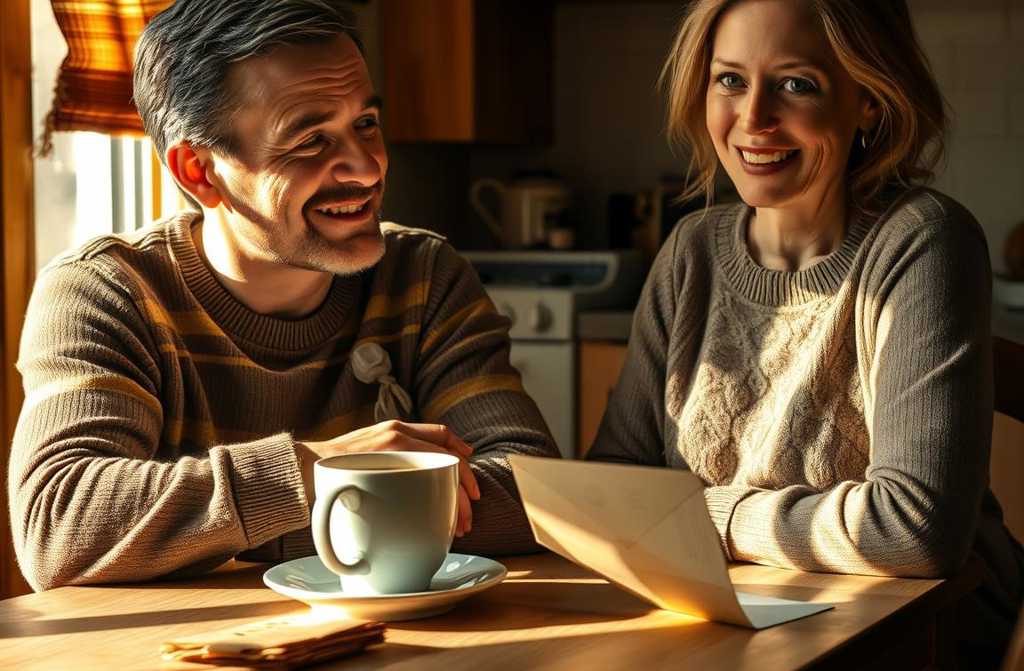
My morning began exactly as it always had for years. I, Andrew Sinclair, was already up a minute before the alarm went off, a habit Id cultivated long ago. I lay there for a few seconds, staring at the ceiling, listening to the water running in the bathroomEleanor was already dressed. The flat was cool, the curtains halfdrawn, letting a pale grey light filter in.
I reached for my phone, checked my emails, messages, calendar. Nothing unexpected. Nine oclock: the weekly briefing; eleven: a meeting with the bank; then lunch with a potential partner. Everything was scheduled.
The kitchen smelled of fresh coffee and toast. Eleanor, in a robe with her hair loosely tied back, was pulling slices from the toaster. A newspaper lay spread on the table beside my favourite mug.
Will you be late today? she asked without turning around.
Depends on the bank, I replied, pouring coffee. If we seal the deal, Ill be home by eight.
She nodded, sat opposite me, scrolling through the news feed on her phone. The conversation felt a little forced, but that no longer seemed odd. We lived side by side, barely intruding on each other, like two parallel lines. On the surface everything looked successful: a flat in central London, a cottage in Surrey, a sleek car, holidays booked months in advance.
I ate mechanically, barely tasting the food. My thoughts were already at the office, running through the numbers again to make sure the bank had no room to haggle. I liked it when everything followed the script, without surprises.
Only one episode never fit the neat picture of my lifesomething I had deliberately kept from my mind. More than twenty years ago, back when I worked for a tiny firm on the outskirts of town, wages were delayed and we paid the office rent in cash, folded into envelopes. My partner and I had cobbled together a scheme using dummy contracts. By todays standards the sum was negligible, but at the time it felt like a lifeline. One accountant suffered the most. I told myself it was a coincidence, not my fault.
I brushed the memory aside, took another sip of coffee, and glanced at the clock.
Im off, I said, standing up.
Eleanor gave a brief nod, eyes still glued to her phone.
Outside the courtyard, cars roared past, horns blared. The driver waited at the building entrance, as punctual as ever. I slipped into the back seat, instinctively checking that my briefcase was still with the documents.
My office sat in a glass tower in the City, a place Id started in a cramped cubicle and now occupied almost half a floor. In the reception, the secretary greeted me.
Good morning, Mr Sinclair. A courier left a parcel for you; Ive placed it on your desk.
From whom?
She didnt say. Just handed it over and left.
I thanked her, headed to my office. The space was spacious, floortoceiling windows, a massive desk, neatly framed diplomas and certificates on the walleverything meant to scream stability and success.
On the desk, atop a tidy stack of paperwork, sat an envelope. Thick, white, no return address, bearing only my name in a crisp, slightly oldfashioned hand.
I lifted it, turning it over. The paper felt textured, expensive. No logos. Suddenly that simple object seemed out of place in my smooth, calculated day.
Another piece of junk mail, I muttered, though I knew it wasnt a typical advertisement.
The secretary peered in.
Would you like a coffee?
Please, thanks, I replied, waiting until she left, then carefully tore the envelopes edge.
Inside was a single sheet, black type printed on a printer, unsigned.
You remember back in 98, in that tiny office on the third floor, when you signed three contracts for fictitious services? You claimed no one would be hurt. Yet one man lost his job and later his home. Hes still alive.
You like to think everything is under control, but the past never vanishesit merely waits for you to relax.
If you want your current partners and family to stay in the dark, be ready for a conversation.
Ill be in touch soon.
My mouth went dry. I read the note again, feeling a heavy weight settle in my chest. The words were precise, not vague hints but exact details.
I sank back into my chair, the paper trembling in my fingers. My heart hammered faster than usual. The image of that shabby office flashed backpeeling paint, a battered desk where my partner and I stayed up late, scheming a way out.
I had genuinely believed nobody would be harmed. The accountant in question was a quiet middleaged man who simply didnt show up one day. Rumours later swirled that hed been fired, that he was in debt. I never bothered. By then Id already learned not to look back.
I placed the sheet beside the envelope and closed my eyes. Who could have written this after all these years?
A knock sounded at the door.
Mr Sinclair, are you ready for the briefing? asked the finance director, a tall man with a neat cut. The teams waiting.
Instinctively I covered the sheet with a folder.
On my way, I said, trying to keep my voice steady.
During the briefing I recited the usual numbers, made notes, nodded at reports. Yet my thoughts kept looping back to that envelope. Someone was digging up my past and knew far more than they should.
After the meeting I returned to my office, retrieved the sheet again. The back was blankno signature, no contact, just the promise that Ill be in touch soon.
I flicked through my contacts. My former partner? We hadnt spoken in a decade. Perhaps he was bitter that Id moved on to my own enterprise while he stayed in the background. But how could he know about the accountants fate? Maybe a current employee had stumbled upon old files? Yet how would they know about the thirdfloor office in 98?
I paced the room, weighing options. Call the former partner? Ask directly? Did you send me that letter? sounded absurd. What if it wasnt him?
My phone buzzed with a message from Eleanor: Are you definitely staying late? Need to know if I should start dinner. I stared at the screen, unsure how to reply. Everything around me suddenly felt fragilehome, office, routine. One wrong move and it could all crumble.
Ill try to be earlier, I typed, setting the phone aside.
The day unfolded under the shadow of an unseen threat. The bank meeting, lunch with the partner, project discussionsall went through on autopilot, like rehearsed theatre. Inside, I waited for the promised call that never came. By evening, the secretary popped her head in.
Mr Sinclair, someone called from an unknown number. They said theyd call back later.
Did they identify themselves?
No. The voice was calm, male. Said it was a personal matter.
I felt a tightening in my chest.
Driving home, I stared out the window, the city lights blurring into a smear. The driver chatted about traffic, but I only nodded.
At home, silence greeted me. Eleanor had left a note on the table: Went to my sisters, dont wait up. A plate of reheated food sat untouched. I poured a measure of whisky, sank into the sofa, and flicked on the TV without choosing a channel. The picture flickered, but I didnt watch.
Each time my phone lit up, I jumped, though only work emails and ads appeared.
That night sleep eluded me. Faces swam in my mind: the accountant whose name I couldnt recall, my old partner who had insisted this was the only way out, a colleague from the old department whod once looked at me with hope before the shop shut down. All those lives seemed distant, like someone elses story. Then a thread was tugged.
The next morning the envelope no longer felt like a dream. It sat in the drawer, neatly folded. I pulled it out, read it againnothing new.
At lunch, an unknown number rang.
Yes? I answered, tension rising.
Mr Sinclair, this is I assume youve received my letter, a flat, unaccented voice said.
Who is this?
Thats irrelevant. What matters is that I know what you tried to hide. I can tell those close to you. Or we can discuss terms.
My hand clenched the receiver until my knuckles whitened.
If you think you can blackmail me I began, but my voice wavered.
Im not blackmailing. Im just a man whose life you ruined with those dummy contracts, who lost his job and his roof. I saw you on TV, the successful entrepreneur, and realised the past never lets go.
A cold shame rose in me, mixed with irritation.
What do you want?
Just a conversation. Tonight, seven oclock, the café on the corner of our street. You know the place. Come alone. And keep this from anyone else.
The line clicked dead. I stood there, phone to my ear, hearing nothing but the hum of the flat.
The corner café was a modest shop with a front window where mums with toddlers and retirees with newspapers lingered each evening. I knew it well; Eleanor and I often stopped there on weekends.
I checked the clockhalf past two. Hours stretched ahead, each minute heavy with anticipation.
Work ceased to exist. I sat at my desk, watching raindrops trace the glass, turning the thoughts over. Should I go? Ignore? The envelope meant someone had copies of the contracts or some proof. Call the police? Admit the blackmail and expose the old crime? The police would need a full story, and I wasnt sure what would come of it. And would they protect my reputation?
I told the finance director I needed to step out for personal business. He noddedpersonal matters were respected unless they interfered with the bottom line.
On the drive home, I found myself watching pedestrians, convinced each passerby knew something. The driver asked if I wanted a detour; I shook my head.
Back at the flat, the café was visible through the kitchen window, two houses down. People at the tables laughed, stared at phones, lived their ordinary lives.
Eleanor entered the kitchen, a hint of surprise on her face.
Youre early. Something happen?
I felt irritation rise, wanting to say everything was fine, that I was just tired, but the words stuck.
I have a meeting downstairsat the café. Workrelated.
The café? You have meeting rooms at home.
They asked. Its more convenient.
She studied me a moment, then shrugged. Alright. Im off to my sisters for her birthday. You coming?
Ill see how it goes, I replied, watching the tension tighten her features before she grabbed her bag and left.
Time crawled. Finally the clock neared seven. I slipped on my coat, descended the stairs, stepped outside into the cool, damp air, clouds hanging low.
At the cafés entrance I paused, inhaled deeply, and went in.
Inside, soft music played. A few tables were occupied. I scanned the room, trying to spot the man who claimed to know my past.
By a window, at a small table, sat a man in his fifties, short, hair greying at the temples, in a plain shirt. His face was both familiar and foreign. The memory of that cramped office, piles of paperwork, a man in a sweater hunched over ledger books flashed through my mind.
He looked up, nodded to an empty chair.
Please, sit, Mr Sinclair, he said calmly.
I lowered myself, feeling a chill travel down my spine.
You sent the letter the call
Yes, he replied, eyes steady. Didnt expect you to be here.
My mind raced. I didnt know what happened to you.
And you didnt care, he answered, voice tired. You were busy building your career, looking ahead. The rest of us were left behind.
A waitress placed menus. He ordered tea; I was offered coffee, which I accepted without thinking.
What do you want? I asked after she left.
He smiled faintly. Moneys the easy part. I want you to acknowledge what you did. Not to me, but to yourself, to the people youve built a life with. And to let my former partner know the truth, if he asks.
Do you want me to quit my business? I asked.
No. I want you to choose. Either you tell your partner and Eleanor the whole story, and we negotiate a settlement, or Ill do it for you. Either way, the truth will surface.
I leaned back, the chair creaking, thoughts clashing. You think this is blackmail?
Its not blackmail, he said, its a reckoning. You used me as a disposable pawn.
The waitress returned with tea. I took a sip, feeling the bitterness on my tongue.
How much are you asking? I asked.
He quoted a sumnot astronomical, but enough to sting. Its for silence? I prompted.
No. Its compensation for the years I lost, for the silence Ive endured. I dont need media exposure. I just need you to own up.
How will you prove it?
Simple. In a week Ill call your partner. If he says he knows everything, our business is done. If he doesnt, Ill make sure you both hear about it from someone else.
Panic rose. A week to dismantle the life Id built. I argued, You have no proof it was my initiative. Others were involvedmy partner, the other guy
I know that, he replied. But you signed the contracts. The others have faded. Youre the face.
Why now? I asked. So many years have passed.
Because I cant live with it any longer, he said quietly. And because you still have something to lose.
We sat in silence as young women at the next table laughed about a film. The ordinary world went on, unchanged.
I need time, I said finally. Give me a moment.
You have a week, he reminded, standing. Ill be in touch.
He left a few notes on the table, paid for his tea, and walked out without looking back.
I sat there, coffee cooling, hands trembling. The decision loomed: confess and watch my world crumble, or hope the threat would fizzle.
Later that night the flat was dark. Eleanor had left a message saying shed be at her sisters and would return late. I closed the office door, sat at the desk, and pulled the envelope from the drawer, placing it beside my phone. I opened my laptop, typed the accountants name into a search engine, and found old debt notices, a few classifieds about someone seeking work, a mention in a local paper about a former employee looking for jobs. A life running parallel to mine, but on a very different track.
The urge to justify myself rosetimes were different, everyone took risks. Yet those words sounded hollow even to my own ears.
My phone rang. The screen showed my business partners name.
Hey, I answered, trying to sound steady.
Great news from the banktheyre on board with our terms, but they want you there tomorrow to sign. And you seemed a bit off today. Everything alright? he asked.
I glanced at the envelope.
Just a bit tired, I replied. Nothing to worry about.
Alright. Rest up. Tomorrows a big day.
The call ended. Inside me two voices argued. One whispered I could pay, buy time, perhaps the man would lose interest. The other warned that the thread was already pulled, and sooner or later the truth would have to be faced.
I imagined telling Eleanor, seeing that tight line on her face from that morning, hearing the partners steady tone. I pictured the accountant in the café, not angry but expectant.
My finger hovered over the call button. I dialed.
The line rang, then a calm voice answered.
Hello?
We need to talk, I said, heart tightening. Not about the bank. About me.
Now? he asked. Im driving.
Then later tonight, at my place. Its important.
There was a pause.
Fine. Ill be there after eight.
I hung up, and for a moment the apartment was quiet except for the ticking clock.
I picked up the envelope, ran my thumb along its slightly rough edge. That simple piece of paper had become the boundary between two versions of my lifethe before and the after.
I didnt know how it would end. My partner could explode, Eleanor might shut down, the accountant could still call, even if I met his demands. There were no guarantees.
One thing was clear: the past could no longer be hidden. It sat on my desk, walked through my flat, stared out from the cafés window opposite.
I slipped the envelope back into the drawer, left it unlocked, sank into my chair, and closed my eyes.
The lock on the hallway door clicked. Someone entered, set their keys down. Footsteps approached.
I opened my eyes, turned toward the office door, and listened, aware that the conversation about to begin would never let me return to the comfortable silence Id known.

My Mother Never Cheated. There Was Never a Third Person in Their Marriage. But She Was Difficult to Live With – Always Complaining About Everything
My mum never cheated.There was never a third person in their marriage.But she was honestly a difficult woman to live...
I was 30 when Dad went to heaven. Now I’m 32, and our last conversation still hurts, as if it happened yesterday. I was always the “problem child” – starting things and never finishing them.
I was thirty when Dad passed away.Now I’m thirty-two, and our last conversation still aches, as if it happened only...


Lingering Discomfort — It’s over. There won’t be a wedding! — Marina exclaimed. — Wait, what happe…
A Bitter Aftertaste Its over, theres not going to be a wedding! cried out Emily. Wait, whats happened? I stammered,...


Women’s Fates: The Tale of Luba—A Story of Sisterhood, Folk Healing, and the Battle Against Evil in …
Womens Fates. Lillian Oh, Lillian, for heavens sake, I beg you take my Andy with you, Martha pleaded, wringing her...


Apples on the Snow… On the edge of the old Ashwood, right where the pines seem to prop up the sky…
Apples in the Snow… On the very edge of Broad Oak, where ancient forests still stand sentry and the firs...


Don’t Dwell on the Past Taisha often finds herself reflecting on her life as she crosses the thresh…
Dont Dig Up the Past Ive found myself reflecting on my life as I crossed the threshold of fifty. I...


The Awakening That Swept Me Off My Feet Up to the age of twenty-seven, Mike lived like a lively spr…
A Discovery That Swept Me Away Until he was twenty-seven, Michael lived like a lively brook in springnoisy, wild, and...


Andrew, please, I beg you! Help us! – The woman dropped to her knees before the tall man in a white …
Mr Andrew Whitaker! Please, I beg you! The woman collapsed at the feet of the tall man in white, her...