
З життя
The Kind-hearted Man Who Rescued a Drowning Woman

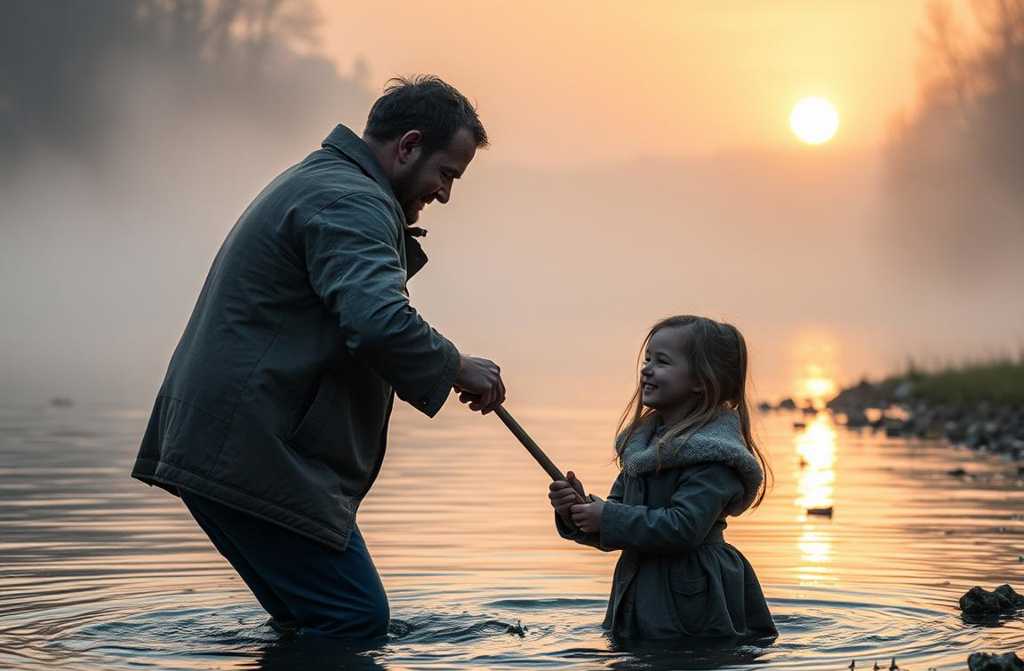
Victor Hill, just after slipping his meagre evening catch into a woven basket and heading down the narrow lane toward his shabby cart, freezes as if struck by lightning. It isnt a trick of the mind. From the rivers thick, impenetrable mist the same sound returns not a shout, but a deathrending wail that sends a shiver up his spine. A woman is screaming. The wind howls through the ancient oaks, tearing her voice to tatters, yet the desperate words cut through the gale. She is not merely calling for help; she is pleading, pouring the last of her soul into the cry. Beside her, frantic splashes of water echo from the bank.
Without a second thought Victor hurls the basket, and a handful of silverscaled minnows spill onto the wet sand. Stripping off his heavy patched coat and mudcaked work trousers, he is left in a threadbare shirt and plunges into the black, chilling water. The wind, like a rabid animal, whips up waves that slap his face with foam and spray.
The swim is excruciating. The current, usually lazy, today snarls like a beast, its icy fingers clawing at his legs. Near the rivers main channel, where the water grows dark and deep, the girl flails desperately. Her dark hair, like seaweed, surges up the crest of each wave then sinks back into the black abyss, threatening to pull her under. The young man she has been begging perhaps in vain already reaches the opposite bank. He does not look back; his movements are sharp, terrified. Grabbing an inflatable dinghy, he darts along the forest edge, eager to disappear into the trees that promise shelter.
The girls screams fade. She no longer breaks the surface. When Victor, exhausted as he paddles, arrives at the spot, only slow, ominous circles ripple outward. His heart drops. He gulps a lungful of air, then dives into the icy gloom. His hands find the slick fabric of her coat; he clutches her limp body from behind, using his other arm as a paddle and his legs as oars, fighting his way back to shore. Every stroke burns his muscles, every breath sounds like a groan. Yet he presses on, clinging to life and to the fragile life in his arms.
On the bank he drags the girl out, his own fatigue forgotten, and begins the rescue. His workseasoned hands work quickly and precisely twists, presses, artificial respiration. Murky river water rushes from her lungs, and she erupts in a hoarse, rattling cough. Her breathing steadies, weak but even. He knows she must be warmed. He gathers the dying embers of an old campfire, builds a quick platform of flat river stones, and covers it with a thick layer of pine branches. He gently lays her on the makeshift bed, blankets her with his only jacket, still scented with smoke and sweat. He gathers scattered belongings, struggles to pull the soaked clothes over her stiffened body, and settles by the newly kindled fire, extending his trembling, frostwhite hands toward the flames.
Heat spreads sluggishly, reluctant to seep into frozen flesh. The girl lies motionless; only a faint wisp of breath testifies to her life. The cold water and the shock have done their work, but Victor knows that time will bring her back. He feels this as surely as he knows every bend of the Thames.
He lifts his eyes to a sky thick with low, heavy clouds. No stars pierce the leaden veil; even the moon would be swallowed whole. The world feels empty and bleak.
He looks down at the dancing flames, and they carry him back to a distant, equally grey evening that once stripped him of everything.
Victor, his wife Ethel and their small son Tommy have come to fish every summer. Leaving his wife and son to unpack gear in the tent, Victor pushes off from the bank in his old but reliable dinghy.
Warm up with a cuppa, Ill be back with a decent haul and well have the best fish soup in the country! he calls cheerfully to Ethel, his face lit by a carefree grin.
Just be careful, Vic, the weathers turning, Ethel warns, eyes tracking the gathering clouds.
I know every stone out here! Dont worry! he shouts back, oars cutting the mirrorsmooth water.
He reaches his favorite spot, casts his line, and settles into the familiar ritual of waiting. Suddenly the sky blackens as if night has fallen early. A fierce wind bends the trees to the ground, and a wall of water crashes from the heavens. His boat spins, tossed sideways, and a deafening crack snaps as the hull catches on a hidden snag jutting up like a dagger. Air hisses out, and within moments the boat disintegrates into a shapeless, rubbery mass.
Victor tries to swim, but a sharp, burning cramp seized his leg in the icy water. The struggle against the enraged elements is uneven. The current grabs him, throws him against something hard, and darkness swallows his consciousness. He awakens three days later on a hard wooden pallet in an unfamiliar cottage, its walls smelling of smoke and herbs. Rising makes him dizzy and nauseous. At that moment an ancient man with a face carved in wrinkles like a map of years shuffles in.
Stir yourself, the old man grumbles, setting a steaming bowl on a low stool. Drink this herb tea; itll stop the bleeding. Eat the porridge or youll waste away.
Where am I? Victor croaks, the name of the distant county striking terror in his chest as he realizes hes been carried dozens of miles from home.
The woods are a brutal place, the old man says after a pause. Hunters dragged me here barely alive. Thought youd never make it back.
Victor tries to sit up, but the old man waves a withered finger.
Stay down, dont play hero. Youve lost too much blood. Moving now will only bring death. Rest and heal.
What about my family? My wife, my son they think Im dead! Victors voice trembles with desperation. He imagines Ethels anguish, his heart tightening into a painful knot.
Theres no post office out here. Only wolves howling and bears roaring. Its just the forest, the old man sneers. We live on herbs, mushrooms, nuts, berries. In winter we store supplies. Hunters come by once in a while with a few treats. Thats my life, twenty years now.
The old man sighs heavily, shuffles back to his strawfilled bed, and tells Victor to sleep. Victor watches the dim firelight flicker, shadows dancing on the walls, forming fleeting shapes of his wife and child. The longing is so sharp he clenches his teeth to keep from sobbing. Outside, a blizzard moans, erasing all hope.
Days blur together, each small movementturning, sitting, lifting a spoonfeels like a triumph. He finally gets to his feet, just as the old man predicted. Stepping beyond the cottage doorway, the world is a blinding white, a fresh blanket of snow.
How do I get out of here? Victor asks the old man, trying to keep panic from his voice.
Theres no way. You cant walk; the nearest road is a days trek, maybe more. All the paths are buried. Youll have to wait until spring. If you recover, Ill guide you.
What about hunters? Can they help?
Hunters are out on other lands in winter. They come in spring and autumn. Maybe someone will take you in if luck smiles, but its unlikely. The terrain here is impassable.
The old man shakes his head and tosses another log onto the fire.
Victor snaps back from the memory, his heart tightening with that old, familiar ache. He feeds the fire with dry twigs, rises and checks on the girl. Her breathing deepens, steadier, though consciousness still lingers at the edge. He adjusts her jacket, returns to the fire, and lets the past try to pull him back into its merciless whirlpool
The old man remains silent. As Victor regains enough strength to move around the cottage, the old man begins helping: clearing snow from the doorway, chopping wood, stoking the fire. He eats the bland porridge made from vague roots and herbs without revulsionhunger and survival instinct win over taste. The tea the old man brews from summergathered herbs reminds Victor of Ethel, who always added mint and lemon balm to her tea. Those memories are both sweet and bitter, like a wound that never quite heals.
Winter drags on, seeming to trap time in ice. Even when spring finally loosens the snow, it does so reluctantly, inch by inch. Two more months of a grudging battle between frost and thaw pass, and when Victor feels his legs regain strength, the old man collapses.
I cant take you to the town now, as we planned, the old man rasped, lying on his pallet. Im too weak. I lifted you, now I must look after myself.
How will you survive alone? Ill go to the citythere are doctors, a hospital!
Doctors? Theyd cut you up, not fix you. Weve survived with bandages and herbs. Go on, dont worry about me. Ill pull through in time.
The old man points out the way, and Victor, grateful for the rescue, thanks him profusely before setting off. What seemed a straight road quickly turns into a chaotic maze. He walks until darkness falls, never finding a clear path. He spends the night beneath pine branches, awakens to a soft rustle behind him. Turning, he spots a few flickering green lights in the gloomwolves. Without hesitating, he scrambles up the nearest tall oak, clinging to the bark until dawn, nails digging into the rough wood. The pack, sensing the futility, leaves after the night deepens. Descending feels like courting death.
Morning finds him crawling again, hope dwindling. Days blur with encounters: a boar, a lynx watching from a branch, nightly climbs into trees for safety. He lives off last years berries, roots, sips from forest streams, sleeps in short bursts, listening for every sound. He refuses to surrender; he must reach his family alive.
Two weeks pass in the endless, ruthless forest. Then, between the trees, he spots a dark rectanglea derelict hut. He crawls to it, nearly losing consciousness from exhaustion, and joy floods him. Its an old hunting bothy, its rusted door barely moving, showing no sign of recent use. Inside smells of dust, dry pine, and rodents. A single grimy window overlooks a wide bed of straw, a rolled wool blanket, a sack of salt, a box of matches, a halfbag of oatmeal, and a tin mug.
He steps outside, gathers firewood, finds a small clearing, and builds a fire. He boils water from a stream in a tin can, steeping dried raspberry leaves and mint he found in the bothy. The first sip of the hot, fragrant drink makes him feel almost happy. He locks the door, barricades it with a branch, and burrows under the stiff, dry wool.
He sleeps like a dead man, his first real rest in months. A bears roar wakes him nearby. Fear spikes, but the sturdy larch walls give him courage.
Unsure what to do next, he knows staying here offers shelter, food, and relative safetybetter than wandering the unknown forest. He decides to wait, believing that returning home later is better than never returning at all.
Matches are scarce, so he learns to start fire with flint, dries mushrooms and berries over the stove, gathers medicinal herbs, recalling the old healers lessons.
A month passes, perhaps longer. One dawn, distant gunshots and dog barks reach his ears. He bursts from the bothy in his only shirt, sprinting toward the sound, coughing, stumbling over roots.
Voices answer. After what feels like ages, clear footsteps and the crackle of branches underfoot draw nearer. Four hunters, by chance, happen to be in that part of the woods. Victor finally reaches help. He rides in a pickup for over a day, barely sleeping, fists clenched with nerves, until he arrives at the familiar doorway of his rented flat. His heart pounds, ready to explode. He knocks. A stranger in a stretchedout home Tshirt opens the door.
The man says hes been living there for three months; the previous tenants left after the husband drowned.
Drowned, the word hits Victor like a hammer. So Ethel thinks Im dead
Where to go? What now? The world spins. He wanders aimlessly, ends up at the local police station, stumbles in and, breathless, explains his story. An officer takes his statement, shrugs, and promises to search.
Help me find my family! They think Im gone! Victor pleads. He fills out forms with his wifes name, sons name, relatives, friends. They assure him theyll look.
He then goes to the warehouse where he worked as a stock clerk. The gates are locked, a new sign hangs over the building.
They moved, the caretaker mutters, sweeping trash. To a new address. I dont know where.
Victor roams a city that feels foreign after his absence. His last hope is an old school friend, Serge. He rushes to Serges house; the door opens to his exwife, Natalie. Her face hardens.
Were divorced. He left for another town. I know nothing about Ethel, she says coldly.
A couple of other mates are scattered: one lives with his inlaws in a onebedroom flat, another is on a sixmonth overseas posting. They each chip in what little money they can. No one can take him in.
Ethel had no close friends; she worked from home, knitting exquisite sweaters and hats on commission. Victor never knew her clients.
He has nowhere to turn. The police keep dragging their feet. Their response is the same stale refrain: Were still looking. No results yet.
After a month he gets a temporary ID and starts hunting for any job. By the old bridge, men in overalls gather, waiting for a lift. He stands aside.
A beatup van rolls up. A head pops out of the window, wearing a cap:
Builders needed? Three of us! A few men dash to the back, jump in, and the van roars away.
Another vehicle offers a livein job. Victor, eyeing his potential partnera weatherbeaten, lost managrees. They drive for hours to a deserted part of an old factory. A massive, halfcollapsed warehouse looms, reeking of chemicals, cheap spirit, and mould.
The work is simple but filthy: siphoning oily, sulphursmelling liquid from drums into bottles, screwing caps on, slapping fake labels, and packing boxes. They sleep on the boxes. Food arrives weeklybread, pasta, tinned stew. Every few days new drums are delivered, and the finished product is taken away.
A month passes, but wages remain a whisper. When Victor asks, the foreman grunts, First you work for food and a roof, then well talk. They confiscate his passport for paperwork. He cant get it back. An attempt to leave one night ends with two burly guards explaining bluntly that leaving without documents is a terrible idea.
Time drags on. A year and a half in this cage of fear and hopelessness hardens everything inside him except one thing: the urge to escape. He flees, penniless, with a few hundred pounds hes scraped from unloading tins.
He returns to the police, now filing a complaint of unlawful detention and extortion. The case stalls for months. When a new passport finally arrives, the officer dryly notes, Next time, think carefully about the statements you make. Your story is messy; you could face charges for false reporting.
He begs former mates for a wash, some old clothes. All decline politely. Doors close one after another.
Despair becomes his sole companion. He drifts to a suburban estate, knocking on gate after gate, offering any handyman workdigging, fixing fences, chopping woodfor a meal, a bath, a coat. Many slam doors, but a few kind souls help. An elderly pensioner feeds him soup and lets him use a sauna, giving him sturdy trousers and a jacket. Another gardener, impressed by his diligence, pays him a few pounds. Victor slowly amasses a few outfits and a modest sum. He places an ad on the local radio seeking his family; the broadcast fades without a single call.
Having exhausted all urban hopes, he makes a final decision. He returns to the forest. On the very bank where the tragedy once unfolded, he finds an old, rusted miners wagon, abandoned years ago. He repairs it, seals the gaps, builds a simple stove. Thus begins his new, solitary life, which he eventually grows to accept. Years later, a familiar scream of distress rises from the river once more.
Victor rescues a drowning girl, brings her back to consciousness, and she awakens. He leaps to his feet and rushes to her. She opens her eyes, bewildered but aware. He exhales a sigh of relief, then notices lights flickering on the opposite bank and faint voices.
It must be them, he says to the girl, his voice shaking with sudden excitement. Help me gather dry sticks for a signal fire.
They quickly pile a heap of kindling near the waters edge, ignite it with his own fire, and the flames leap high into the night, lighting the rivers surface. Soon a rubber rescue boat glides to the bank, and with it the sameVictor watches as the rescuers pull the girl safely aboard, his heart finally steadied, knowing that both she and he have been given a second chance at life.

A colleague tried to dump her reports on me, so I forwarded her request to our manager: “Please help Mary, she’s struggling to cope.”
Charlotte tried to dump her reports on me. I forwarded her request to the manager: Please support Charlotte, shes struggling...
“‘You see, at 50 a woman is more of a liability than an asset.’ A 57-year-old man shared his perspective over dinner. Here’s how I responded”
Do you realise, at fifty a womans more of a liability than an asset. That was his explanation at dinner....


My family gathered around the dinner table, but my father was nowhere to be seen. My heart was instantly filled with worry and fear.
I was just three years old when my father and I became the only ones left in our family. I...


Mum Forbids Me from Inviting My Dad’s New Wife to My Wedding, Even Though She Feels Like Family to Me!
So, my wedding is happening in just a few days, and honestly, its turning into a bit of a nightmare...


Monica Fought to Gain Custody of a Young Boy from Her Neighbourhood—Her World Stopped When She Heard the Same Words from Social Services
Margaret, a gentle woman of 67 years, steadfastly maintained her cherished custom of daily strolls through the village green. Yet...


Mum Always Said Dad Never Needed Me, But the Urge to Find Him Haunted Me – And I Finally Did!
My life has always been shaped by the distinct absence of my father. As I grew older, a restless itch...


Susan enjoyed a wealthier life compared to her friend, so she often shared her fortune by giving her money from her comfortable earnings—little did she realise she was unknowingly building a dowry for her friend’s future husband!
From the outside, I must have looked like a happy woman: a mother of three, fluent in several languages, with...


Awkward Situation – Having Children with Different Fathers
There once lived an elderly couple in our neighbourhood, folks I remember well, and with them resided their daughter, Mary,...