
З життя
The Last Joyful Day

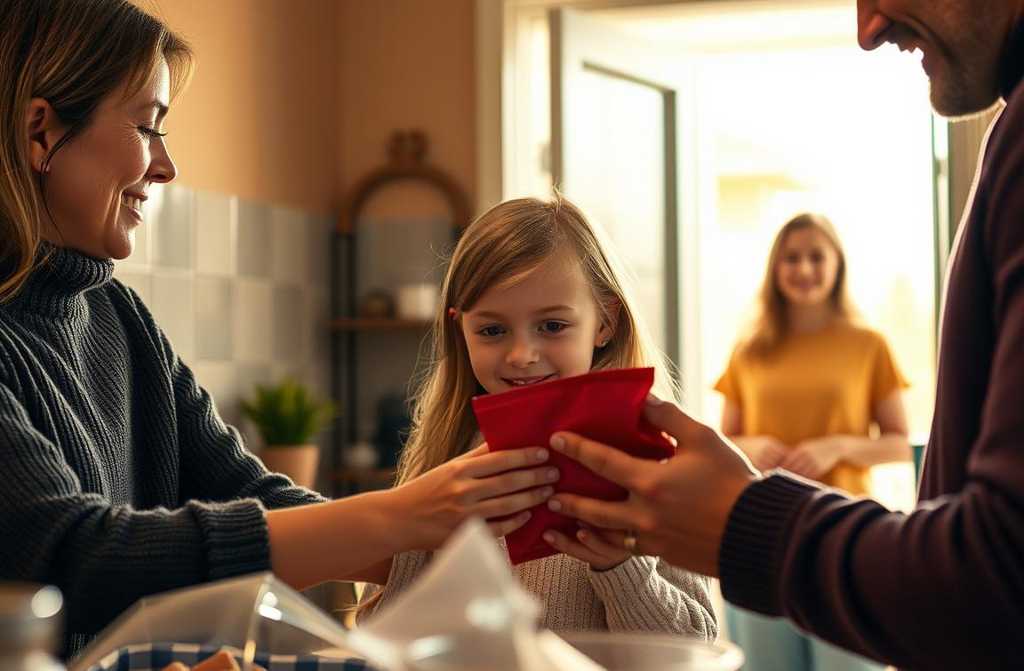
“Do you even know what you’re doing?” Mom’s voice snapped, turning into a hiss. “You brought her a handful of sweets. Once every six months. How thoughtful, Dad! Where’s the love? Is that really all you manage? You show up, drop a candy and bolt, ignoring any real dad duties? Do you even know how we get by? Ever ask? Brought any money? No! Just popping in now and then so I don’t forget you exist. A ‘good, caring’ dad handing a lone kid a few sweets because I can’t leave work!”
That was the first time Mom ever went after him in front of Emily. And now Claire was trying everything to keep the little girl from hearing, but the walls weren’t exactly soundproof…
Emily’s world was a cramped twelvesquaremetre council flat in Manchester. In one corner sat a battered desk littered with pencils, a crooked paper cutout, and a stack of textbooks opened at random pages. This was the room she shared with her toys, where she spent most of her evenings alone. She was seven, already used to being on her own, especially after school. At school she had mates, a seatmate, a whole buzz, but at home it was just her.
She was wresting with a maths worksheet, numbers swimming before her eyes. She was exhausted, clueless about the solutions, but she knew she had to finish turning in a blank page wasn’t an option and there was no one to help. Who knew when Claire would get back from her shift, or if she’d even have time?
Emily did everything by herself homework, the commute past the old swing set in the back garden, reheating yesterday’s soup on the stove, then tackling maths.
“Five plus three eight. Write eight,” she muttered, speaking the answer aloud.
In her mind, Mom’s voice seemed to hover nearby: “You’re growing up, Em. Pull yourself together.”
And Emily managed, because Claire was always at work, from early morning until late night. A mother who tried, who loved, who rarely got to just be Mom.
Suddenly, thin voices drifted up from the stairwell a muffled argument, perhaps. Emily froze, pencil hovering. Someone knocked on the flats door. Mom and someone else.
Cautiously, Emily tiptoed to her bedroom door, eased it open a crack, and peeked into the dim hallway.
In walked a familiar yet strange scene. Claire stood in the doorway, her morningstyled bangs pushed to the side. Beside her stood Mark, the dad who hadn’t lived with them for a couple of years. The sleek black car he sometimes drove into the courtyard always made Claire twitch with a mix of nervousness and a strange hope. In the six months since he’d vanished, Emily had almost forgotten she even had a dad.
Mark’s hand clutched something bright against the grey concrete of the stairwell a red paper bag.
Claire hung her coat on the peg, Mark slammed the door behind him.
“Emily!” Claire called, her tone soft at first, then a little harsher as she glanced at the exhusband. “We’ve got a guest.”
Emily stepped out hesitantly, eyes locked on the red bag. Mark flashed a showy smile, leaning in like he owned the moment.
“Hey, princess,” he said, thrusting the bag toward her. “Got something special for you. Picked them out, saved up for you”
Emily took the bag, feeling its weight. Through the translucent film she could see shiny wrappers sweets! In their flat, candy was a rare treat, something saved for a grandmas visit or a school fête. And here was a whole bag. Forgetting everything else, she peeled open a chocolate bear.
“Thanks, Dad!” she blurted, mouth full, and dove back into the bag.
Claire watched, her expression one Emily had learned to read not approval, not joy, definitely not a desire to see Mark again. It was something more complicated.
“Mark, let’s head to the lounge,” Claire said, slipping an arm around his waist, ignoring Emily, who was still devouring candy like there was no tomorrow, and led him deeper into the flat.
Feeling like a spectator, Emily retreated to her room, but she heard everything.
“Do you even know what you’re doing?” Mom’s voice cut in again, sharper this time. “You bring her sweets once every six months. How ‘caring’! Is that all you can manage? Show up, drop a bag, and then disappear? Do you even know how we survive? Ever think about it? Brought any cash? No! Just popping in so I dont forget you exist. A ‘good’ dad gifting sweets to a kid who spends days alone because I cant quit my job!”
It was the first time Claire ever let Emily hear such a showdown. She was still trying to muffle the noise, the thin walls doing little help.
“Claire, look” Mark started, but his words were garbled, lost behind the door.
“Not ‘look’!” Emily snapped. “I’m still paying off your loan! Your halfcollapsed business! Remember who the loan was in? Me! And youre out there, living it up. When are you going to pay up?”
A rustle rose.
“I’m paying what I can,” Mark’s voice trembled. “Money doesnt just appear. I help where I can. If I could, Id shower you with gold.”
“Help?” Claire shouted. “You bring a bag of sweets and call that help? Fine, suppose you have no cash. Sell the car. Close the loan.”
“How can I sell the car if I need it to work?” Mark protested. “That’s my only income.”
“Then just spend time with the kid,” Claire snapped. “If you cant afford money, at least be present.”
Mark muttered something about time, and Emily pressed her back against the wall, a shiver running down her spine. She was only seven, but she understood dad had left, debts were scary, his onceproud business was now a burden. The sweets in her hand suddenly tasted bland.
Fast forward a few years.
Emily, now twentynine, lived in a modest terraced house in Liverpool with her threeyearold daughter, Lily. Lily was probably racing around the living room now, playing with a friend, making up their own secret language.
A familiar knock sounded at the door. Mark was there again, though this time there was no heated argument in the hallway. Claire had long since paid off the loans Mark had left behind. Shed raised Emily on her own. Mark, having pocketed a decent chunk from selling the old flat when Claire finally moved to a smaller place, still popped by every six months a habit that no longer amused Emily.
“Hey, princess,” Mark beamed, holding a bright pink bag this time. “Got a little something for my granddaughter.”
Emily forced a polite smile. “Hi, Dad. Come in.”
Lily peeked out from the playroom, eyes widening at the unfamiliar man. “Whos that?” she asked.
“Thats Granddad, love. He gave you a Barbie last year,” Emily replied, rolling her eyes a bit.
Mark handed Lily the bag. Inside were not sweets but cheap plastic figurines from a promotional giveaway nothing more than cheap trinkets.
“You really haven’t changed a bit,” Emily said dryly.
“Why would I?” Mark chuckled, taking the compliment as praise.
Emily knew his help was always symbolic, never financial. He never covered tuition for university, never bought her a new coat when she worked night shifts to scrape together extra cash. His gifts were always token gestures.
“Im here, you know,” Mark said, sinking into an old armchair that desperately needed replacing. “Got a son nowJames.”
Emily’s eyes widened. James, the halfbrother shed only seen in photos, born to Marks second wife back in 2002. Shed never met him.
“Congrats,” she replied curtly. “Want me to take out a loan for his wedding?”
Mark went quiet, caught off guard.
“Just Id like you to come,” he said, trying to sound hopeful. “Even for an hour. Family.”
Emily felt a surge of anger, then a hollow calm. “Fine, Ill come.”
The wedding was a lavish affair, way beyond what Emily could ever afford a fancy hall, designer dresses, a catered banquet. She sat at a distant table with distant relatives and work friends, watching James and his bride, Marina, in a pristine white dress. Mark was everywhere, trying to charm everyone.
When the toast time arrived, Mark stood, clutching a stack of papers.
“Dear James and Marina,” he began, “today I wish you a happy life together” He handed James a set of keys. “Your new home.”
Emilys stomach dropped. Shed spent years grinding away, paying off a mortgage on her modest flat, while James was handed a fresh property, courtesy of a dad who never truly contributed. A wave of resentment washed over her, fierce and sharp.
“This is justice,” she whispered to herself, eyes burning.
She left the reception, casting a final, icy glance at Mark and his new family. A dark thought flickered: “May this be your last happy day.”
A month later, gossip swirled through the family. James had been mugged in a back alley; he survived but was left unable to walk or speak. Mark had to hire a caregiver. Marina, now pregnant, suffered a miscarriage in her fifth month. Mark was torn between his bedridden son and his grieving wife, finding solace only in a glass of whisky.
One rainy afternoon, Mark shuffled over to Emilys house, leaning on a cane, looking for a sympathetic ear.
Emily listened, nodding, but inside she felt nothing but grim satisfaction. “Enjoy your little life, Dad,” she thought, voice flat.
She never bothered to ask how Marks life unfolded after that. She repaid what she could consider a debt, though it hardly felt like one.
Years later, Emily visited the grave of her paternal grandmother, Ethel, who had always been kinder to her than Mark ever was. Beside Ethels headstone lay a fresh grave Jamess. “He gave up the fight,” Emily noted, feeling a strange emptiness. No sorrow, no anger just a hollow stillness. She finally realized she had no brother left to miss.
One more time, Mark showed up, older now, his hair grey, his voice cracking. “Emily, could you spare a thousand pounds? Ill pay you back soon.”
“When?” she asked.
“Whenever I can.”
“Dont bother,” she replied. “Keep it.”
She gave him the cash without a second thought. It felt oddly satisfying to see him humbled.
She never saw Mark again. Relatives told her hed sold his remaining properties, poured the money into some cultlike venture, and his wife, Jamess mother, returned to her homeland to grieve. Meanwhile, Emilys own life took a turn for the better. With her husband, she finally cleared the mortgage on their modest home and even bought a second flat to let out. Occasionally, when she let her mind wander back to the past, she wondered, almost wistfully, whether any of the misfortunes were her own fault. But she kept moving forward, one quiet day at a time.

Our Neighbor Loved Blasting Rock Music at 2 AM, So I Bought My Son a Violin and We Started Practicing Scales Right at 8 in the Morning, Just as the Neighbor Was Finally Getting to Sleep
Every night at half past two, the ceiling above my bedroom would come alive with a suspicious amount of activity....


My Father Abandoned Us, Leaving My Mum Buried in Debt—Since Then, I Lost My Right to a Happy Childhood
When I was ten years old and my younger brother was just three, our dad walked out on us. Hed...


My brother and his family wanted to settle in London at my expense, but I made sure they understood from the start that this wasn’t going to happen!
My brother and I have an age gap of six years, with him being the elder. Three years ago, he...
A Coworker Tried to Dump Her Reports on Me, So I Forwarded Her Request to the Manager: “Please Help Mary, She’s Struggling”
Today was another one of those days when my patience in the office was really put to the test, and...


No One Will Ever Forget My Son’s Wedding: Two Shocking Secrets Revealed
My son has just recently gotten married. Of course, before that, he brought his girlfriend over several times so that...


Jack discovered that his colleague’s wife was pregnant, and instantly felt uneasy—after all, he had a good reason for feeling uncomfortable.
When Jack arrived at work, he was taken aback. The staff were having a celebration. Is there a special occasion...


“Wouldn’t You Like to Have a Daughter? I Could Be Your Daughter, If You’d Like.” The Girl Joined Our Family On Her Own
This story takes place 15 years ago. A girl at the orphanage looked up at me with her bright green...


A Friend of Mine Is 35 and Has Never Worked—Now He’s Running for a Top Management Position with a High Salary
Theres this woman I went to school withlets call her Charlotte. Charlotte was, in a word, the star of our...