
З життя
The Letter That Never Arrived

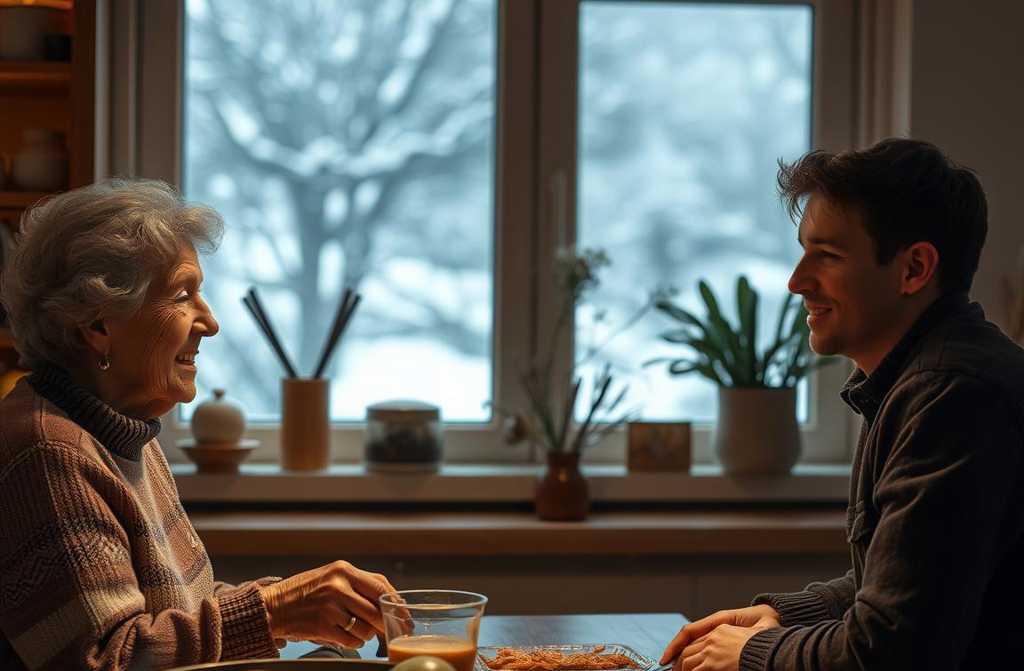
Diary entry
I sat by the window for a long while last night, although there wasnt really much to see. It gets dark early here in London, especially in winter. The streetlamp outside flickered lazily, never quite deciding whether to illuminate the street or leave it in murky twilight. A fresh dusting of snow was already tracked through by a few dogs and people, but the night was mostly stilljust the sound of our caretaker shovelling the steps drifting up now and then.
On the windowsill: my reading glasses in their thin frame and my old mobile with a cracked screen protector. Every now and then, the phone gives a little shiver when a family photo pops up in the group chat, but tonight, there was only silence. The flat was so quiet, the ticking clock on the wall seemed determined to measure out the seconds for everyone to hear.
I rose and went to the kitchen. The light bulb overhead cast a puddle of dull yellow across the table, where a bowl of cold dumplings sat beneath a plate. Id made them earlierjust in case someone dropped by. Of course, no one did. I sat down, took one, nibbledand set it aside. The dough had lost its softness over the afternoon. Edible, but not exactly tempting. I poured myself tea from my battered old enamelled kettle and listened to the sound of it filling the glass. And then, to my surprise, I sighed out louda heavy, chest-deep sigh, as if something inside had tumbled into the chair beside me.
Why am I grumbling? I thought. Everyones alive, thank goodness. Theres a roof over my head. And yet
And yet, those scraps of recent conversations floated back. My daughter Alices voice, tight as a violin string
Mum, I cant go on with him like this. Hes done it again
And my son-in-law Peters, always with a hint of mockery
She complains to you, doesnt she? You tell her, life isnt always the way she wants.
And then, most painful, my grandson Oliver: just a flat yeah when I ask how hes doing these days. Once, hed natter on for hours about school and mates. Hes older now, of course. But even so.
They rarely argue in front of meno shouting, no doors slamming. Yet theres some unseen wall between their words. Little prods, unfinished thoughts, grievances no one admits. And me, caught between them, careful not to say too much, torn between comforting Alice and Peter. Occasionally, I wonder if this is all my faultsome mistake in how I raised Alice, a wrong word or the wrong silence at the wrong moment.
I took a sip of tea and wincedit was hotter than I thought. Suddenly, I remembered Oliver as a little boy, both of us hunched together, writing a letter to Father Christmas. Hed formed his letters in a wobbly hand: Please bring a model kit, and make sure Mum and Dad dont argue. Id laughed and ruffled his hair back then, promising Father Christmas would hear.
Now, remembering, I felt a twist of shame, as if Id lied to a child. His parents never truly stopped bickering. They just got quieter about it.
I pushed the glass aside and swept the table, which was already spotless, with a napkin. Then I went to my bedroom and switched on the desk lamp. The circle of light landed on my old writing desk, which I hardly use these days. Most things happen on my phone nowmessages, emojis, voice memos. But a biro still sat in a cup beside a lacy notebook, squared pages crisp.
I stood gazing at them. And then, an idea: childish, yes, but it made me feel a little warmer inside. To write a letter. A proper letter. Not for a present, not from anyone with a stake in our squabbles. But to someone outside it allsomeone, in theory, who owes nothing.
I smiled at myself: silly old woman, writing to a fictional man in red. But already my hand was reaching for the notebook.
I sat down, fitted my glasses to my nose, took up the pen. On the first page were some old jotting; I turned to a blank one. I hesitated, then wrote: Dear Father Christmas.
My hand trembled. I felt oddly embarrassed, as if someone was peering over my shoulder. I glanced at the empty room, the neat bed, the closed wardrobe. No one.
Well, never mind, I muttered, and went on,
I know youre for children, and Im old now. I wont ask for a coat, a telly or anything material. I have what I need. All I want is this: could you, please, bring my family some peace?
Let Alice and Peter stop their quarrelling. Let Oliver talk, not sit in silence like a stranger. Let us all sit round the table, not worrying who says the wrong thing. I know its peoples own fault, I know you cant really step in. But maybe, just maybe, you can help a little. Perhaps Ive no right to ask, but Im asking anyway. If you can, help us listen to each other.
Yours sincerely, Grandma Mary.
I re-read it; the words looked childish, crooked as a kids drawing. But I didnt cross anything out. A weight had lifted, as though Id spoken to someonenot just the empty kitchen.
The paper rustled under my hands. I folded it in half, then again. I sat holding the letter, not sure what to do next. Throw it out the window? Pop it in a postbox? It all seemed ridiculous.
Eventually, I fetched my handbag from the hall. Remembered that Id need to go to the post office tomorrow, to pay the council tax. WellId slip the note into the Letters to Father Christmas box. There are such things everywhere these days. That made it less embarrassingnot just me, after all.
I tucked the letter beside my passport and bills, turned off the lights, and lay awake for ages, listening to the flats hush before finally drifting off.
I left out early the next daydidnt want to get caught in queues. The streets were slippery, the snow crunching under my boots. Outside the block, our neighbour Mrs Jenkins was out with her terrier, nodded a greeting, asked after my health. We exchanged a few words, and I pushed on, gripping my bag strap.
The post office was packed, a queue coiling to the counter where bills were paid. I waited, clutching my forms and the folded letter. But there was no Father Christmas postbox in sightonly the standard Royal Mail ones and a glass case of stamps and envelopes.
I hesitated. I could have thrown the letter in the bin, but couldn’t bring myself to do it. So back it went in the bag. I paid the council tax and left.
Outside, a little stall sold tinsel and toys for Christmas. A cardboard box hung there: Letters to Father Christmas. Only, it was empty, and the stall lady was peeling off the sticker.
Its over now, love, she said, catching my glance. Last day was yesterday. Too late nowwont make the North Pole in time.
I smiled, thanked her all the same. I didnt really have anywhere pressing to be. I walked home. The letter lay in my baga quiet, warm weight I couldnt ignore, but couldnt get rid of, either.
Back in the flat, I set my bag on the kitchen stool, put away the shopping. The phone in my coat pocket buzzeda message from Alice.
Mum, hi! Well pop round this weekend, alright? Ollie wants to ask you something about schoolhe says youve got books he needs.
I felt a sharp squeeze of hope. They were coming after all. Maybe it wasnt so bad. I quickly replied: Of coursecome, Ill be waiting for you.
I unpacked the shopping, put on a pot of stock, and forgot about the letter left behind in the bag.
Saturday evening brought footsteps on the stairs, a bang at the door. Peering through the spyhole, I recognised the shapes: Alice with a carrier bag, Peter holding a box, Olivernow so tallwith his rucksack slung over one shoulder, hair poking out from beneath his hat.
Hi Gran, he said, coming in first, awkwardly stooping for a peck on the cheek.
Come in, come in, I flustered, take your shoes off, Ive got slippers for you.
The narrow hall was suddenly bustling, filled with the scent of street, snow, and something sweet from Alices bag. Peter muttered about the messy stairwell; Oliver silently kicked off his trainers, bumping the coat stand.
Mum, we cant stay long, Alice said, putting her bag down. Tomorrows Peters parentsyou remember.
Oh, I remember. I smiled. Come through, Ive made soup.
We sat round the kitchen table, a bit uneven. Peter by the window, Alice beside him, Oliver facing me. We ladled soup in silence, the clink of spoons the loudest sound. Then talk started upwork, traffic, food prices. Nothing heated, but underneath, I could feel the old tension swirling unseen.
Ollie, didnt you want to ask Gran something for school? Alice prompted as the bowls emptied.
Oh, right, he said, snapping out of a daze. Gran, do you have any history books? Were doing the war era, and teacher said extra reading is good.
I certainly do, I beamed. Theres a whole run of them on my shelf. Come, lets have a look.
The two of us went to the sitting room. I switched on the lamp, reached up for the battered old hardbacks.
Seeheres one about the Blitz, theres one about rationing, and this is all soldiers memoirs. What do you need?
Dunno, he shrugged. Just something thats not dry as dust.
Standing close, head tilted, for a second he looked like the little boy who used to sit on my knee asking endless questions. Now he was quiet, but there was a flicker of interest.
This ones livelygive it a go, I said, passing him a faded book. I loved it when I was your age.
He leafed through. Thanks, Gran.
We chatted a bit about school, about his history teacher (alright, but goes over the top), and I just basked in having him share, however briefly.
Soon, Alice called, Ollie, well be off in half an hour, time to pack up.
He slipped the book into his rucksack and joined the others in the hall. The narrow corridor filled with bags, scarves, Susans call me, Peters grumbled dont forget, all the leaving noise.
After they headed off, I stood at the closed door a while, then wandered back through the flat. Clearing the kitchen table, I caught sight of my bag on the stool, the letter still tucked inside. On a stray impulse, I slid my fingers into the pocket, brushed the folded page. A flash of wanting to tear it up, but instead I pushed it deeper down and zipped up the pocket.
I didnt know that while I was fetching books, Oliver, while unstrapping his rucksack, had nudged the bag with his foot. It flopped open, the letter peeking out. Absent-mindedly, he tucked the paper backthen noticed the neat cursive: Dear Father Christmas. He froze for a split second.
He didnt pull it out there and thenit was busy, adults everywhere. But that title cut into his memory like a bright mark.
Later, at home, getting out the book for school, he found his thoughts circling back to it: Gran, an adult, writing to Father Christmas. Funny at first, then odd, then sad.
The next day, off visiting relatives, eating plates of salad, listening to adults bicker softly, thumbing his phone, the letter was in the back of his mind like a stubborn ghost.
He dropped me a message a couple days later: Gran, Ill swing byneed more help with history? I replied at once: Youre always welcome.
He came by after school, rucksack on, headphones around his neck. The block smelled of cabbage and cleaning solution. I opened the door almost before he pressed the bell.
Come in, Oliverjacket off. Ive made you pancakes, I called, retreating to the kitchen.
While I flipped pancakes, he crouched down, seemingly tying his laces, and quietly slid the letter from my bag into his hoodie pocket. He knew it wasnt quite fair, but he couldnt help himself.
Ohpancakes, he grinned as he entered. Brilliant.
We ate, chatted about school, holidays, weather. Of course, I checkedAre your boots sturdy? Are you warm enough?and he batted my fussing away with little jokes.
Later, in the sitting room, he glanced at a book, then said hed better be off.
At home, he sat on his bed, letter across his kneescorners bent, handwriting looping and a bit shaky. He began to read. At first, he felt embarrassed, like eavesdropping. By the time he reached the line, so that my grandson doesnt sit in silence like a stranger, a lump had climbed into his throat.
He reread it. Remembered all those times lately that hed shrugged off my calls, answered in monosyllables. Not out of dislike, but stress, or just lazinesssomething always in the way. For me, though, that retreat must have hurt.
He finished the letter, reading about peace, the dinner table, listening to each other. An overwhelming tenderness swept through him, and he wanted instantly to go over, to hug me tight and promise that everything would change. But he found it all a bit too sentimental and felt oddly shy.
He lay back on his bed, the letter a white cloud on his dark blanket. What now? Tell Alice? Peter? Theyd make a fusseither laugh it off or take it the wrong way. Return the letter to me? Id know hed read it. It would be awkward, for both of us.
That night, at dinner, he almost started, Mum, about Gran but each time some other conversation cut him off. He finished his spaghetti silently.
The next day, he told his mate at school, Found a letter Gran wrote to Father Christmas. The boy laughed, Suppose next pension day shell write to the lottery. Oliver surprised himself by snapping, Its not a joke. That ended the talk.
Later he tried to ring me, but chickened out after one ring. He looked at the family chat: salad, banter about train strikes, someones Christmas do invitation. All surface, all safe.
He even wrote in the chat: Mum, could we do New Year at Grans? Then deleted it, picturing his mum snapping, Dont be silly, were seeing Dads lot! More rows.
He took out the letter again, read those words about one table. An idea surfacednot a grand holiday, but just a dinner. No fuss.
He found Alice working in the lounge.
Mum, can weum, go to Grans for a proper dinner? All together, not just a quick visit. I could help cook.
She raised a brow, half-smiling. You? Cook? Novel idea. But you know your dadll grumble. Im short on time, and
We could do Saturday, he said more firmly. Were always in anyway.
She leaned back, studying hima bit surprised, a bit soft. Alright, Ill mention it to your dad. No promises.
He slipped out, ears burning. That was the first awkward step. Not heroic, but a start.
That evening, he overheard Alice chatting to Peter:
Hes asking, if you can believe it. Wants us all together at Mums.
Peter: What for? More talk about the NHS and pensions?
Alice: Shes on her own, Pete. And Ollie clearly cares about it.
Peter sighed. FineSaturday it is.
Back in his room, Oliver felt hed won a small battle. The bigger one would be with me.
The next day, he rang me directly.
Gran, hi. Well come over Saturday. Ill come early and help with prep.
After a beat, I replied, Of course, darling. What will we make?
Whatever you like. I can chop salad. Potatoes, maybe.
I chuckled. Salads new for youtheres a first for everything.
On Saturday, he showed up early, shopping bags in hand.
Goodness! I exclaimed. Feeding the whole street?
Dont want to run out, he shrugged.
We peeled potatoes, chopped veg side by side, me fussing about the knife.
Watch your fingers now.
Im fine, Gran, he muttered, but let me show him.
The kitchen filled with onions, browning meat, the radios gentle hum. Dusk was settling over the close.
He said suddenly, Grando you believe in Father Christmas?
I flinched, spoon chiming against the saucepan. The kitchen went oddly quieteven the radio faded.
Why dyou ask? I replied.
He shrugged. School argument. Just wondering.
I did, as a child. Now, not the beard-and-sleigh bit, but maybe theres someoneor somethingwatching out for us. Why?
No reason, he said quickly, focusing on the cucumber.
We both fell quiet. He never mentioned the letter. But I think we understood, without saying, what was really in our hearts that afternoon.
By twilight, Alice and Peter arrived. Peter was tired but less grumpy than usual. Alice had brought a homemade tart.
Peter surveyed the table. Looks enough for an army!
Thats your sons doing, I grinned. He helped.
You, cook? Miracles never cease, Peter teased. Oliver grumbled, Didnt blow the house up, did I?
Dinner went stiffly at first: everyone careful, words measured. But food has a way of melting barriers. Laughter bubbled up over silly childhood stories. Peter told work anecdotes. I found myself giggling, cupping my mouth.
Oliver watched, thinking of the letter, feeling like a secret conversation ran beneath the spoken wordsabout really listening at last.
Halfway through, Alice poured tea and said, almost shyly, Mum, sorry we come so rarely. Were always in a rush.
She meant it, not as an excuse, but a truth. I traced my saucer, looking down.
I know, love. Your lives come first. Im not upset.
But Oliver cut insurprising himself, Still, we could come more. Not just on big occasions.
They both looked at him. He felt awkward but pressed on.
Like today. Its nice.
Peter for once nearly smiled. Not too shabby.
Well try, said Alice, and I heard something new in her tonea promise to try, at least.
The conversation shifted againuniversities, studying, whether tutors mattered. I joined in where I could; new words escape me still, but I keep up.
They began their goodbyes: coats, gloves, a whirlwind of departures. Alice paused.
Mum, lets do this againsoon. Ill give you plenty of warning.
Of course, I nodded, honestly pleased.
Oliver lingered in my study, looking at my desk where the notebook and pen lay, but not the letterhed decided long ago not to return it. Too much truth in it, too important just to stuff into my bag again.
He said, quietly as he left, Gran, if you ever need something to change, tell us. Dont write a letter. Just say.
I stared at him for a long momentamazed, then melting. Alright, darling. I promise I will.
He gave a little nod, and left. The lift rattled away.
I stood, the flat suddenly still. Cleared the table, stacked the plates, gathered crumbs with a hand. The air held a ghost of roast meat and black tea.
Something in my chest felt differentnot joy, not quite happiness, but a gentle opening, as if someone had cracked the window and let in snow-bright air. The arguments weren’t gone. Alice and Peter would row again; Oliver had his secrets still. But tonight, wed drawn closer together, just a little.
I remembered the letterdidnt know if Id still got it, if it had fallen out, if someone found it. But it no longer really mattered.
I stepped to the window. On the close, children in bright hats were making snowballs, a boy in red shouting in pure, clear delight I could hear all the way to my third floor.
I leaned against the cool glass, smiling to myselfa tiny smile, as if answering a distant, familiar signal.
And in Olivers coat pocket, back at their flat, the folded letter sat. Every now and then, hed take it out, read a few lines, then put it away. Not as a plea to a jolly old man, but as a reminder of what someone who makes you pancakes is truly hoping for.
He never told anyone about that letter. But the next time Alice said she couldnt be bothered to visit me, he just shrugged and said,
Ill go on my own.
And did. Not for a holiday, not for anything, just because. No miracle therejust a small step closer to the peace someone once wrote down in a squared notebook.
When I opened the door to him, I was surprised, but didnt question it.
Come in, Oliverkettles just boiled.
And that was enough, to bring a bit more warmth into our home.

My Thirty-Year-Old Son Arrived Home at Eight O’Clock in the Evening, Dragging Two Suitcases Along the Pavement as If Returning from a Very Long Journey
My thirty-year-old son arrived home at eight oclock in the evening, dragging two suitcases along the pavement as if returning...


She Pretended to Be an Orphan to Marry Into Wealth and Hired Me as a Nanny for My Own Grandchild—Is …
She said she was an orphan just to marry into a wealthy familyand then hired me as the nanny for...
The Family Thought Their Perfect Home Life Was Just Routine—Until Mum Went on Holiday for a Month
The family thought their smoothly running household was nothing more than the natural order of thingsat least, until Mum jetted...


My Wife Left Me for Another Man After Five Years of Marriage—At First I Wanted to Play the Victim, But Eventually I Realized I Wasn’t the Best Husband Either. We Didn’t Have Children. We Married Quickly After Almost Two Years Together. In the Beginning, Everything Felt Wonderful—Plans, Nights Out, Promises—But Routine Slowly Ate Away at Us Without Me Even Realizing It.
My wife left me for another bloke after five years of marriage, and though at first I was quite keen...


A Gift to Herself
A GIFT TO HERSELF Helen Smith an attractive, blue-eyed brunette in her early fifties, curvy yet with an elegance that...


Dad, do you remember Mrs. Nadine Martin? It’s late today, but come see me tomorrow—I’ll introduce yo…
Dad, do you remember Margaret Beecham? Its late today, but come over tomorrow. Ill introduce you to my little brotheryour...


When I Came Home, the Door Was Wide Open—My First Thought Was a Break-In. “They Must Have Hoped I Ke…
When I returned home that afternoon, I saw the front door wide open. My heart skipped a beat who couldve...


I’m 50 Years Old and Have Lived with My Parents Ever Since I Became Pregnant—Now My Son Is 20
Im 50 now and I still live with my parents, ever since I fell pregnant all those years ago. My...