
Connect with us

З життя

The Long-Awaited Granddaughter Natalya Mitchell had been anxiously calling her son, who was away at sea once again, but there was still no answer. “Oh, what trouble you’ve caused this time, my boy!” she sighed worriedly, dialing his number yet again. No matter how often she tried, there would be no connection until he reached the next port—and who knows how long that would be. And this time, things were different! For two sleepless nights, Natalya Mitchell couldn’t rest, all because of what her son had done!

Published

on

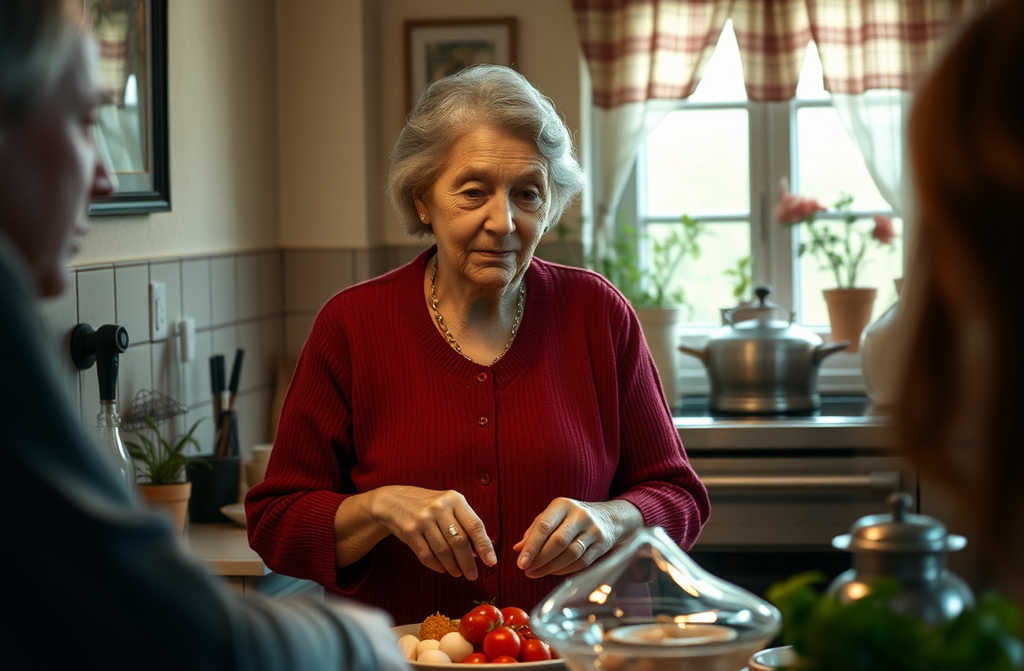
The Long-Awaited Granddaughter

Dorothy Middleton was calling her son with the sort of persistence that could wear down a call centre menu. He was, as usual, out at sea, somewhere between Dover and goodness knows where. Still, she kept ringing.

Oh, Simon, what a pickle youve got us into! she sighed dramatically, thumbing his number again. Not that it would make a jot of difference; until he reached the next port, the only bars hed find were on shore, and probably serving pints. That could be days. And honestly, at a time like this!

Dorothy hadnt slept properly in two daysthanks to her sons latest exploits.

* * *

Really, it had all started years ago, when Simon hadnt even considered taking jobs on the high seas. He was already a grown man, but seemed to find nice girls about as agreeable as a heatwave in Yorkshirenever quite right. Dorothy watched, helpless, as his promising relationships crashed and burned, each time with decent, respectable young women (at least by her standards).

Youre impossible! shed scold. Nothings ever good enough for you! What sort of woman could put up with your endless demands?

Simon, for his part, would simply shrug. I just want someone I actually connect with, Mumnot too much to ask, is it?

Of course I want a daughter-in-law, but she should love you, and have some backbone, Dorothy insisted, feeling herself getting wound up as her own son, whom shed brushed knees and knobbly elbows for, carried on as if he knew the world better than his own mother. Whod been around longer, after all?

What was wrong with Charlotte, then? She even brought over Victoria Sponge!

Simon would just shake his head. Weve talked about this.

Fine, she wasnt perfect, Dorothy conceded. But if honestys all youre after, I do think youre making a mountain of a molehill.

Mum, can we not talk about this? he groaned. Charlotte wasnt for me. Thats that.

And what about Harriet? She was a gem! Quiet, homey, always popped round, helped with the washing upwhats the issue?

She never really loved me, Mum. We were both just muddling along.

Did you even try loving her?

I suppose not, he conceded.

Goodness, and Sophie?

Mum, please!

But Dorothy would not be deterred: Nothings ever good enough for you! Why cant you just settle down, start a family? Im not getting any younger, you know!

Eventually, Simon would make his exit, leaving Dorothy muttering as she wiped down the counter: Stubborn and pickyjust like his father, rest his soul!

The seasons passed, women drifted in and out of Simons orbit, but Dorothys wish for a family to fuss over was never fulfilled. Then Simons life took a nautical turnan old mate roped him into working on cargo ships. Hed be gone for months, returning with salty hair, tall tales, and, inevitably, new girlfriends he never brought home.

Why would you do this, Simon? Dorothy pleaded. Plenty of lads make good money on dry land!

But this pays brilliantly, Mum! Well be sorted, he enthused.

Whats the use of cash if youre never here for me to pester? Wouldnt it be better to settle down?

Ill do both! Get my head down while Im young, have money in the bank And once Ive got kids, Ill stop sailing off, honest!

True to his word, Simon earned quite a lot. After the first few voyages, the flat was kitted out so nicely that Dorothy could barely recognize it. Then, as if to rub salt in the wound, he handed her a bank card.

So you never want for anything, Mum!

But, Simon, I dont need anything! Just a grandchild, before time runs outIm getting on!

Youre not old, dont be daft! Still years before youll need Werthers Originals! he scoffed.

Secretly, Dorothy let the card gather dust. Her job as a pharmacy assistant paid enough for a cuppa and the papers, and anything extra just sat thereshe wanted Simon to be amazed at how little shed spent. Let him see what a sensible old boot I am! she chuckled.

So it went: Simon would return, cram in two months worth of fun, then disappear again, as unanchored as everand more reluctant than ever to let Dorothy meet his new girlfriends. When she pressed him, he threw her words back at her.

Its so you dont worry when I dump them, Mum! Im not marrying any of themdont fret!

Dorothy was stung when he called her gullible, practically accusing her of being a pushover. It niggled at her for ages. Then, by chance, she glimpsed him with yet another girl, and her resolve to get him settled returned in full force. She marched over, and Simon practically wilted with embarrassment. Mothers, it seems, never outgrow the urge to embarrass their sons.

This girl, Olivia, was a marveltall, curly-haired, intelligent, friendly. When Dorothy saw her beside Simon, she forgot every past grievance.

Maybe, just maybe, all his heartbreaks led him to Olivia, Dorothy mused.

Simon and Olivias whirlwind romance spanned his shore leave, andthanks to Dorothys meddlingOlivia found herself round for tea more than once. She held her own in conversation, and seemed a sensible sort. But, as inevitably as drizzle before Bank Holiday, fate intervened: before Simons next ship, Olivia vanished.

Were not in touch and you shouldnt be, either, Simon announced, packing his things.

Dorothy wracked her brain for answers, but got nowhere.

* * *

A year trundled by, Simon breezed in and out, and Dorothys questions about Olivia were met with tight-lipped rebuffs.

For goodness sake, what was wrong with her then? Dorothy finally cried, at the end of her tether.

Thats my business, Mum. If I ended it, I had my reasons. Please stay out of it.

Dorothy bit back tears. But I only worry about you!

Dont! And I mean itno more with Olivia! Stop badgering me!

Off he went again, another voyage, leaving Dorothy stewing and lonely.

Then, one day at Boots, Dorothy spied a familiar head of curls at the counterOlivia, buying baby food. Heart thumping, Dorothy dashed over.

Olivia! Fancy seeing you! I never knew what happened, Simon wouldnt say a word! she blurted, unable to keep her reliefor curiositycontained.

Olivia just gave a weary smile. Oh, thats how it is, is it? Well, let it be.

Dorothy was nearly beside herself. What on earth happened? I know my sonhe can be a mule. Did he hurt you?

It doesnt matter But dont worry, honestly. Were all right.

Drop by some time, will you? Or just see me at workwe can have a cuppa and a gossip.

True to her word, Olivia reappeared one shift, again for baby food. Slowly, Dorothy coaxed out the story: Olivia had gotten pregnant, told Simon, and hed dashed cold water all over itsaid he was too busy, wasnt ready for a long-term thing, and vanished.

Probably off on another voyage, Olivia sighed. But, honestly, were not here to burden anyone. Well manage!

Dorothy went to pieces over the pram. So you mean thats my granddaughter?

Olivia nodded. Her names Annie.

Annie, whispered Dorothy, awed.

***

Restless, Dorothy soon prised out that Olivia was struggling. She was renting, with no steady job, and had half a mind to decamp back to her parents place up north. The mere thought of her granddaughter moving away made Dorothys heart feel like a scone at a stale bake sale.

Come and live with me, both of you! Ive got plenty of space, and Annies my granddaughterIll help, youll find a job, and goodness knows Simon sends more money than I can shake a stick at. Annie can have everything!

And Simon?

He doesnt get a say! Left you in the lurch and didnt even bother to tell his own mother. Someones got to make this right, and thatll be me. When hes back, Ill give him a piece of my mind! Dorothy declared, shaking her fist with gusto.

And so they moved in. Dorothy doted on Annie, took fewer shifts at the pharmacy, and Olivia soon landed work, leaving Annie happily with her grandmother. Olivia sometimes returned home exhausted, moaning: Spent all day on my feet, customers doing their nut!

There, there, love! Pop your feet up, Ill bath Annie and put her down for the night.

Simons return from sea loomed, and Dorothy was practically rehearsing her tell-him-off speech, while Olivia grew more nervous by the hour.

Simonll throw us out! I shouldnt have agreed. Ill start flat-hunting tomorrow, Olivia fretted.

Nonsense! I say who comes and goes in this flat, not Simon. Let him try to move you outId like to see him try!

Olivia tried to argue, but Dorothy stood firm.

Ive been thinking, Olivia, she said one evening. We should sign this flat over to Annie, get the paperwork sorted, so shes secure. Simons not even put on her birth certificate, has he? Dorothy looked at Olivia, who lowered her eyes.

Sorry I thought

I understand. If theres ever a need, itll be hard to prove shes his. So best get things done properly.

Please, Dorothy, thats not necessary! My parents have a placeAnnie doesnt need

Dont you start! Ive decided. End of!

Alas, the solicitor said the paperwork couldnt go ahead until Simon removed his name from the deeds.

Dorothy was miffed, but Simon would be home in days, and she told herself it would be sorted soon. Olivias nerves, meanwhile, were beginning to fray.

Where have you been disappearing to? Dorothy asked one evening, spotting Olivias half-packed bag hidden behind the bed.

Work Im after an advance, but my boss says if I dont do extra, I dont get a penny, Olivia mumbled.

Why the advance? Need something?

Olivia kept quiet, slipping into pyjamas. Dorothy tailed her, noticing more packing.

Youre not actually planning to move out, are you?

I have towhen Simon returns, I have to go, Olivia said softly.

I wont have it! I told you where I keep the card and the pinyou could use it if you needed. No point breaking your back for every penny, love. Annie will forget what her own mother looks like! If you want Simon to take you seriously, you need to show youre reliable.

Two days later, Simon came home.

* * *

Dorothy woke early, ready to peek in on Olivia and Annie before breakfast, but found Annie alone, peacefully asleep.

Wheres Olivia gone? Six a.m. and shes already out? Thats a first!

She busied herself in the kitchen, preparing Simons favourite comfort food, picturing the reunion: her, Annie on her hip, Simon begging forgiveness when Olivia returned.

At last, the doorbell rang.

Simon stopped dead upon seeing his mother, a child on her arm.

Hi, Mum. Whose child is this? What have I missed?

You know perfectly well who this is!

Im lost, Simon said, putting his bags down. Go on then, whats happened while Ive been away?

This is Annie, your daughtermy granddaughter! Dorothy informed him, full of righteous indignation.

My what? Do I have siblings I dont know about? Simon gawked.

Oh, dont be daft! Olivia told me everything! I didnt raise you to behave like this!

Simon groaned. Mum, I specifically asked you to stay out of it. Whats Olivia got to do with this, and whos this child?

So Dorothy, fired up, laid out the whole story, peppered with jabs and asides. Simon gripped his forehead.

Oh, Mum! he cried.

Go on, call your mother a fool again! But

Shes not mine, Mum! Olivia took you for a ride, and youoh, youre just too trusting! Have you checked your account? I bet shes run off with your money!

She went to work! Dorothy insisted.

They argued until Simon, weary, relented. Fine, I’ll wait for her to return and well sort this.

Evening became night. Olivia did not return. Nor the next day. Dorothy rang everywhere Olivia was supposed to work, only to be told shed never been employed there. She brandished photos, but no one recognised the girl.

Panicking, Dorothy checked her stashed card and cashgone. The only things left were Annies clothes. Then it hit her: shed been duped.

How could she just leave Annie? I dont believe it! Dorothy sobbed.

She could, and she did, Simon muttered darkly. I had mates tell me shes a wrong unripped off more than one bloke. She was seeing others even while we were together, and told me she was pregnant. Everyone warned me, but then next thing, I find out she was already pregnantby who knows who. Never again!

Oh, Im so naïve! Dorothy wept. Why didnt you just tell me?

I didnt want to upset you. You always see the best in everyone.

So, now what?

We call the police! Lucky you never managed to transfer the flat! You couldve lost everything.

They did report her, but Olivia had vanished into thin air. For months, nothing. The bank card was later found at a train station miles away.

With the police involved, Dorothy was allowed to keep Annie temporarily. She left her job, relying on Simons wages. DNA proved Annie wasnt Simons, but Dorothy had grown far too fond of the little girl to part with her. After much discussion, Dorothy and Simon decided to raise Annie together. The authorities cut ties with Olivia and granted Dorothy custody after many a hoop was jumped throughfinding a nursery for Annie, showing income from Simon, and all the rest, but eventually, a new routine settled in.

A year later, Simon returned from the sea, this time with an extra suitcaseand a wife.

Mum, meet Sophie. Shes moving in with us.

Dorothys eyes darted to Annies room. Did Sophie know?

But Sophie beamed. Lovely to meet you, Mrs Middleton. Simons told me the lot, and I think what you did is amazing! If I could be a part of Annies life, Id feel lucky.

Simon chimed in, Im finishing with shipping work, and we want to adopt Anniethis time they wont refuse.

Dorothy was radiant.

Oh, what a blessing! Come in, both of you! Ive cooked enough to feed an army. Lets all get acquaintedI cant believe my luck! And she wiped away a joyful tear.

Click to comment

Leave a Reply

Ваша e-mail адреса не оприлюднюватиметься. Обов’язкові поля позначені *

одинадцять − два =

Також цікаво:

З життя54 секунди ago

Convenient Grannies Helen awoke to laughter—not a gentle chuckle, nor a polite giggle, but a booming, belly-clutching roar wholly inappropriate for a hospital ward, a sound she’d despised all her life. The culprit: her bed-neighbour, phone pressed to ear, waving her free hand in the air as if her caller could see the gesture. “Len, you’re having a laugh! Seriously, he actually said that? In front of everyone?” Helen glanced at the clock. Quarter to seven. Fifteen precious minutes of peace before the day’s bustle—a last chance to gather herself for surgery. Last night, when she’d arrived, the neighbour was already here, briskly tapping at her phone. A curt “good evening” was their entire exchange. Helen had been grateful for the quiet—until now. “Excuse me,” she said, softly but firmly. “Would you mind keeping it down?” The neighbour swiveled. Round face, short grey hair unapologetically natural, a garish red-polka-dot pyjama set—honestly, in hospital! “Oh, Len, I’ll ring you back—someone’s schooling me in manners.” She popped her phone away, beamed. “Sorry. I’m Kate. Did you sleep well? I never sleep before surgery. That’s why I ring round everyone.” “Helen. If you can’t, others might still want to rest.” “But you’re not sleeping now, are you?” Kate winked. “Right, I’ll whisper. Promise.” She didn’t. By breakfast she’d made two more loud calls. Helen buried herself under her blanket, furious. “My daughter rang,” Kate explained over uneaten porridge. “Poor thing—she’s worried silly. I have to calm her down.” Helen stayed silent. Her own son hadn’t called. She hadn’t expected it—he’d said he had an early meeting. It was how she’d raised him: work first, work is responsibility. Kate went in for surgery first, breezing down the corridor and waving, cracking jokes at the nurses. Helen rather hoped she’d be in a different room after the operation. Helen’s own surgery was difficult, as always. She woke aching, sick. The nurse reassured her: all went well, it would pass. Helen was stoic; she always was. By evening, Kate was back, ghostly pale, silent for once, drifting between sleep and pain. “How are you?” Helen found herself asking. Kate managed a wan smile. “Alive. You?” “Same.” They drifted into silence. The IV dripped. The light faded. “Sorry about this morning,” Kate whispered into the dusk. “It’s nerves—I babble when I’m nervous. Drives people mad.” Helen wanted to retort but was too tired. “That’s all right.” Neither slept that night—the pain was too much for both. Kate stayed hushed, but Helen could hear her sniffling. Once, she might have been crying into her pillow. In the morning, the doctor came, checked their wounds, declared them both model patients. Kate immediately grabbed her phone. “Len! I’m fine, honestly. How are my lot? Kirky still got a temperature? Oh, it’s gone? See, I told you it wasn’t serious.” Helen couldn’t help listening. “My lot” meant grandkids, she realised. Her own phone was silent. Two texts from her son: “Mum, how’s things?” and “Text me when you’re up to it.” Last night, when she’d still been too dizzy to reply. She texted: “All fine.” Added a smiley. Her son liked those; said messages came off as cold without them. Three hours later, a reply: “Great! Big hugs.” “Your family not coming?” Kate asked after lunch. “My son’s working. Lives miles away. And really, there’s no need—I’m not a child.” “Exactly,” Kate nodded. “My daughter says the same: ‘Mum, you’re a grown-up, you’ll cope.’ Why bother visiting if all’s well, right?” But her eyes were strangely sad behind the smile. “How many grandkids have you got?” Helen asked. “Three. Kirky’s the oldest—he’s eight. Then Mash and Leo—three and four.” She fished for her phone. “Want to see photos?” For twenty minutes, Kate scrolled through snaps—kids at the beach, at home, with cake. In all of them, Kate was there—hugging, pulling faces, part of the action. Her daughter was never in a single pic. “She takes the photos,” Kate explained. “Hates being in them.” “Do you see them a lot?” “I practically live there. My daughter works, my son-in-law too, so I…well, I help. School runs, homework, dinner.” Helen nodded. She’d done the same in the early days with her own grandson. Now visits were infrequent, maybe once a month—if schedules aligned. “And you?” “One grandson, nine. Bright, sporty. I see him…sometimes Sundays. They’re very busy. I understand.” “Right,” Kate murmured, turning to stare out the rainy window. “Busy.” Later, Kate said quietly: “I don’t want to go home.” Helen looked up. Kate sat, knees hugged to her chest, staring at the floor. “I really don’t. I’ve been thinking, and I don’t.” She faltered. “Why would I? I get there, and it’s Kirky with his homework, Masha with her sniffles, Leo’s torn his trousers, daughter working late, son-in-law away as always. And then it’s: cook, clean, fetch, fix…and they don’t even—” she paused, voice cracking, “don’t even say thank you. Because it’s just Grandma—it’s her job.” A lump formed in Helen’s throat. “Sorry,” Kate wiped her eyes. “I’m being silly.” “Don’t apologise,” Helen whispered. “I… when I retired five years ago I thought at last, time for me. I wanted the theatre, exhibitions, signed up for French classes. Lasted two weeks.” “What happened?” “Daughter-in-law went on maternity leave, asked for help. I’m Gran, I don’t work, it’ll be easy. I couldn’t say no.” “And then?” “Three years, every weekday. Then nursery—every other day. Then school—once a week. Now… Now I’m hardly needed. They’ve got a nanny. I’m just at home, hoping they’ll ask. If they remember.” Kate nodded. “My daughter was meant to visit last November. I scrubbed the house, baked. She rang: ‘Mum, sorry, Kirky’s got club, can’t come.’ Didn’t come. Gave the cakes to my neighbour.” They sat in a hush as the drizzle tapped the glass. “You know what hurts?” Kate murmured. “Not that they don’t come. That I still wait. Clutching the phone, hoping—maybe they’ll ring, just to say they miss me. Not because they need a favour.” Helen felt her eyes sting. “Me too. Whenever the phone goes, I hope…maybe he just wants a chat. But it’s always for something.” “We always say yes,” Kate smiled ruefully. “Because we’re mums.” The next days passed in pain and slow recovery. Dressing changes were brutal; both lay silent afterward. Then Kate said: “I always thought I had the perfect family. Lovely daughter, good son-in-law, happy grandkids—I was needed. Irreplaceable. Turns out, they manage just fine. My daughter’s chirpy, not complaining. They’re just…fine. A granny is simply convenient—free childcare.” Helen pushed up on her elbow. “Know what I realised? It’s my fault. I taught my son Mum’s always available, always waiting, her plans don’t matter, yours are everything.” “I did the same. Drop everything when my daughter rings.” “We taught them we aren’t people,” Helen said slowly. “That we have no lives of our own.” Kate let that sit. “So what now?” “I don’t know.” By day five, Helen was up unaided. Day six she made it down the corridor and back. Kate was always a day behind but stubbornly kept up. They shuffled together, clinging to the rails. “When my husband died, I felt so lost,” Kate admitted. “My daughter said, ‘Mum, your new purpose is the grandkids.’ So I made that my purpose. Only…it’s a one-way street. I’m there for them; they’re there for me only when it suits.” Helen talked about her divorce—thirty years ago, raising a boy alone, studying at night, working two jobs. “Thought if I was the perfect mum, he’d be the perfect son. Give everything, he’d be grateful.” “He grew up, got his own life,” Kate finished. “Yes. Maybe that’s normal. I just didn’t expect to feel this lonely.” “Me neither.” Day seven, Helen’s son turned up, unannounced. Tall, well-coiffed, smart coat, bag of fruit in hand. “Mum! How are you? Feeling better?” “Better.” “Great! The doctor says you’ll be discharged in a few days. Fancy staying with us? Guest room’s free, Olesia says.” “Thanks—but I’ll be fine at home.” “As you like. But ring anytime; we’ll fetch you.” He talked about work, grandson, a new car, offered money, promised to visit next week. Left briskly—almost relieved. Kate pretended to sleep through it all. When he’d gone: “That was yours?” “Yes.” “He’s handsome.” “Yes.” “And cold as marble.” Helen couldn’t reply. Her throat was tight. “You know,” Kate whispered, “I reckon we need to stop waiting for their love. Just…let go. Accept they’ve grown up, got their lives. And we need to find our own.” “Easy to say.” “Hard to do. But what else is there? Keep sitting, hoping they’ll remember us?” “What did you tell your daughter?” Helen found herself switching to ‘you’, as if an old friendship had begun. “Told her I’d need at least two weeks’ rest after discharge—doctor’s orders. No babysitting.” “How did she react?” “Furious at first. I said, ‘Len, you’re an adult, you’ll cope. I can’t right now.’ She sulked.” Kate grinned. “But you know what? I felt lighter. Like dropping a heavy load I never wanted.” Helen closed her eyes. “I’m scared. If I say no and they get offended—they’ll stop calling altogether.” “Do they call much now?” Silence. “See? Can’t get worse. Might get better.” On day eight they were discharged—together, as if fate had arranged it. They packed in silence, as if saying a final farewell. “Let’s swap numbers,” Kate suggested. Helen nodded. They tapped contacts into their phones, gazed at each other. “Thank you,” Helen said. “For being here.” “And you. I’ve not had a heart-to-heart with anyone in thirty years,” Kate smiled. “Not like this.” “Me neither.” They hugged, awkwardly, careful of the stitches. The nurse brought discharge forms, called a taxi. Helen left first. The house was quiet, empty. She unpacked, showered, lay on the sofa. Three texts from her son: “Mum, are you home?”, “Ring when you get in”, “Don’t forget your meds.” She replied: “Home. All good.” Set her phone aside. Rising, she opened a folder untouched for years: French course brochure, a printout of theatre listings. She stared at the flyer, thinking. Her phone rang. Kate. “Hi. Sorry I’m ringing so soon. Just—I wanted to hear your voice.” “I’m glad. Really glad.” “Listen, fancy meeting up? When we’re up for it. Coffee, or just a walk.” Helen eyed the course brochure, then her phone. Back to the brochure. “I’d love that. Actually…let’s not wait. How about Saturday? I’m sick of this sofa.” “Saturday? Are you sure? Doctors said—” “They said. But I’ve spent thirty years looking after everyone else. Time to do something for me.” “Then it’s a date. Saturday.” Helen ended the call and picked up the French flyer again. Classes started next month. Enrollment was still open. She opened her laptop and started filling in the registration form. Her hands trembled, but she kept typing, right to the end. Outside, the rain still fell—but a pale shaft of autumn sun broke through the clouds. And for the first time, Helen thought, perhaps life was only just beginning. She clicked ‘submit’.

Reliable Grandmas Margaret Wakefield woke to the sound of laughter. Not a subtle chuckle or a polite titter, but a...

З життя4 хвилини ago

Even Good People Get Left Behind

From the mirror, a beautiful woman of thirty-five with sad eyes gazed back at Anne. She truly didnt understand what...

З життя53 хвилини ago

“While We Sell the Flat, Go Stay at the Care Home,” Her Daughter Told Her: How Late-Blooming Love Led Ludmila to Betray Her Mother for the Sake of an Ungrateful Husband

“While were selling the flat, youll have to stay at the care home for a bit,” my daughter said matter-of-factly....

З життя1 годину ago

The Long-Awaited Granddaughter Natalya Mitchell had been anxiously calling her son, who was away at sea once again, but there was still no answer. “Oh, what trouble you’ve caused this time, my boy!” she sighed worriedly, dialing his number yet again. No matter how often she tried, there would be no connection until he reached the next port—and who knows how long that would be. And this time, things were different! For two sleepless nights, Natalya Mitchell couldn’t rest, all because of what her son had done!

The Long-Awaited Granddaughter Dorothy Middleton was calling her son with the sort of persistence that could wear down a call...

З життя2 години ago

Putting Dad in a Care Home: Elizabeth’s Struggle with Guilt, Family Trauma, and a Father’s Lasting Cruelty

– What on earth do you think youre doing? A care home? Absolutely not! Im not leaving my house for...

З життя2 години ago

While There’s Life, It’s Never Too Late: A Heartfelt Story of Family, New Beginnings, and Finding Happiness at Any Age

As long as you’re still breathing, it’s never too late. A Story Well then, Mum, as we agreed, Ill pick...

З життя3 години ago

After My Parents’ Divorce, They Abandoned Their Daughter: How I Was Thrown Out, Forced to Start Over Alone, and Eventually Forgave a Family That Had No Room for Me

I pleaded, but my mum was resoluteshe swiftly bundled my things into a rucksack, handed me a few notes, and...

З життя3 години ago

This Is Not Your Home Alena gazed sadly around the house where she’d grown up since childhood. At eighteen, she had lost all faith in life. Why was fate so cruel to her? Her grandmother had died, she’d failed to get into university because of a girl who had sat by her side during exams, copied her answers, and then whispered something to the examiner as she handed in her sheet. The examiner frowned, checked Alena’s answers, accused her of cheating, and removed her from the exam. She couldn’t prove her innocence. Later, it turned out that the girl was the daughter of a local bigwig—how could anyone stand up to that? Now, after all those failures, her mother had suddenly reappeared in her life, bringing along two brothers and a new husband. Where had they been all these years? Alena’s grandmother had raised her, and her mother was only present until she turned four—which left no pleasant memories. While her father was at work, her mother would leave her alone and go out partying. Even when married, she kept hunting for a “real man,” and never hid it, not even after Alena’s father died suddenly. When she was widowed, Tamara grieved only briefly. She packed up, left her four-year-old daughter on her mother’s doorstep, sold the flat inherited from her first husband, and vanished. Grandmother Raya had pleaded in vain for her conscience. Tamara only visited rarely and showed no interest in Alena. When Alena was twelve, Tamara showed up with a seven-year-old Svyatoslav and demanded her mother sign the house over to her. ‘No, Toma! You’ll get nothing!’ her mother refused. ‘Once you die, it’ll be mine anyway!’ Tamara shot back cruelly, glancing with irritation at her daughter, who watched from another room, collected Svyatoslav, and slammed the door on her way out. ‘Why do you always fight when she visits?’ Alena asked. ‘Because your mother’s a selfish woman! I didn’t raise her right! Should’ve been stricter!’ Raissa Petrovna snapped. Grandma’s illness came out of nowhere. She’d never complained about her health, yet one day, Alena came home from school and found her ever-busy grandmother pale, sitting in a chair on the balcony—something she’d never seen before. ‘Is something wrong?’ Alena asked anxiously. ‘I’m not feeling well… Call an ambulance, Alenushka,’ Grandma replied calmly. Then hospital wards, IV drips… and death. Raissa Petrovna spent her last days in intensive care—no visitors allowed. Distraught, Alena called her mother. At first, Tamara refused to come, but when told her mother was critical, she finally relented and arrived just in time for the funeral. Three days later, she thrust a will in her daughter’s face: ‘The house now belongs to me and my sons! Oleg will be here soon. I know you don’t get along, so stay at Aunt Gail’s for a while, okay?’ Her mother didn’t sound even slightly sorrowful. It seemed she was almost glad Raissa Petrovna was gone—now she was the heir! Alena, overwhelmed by grief, couldn’t stand up to her mother—especially since the will was clear. So she lived for a while at Aunt Gail’s—her father’s sister. But Gail was flighty, still hoping to marry well, which meant there were always loud, half-drunk guests, and Alena couldn’t stand it—especially when some started taking an interest in her, which terrified her. She told her boyfriend Paul everything, expecting the worst, but was surprised by his response: ‘I won’t have creepy old men leering at you or touching you!’ he said seriously, despite his nineteen years. ‘I’m talking to Dad today. We have a spare flat on the edge of town. He promised I could live there once I got into uni. I kept my word, now it’s his turn.’ ‘But what does that have to do with me?’ Alena asked, confused. ‘How can you ask? We’ll both live there!’ ‘Would your parents agree?’ ‘They have no choice! Consider this my official proposal: will you marry me and share a flat?’ Alena almost wept with joy. ‘Of course—yes!’ Aunt Gail was thrilled at the news, but Alena’s mother almost gnashed her teeth: ‘Getting married, are you? How quick off the mark! Couldn’t get into university, so you found another way! I won’t give you a penny! And that house is mine! You’ll get nothing!’ Her mother’s words cut deep. Paul struggled to decode Alena’s sobbing that night. He carried his tearful fiancée to his home, where his parents comforted her with tea and sympathy. Paul’s father, Andrew, listened carefully to the avalanche of misfortunes Alena had endured in just a few months. ‘Poor girl! What sort of mother is that?’ Paul’s mother exclaimed. ‘I’m wondering…’ Andrew mused. ‘Why is she so obsessed with the house, waving that will at you all the time?’ ‘I don’t know…’ Alena sniffled. ‘She always fought with Grandma over the house, asking her to sell it and give her the money, or transfer it to her name. Grandma never agreed. She said if she did, we’d both end up on the street.’ ‘It’s odd! Have you seen a solicitor since your grandmother died?’ Andrew asked. ‘No, why?’ ‘You need to assert your inheritance rights.’ ‘But my mother’s the heir. I’m just a granddaughter—and she showed me the will.’ ‘It’s not that simple,’ Andrew replied. ‘We’ll go to the solicitor together on Monday. For now, get some rest!’ Later, Alena met her mother, who tried to get her to sign some papers. Paul intervened: ‘She’s not signing anything!’ ‘And who are you to say so? She’s an adult!’ Tamara snapped. ‘I’m her fiancé, and I think this could harm her. She won’t sign anything for now.’ Tamara exploded with insults but left empty-handed, which only made Andrew more suspicious. Days later, as promised, Andrew accompanied Alena to the solicitor: ‘Listen closely to everything, but double-check what you sign!’ he said. The solicitor was diligent—it turned out a probate case had already been opened in Alena’s name. Raissa Petrovna had also left a savings account to fund her granddaughter’s education, about which Alena knew nothing. ‘What about the house?’ Andrew asked. ‘The property was gifted to the girl some time ago. There are no other documents.’ ‘Gifted? How?’ Alena was stunned. ‘Your grandmother came here years ago to deed the house to you. Now you’re eighteen, it’s yours outright.’ ‘But what about the will?’ ‘That was made seven years ago and later revoked. Your mother probably doesn’t know. The house is yours—you are free to live in it.’ Andrew’s suspicions proved justified. ‘So now what?’ Alena asked in bewilderment as they left. ‘Now? You tell your mother the house is yours and she must move out.’ ‘But she never will! She’s already packed my things!’ ‘That’s what the police are for!’ When Alena announced the news, Tamara was furious: ‘You schemer! Throwing your own mother out! Get lost! You think I’ll believe your lies? Did your fiancé and his dad put you up to this? I have a document—I own this house!’ ‘Yeah, so get out! Or I’ll break your legs so you can’t come back!’ her brother Oleg chimed in with venom. Andrew stood calmly beside Alena. ‘Sir, I warn you—that’s a criminal threat!’ Andrew said pointedly. ‘Who the hell are you? Get out! I’m selling this house! Buyers are on their way!’ But instead of buyers, the police showed up. Once the facts were clear, they ordered Tamara and her clan to vacate at once or face prosecution. Furious but helpless, Tamara and her family had no choice. Alena, finally, returned to her home. Paul refused to leave her alone, worried her stepfamily might threaten her, so he moved in with her. And he was right—Tamara and Oleg continued to harass her. When Tamara found out about Raissa Petrovna’s savings, she tried to claim them, and though she managed to get some of the money as a legal share, she never did get the house. Eventually, after countless failed legal attempts, Tamara gave up and left with her family for good. Alena never spoke to her again. Alena and Paul married. The following year she was admitted to university to study her dream subject, and in her third year had her first child. She remained grateful to Paul and his family for helping her in her darkest hour, and lived out her life in happiness. Author: Odette — — The Puzzle The cottage was old but well tended. It hadn’t stood empty long—no time to grow wild or decay. ‘Thank goodness!’ thought Mary. ‘I don’t have a man about these days—not sure I ever will. And I’m certainly not one of those legendary British women who can handle everything: hang shelves, chase off burglars, and rescue cats from burning houses all on my own!’ She climbed the front steps, fished the heavy key from her bag, and unlocked the sturdy padlock. *** For some reason, this house had been left to Mary by Granny Lucy—an elderly woman Mary hardly knew, though the family tree said they were related. Strange, but who can fathom what goes on in the minds of those aged relatives? By Mary’s reckoning, Granny Lucy must have been about a hundred. Mary was either her great-niece or distant cousin. In short, a relation, albeit faint. Mary had visited Granny Lucy in her youth, back when Lucy already seemed ancient. But Lucy had always insisted on living alone, never imposing on kin or asking for help. Then, just recently, she passed away. When the call came that ‘Grandma’ from the village of Mystery had died, Mary struggled to place Granny Lucy—never expecting to inherit her cottage and a third of an acre. ‘A little early retirement gift,’ joked Mary’s husband, Michael. ‘Oh, retirement’s still light-years away for me,’ Mary laughed. ‘I’m only fifty-four. By the time I make it to sixty-five, the government will probably have pushed it further. But a gift’s a gift, no point complaining—though I can’t imagine why she chose me. I didn’t even realize Granny Lucy was still alive! I thought she’d gone to the great beyond ages ago. But fine—who am I to refuse?’ ‘Or sell it!’ Michael rubbed his hands gleefully. *** Thank goodness we didn’t sell! Just a few months after Mary officially became a lady of the (modest) manor, a much less pleasant surprise came her way. She found out her beloved Michael was cheating. Yes, just like that. A silver-haired rogue; an itch he couldn’t ignore…

This Isnt Your House Helen looked around the house where she had spent her childhood, her heart heavy with sadness....