
З життя
The Mystery In a small English village that felt more like the countryside than a proper town, live…

The Mystery
In a sleepy town that fancied itself a bit posher than it really was, lived a girl named Emily. One day, her mumwho had an unwavering faith in horoscopes and odd folks waving crystalsdragged her daughter off to see the local fortune-teller.
The old woman dramatically shuffled her well-worn cards and declared, Your Emily will be a happy one. Life will treat her kindly. But I dont see a man sticking around her.
Emily was about ten and promptly filed the words away, although she hadnt the faintest clue what they meant.
The years rolled on by. Emily grew into a tall, striking beauty. Local lads completely lost their minds over her. Yet she never settled on any particular chap. Oh, she had her share of beaus, but none stuck longer than a bottle of milk in a heatwave.
Despite doing well in school, Emily didn’t bother moving off to uni. She stayed put, taking a job at the village dairy. Rumour had it she had a fling with some manager, but no one ever caught them together, not even hiding behind the cheese counter.
The women in the factory would warn the new girl, Dont dawdle here, Emily. Blink and youll have thrown your life away. Best get yourself to London. With your looks, theyd snap you up before you could say Buckingham Palace.
Emily just grinned and didnt say a word, expert at sidestepping unsolicited life advice.
Then, one morning, the town was buzzing with the sort of news you couldnt drown out with even the worst pop song: Emilys up the duff!
An advanced-level debate ensued over who had managed to bless the most eligible lass in the borough. So many guesses, so much speculation, but no one found out for sure who the babys father was.
Emilys mum wasted no time passing judgement: Well, thats it. Youve made your bed. Dont think you can lie about in mine. You got yourself into this, you raise the child yourself. And find somewhere else to live. Im giving you a month.
Emily shrugged. Fine, Mum. Ill go. But don’t call me back when you change your mind.
Within two weeks, Emily had somehow bought a tidy little cottage, complete with all the homely essentials. Fortune, it seemed, had smiled on her: the previous owners kids had moved their mother to the city and practically given the house away. Where Emily got the poundseven a modest sumremained a mystery.
Strange things soon began to happen. The cottage was revamped so fast it made the neighbours’ heads spin. The garden fence was replaced, and a brand new well appeared in the yardinstalled by some no-nonsense blokes in overalls who came, worked, and vanished.
Soon after, a lorry dropped off new kitchen gadgets and bits of furniture. Emily, positively beaming, strolled about like the cat whod got the creamlooking nothing at all like a jilted village maiden.
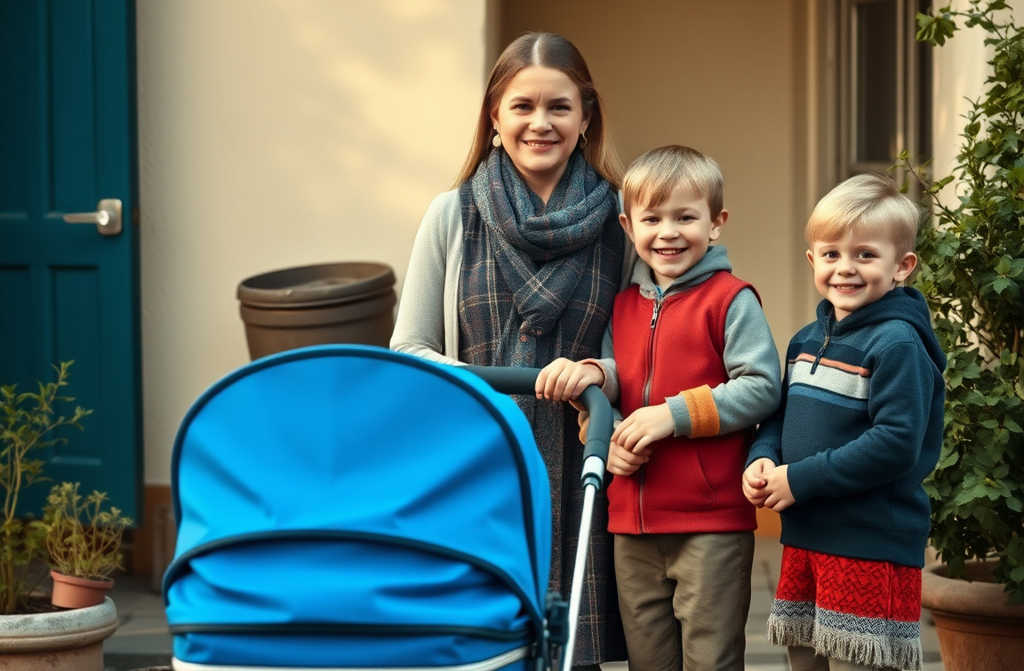
Autumn came, and with it, her baby son, Charlie. The blue pram in her tidy garden was as shiny as the morning dew. Emily bounced back swiftly and if possible, looked even betteralways pressed, stylish, marching through the village with her head high and a smile that said she knew something you didnt.
At home, life was no picnic: little one in tow, veggie patch to dig, fires to stoke, shops to raid, mountains of washing But Emily hardly complained. Shed been raised to work hard and managed everything herself without fuss.
Soon, the local ladies realised Emily was a diamondhardworking, kind, and fiercely independent. They began to warm to her, even watching little Charlie when she needed to dash out. Why not lend a hand, after all?
Theyd send their husbands over to help dig up her veg patch or pop round themselves for a bit of weeding, but by and large, Emily had it all under control.
Charlie was about two when one morning, a wide-eyed neighbour raced across the street, yelling, Have you seen? Have you SEEN?
What?
Emilys up the duff again!
Youre joking!
Ill let your own eyes do the talking.
Once again, village tongues wagged. Wild theories flew aboutwho, when, howbut no good answers surfaced. No one had seen Emily with any man, ever.
Emily, ever the unbothered queen, carried on just as she was. Now there was a shiny new shed in her garden, gas piped straight in (the engineers went well out the way for her), and a state-of-the-art greenhouse that surely didnt come cheap.
Where does she get the money? people gossiped. Must have a mystery admirersomeone high up at the dairy, no doubt. But Emilys secret remained locked tighter than the biscuit tin before payday.
Soon after, the same blue pram sat in her garden, only now alongside a new brother for Charlie: little Jack.
Two years later, there was anotherthey called him Harry.
Three sons, and not a soul in the village could say where theyd come from.
Some laughed at Emily, called her barmy. Others, seeing her sturdy, well-looked-after children, admired her nerveespecially as she steered clear of the pub, and worked harder than anyone.
Some shook their heads and used her as a cautionary tale for their daughters.
Emilys mum simply couldnt understand her, hiding in embarrassment and never so much as meeting her grandsons.
But Emily still walked the streets head held high, utterly unfazed by gossip.
Then, one sunny afternoon, an elegant car pulled up outside Emilys place. Out stepped Mr. Robert Hughes, the dairys director, clutching a bouquet that could have been seen from the moon. Neighbours peered out, clutching their tea mugs, unable to resist the scene.
Everyone remembered Mr. Hughes had lost his wife the year before after years of devotedly caring for her. Hed stood by her side to the very end, kindness itself.
When Emily stepped out to see Mr. Hughes off, the sightseers were packed so tightly she nearly tripped over them all. Mr. Hughes took her hand, gave her a kiss for all to witness, and then, in a voice that echoed down the lane, announced, Emily has agreed to be my wife! She and our sons invite you all to the wedding.
Utter silence. Then, realisation dawnedthose boys, why, they did look just like Mr. Hughes
Congratulations burst out from every direction.
The wedding was the talk of the countyjoyful, with the whole village lending a hand as Emily, now Mrs. Hughes, moved herself and her boys into Roberts home.
And a year later, a long-awaited daughter arrived, much to everyones delight.
So much for fortune-tellersEmily stood in her new garden, sunlight dappling the lawn as Charlie, Jack, and Harry tumbled about, chasing each other through the dahlias. Mr. HughesRobertwatched them with a grin, little Anna asleep on his shoulder. There were whispers, of course, laughter and wild stories that would swirl for years over tea and biscuits. But as autumn leaves spun on the breeze and her laughter mingled with the shouts of her sons, no shadow could touch her.
Emily had rewritten the rules. The village pause when she passed, not in scandal but in admirationshe who had faced the world alone, made her own luck, and let happiness find her when it would. She had no need for fortune tellers now. The mystery had never really been about Emilys secrets, but about the kind of courage it takes to choose joy, to stand tall, and to greet what comes with a smile.
And on quiet evenings, when the childrens laughter faded, Emily would light a lamp, gaze through the window at her little corner of the world, and feel absolutely certain: no matter what theyd said, her storyher happinesshad never needed explanation, only living.



Absolutely! Please provide the title you would like to have rewritten and adapted.
Choice So it turns out, Freddies thoroughly married sighed Alice, perched on a bench in the little park while nervously...


A Twist of Fate: After Divorce and Heartbreak, Anton’s Ex-Wife Dina Finds Lasting Love, a Family, an…
A Twist of Fate Andrew shows up at his mums flat late at night; she barely bats an eyelidhes always...


The Mystery In a small English village that felt more like the countryside than a proper town, live…
The Mystery In a sleepy town that fancied itself a bit posher than it really was, lived a girl named...


THE BOX OF BROKEN PROMISES Lately, Vera had begun to suspect there was someone else living in the h…
THE BOX OF FORGOTTEN PROMISES For a while now, I have been suspecting that someone else lives in our house...


We Brought Him Home So He Could Find Peace in His Final Days—But Our Elderly Golden Retriever Discov…
We took him home so he could pass away in comfort. Thats literally what it said on the paperwork from...


My Husband’s Mistress Was Stunning—The Kind of Woman I’d Choose Myself, If I Were a Man. You know …
My husbands mistress was strikingly beautiful. Honestly, if I were a man, Id probably have picked someone like her myself....
My Son Isn’t Home? – My Father-in-Law Stood Awkwardly on the Threshold – Honestly, It’s Probably for the Best He’s Not Here
I could never quite get along with my mother-in-law. At first, we tried living together, but we only managed a...
My Daughter Demanded a Lavish Wedding, a Diamond Ring, and a Hired Land Rover; We and the Groom’s Parents Went Into Debt for It All—And They Divorced Six Months Later
My wife and I were completely taken aback when our daughter Emily announced she was getting married. She was only...