
Connect with us

З життя

The Recipe for Happiness… Everyone in the block watched as new residents moved into the second-floor flat—a family led by the supervisor of a key factory in a small provincial English town. “Why would they choose an old building to live in?” pensioner Mrs. Nina Anderson asked her friends. “With their connections, they surely could’ve snatched up a new-build somewhere fancy.” “Don’t judge by yourself, Mum,” replied her unmarried thirty-year-old daughter Anna, her make-up bright. “This is a proper period flat—high ceilings, big separate rooms, a spacious hallway, and the balcony’s almost a full room on its own! Besides, they had a phone line put in right away—not many of us do; just three phones among nine flats…” “You just want to chat on the phone all the time,” her mother chided. “The neighbours are sick of it. Don’t you dare bother these serious people—they lead busy lives…” “They aren’t so serious, Mum—they’re young. Their daughter Natasha is only nine. They’re my age, maybe five years older,” Anna insisted. The new neighbours turned out to be polite and friendly. Lydia worked as a school librarian, while Ivan already had a decade of factory experience. Anna relayed all this to the women on the communal bench where her mother and the other ladies chatted each night. “And how do you already know all this?” they teased her. “You’re like a regular detective!” “I pop in to use their phone—they let me, unlike some people,” Anna hinted, recalling neighbours who pretended not to be home to avoid her hour-long gossip sessions. So, Anna got to know the newcomers and grew increasingly fond of dropping by to chat to her friends or colleagues—sometimes in her smart new outfits, sometimes in cosy house clothes—always on the lookout for friendship. One day she noticed Ivan firmly shutting the sitting room door when she arrived to make a call. It happened more than once. Anna would smile at Lydia in the kitchen and thank her after her calls, but Lydia only nodded and asked her to pull the door shut as she left. “Can’t close behind me, hands are covered in flour,” Lydia would say. “The lock clicks itself—French, you see.” “Ooh, baking again? More pies? You always have something in the oven… I never learned how,” Anna admitted. “Yes, I’m prepping cheese danishes for breakfast. No time in the mornings, so I do it now,” Lydia smiled, turning back to her dough. Anna would leave, sulking at their lack of warmth. “Lydia, you find it hard to tell her no, but our phone’s always busy thanks to her—my mates can’t get hold of me,” Ivan once remarked. “I did notice she’s making herself far too comfortable, treating our home like a drop-in centre,” agreed Lydia. That evening, Anna, dressed up and with bright lipstick, was again perched on the hallway stool gossiping into the receiver. “Anna, are you nearly done? We’re expecting a call,” said Lydia after ten minutes. Anna nodded and hung up, but then produced a bar of chocolate. “I’ve brought a treat for tea—let’s celebrate getting to know each other!” She headed for the kitchen, placing the chocolate on the table. “Please, take it away,” Lydia said. “If Natasha sees, she’ll be tempted, but she’s allergic—no sweets allowed. No tea for us, sorry; chocolate’s taboo here.” “What? Taboo? Well, suit yourself. I meant well,” said a flustered Anna. “No need for gifts. And use the phone only if it’s for something important—a doctor, an emergency. That’s different, even in the middle of the night—we understand. But otherwise, please, not so often,” Lydia said as kindly as she could. Anna took back her chocolate and left without a word, confused by their coldness and blaming Lydia’s jealousy. “She can see I’m younger and prettier, Mum—that’s why. I only wanted some friendly company over tea,” Anna lamented. “You’re stubborn and foolish,” sighed Mrs. Anderson. “Stop pushing into other people’s homes. Make friends on your own terms—get your own phone, invite neighbours to yours if you must!” Anna’s last attempt at befriending Lydia came when she arrived with a notepad, asking for the danish recipe. “You’d best ask your mother—she knows all the recipes,” Lydia replied, surprised. “I don’t use exact amounts, I do it by eye. My hands just remember,” she smiled, hurrying out. Anna blushed and went home. Of course, her mum had an old recipe notebook stuffed in a kitchen cupboard with scribbled-down instructions for everything—salads, pies, even festive fish terrine. Anna didn’t want to bake herself, but with her own mother’s baking days long past, she finally gave it a go. She found the recipe, to her mother’s amazement. “Are you really going to bake something?” Mrs. Anderson exclaimed. “Why is that so surprising?” Anna asked. “Perhaps things with Slav are getting serious…” her mum guessed. “What if they are?” Anna retorted. “So be it—you’re long overdue! Want advice with the recipe?” “No need. Just preparing myself,” came the reply. But when her mother returned from her walk a few days later, the warm scent of fresh pastries filled the flat. “Goodness‒pies!” Mrs. Anderson exclaimed. “You must be in love; nothing else explains it!” “Shh, not so loud,” Anna smiled. “Taste for yourself—these are cheese danishes, just like the old days.” The teacups were out, and a plate piled with golden sunburst treats awaited. “You haven’t lost your touch,” her mother praised. “It’s like old times.” “Don’t just say so—do they taste right?” Anna asked. “Try for yourself! There’s nothing wrong with them—your father used to say ‘that’s edible’ and it was the highest praise!” Anna pondered. “Maybe I’ll invite Slav for tea soon—what do you think?” “Oh, he’ll love them, I’m sure. I won your father over with danishes too—couldn’t get enough of them or me!” Mrs. Anderson chuckled. “You keep baking, and I’ll go watch a film with the neighbour. Time you settled down—curls and dresses alone won’t catch a man!” Soon, Anna’s boyfriend Slav started coming round. There were fewer arguments, and her mother grew used to the couple’s laughter and busy kitchen. When Anna announced they’d put in for the register office, her mother even shed a tear of joy. Anna had slimmed for the wedding, and Slav joked: “Have you stopped baking danishes for good? Will we have pies at the wedding feast?” Wedding preparations were a family affair, with Anna, her mother, and aunt cooking for two days, though just twenty close relatives were invited. The newlyweds had the largest room in the shared flat. Within a year, the whole building was equipped with telephones. Anna called everyone at first—but kept her chats brief. “Sorry, Rita, have to dash—the dough is ready and Slav will be home soon!” Now, with a baby on the way, Anna kept baking—her husband’s favourite cheese danishes, always fresh and homemade. And he adored her, for her warmth, her treats, and their happy home.

Published

on

The Recipe for Happiness

Everyone in the block was watching as the new family moved into the second-floor flat. It was the family of the plant manager, a key figure in our small, sleepy English town.

I dont get why they wanted to live in this old estate, Mrs. Edith Harris, a retired lady and one of our neighbours, was saying to her friends. With his position, they couldve surely landed a flat in those fancy new developments.

Oh, Mother, not everyone wants something flashy, replied her daughter, Jeanette, thirty, still single and always dolled up. This place is proper solid real Victorian ceilings, big rooms, a roomy hallway, and that balcony you could fit a four-poster on. And dont forget, theyve got a phone line already. Only three of us in this entire block have one, and there are nine flats!

Youre just missing your daily gossip on the phone, Edith snapped back. Dont you go bothering those folk theyre important people and busy.

Oh, theyre not so serious. Theyre young, after all, and their daughters only nine her names Emily, Jeanette argued, pouting. Theyre practically my age. Well, maybe a few years older.

Turned out, our new neighbours were kind and always smiling. Clara worked in the local school library, and Richard had already gone a decade at the plant.

Jeanette gossiped about all this during her evening outings to the yard, where her mother would sit and chat with the neighbours.

How on earth do you know so much already? the women joked. Oh, Jeanette, youre a regular barrister!

Its easy, I stop by to use their phone. Unlike some, theyre always polite and let me, shed say, shooting a look at the neighbours whod learned not to open their doors when Jeanette came calling for a chat that would last ages.

So, Jeanette got well acquainted with the newcomers, and soon shed be ringing her friends and colleagues from their phone, making herself at home as if it were her own. Shed show up in new outfits or her cosiest dressing gown, clearly hoping for a bit of neighbourly friendship.

One day, she noticed Richard rather pointedly closing the living room door to watch telly when shed drop by. It happened a few times. Jeanette would just smile at Clara after her calls, poking her head into the kitchen. Clara always just nodded and asked her to shut the door on her way out.

Sorry, cant close it, my hands are covered in flour, Clara explained, and the locks tricky its a French one.

Oh, what are you baking? More buns? You seem to be always baking I wish I knew how! Jeanette commented.

These are Chelsea buns for breakfast. No time in the mornings, so I do them now, Clara smiled, turning back to her dough.

Jeanette would scrunch up her nose, sulking away, dismayed that the neighbourly chats never blossomed.

Listen, Clara, Richard said one evening, I know you dont want to seem rude, but that womans always tying up the phone in the evenings now my mates cant get through. Its just not on.

I know, she comes and goes as she pleases, and treats our place like a drop-in centre, Clara agreed.

That very night, Jeanette, all spruced up, settled herself on their hallway stool, phone in hand, nattering away to a friend.

Jeanette, could you finish up soon? Were expecting a call, Clara asked after ten minutes.

Jeanette nodded understandingly, quickly ending her call. She then fished a chocolate bar from her bag and announced, Thought Id bring something sweet today. Shall we have tea together?

She marched into the kitchen and set her chocolate on the table.

Oh, please, take it back. If Emily sees, shell want some, and she cant have it allergies. No tea for us, sorry. Chocolates a forbidden fruit in this house.

What? Seriously? Jeanette blushed. But its just a gift just wanted to say thank you.

No need for thanks, but please dont use the phone so often. Unless its to ring a doctor, an ambulance, or the fire brigade thats different. Even if its the middle of the night, well always understand. But, really, please dont take it amiss, Clara managed, Richard gets calls from work, and Emily gets distracted by voices when shes doing her homework. We try to keep things quiet.

Pocketing the chocolate, Jeanette left in a huff, still not understanding, and decided Clara must simply be jealous of her.

She probably knows Im younger and prettier, she complained to her mum, so now shes just envious. I was only trying to be friendly, brought my own chocolate and everything and she didnt even serve tea!

Youre being silly, and stubborn, girl, Edith replied. I must not have brought you up right. You shouldnt force your way into other peoples families. They dont need you making calls in their home. Its not a free-for-all. Theyve shown you the door, plain as day. And now youre all sore about it, and inventing jealousy. Find a husband, get yourself a phone line, and let neighbours come calling on you!

Jeanette made one last effort when she turned up with a notepad, hoping to get Claras bun recipe.

I wanted to ask for your recipe. Maybe its high time I learnt something for myself If you tell me how, Ill go straight home and try.

Why not ask your mum? Our mums always know best, Clara remarked, surprised. I cant really help; I make the dough by eye, never measure a thing My hands just know what to do now, she chuckled. Besides, Im in a rush. Honestly, do ask your mum!

Jeanette blushed again, returning home. She knew there was an old, grease-stained notebook in the kitchen; her mums recipe book, filled with page after page in neat script salads, casseroles, soups, even fish pie, with most of it dedicated to cakes and bakes her mother used to make all the time.

But Jeanette never fancied baking herself, and her mum had stopped too, watching her waistline and battling high blood pressure.

Still, Jeanette dug out the book and idly flicked through it, surprised to find exactly the recipe she needed.

So, youre finally going to bake something? Edith gasped.

Whys that so shocking? Jeanette snapped the notebook shut after folding down the right page.

Maybe things are picking up with that Rob, then? I thought youd split up. Just like all the others.

No, why would we? Jeanette tossed back. Hed come running if I clicked my fingers.

Well, why dont you? Youre long past getting married. What were you looking for in there, anyway maybe I can help?

No, leave it. Im still working up the courage, Jeanette replied, a bit sheepishly.

A few days later, Edith returned from a walk and was hit by the warm, inviting scent of baking.

Well, now Ive seen it all! The house smells like a bakery! she gasped, Youve got to be in love.

Shh, not so loud! Jeanette grinned. Come taste they arent pies, theyre Chelsea buns. Cheese ones. Traditional.

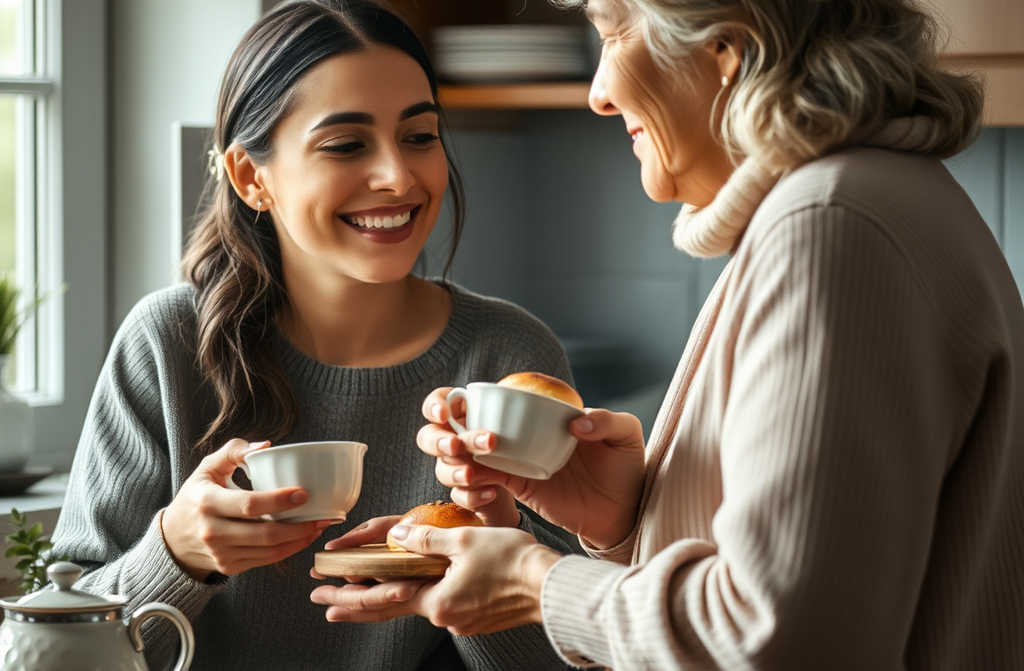
The kettle was boiling on the stove, Jeanette had already set out teacups, a teapot, and a platter of buns that glowed golden on the table.

Youve done well, said Edith. We havent baked together in ages, and I thought youd forgotten everything, but look at you now. Theyre quite all right, love. Well done.

Dont just humour me, Mum. Be honest. Are they actually good, or just edible? Jeanette pressed.

Oh, stop fishing have a bite and see for yourself! Theyre very good! Edith laughed, echoing Jeanettes dads favourite praise: Theyre very good.

Right then. Ill invite Rob round for tea soon. See what he thinks of my buns, Jeanette grinned.

Hell love them. Thats how I won your dad over Chelsea buns, and I had him wrapped round my little finger! her mum joked. Bake, invite him over, and Ill nip out to see Mrs. Smith and watch a film. Glad youre finally using your head it takes more than clothes and curls to win a man.

Rob started coming over regularly after that. The rows became fewer; the laughter in the kitchen was infectious, and Edith grew used to Jeanette spending most of her time baking with her beau lending a hand.

So, when Jeanette finally told her mum that she and Rob had given notice at the registry office, Edith teared up: finally.

Jeanette herself changed too she slimmed down, eager to shed weight before the big day. Rob would tease, What, no more Chelsea buns for me? But youll make a huge pie for the wedding, wont you?

Ahead of their home wedding, Jeanette, her mum, and her Aunt Susan cooked for two days, even though fewer than twenty relatives would attend.

The young couple made their home in a large room in the shared flat. A year later, everyone in the building had their own phone, and Jeanette, delighted, made calls to everyone. But now she kept them short.

Sorry, Rita, got to go doughs ready and Rob will be home soon. Bye!

She hurried to the kitchen, where the dough had puffed up like a cushion. Jeanette was expecting now and her maternity leave was coming up. Still, she bustled about, baking to please her husband and she loved cheese buns as much as he did. Homemade what a treat! And you could tell Rob adored her deeply for her baking and her kindness.

If Ive learned one thing from all this, its that the recipe for happiness is sometimes already sitting in your own kitchen you just have to dust it off, trust your hands, and share it with the people who matter.

Click to comment

Leave a Reply

Ваша e-mail адреса не оприлюднюватиметься. Обов’язкові поля позначені *

вісімнадцять − 3 =

Також цікаво:

З життя2 хвилини ago

Strangers in Our Flat Katie was the first to open the door and froze on the threshold. From inside came the sound of the TV, voices in the kitchen, and a strange smell. Behind her, Max nearly dropped the suitcase in shock. “Quiet,” she whispered, stretching out her arm. “Someone’s in there.” There were two complete strangers sprawled out on their beloved beige sofa. A man in trackies flicked through the channels, while a plump woman beside him knitted. On the coffee table—mugs, plates strewn with crumbs, packets of medicine. “Excuse me, who are you?” Katie’s voice trembled. The strangers turned, not the least bit embarrassed. “Oh, you’re back,” the woman didn’t even put her knitting down. “We’re Lynda’s relatives. She gave us the keys, said you weren’t home.” Max paled. “Lynda who?” “Your mum,” the man, finally standing, replied. “We’re from Birmingham, here with Michael for some health checks. She put us up here, told us you wouldn’t mind.” Katie wandered into the kitchen. At the hob stood a teenage boy, frying sausages. The fridge was packed with unfamiliar food. Dishes were piled in the sink. “And you are?” she managed. “Michael,” he turned. “Why, shouldn’t I eat? Granny Lynda said it was fine.” She returned to the hall, where Max was already getting his phone out. “Mum, what are you doing?” His voice was quiet, but angry. His mum’s upbeat voice came through the speaker. “Maxie, you’re back already? How was your holiday? Listen, I gave Svetlana the keys, her and Victor came up to London, Michael had to see the docs. Didn’t think it mattered—place would be empty, waste not want not. Just for the week.” “Mum, did you ask us?” “Why should I? You weren’t here. Just tell them I’m responsible for the flat, make sure they tidy up.” Katie grabbed the phone: “Lynda, are you serious? You let strangers into our flat?” “What strangers? It’s only my cousin Svetlana! We shared a bed as kids.” “And? That’s our flat!” “Katie, don’t be so dramatic. They’re family. They’ll be quiet. They’ve got a sick child, you should help. Or are you just selfish?” Max took back the phone. “One hour, Mum. You come and take them. All of them. Or I’ll ring the police.” He hung up. Katie sat on the pouffe in the hallway, head in her hands, their suitcases still unpacked. The TV buzzed in the lounge, sausages sizzled, and she felt like an uninvited guest in her own home. The woman from the living room appeared looking sheepish. “We’ll start packing,” she murmured. “Lynda thought you wouldn’t mind. We’d have asked you ourselves, but didn’t have your number. She offered, we agreed. Just needed a week for Michael’s appointments.” Max stood by the window, silent, shoulders tense. “Where’s our cat?” Katie suddenly gasped. “What cat?” “Morris. Ginger. We left the keys so you could feed him.” “No idea,” Svetlana shrugged. “Not seen him.” Katie found Morris wedged under the bed, fur bristled, eyes wide. The room smelled unfamiliar; unknown medicine bottles on her nightstand, the bedding different, someone else’s slippers by the door. Max knelt down beside her. “Sorry.” “It’s not your fault. You didn’t know.” “For Mum being like this.” “She always does what she wants.” Voices filtered from the corridor—his mum had arrived. Katie straightened her hair and went to face her. Lynda stood in the hallway, glaring. “Max, are you mad?” “Mum, sit down,” he said, pointing to the kitchen. “We’re being thrown out! Svetlana, Victor, pack up, we’ll go to mine.” “Mum, just sit.” They sat at the kitchen table, Michael finishing his sausages. “Mum,” Max said, “how did you think it was okay to let people into our flat without asking?” “I was just helping! Svetlana rang, crying—Michael’s sick, they had nowhere to stay. It’s not like you were here.” “But it’s not your flat.” “Of course it is! I’ve got keys.” “To feed the cat. Not run a B&B.” “Max, they’re family! He’s poorly, they need help. And you’d turn them out?” Katie’s hands shook as she poured water. “You didn’t even ask us, Lynda.” “Why ask? You weren’t here!” “That’s exactly why you should have.” Max’s voice rose. “You could have called. Texted. We’d have talked it over.” “And you’d have said no, I suppose.” “Maybe. Or maybe just for a couple of days. But we’d have known. That’s called respect.” Lynda stood up. “Typical. I try to help, and you throw it back in my face. Svetlana, pack up—we’ll manage at mine.” “You said your flat’s a single-bed, there isn’t room for four.” “We’ll squeeze in. Better than dealing with ungratefulness.” Katie set her glass down. “Lynda, stop. You know you did the wrong thing, or you’d have asked first.” Lynda hesitated. “You knew we’d say no, and wanted to put us on the spot. That we wouldn’t turf people out—yes?” “I thought it was best.” “No, you wanted to do things your way. That’s different.” Lynda finally looked lost. “Svetlana was so upset. Michael’s in pain. I felt sorry for them.” “We get that,” Max said. “But you can’t just use what isn’t yours. Imagine if I let my mates move into your flat without asking.” “I’d be furious.” “Exactly.” They sat in silence, the sounds of hasty packing drifting from the lounge. Michael stood in the doorway, looking at his feet. “Sorry,” the teenager muttered. “Thought it was okay. Gran said so.” Katie gave him a tired smile. “It’s not your fault. Go help your parents, love.” Lynda dabbed her eyes: “I really thought I was helping. Never occurred to me to ask. You’re still my kids—I just assumed…” “We’re not kids anymore, Mum. We’re thirty—we have our own life.” “I see.” She handed over the keys. “You’ll want these back?” “Yes,” Katie said. “Trust is broken now.” “I understand.” Svetlana’s family packed quickly. Their apologies were awkward and endless. Lynda drove them away, promising to find space. Max closed the door behind them and leaned against it. They checked the flat—unmade beds, the fridge filled with strange food, bits left behind, and their cat still cowering. Katie opened the kitchen window. “Think she’ll get it this time?” “Not sure. I hope so.” “And if not?” “Then we’ll just have to set firmer boundaries.” She hugged him, and together they stood among the chaos. “You know what hurts most?” Katie pulled away. “The cat. We did all this for him and he’s hungry and terrified.” “Did they even feed him?” “Doesn’t look like it—bowl’s empty, water filthy. They probably forgot he existed.” Max knelt by the bed. “Morris, mate, we’re not giving her the keys again.” The cat cautiously crawled out at last. Katie gave him food; he devoured it, as if he hadn’t eaten in days. They started cleaning. Threw out the strange food, changed the sheets, washed the dishes. Gradually, their flat became home again. Morris slept on the windowsill, finally settled. That evening, Lynda rang. Her voice was quiet, apologetic. “Max, I’ve been thinking. You were right. I’m sorry.” “Thanks, Mum.” “Is Katie angry?” He glanced at his wife—she nodded. “She is. But she’ll forgive you. In time.” They sat up late over tea, silent. Out the window the city darkened; their flat, finally, was quiet and theirs again. Holiday was well and truly over—suddenly and brutally.

Sarah was the first to open the door, halting on the threshold. From within the flat drifted the sound of...

З життя7 хвилин ago

The Fool Everyone thought Ann was a simpleton. She’d been married to her husband for fifteen years, and they had two children: Alice, fourteen, and Sean, seven. Her husband barely hid his affairs—he cheated on her the second day after their wedding, with a waitress, and no one could count the affairs after that. Her friends tried to open her eyes, but Ann just smiled sweetly and stayed silent. Ann worked as an accountant at a children’s toy factory. Her salary, as she said, was pitifully small, but her workload reached the sky. She even had to work weekends and sometimes stayed overnight during quarterly and annual reports. Her husband earned very well. Ann, however, was a hopeless homemaker. No matter how much money she got, it was never enough for groceries, the fridge was always empty, and—at best—there was just soup and sausages with pasta. And so they lived. Everyone was amazed to see Val with yet another new girlfriend. He often came back home, as they said, “dry as a bone.” “Oh, Ann’s such a fool. Why does she put up with a philanderer?” On the day Sean turned ten, her husband came home and announced he was getting a divorce. He’d fallen in love, and the family no longer suited him. “Don’t be upset, Ann, but I’m filing for divorce. You’re as cold as a fish. If you were at least a good homemaker, but you can’t even manage that.” “That’s fine. I agree to the divorce.” Val nearly fell off his chair. He’d been prepared for a scandal, a hysterical scene, tears—he hadn’t expected such calm. “Alright, then pack your things and I won’t get in your way. I’ll come back tomorrow, just leave your key under the mat.” Ann looked at him with a strange, almost suspicious smile. It all seemed odd to Val, but he soon forgot about it, picturing his new life without his wife or the kids. The next day he came back with his new flame. There was no key under the mat, making him a bit grumpy. “No matter, I’ll change the locks, easy.” He tried his key in the lock—it didn’t fit. He knocked on the door. A big, burly man in slippers and a dressing gown opened it. “What do you want, mate?” “This is my flat, actually,” Val said, not too convincingly. “I’d argue with that, got any paperwork? If you do, best show it.” Of course, Val had no documents on him. Suddenly, he remembered the proof of registration in his passport. He fumbled and finally found it. “Here’s my passport—the address is inside.” The man in the dressing gown flicked through the papers, then smirked and handed it back. “When did you last open this booklet?” Val, sensing something wrong, turned to the registration page. There were two stamps—one for moving in, one two years ago for moving out. What happened? He didn’t argue with the giant. He tried to call his wife, but she was out of reach. He decided to wait for her after work. But here too, he failed. Ann had left her job a year ago. Their daughter had gone abroad to study, and their son should still be at school. But even at school, he got nowhere—Sean had transferred last year, and they wouldn’t give details to a father who didn’t know where his son went. Utterly defeated, Val sat on a bench, head in hands. How could this happen? His meek, mousy ex had orchestrated this? And how did she sell the flat? Well, he’d sort it out in court—divorce was a week away. He arrived at the divorce hearing angry, determined to expose her and get back what was his. At the hearing, everything fell into place. He’d completely forgotten signing a general power of attorney to his wife two years ago—at the time, he was so smitten with Eliza, his new paramour, that he’d signed whatever his then-wife asked for, to help their daughter with paperwork for studying abroad. He’d handed over everything himself. Now he was left with nothing, on the street, and, worst of all, with no flat, Eliza vanished too. “At least she’ll file for alimony, then I’ll teach her a lesson!” he thought. But disappointment struck again. Instead of a summons for child support, he received one challenging his paternity. Turns out, both children were not his. On their wedding day, Ann had seen her husband cheating with a waitress. Something short-circuited inside her. She couldn’t explain what happened, but she chose a unique path for revenge. First, an affair for an affair. Then she started saving. Every penny her husband gave for groceries, she hid. The fridge stood empty, but the kids had nice clothes and ate at their grandmother’s. Ann’s mother shook her head and tried to talk her daughter out of it. “Revenge will destroy you, and shatter the children’s minds,” her mother warned. But Ann stayed obsessed with her goal—and reached it. She did DNA tests on the kids, though she already knew they weren’t her husband’s. That was a knockout blow for Val. Losing the flat didn’t hurt as much as finding out neither child was his. Never underestimate a wronged woman—in anger, she is capable of anything.

Silly Girl Everyone considered Emily a silly girl. She had been married to her husband for fifteen years, and they...

З життя1 годину ago

“I Never Invited You! – The Daughter-in-Law’s Voice Broke as She Faced Uninvited In-laws on Her Birthday”

I never invited you! The daughter-in-law’s voice finally trembled. I didnt ask you to come! Matthew stood in the kitchen,...

З життя1 годину ago

The Recipe for Happiness… Everyone in the block watched as new residents moved into the second-floor flat—a family led by the supervisor of a key factory in a small provincial English town. “Why would they choose an old building to live in?” pensioner Mrs. Nina Anderson asked her friends. “With their connections, they surely could’ve snatched up a new-build somewhere fancy.” “Don’t judge by yourself, Mum,” replied her unmarried thirty-year-old daughter Anna, her make-up bright. “This is a proper period flat—high ceilings, big separate rooms, a spacious hallway, and the balcony’s almost a full room on its own! Besides, they had a phone line put in right away—not many of us do; just three phones among nine flats…” “You just want to chat on the phone all the time,” her mother chided. “The neighbours are sick of it. Don’t you dare bother these serious people—they lead busy lives…” “They aren’t so serious, Mum—they’re young. Their daughter Natasha is only nine. They’re my age, maybe five years older,” Anna insisted. The new neighbours turned out to be polite and friendly. Lydia worked as a school librarian, while Ivan already had a decade of factory experience. Anna relayed all this to the women on the communal bench where her mother and the other ladies chatted each night. “And how do you already know all this?” they teased her. “You’re like a regular detective!” “I pop in to use their phone—they let me, unlike some people,” Anna hinted, recalling neighbours who pretended not to be home to avoid her hour-long gossip sessions. So, Anna got to know the newcomers and grew increasingly fond of dropping by to chat to her friends or colleagues—sometimes in her smart new outfits, sometimes in cosy house clothes—always on the lookout for friendship. One day she noticed Ivan firmly shutting the sitting room door when she arrived to make a call. It happened more than once. Anna would smile at Lydia in the kitchen and thank her after her calls, but Lydia only nodded and asked her to pull the door shut as she left. “Can’t close behind me, hands are covered in flour,” Lydia would say. “The lock clicks itself—French, you see.” “Ooh, baking again? More pies? You always have something in the oven… I never learned how,” Anna admitted. “Yes, I’m prepping cheese danishes for breakfast. No time in the mornings, so I do it now,” Lydia smiled, turning back to her dough. Anna would leave, sulking at their lack of warmth. “Lydia, you find it hard to tell her no, but our phone’s always busy thanks to her—my mates can’t get hold of me,” Ivan once remarked. “I did notice she’s making herself far too comfortable, treating our home like a drop-in centre,” agreed Lydia. That evening, Anna, dressed up and with bright lipstick, was again perched on the hallway stool gossiping into the receiver. “Anna, are you nearly done? We’re expecting a call,” said Lydia after ten minutes. Anna nodded and hung up, but then produced a bar of chocolate. “I’ve brought a treat for tea—let’s celebrate getting to know each other!” She headed for the kitchen, placing the chocolate on the table. “Please, take it away,” Lydia said. “If Natasha sees, she’ll be tempted, but she’s allergic—no sweets allowed. No tea for us, sorry; chocolate’s taboo here.” “What? Taboo? Well, suit yourself. I meant well,” said a flustered Anna. “No need for gifts. And use the phone only if it’s for something important—a doctor, an emergency. That’s different, even in the middle of the night—we understand. But otherwise, please, not so often,” Lydia said as kindly as she could. Anna took back her chocolate and left without a word, confused by their coldness and blaming Lydia’s jealousy. “She can see I’m younger and prettier, Mum—that’s why. I only wanted some friendly company over tea,” Anna lamented. “You’re stubborn and foolish,” sighed Mrs. Anderson. “Stop pushing into other people’s homes. Make friends on your own terms—get your own phone, invite neighbours to yours if you must!” Anna’s last attempt at befriending Lydia came when she arrived with a notepad, asking for the danish recipe. “You’d best ask your mother—she knows all the recipes,” Lydia replied, surprised. “I don’t use exact amounts, I do it by eye. My hands just remember,” she smiled, hurrying out. Anna blushed and went home. Of course, her mum had an old recipe notebook stuffed in a kitchen cupboard with scribbled-down instructions for everything—salads, pies, even festive fish terrine. Anna didn’t want to bake herself, but with her own mother’s baking days long past, she finally gave it a go. She found the recipe, to her mother’s amazement. “Are you really going to bake something?” Mrs. Anderson exclaimed. “Why is that so surprising?” Anna asked. “Perhaps things with Slav are getting serious…” her mum guessed. “What if they are?” Anna retorted. “So be it—you’re long overdue! Want advice with the recipe?” “No need. Just preparing myself,” came the reply. But when her mother returned from her walk a few days later, the warm scent of fresh pastries filled the flat. “Goodness‒pies!” Mrs. Anderson exclaimed. “You must be in love; nothing else explains it!” “Shh, not so loud,” Anna smiled. “Taste for yourself—these are cheese danishes, just like the old days.” The teacups were out, and a plate piled with golden sunburst treats awaited. “You haven’t lost your touch,” her mother praised. “It’s like old times.” “Don’t just say so—do they taste right?” Anna asked. “Try for yourself! There’s nothing wrong with them—your father used to say ‘that’s edible’ and it was the highest praise!” Anna pondered. “Maybe I’ll invite Slav for tea soon—what do you think?” “Oh, he’ll love them, I’m sure. I won your father over with danishes too—couldn’t get enough of them or me!” Mrs. Anderson chuckled. “You keep baking, and I’ll go watch a film with the neighbour. Time you settled down—curls and dresses alone won’t catch a man!” Soon, Anna’s boyfriend Slav started coming round. There were fewer arguments, and her mother grew used to the couple’s laughter and busy kitchen. When Anna announced they’d put in for the register office, her mother even shed a tear of joy. Anna had slimmed for the wedding, and Slav joked: “Have you stopped baking danishes for good? Will we have pies at the wedding feast?” Wedding preparations were a family affair, with Anna, her mother, and aunt cooking for two days, though just twenty close relatives were invited. The newlyweds had the largest room in the shared flat. Within a year, the whole building was equipped with telephones. Anna called everyone at first—but kept her chats brief. “Sorry, Rita, have to dash—the dough is ready and Slav will be home soon!” Now, with a baby on the way, Anna kept baking—her husband’s favourite cheese danishes, always fresh and homemade. And he adored her, for her warmth, her treats, and their happy home.

The Recipe for Happiness Everyone in the block was watching as the new family moved into the second-floor flat. It...

З життя2 години ago

“But I Told You Not to Bring Your Kids to the Wedding!” The doors to the reception hall slowly swung open, filling the foyer with a warm golden glow. There I stood in my wedding dress, clutching the hem ever so slightly as I tried to hide the trembling in my hands. Gentle jazz played in the background, guests smiled, and waiters set out glasses of bubbly—everything just as Arty and I had dreamt it would be. Almost. Just as I tried to steady my breath before stepping into the hall, tyres screeched outside. Through the glass doors, I watched as an old silver minivan came to a stop at the foot of the steps. The doors burst open, and out poured a noisy troupe: Auntie Gail, her daughter with her husband… and five children already tearing around the car. My heart sank. “Oh, please no…” I whispered. Arty moved closer. “They actually came?” he murmured, eyes locked on the spectacle. “Yes. And… with the kids.” We stood frozen in the doorway, meant to sweep elegantly into the room but instead stuck like two actors suddenly, hopelessly lost for lines on opening night. And in that moment, I knew: if I didn’t hold it together—well, the entire day would spiral. To understand how things got so absurd, we have to rewind a few weeks. From the moment Arty and I planned this day, we were certain about one thing: a quiet, intimate, cosy wedding. Just forty guests, live jazz, warm lighting, relaxed vibes. And—most importantly—absolutely no children. Not because we’re anti-kids. We simply dreamt of an evening without racing about, shrieks, juice spills, and awkward yet well-meaning parenting interventions. Our friends? No problem. My parents? Absolutely fine. Arty’s parents were a little surprised, but quickly accepted it. But then—extended family. Auntie Gail was the first one to call—a woman whose voice is set at maximum volume by nature. “Ina!” she snapped, skipping any pleasantries. “What’s this nonsense about no kids allowed at the wedding? Are you serious?” “Yes, Gail,” I replied calmly. “We want a peaceful evening so the adults can really enjoy themselves.” “Enjoy themselves without their own children?!” she practically shrieked, as if I’d declared children illegal across the land. “You do know what family means, don’t you?! We do things together!” “It’s our day. No one has to come, but that’s the rule.” Long, stony pause. “Well, fine, then. We just won’t come,” she huffed—and hung up. I sat holding the phone, feeling as though I’d just triggered a family disaster on the scale of a nuclear missile launch. Three days later, Arty arrived home wearing a thundercloud expression. “Ina… can we talk?” He peeled off his jacket. “What is it?” “Katya’s in tears. Says it’s a family outrage. Her three aren’t some wild monsters, apparently; ‘they’re people too’. And if the kids can’t go, neither will she, nor her husband, nor his parents.” “So… five less?” “Eight,” he corrected, slumping down next to me. “Apparently we’ve ‘broken with tradition’.” I just laughed—hysterical, brittle, ugly laughter. “Tradition?! The great family tradition of children tripping up the waiters at weddings?” Arty managed a weary smile. “Don’t say that to them. They’re on the warpath already.” But the pressure didn’t stop there. A week on, we were at his parents’ place for a family dinner—ready for a surprise. His grandma—sweet, soft-spoken, usually praying never to get drawn into family squabbles—suddenly piped up. “Children are a blessing,” she scolded. “Without their laughter, a wedding is empty.” I opened my mouth but Arty’s mum stepped in first. “Mum, enough!” she sighed. “Children at weddings equals chaos. You’ve always complained about the noise… how often did we have to fish them out from under the tables?” “But family celebrates together!” “Family respects the wishes of the bride and groom,” his mum said, steady as stone. If I could’ve applauded, I would have. But Mrs. Antonina just shook her head. “I still say it’s wrong.” That’s when I realised: the drama had reached nearly Game of Thrones level. And we, the bride and groom, were the royal couple everyone wanted to topple. The knockout came a few days later. Ring-ring. Uncle Michael—Arty’s most laidback, “not-my-business” relative—on the screen. “Ina, love,” he began in his gentlest tone. “Just a little thing… Olly and I wondered… why no children? They’re a part of us. We’ve always brought them along.” “Michael,” I sighed, “it’s just a quiet evening we want. No one’s being forced to come…” “Yes, I understand… but Olya says: no kids, then she’s not coming. And neither will I.” Eyes closed. Two more down. By this point, our guest list was basically on a crash celebrity diet—minus fifteen bodies and counting. Arty sat beside me, arm round my shoulders. “We’re doing the right thing,” he murmured. “Otherwise, it’s not our wedding.” But still, the drama churned on. One minute, his grandma would drop a guilt trip about “no children’s laughter—so bleak!” The next, Katya would post a tragic message in the family chat: “Sad that some people don’t want to see children at their own celebration…” And so—the wedding day. The minivan rolled up to the steps. The children spilled out, pounding the pavement in military-style formation. Auntie Gail clambered out after, fixing her hair. “I’m going to lose my mind…” I whispered. Arty squeezed my hand. “Don’t worry. We’ll sort it out.” We walked to meet them. Gail had already reached the top step. “Hello, my dears!” she sang, arms wide. “Forgive the late arrival. But, well, we just had to come. We’re family! Honestly, there was no one to mind the kids. But they’ll be ever so good. We won’t stay long.” “Good?” Arty muttered, watching the children already trying to peek under the wedding arch. I took a deep breath. “Gail… we had an agreement,” I said clearly, voice even. “No children. You knew about this far in advance.” “But a wedding is…” she began to protest. Then Grandma Antonina cut in. “We’ve come to wish you well,” she said evenly. “But children are part of family. It’s not right to leave them out.” “Mrs. Antonina,” I replied softly, “we’re grateful you’re here. Truly. But this is our choice. And if it’s not respected, I’m afraid we’ll have to…” I didn’t finish. “Mum!” Arty’s mum snapped, striding from the hall. “You’re ruining their day. Adults celebrate—children stay home. End of story. Let’s go.” Grandma was stunned. Auntie Gail froze. Suddenly, even the children went quiet—sensing the shift. Gail sniffed. “Fine. We didn’t mean to cause trouble. We just thought…” “You don’t need to leave,” I said. “But the children must go home.” Katya rolled her eyes. Her husband sighed. Two minutes of silence later—and they quietly shepherded the children back to the minivan. Katya’s husband got in, drove off, and the adults stayed. For the first time—by choice. Inside, soft candlelight, jazz, and gentle laughter set the mood. Friends raised their glasses. Gentlemen opened a path. A waiter handed us champagne. In that moment I knew: we’d done the right thing. Arty leaned over. “Well, my wife… I think we’ve won.” “I think so too,” I smiled. It was a perfect evening. We danced the first dance with no children swirling underfoot. No shrieks, no sticky cupcakes dropped, no Peppa Pig blaring from iPhones. Grown-ups chatted, laughed, and enjoyed the music. Much later, Grandma Antonina shuffled over to us. “Ina, Arty…” she said quietly. “I was wrong. Tonight was… lovely. Peaceful.” I smiled. “Thank you, Mrs. Antonina.” She sighed. “Old people cling to habits. But I see—you knew what you wanted.” Her words meant more than all the toasts that night. Near the end, Auntie Gail joined me, clinging to her glass like it was a shield. “Ina…” she whispered. “I overreacted. Sorry. We’ve just always done it this way. But today… it was beautiful. Calm. Grown-up.” “Thank you for being here,” I replied. “We rarely get time without the kids. Tonight… I actually felt like myself,” she admitted. “Makes me wish we’d thought of it sooner.” We hugged, finally free of the tension that had been brewing for weeks. When the night ended, Arty and I wandered outside under the soft glow of the lamps. He draped his jacket over my shoulders. “So, darling—how was our wedding?” “It was perfect,” I said. “Because it was ours.” “And because we stood our ground.” I nodded. That was everything. Family matters. Traditions too. But so does holding your own boundaries. If a bride and groom say “no kids,” it’s not a whim—it’s their right. And, it turns out, even the most stubborn family gears can shift—if you show you mean it. This wedding taught us all—and especially us newlyweds—an essential truth: sometimes, to truly save your celebration, you have to say “no”. And that “no” is what makes happiness possible.

I distinctly said, dont bring your children to the wedding! The doors of the reception hall creaked open, spilling warm...

З життя2 години ago

I Pushed My Son to Divorce His Wife—And Now I Regret It…

Managed to make my son get a divorce and Ive regretted it ever since… Yesterday, my neighbour Margaret caught me...

З життя3 години ago

“What Do You Mean You Won’t Take Care of My Son’s Child?”—The Mother-in-Law Couldn’t Hold Back “Firstly, I’m not turning my nose up at little Billy. I’d like to remind you that in this household, it’s me—after work, as a proper wife and mother—who does the second shift of cooking, laundry, and cleaning. I’m happy to help out and offer advice, but I have no intention of taking on full parental duties.” “So what do you mean, you’re not going to help? Is this the real you—a hypocrite?” “Oh come off it, Rita. Who wants work if it doesn’t pay?” As expected, at the school reunion, Becky couldn’t help but gossip and pass judgement, just like always. But those days when Rita didn’t know how to answer were long gone. Now she always had a quick comeback, and she wasn’t about to let Becky get away with her sharp tongue this time. “If you’re worried about finding money, that doesn’t mean everyone else has the same problem,” Rita shrugged nonchalantly. “I inherited two flats in London from my dad. One was his, which we lived in until my parents divorced, and the other came from my grandparents, first to him, then to me. And rental prices there, as you know, aren’t exactly local rates—I have enough to live on and to enjoy a few treats, so I don’t have to scramble for any old job just because it pays. Isn’t that why you left medicine to work in retail?” That was supposed to be a secret. Rita had promised not to tell anyone. But if Becky really wanted to keep it under wraps, she should have watched her words—especially not calling Rita an ‘idiot’ in public. What, did she seriously think she’d get away with that? If anyone’s being an idiot, it’s hardly Rita. “You’re working in retail? Seriously?” “You promised you wouldn’t tell!” Becky squeaked, wounded, and grabbing her bag, rushed out of the restaurant, clearly fighting back tears. “Serves her right,” Andrew commented after a moment’s silence. “Honestly, I’ve had enough of her. Who even invited her?” Tanya chimed in. “I had to invite everyone,” said Anna, the former head girl and now chief organiser, apologetically. “I remember Becky was never exactly pleasant in school, but I thought people could change—well, some do. Some.” “But not always,” Rita shrugged. They all burst out laughing, and after that, people actually started asking Rita about her job—this time genuinely curious, with none of the snide remarks about her choices or intelligence. Hardly anyone comes across this line of work (nor would you wish it on your worst enemy), so there are a lot of myths and misunderstandings. Rita spent some time dispelling them for her old friends. “Why even bother treating these kids if there’s no point?” someone asked. “Who says there’s no point? Look, I’ve got a lad, five years old. Birth went a bit sideways, he had a lack of oxygen, so now he’s got some developmental delays. The outlook is actually really positive for cases like his—he just started talking a bit later, at three, and now his parents are taking him to speech therapists and neurologists. There’s every chance he’ll start school in a mainstream class, not special ed, and have a regular life. But if no one worked with him, things would look very different.” “I see. So you didn’t need to chase pennies, and chose a socially meaningful career instead,” Val summed up. Soon enough, the chat moved on to the rest of the classmates and their families. Suddenly, Rita felt like someone was watching her. At first, she brushed it off, but it came again—a prickling sense of being observed. She casually glanced around: no, no one was staring, no one there who’d pay her any mind. So she relaxed, carried on chatting, and soon forgot the odd feeling altogether. A week after the reunion, early morning, Rita was about to leave for work, only to find her car blocked in. She rang the number left on the other car and was greeted by profuse apologies and a promise to run down and move it at once. “Sorry for the hassle!” said a cheerful young man as he rushed over. “Had to pop by on an errand, but parking’s impossible round here. I’m Max, by the way.” “I’m Rita,” she introduced herself. There was something about Max—his way, his clothes, his aftershave—that got under her skin in a good way. She agreed to go out with him, then on another date. Three months in, she couldn’t imagine life without him. Even better, Max’s mum and his young son from a previous marriage took to Rita instantly. The boy had additional needs, but thanks to Rita’s profession, she quickly found common ground. She even offered Max some fresh ideas to help with his son’s social skills. By their first year together, Rita moved in with Max and his son, renting out her own place through the same agency that managed her London flats. All seemed well, but then came the warning signs. Little things at first—“help Billy get ready” or “can you watch him for half an hour while I dash out?”—which Rita didn’t mind, especially since she and Billy got along, and she had the time. But the requests piled up, became heavier. Rita had an honest chat with Max. She was happy to help, but Billy was still his responsibility first, especially since her whole professional life was already dedicated to children with extra needs. Max seemed to understand—until, right before the wedding, he and his mum discussed Billy’s rehabilitation plan, clearly expecting Rita to take over in all her free time. “Whoa, hang on,” Rita interrupted. “Max, we agreed—your son, your responsibility. I don’t ask you to go help with my mum’s house, sort out her repairs, or handle her problems, do I? I manage all that myself.” “That’s different,” his mother snorted. “Your mum’s a grown woman, lives on her own. Billy’s a child.” “So are you saying, after the wedding, I’m supposed to put up with all of this and you’ll just expect it to be normal?” “Look, I’m not turning my nose up at Billy. But after work I already do the cooking, cleaning, laundry. Add all of Billy’s extra care to that? That’s for his dad to manage. I’ll help and advise, but I won’t be the full-time parent.” “And you call yourself a decent person?” Max’s mum snapped. “Happy to brag about your job to your mates, but can’t be bothered to actually care for a child?” “What are you on about?” Rita was baffled. Then it clicked: Max’s mum worked at the same restaurant as a dishwasher—they must have overheard everything at the reunion. “So this was all a set-up, just to dump your child on me?” “You really think I’d be with you if it wasn’t for Billy and your job?” Max couldn’t hold back. “If not for those things, I wouldn’t have looked twice at you…” “Oh, really? Well then, don’t!” Rita slipped off her engagement ring and threw it at her ex-fiancé. “You’ll regret this,” Max and his mother threatened. “No real man wants a mouse like you, dead-end job, no money.” “I’ve got two flats in London, so I’m sorted,” Rita shot back, savouring the way their faces changed, then went off to pack. Of course, the next moment came the desperate apologies and promises—he’d care for his son himself, he’d never talk like that again, he was just tired and overworked. But Rita wasn’t buying it. She even visited her old classmates and had a laugh about the whole thing. And she’s still hoping to meet someone who’ll love her for who she is, not her bank balance or job skills. For now, her work and her friends are enough. And maybe she’ll finally get that cat—at least you can train one of those, which is more than can be said for some men.

How can you say you wont take care of my sons child? my future mother-in-law snapped, unable to hide her...

З життя3 години ago

Are You Out of Your Mind? That’s Our Son, Not a Stranger! How Can You Throw Him Out of His Own Home?! – Shouted Mother-in-Law Mrs. Johnson, Clenching Her Fists in Fury…

Have you lost your marbles? Thats our own son, not some stranger off the street! How can you kick him...