
З життя
The Right to Choose

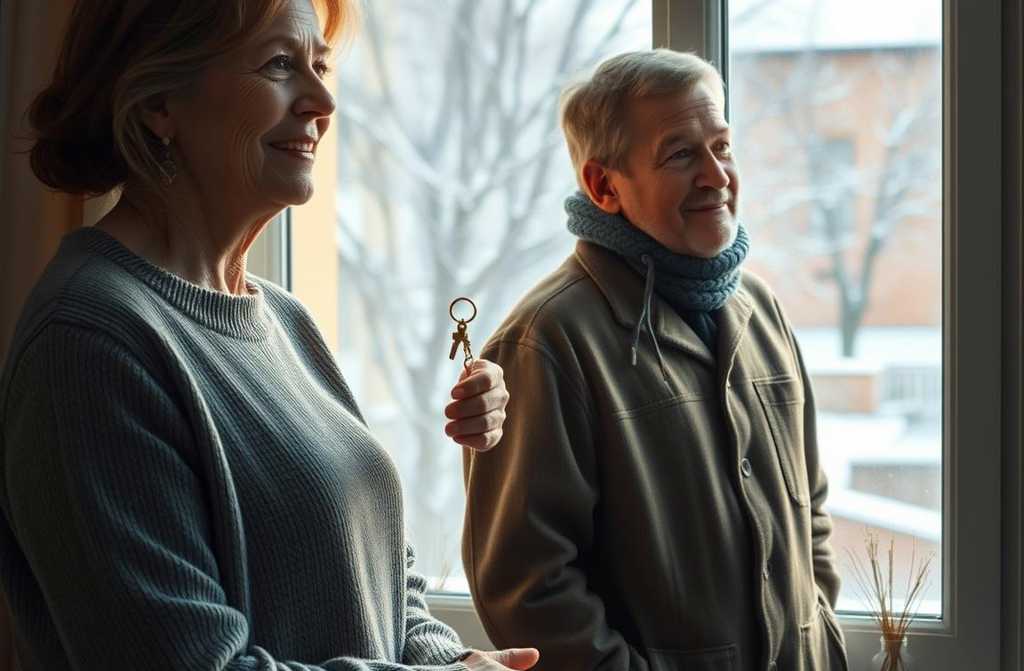
Emma wakes up a minute before her alarm. The room is still dim, but the grey February light filters through the curtains. Her back aches from sleep, her fingers are a little swollen, as they always are in the mornings. She sits on the edge of the bed, waits for the dizziness to pass, then gets up.
The kitchen is quiet. James has already gone for his run, as he has done for the past couple of years since his doctor warned him about cholesterol. Emma turns on the kettle, pulls two mugs from the cupboard and puts one back; he always drinks only water in the mornings.
While the water heats, she checks her phone. The family chat has no new messages, just a photo of her grandson sent by her son earlier in the evening. The little boy, in nursery, holds a cardboard rocket. Emma smiles automatically and feels that familiar warm feeling rise inside: she endures traffic, reports and endless meetings for him.
Her job has been her anchor for twentyeight years. She works in the HR department of the local health centre: first as a junior inspector, then as a senior officer. Doctors and nurses come and go, heads of the centre change, but she stays. She knows which staff have children, who is married, who needs advice on parental leave, and who must be nudged to bring a certificate on time.
Lately it gets harder. Paperwork moves to electronic systems, reports multiply, and management demands more figures and tables. Emma grumbles but learns the new programmes, writes passwords in a notebook, keeps tidy folders on her desk. She likes feeling needed, fearing that without her the quiet chaos would collapse.
She pours herself a cup of tea, drops in a slice of lemon and sits by the window. Outside, the groundskeeper shovels snow to the side of the path, a few cars crawl out of the yard. Emma imagines herself ten or fifteen years from now, looking at the same garden from a balcony, wrapped in a cosy robe. Perhaps an older grandson will swing his legs and ask why the snow looks so grey.
That picture has lingered for years. In summer it is joined by a modest cottage with peeling paint, a garden where she begrudgingly pulls up dill, and evenings spent at the barbecque arguing with James about how much salt to add to the kebabs. Old age seems inevitable, not exactly joyous, but it is hers.
The front door clicks, and the sound of sneakers echoes down the hallway. James steps into the kitchen, breathing in the air.
Tea again without sugar? he asks, wiping his throat with a towel.
The doctor said less sweet stuff, Emma reminds him.
He smiles and fills his glass with filtered water. His temples are now slightly grey and his face has become even leaner. Once she loved his sharp cheekbones and confident gaze; now she sees more fatigue and a hidden irritation he tries not to show.
Ill be late today, he says, looking out the window. Dont expect dinner tonight.
Another meeting? she asks. Or your English classes?
He grimaces.
Not classes, a tutor.
Right, a tutor, Emma nods. He gives her a brief look and stays silent. A knot tightens in Emmas stomach. Their halfsentences have become a habit, words unsaid hanging heavier than any conversation.
She checks that the bedroom window is closed, then grabs the familiar ring of keys from the hall table. The metal feels cool in her palm. Those keys have been with her for years house, car, cottage, postbox a small bundle of certainty.
The minibus is packed. People stare at their phones, some yawn, others mutter about the stops. Emma clutches her bag and reviews the day ahead. At lunch she must call her mother, ask about her blood pressure. Mother is seventythree, lives in the neighboring district and stubbornly refuses to move closer to them or to her son.
I know everyone, Emma repeats to herself. At the pharmacy, the shop, the health centre. Where am I heading?
She nods mentally, feeling the comfort of familiar walls, known faces, the route she could walk blindfolded. It anchors her sense of belonging.
Inside the health centre the scent of antiseptic and medicine fills the air. A guard nods as she passes. Patients crowd the corridors, some arguing with reception, others checking the clock. Emma steps into her office, hangs her coat, powers up the computer and goes for a kettle of hot water.
The HR office is cramped: three desks, a filing cabinet, an old printer that whirrs and chews paper. A colleague, a woman in her thirties, arranges some documents.
Morning, the woman says. Heard the news?
What news? Emma places her mug on the desk and sits.
The chief medical officer is calling all department heads to a tenoclock briefing. Something about optimisation.
The word hangs like a draft. Emma feels her stomach tighten. Optimisation has meant one thing lately: cuts.
Maybe its another report, she tries to brush it off.
Maybe, the woman replies uncertainly.
Doctors come in with leave requests, Emma mechanically explains procedures, signs forms, types data into the system. The word from the briefing keeps looping in her mind.
At ten she is summoned, along with the HR manager, to the auditorium. Heads of departments and senior nurses are already seated. The chief medical officer, a man in his sixties, steps up to the podium, adjusts his tie.
He talks about reform, new standards, the need for greater efficiency. Emma hears him through a haze. Then he announces a review of the staffing structure, a merging of functions, and mentions redundant posts.
Specific decisions will be taken within the next month, the chief says. Department heads will receive lists of positions slated for reduction.
The word positions lands heavily. Emma catches the HR managers glance, which quickly darts away.
Back in her office the colleague already knows the gossip news spreads fast.
Do you think itll touch us? she asks, fidgeting with a pen.
Im not sure, Emma replies. Were already shortstaffed.
But if they merge us with finance or? the woman trails off.
Emma remembers a neighbouring health centre that cut one HR officer last year, leaving three people to do the work of four. Theyll manage, they said then.
She tries to focus on her tasks, but numbers blur. Before lunch she knocks on the HR managers door.
Got a minute? she asks, opening the door slightly.
He nods without looking up.
Did you hear? Emma begins.
Yes, he replies shortly.
Our department She falters.
He finally meets her gaze, weary.
We dont have any concrete news yet. Were waiting for directives from above. Ill let you know as soon as I hear anything.
She leaves, feeling a sudden heat despite the thin sweater. Her age flashes in her mind fifty. Not forty, when new possibilities seemed within reach, not thirty, when risks felt doable. Fifty.
She gets home later than usual; the minibus was stuck in traffic and she spends the whole ride staring out the window, seeing nothing. Thoughts circle: if shes let go, what work can she find? Who would hire a fiftyyearold HR officer with experience? A private clinic? A college? Would she start over, learn new software, fit into a new team?
James arrives around nine, in a suit he reserves for important meetings. He hangs his jacket, then walks to the kitchen.
Did you have dinner? he asks.
I was waiting for you, Emma replies. Heat up the soup?
No need, Ive already eaten, he says, pouring himself tea. We had a meeting today.
We did too, Emma says. About the cuts.
He raises an eyebrow.
You?
I dont know yet. They said the staffing plan is under review, she answers.
He pauses, then sits opposite her.
Ive got news as well, he says. Theyve offered me a contract abroad.
Emmas mind lags.
Where?
In Germany. The companys branch is launching a new project and needs someone with experience for two or three years.
She looks at him, feeling her face go numb.
Did you accept? she asks.
I said Id think about it, he replies. Honestly, its a serious opportunity financially and professionally.
The mention of money hits hardest. Money has always been a hardtoargue point: the mortgage, helping Oliver with his loan, medication for her mother. All hinged on that dry figure.
For two or three years, Emma repeats. What would I be doing then?
He looks away.
We could discuss options. You could come with me. They need HR staff there too. Ill find out.
She imagines a foreign city, an unfamiliar language, trying to explain holiday leave in German, only recalling it from school lessons. She pictures her mother alone, Oliver with his family, the grandson, and herself wandering a supermarket near Hamburg, searching for sour cream on shelves with foreign labels.
Or you could stay here, with the grandson, he adds. Two or three years will pass quickly.
His voice sounds confident, yet a tremor underlies it. He clenches his mug tighter.
What if it doesnt work out? What if you stay? she whispers. What if you remain?
He sighs.
Im not emigrating permanently. Its a work contract.
A work contract can be extended, she says. There are new opportunities there, new contacts. And here
She doesnt finish. Here means all the familiar, heavy things: the queues at the health centre, endless road repairs, rising grocery prices, news that no longer promises any good.
They fall silent. From the next door a chair scrapes.
Not today, James finally says. Im tired too. Lets talk this weekend.
Emma nods, feeling a wave rise inside fear, anger, exhaustion.
That night she lies awake, listening to Jamess breathing, to the occasional car passing outside. Thoughts jump: the cuts, the contract, her mother, the grandson, her own body reminding her of aching knees, a sore back, rising blood pressure.
In the morning she calls Oliver.
Morning, love, Im in a meeting, he whispers. All okay?
Fine, she replies. Ill call back later.
She doesnt want to bring up the whole mess now. She isnt sure how to say, Dads thinking of moving, or I might be let go. Oliver is just starting to climb out of his debts.
At the health centre the day is hectic. At lunch the HR manager asks her into his office.
Emma, he begins, sliding a paper across the desk. We have a new staffing schedule. One post in HR is set for reduction.
Her chest goes hollow.
Which one? she asks, already knowing.
Formally the senior officer role thats yours, he says, pointing to the document. We could offer you an inspector position a downgrade but you stay employed. Salary would drop by roughly £2,000 a year.
She sits, legs feeling like jelly.
How much less?
He names the figure. Emma calculates mentally the cut means tighter budgeting, less help for Oliver, fewer funds for her mothers medication.
The other option is redundancy three months pay, then you can register with the Jobcentre, he adds.
She nods. The Jobcentre feels like a distant world.
Think it over until Friday, he says. Submit your decision then.
She walks out, lingering by the snowcovered courtyard. People come and go, ambulances arrive and depart. Life goes on as if her personal news were background noise.
That evening she visits her mother. She sits at the kitchen table, newspaper spread before her.
You look pale, her mother says. Checked your pressure?
Its fine, just a tough day, Emma replies, omitting the contract talk.
She tells her about the redundancy, leaving out the German offer. Her mother frowns.
A reduction isnt a disaster, she says. Pay will be lower, but youll still have work. At your age finding a new job is hard.
What if I try something else? Emma asks. Maybe something better?
Her mother sighs. You decide. In my day I never ran off anywhere. Times are different now.
The word different sounds odd, as if time always shifts for those who age.
On the way back she watches the houses along the road, mentally fitting her life to each. New housing estates with lit windows, old terraced houses with peeling paint, the garden trees that were big when she was a child. She wonders where she could live if everything changes.
At the weekend she and James finally sit down at the kitchen table and speak seriously.
I need a decision, James says. The company wants an answer within a month.
I need one by Friday, Emma replies. Either a downgrade or redundancy.
They stare at each other, eyes heavy with too much.
If you stay on a lower grade, well manage. Ill earn more, and I can send money back, James says.
What if I quit and go with you? Emma asks. Will I find work there? How will I explain leave policies in German?
James pauses.
We could find a language course, learn the basics. There are many expats. You wouldnt start in HR straight away.
So Id be cleaning offices? Washing dishes in a café? she asks, halfjoking.
He frowns. Dont underestimate yourself. Youre experienced, youll find a role.
And Mum? The grandson? You think I can live in another city while Moms alone here? she presses.
We could arrange a carer, or move her to live with Oliver, James says.
Emma smirks. Did you talk to her about that? She barely agrees to let me call a nurse over.
He falls silent. The room hangs heavy.
Im scared too, he admits suddenly. Im fiftytwo. Starting over in another country, new colleagues, a new language But staying here feels like a slow fade. This could be my chance. If I turn it down, there wont be another.
Emma sees fear, not confidence, in his eyes, plus a stubbornness that refuses to accept that the good days are over.
What about me? Wheres my chance? she asks.
He has no answer.
Their conversation loops, each holding onto a different future that no longer aligns.
Later that night her mothers blood pressure spikes. A neighbour calls.
Shes complaining of a headache, Ive called an ambulance, can you come? the neighbour asks.
Emma dresses quickly, wakes James.
Moms pressure is high, Im heading over, she says.
James nods, rubbing his eyes.
At her mothers flat the air is heavy. Her mother lies pale on the sofa, forehead damp. A young paramedic measures her blood pressure, asks questions. Emma stands nearby, feeling everything tighten inside.
The pressure is high but not critical, the medic says. Well give tablets and monitor. If it stays up, well admit her.
While the medic writes notes, Emma looks at the dated wallpaper, the familiar carpet, the chair by the window where she did homework as a teenager. This flat holds her past the first time she introduced James to her parents, the nights she left the grandson with her mother while they went away.
She realises old age isnt just a cottage and grandchildren; its also nighttime ambulance calls, pills, the fear that someday no one will arrive in time.
When her mothers pressure eases and the paramedic leaves, Emma stays the night. She lies on the narrow sofa in the spare room, listening to her mothers breathing, thinking about her own future. If she leaves, who will sit there on such a night? Oliver with his small child? The neighbour with her own ailments?
The next morning she walks home through her familiar neighbourhood, noting each door, each courtyard linked to a story. The house where friends once picnicked, the shop where she bought school uniforms for Oliver, the place where she and James argued about holiday destinations.
She feels the key ring in her hand, though she isnt about to go anywhere. She squeezes the metal, feeling its roughness. Her life has been written into these streets.
Later that day after work she stops at a small café near the health centre. Its quiet, soft music playing. Emma orders a coffee, pulls out a notebook and begins to list options: stay on a lower grade, resign and look for a new job, resign and move with James, stay and wait for him. She draws pros and cons, arrows, question marks.
When the page fills, she looks up and realises every option centres on someone else James, her mother, Oliver. She has been treating herself only as a function: to support, to help, to adapt.
The thought feels uncomfortable, a sting of selfishness she never allowed herself to feel.
That evening she calls Oliver and arranges to meet in the park. They sit on a bench, cool air around them, people hurrying past.
Dad got a contract abroad, she says plainly. In Germany, for a few years.
Oliver frowns. And youll go?
Im not sure, she admits. Works changing here too. Ive been offered a downgrade or redundancy.
He stays quiet, looking at his shoes.
I dont want you or Dad to give up opportunities because of me or Mum, but I dont want you to split up either, he finally says.
Were not splitting, Emma replies quickly, though something trembles inside.
Mom, you always help everyone me, Mum, Dad. What do you want for yourself? Not as a good grandma or a supportive wife, but for you, he asks.
She has no answer. He sighs.
I cant decide for you. I can only say if you stay, Ill be here. If you go, well keep in touch, visit. But you need to choose so you dont feel forced later.
Those words linger: so you dont feel forced.
Thursday arrives and the HR manager reminds her about the form.
Decided? he asks.
Emma nods. IIll take the redundancy and look for a new path, trusting that the choices I make now will shape the years ahead.



The Unwanted Mum
UNWANTED MOTHER “James, sit down. We need to talkit’s urgent.” My wife sat at the kitchen table, her face set...


When My Sister Sold Our Parents’ Flat Without Asking Me, I Realised the True Cost of My Silence
When my sister sold our parents flat without asking me, I finally understood the price of my silence. I first...


I am 65 Years Old and This Is My Life Since I Got Married—Married at 23, Not Out of Pressure or Preg…
Im 65 now, and this is the story of my life since I tied the knot. I got married at...


I took Caesar in “for the end of his days.” But on the very first night, he brought someone else’s heartache into my home — and woke up the entire building.
I brought Caesar home for the end of his days. But that very first night, he brought someone elses loss...


“You’ll Never Cope Without Me! You Can’t Do Anything! – My Husband Yelled While Packing His Shirts Into a Big Suitcase”
Youll never manage without me! Youre helpless! my husband shouted, throwing his shirts into a large suitcase. But she proved...


After My Father Went to Heaven, My Brother Expected Me to Take Care of Everything Without Question—H…
After my father passed away, my brother decided that I should take care of everything, without asking questions. After the...


I ended my relationship with my girlfriend because she neglects self-care — she doesn’t even use basic hygiene products.
Mate, let me tell you about my life over the past years. Im single now, 45, and was married for...


After Years as the ‘Convenient Daughter,’ One Family Dinner Made Me Feel Unwanted—My Sister Has Alwa…
After years of being the dependable daughter, one family dinner made me realise just how invisible Id become. My sister...